Archive

Archive for the ‘in the garden this week’ Category

Tikorangi notes: April 16, 2010

16 April 2010 Leave a comment

Latest posts:
1) April 16, 2010 There are times we have regretted letting our purple bougainvillea reach its natural massive proportions but it is a splendid sight in flower.
2) April 16, 2010 There are no like for like replacements for the ever handy (if a little dull and clichéd) buxus hedge.3) April 16, 2010 Making the most of mild autumn conditions in the garden – what to do in the Taranaki garden this week.

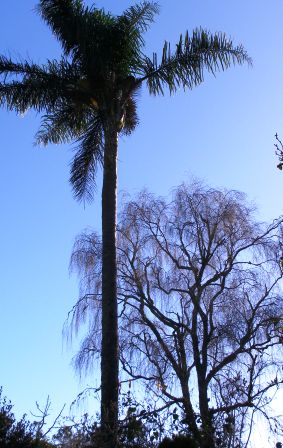
Our venerable old man pines against the blue sky of autumn

The common reaction from New Zealanders to our massive, but elderly pine trees is that we should be taking them out immediately because they are dangerous but we are fond of their scruffy majesty on our south eastern skyline. Planted in a double row around 1880 by Mark’s great grandfather, they were originally a shelter belt and will rank amongst the oldest specimens in the country. Californians are often impressed because these Monterey pines tower around 50 metres or over 150 feet high which we are told is unusual for their homeland on the Monterey Peninsula.

Our Monterey pines - not all are exactly at right angles to the ground

But to New Zealanders, they are just crusty old Pinus radiata, a cultivar the timber industry has made our own as a very quick turn around, low grade timber crop covering vast acreages.

Occasionally we lose a pine tree – running about once every fifteen years at the moment – and the last one dropped itself in the one clear space that we would have chosen had we deliberately felled it, doing minimal damage as it crashed down but gouging out a 30cm deep indentation on the ground. Because they started life as a shelter belt and are planted in more or less straight rows, they now give us a woodland avenue below to grow frost tender material such as vireya rhododendrons, cymbidium orchids, monstera delicosa and a range of woodland bulbs. Such is their location, they would have to removed by logging helicopter but we are happy to live with them as a characterful backdrop.

Tikorangi Notes: March 19, 2010

19 March 2010 Leave a comment

Latest posts:
1) March 19, 2010: The simple purity of Lapageria alba and praise for the Chilean climbers which are almost never without a flower for us.
2) March 19, 2010: Outdoor Classroom on lifting and limbing – aka: a little bit of judicious pruning can make a significant difference.
3) March 19, 2010: In the Taranaki garden this week : With autumn approaching rapidly, we offer advice on garden tasks for the week ahead, including our usual plug for green crops and compost, along with advice on using animal manures.

The growing collection of birds's nests

The growing collection of birds's nests

We have recently started a little collection of birds’ nests here and Mark is regretting that he did not start recording his observations years ago so he could chart the changing materials our feathered garden inhabitants have used over the years. While we try and minimise litter here, it is frankly alarming to see the number of Tuflok labels, plastic ties and budding strips that the birds find to line their nests. They are also stripping the threads of fibreglass from a clear roof here. I was particularly taken by the little chaffinch nest constructed from dried grass and lichen and lined in what looks like dog fur (I did trim our long haired sheltie for summer) but which Mark disappointed me by telling me was in fact the fibrous thread from our tree ferns (pongas). We have been bringing in the abandoned nests we find in good condition and arraying them under cover up the vinous stems of Tecomanthe venusta.

Tikorangi Notes: March 12, 2010

12 March 2010 Leave a comment

Latest posts:

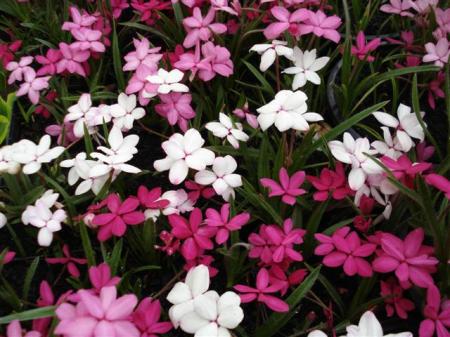
March 12, 2010 The ephemeral delight of Rhodophiala bifida in late summer.

March 12, 2010 Early autumn garden tasks for this week.

March 12, 2010 Who should pay when a garden is uneconomic to run? Transferring the costs of running Pukeiti Rhododendron Trust to the wider public.

The case of the nonconformist sunflower.

The non conformist sunflower

As anybody who has ever grown sunflowers knows, the flowers face the morning sun. All but this one. In a row of sunflowers standing around two metres high, all are obediently lined up to curtsey to the east, bar one which is defiantly facing west. Theories abound. It has a contrary nature. It is a northern hemisphere sunflower, confused by the southern orientation. It was planted back to front. Mark is of the opinion that the other flowers voted it to be the watch flower to ensure there are no ambushes from behind. I just think it wants to be different.

Tikorangi notes 5/3/2010

Latest updates

March 5, 2010: In the Taranaki garden this week – from growing buckwheat as a green crop to constructing individual hammocks for metamorphosing monarch caterpillars.

March 5, 2010: Angelica gigas – feeding the bees this week and if they would make some space, it would also feed the butterflies.

March 5, 2010: A step by step pictorial guide to chip budding – the horticultural equivalent of micro surgery.

One country's treasured plants are another country's roadside plants, even weeds

One country’s prized garden plants are another’s roadside wildflowers and weeds. The South African agapanthus grows so easily here that it is regarded as a low value roadside plant bordering on a weed though it must be said it is a real feature up and down the roads of our area in summer. I was completely confused by some English garden visitors one summer who asked what was the giant bluebell which grew everywhere in our area. It wasn’t until I next went out our gate that the penny dropped and I realized they were referring to agapanthus. Mind you, as they also asked about the yellow lacecap hydrangea on our roadsides (which I worked out was wild fennel), I don’t think plant identification was their strong point.

Wind anemones and agapanthus on our road verge

Wind anemones and agapanthus on our road verge

This is a particularly good dark blue agapanthus which grows beside the little row of rustic letterboxes serving the houses here. Being on rural delivery, the flag up on the letterbox is a message to the postman that there is also mail to be collected – yes, in this country, the rural mail service picks up as well as delivers mail to individual properties.

Agapanthus are on the banned list in more northern areas of New Zealand because of their invasive and seeding habits. In our area the giant gunnera (Chilean rhubarb), so prized in cold climates overseas, is on the pest plant list banned from sale and scheduled for eradication – both tinctoria and manicata.

The Japanese anemones (hupehensis var. japonica) make a great roadside planting but are rather too strong and invasive as a garden plant in our conditions. I have a sentimental attachment to these flowers which we know as wind anemones. On the night before our wedding a few decades ago, Mark turned up to see me with an armful of white wind anemones he had gathered on the roadside. How romantic is that?

The case of the missing hedge clippers

8 December 2009 1 comment

I felt sure we had another pair of hedge clippers somewhere

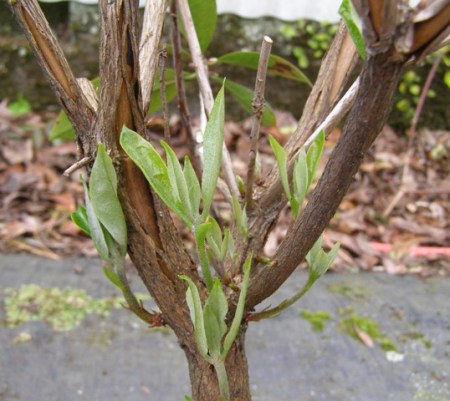
I am not sure what it says about us here, that we hadn’t noticed that we were missing one set of hedge clippers. All I can say is that it was not the good pair. But when Mark went to give the Michelia yunnanensis (syn. Magnolia dianica) Honey Velvet its annual or biennial trim, lo and behold, there were the clippers providing a perfect platform for the nesting blackbird family. In vain does Mark protest that he has no idea how the birds got the hedge clippers up there. We know, and never again will he be able to deride me for my carelessness with secateurs and trowels which frequently lose themselves in the compost heap.

Follow

Get every new post delivered to your Inbox.

Join 46 other followers