Growing garlic

Sown in late autumn, the garlic is well into growth here - seen with an unusually heavy frost which had me out with the camera this morning

Sown in late autumn, the garlic is well into growth here - seen with an unusually heavy frost which had me out with the camera this morning

We have been talking about garlic.This is because of the repeated advice from a local garden centre that it is not too late to plant garlic but you must start it off in trays and transplant in several weeks time when the bulbs have made good growth. It is an approach that will work (though individual pots cause less root disturbance at the time of transplant rather than trays) but it is a lot of work that we are not convinced is necessary.

Garlic can be planted directly into the ground. It is not difficult to get it growing. Within a few days of planting, it should be showing fresh root. But it is getting late in the planting season and should be done immediately. Increasingly, we are of the opinion that it is an unhelpful old wives’ tale that it should be planted on the shortest day and harvested on the longest day. These days, Mark plants it in autumn, a practice which is becoming increasingly common in this country. Autumn planting means the cloves are already growing well before the ground becomes cold and sodden.

The single biggest issue with garlic is that you need to know where they come from because you want NZ garlic. Cheap imported garlic may look fine and clean but it is usually from China, so from the wrong hemisphere and therefore on an opposite seasonal sequence. Added to that, imported garlic is reputed to be troubled by garlic virus which you do not need to unleash.

Other growing tips:

• Break the garlic bulb into single cloves and only plant the big ones. It is a waste of time planting small cloves.

• Plant at about 10cm spacings into ground which has been dug over well and is friable and fluffy.

• Put the cloves in so they are about 2cm deep to the top of the clove. Press them down firmly because they can push themselves out of the ground as they start to grow.

• Pile on the compost on top of the soil. Garlic is a hungry plant. Real enthusiasts will liquid feed regularly and keep the fertiliser up to them and it is likely to result in a bigger and better harvest. We are busy here with a big garden so Mark just plants well, keeps the area weedfree and that is pretty much it until harvest time.

• If we get a very dry spell in spring, that can be a problem. Check the crop. You may have to water them if we get several weeks without rain.

• Harvest around mid summer when the bulbs have reached maturity. You do not have to wait for the tops to die off. Dry the garlic before storing (plaited is the traditional approach) – hanging in an airy situation helps it to last longer.

And, basically, that is about it. Keep the vampires at bay.
Ornithological bickering and squabbling

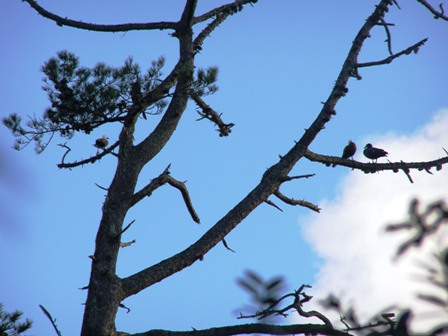
Three paradise ducks but spot the shag

Three paradise ducks but spot the shag


The paradise ducks were not at all thrilled by the shag in their old pine tree (you can just see the silhouette of the shag amongst the pine needles but it is about 20 metres up the tree) and were attempting to move it on by verbal abuse. The bellbirds don’t like the tui (one tui, two tui – we have many tui but they don’t have an s to make them plural). Everybody hates poor old Hedwhig the Morepork and the tui will persist in lording it over pretty much every other feathered inhabitant of the garden, including each other. Clearly these birds do not believe in peaceful co-existence.

Tikorangi Notes: Sunday 26 June, 2011

Latest Posts:

1) Growing citrus in the Taranaki garden – the first part of a random series drawing on our experience of growing fruit trees in the home garden here. With the abundance of tui in our garden, I did briefly ponder calling it the Tui Tikorangi Fruit Garden as a nod and a wink to the somewhat infamous publication from Penguin. Given that we also have a surprising and gratifying number of bellbirds or korimako in residence at the moment, Mark was of the opinion that I could instead draw on the common name for these songbirds – mockers. So, perhaps, The Mockers Tikorangi Fruit Garden. At least our advice is based on practical experience underpinned by some horticultural experience….

2) Meet Hedwhig the Morepork (our native owl, also called a ruru).

3) Tikorangi Diary – aka what we have been up to in the garden this week from pruning roses and wisteria to planting broad beans and peas with a bit more inbetween.

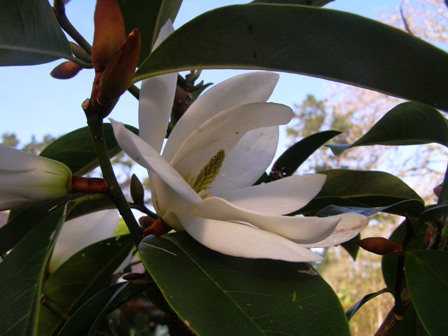
The lovely flowers of the early season michelias

The lovely flowers of the early season michelias

Tikorangi Diary: June 26, 2011

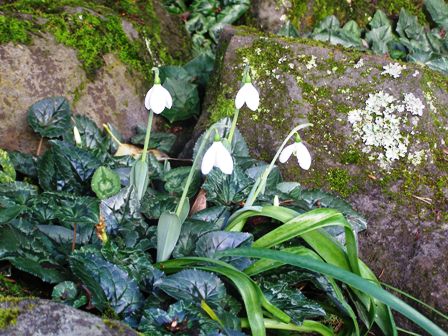
We New Zealanders have a love affair with white flowers. I was told that Rose Flower Carpet White is easily the biggest selling colour in this country but not internationally. My informant put this down to the fact that snow never settles here for long (except in alpine ski villages) and, indeed, most of the country never even sees snow. Winter white is a colour from a clothing catalogue, not the view from our windows. Which is by way of introducing two very different white flowered plants in bloom this week – the charming snowdrops (no snow, but growing here happily with cyclamen and lachenalias) and the white perfection of one of our early flowering michelias. One of the attributes of gardening in a soft climate such as ours is that we can have flowers for twelve months of the year in the garden. We tend to take it for granted until we see people gardening in much harsher climates. The corollary is that weeds and grass also keep growing all the time, but that is a small price to pay when mid-winter can still be brightened by the loveliest of blooms.

No snow, but we have plenty of snowdrops coming in to flower

No snow, but we have plenty of snowdrops coming in to flower

Tikorangi Diary: Sunday June 25, 2011

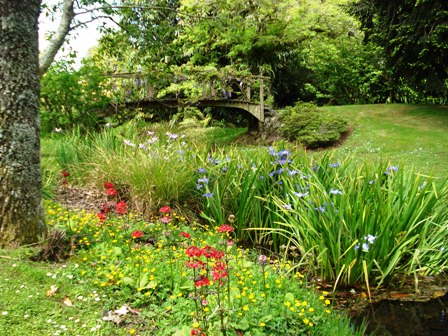
The wisteria festooned bridge in spring

The wisteria festooned bridge in spring

I have pruned the wisterias. I have a bit of a love-hate relationship with wisterias which seem to make a leap for freedom the moment my back is turned, but they certainly add to the spring display. The blue (sinensis Blue Sapphire) and white (floribunda Snow Showers) which festoon one of our bridges in the park look terribly romantic in flower, but they are inclined to try and join hands across the middle. And I am worried that some of their thicker branches are threatening the bridge timbers. We don’t worry about the borer attacks. Wisteria are not shy and backward plants which need nurturing so I just cut out badly affected branches as need be. Mark’s mother had a lovely blue wisteria up the wall of the house outside her bedroom window but Felix took it out. I can’t recall now whether he waited til after she died (when the climbing roses went west) but I can remember being a little sad at his actions. These days I know exactly why he removed it. I have had the spouting cracked outside my office window. The last thing we need is a rampant wisteria lifting the concrete roof tiles on the house and cracking our vintage spouting there.

I am also pruning the roses and my relationship with these leans more to hate than love. Yes they have beautiful flowers and fresh foliage in spring. Because we don’t spray, come summer they have some beautiful flowers but cruddy foliage. In winter, all they do is try and ensnare me as I work around the areas where they are planted. I do not feel the need to plant more roses until breeders start to offer us more options in beautifully full, fragrant blooms (of the David Austen type) on bushes that repeat flower and don’t get diseased, preferably without thorns. By far and away, the best performers here are Rose Flower Carpet white and coral, the rugosas and one called, I think, Golden Celebration which has fearsome thorns but very good habits otherwise. But none of these give me the soft and subtle flowers of the lovely Austens.

I had a matched pair of standard Mary Roses of which I was very fond. Note the past tense. Today I dug out the one that is all but dead and which has for a long time persisted in putting out strong shoots from the root stock. And therein lies a demonstration of the problem of matched, formal plantings. What do you do when one dies or ails badly? It is much easier to get the formal look with inanimate objects. I could probably source a replacement standard but I am not going to. I do not think anyone but me will notice that there is one half of a pair missing. It is a garden which, at its best, is full of froth and flower within a formal setting. I think the setting is enough – I will not worry about trying to repeat the formality in framework planting.

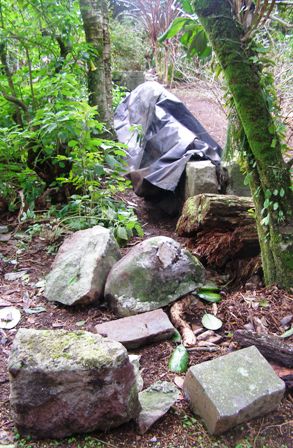
Repairing the stone wall (a pine tree fell on this section some years ago)

Repairing the stone wall (a pine tree fell on this section some years ago)

Shamed by a current shortage of greens, Mark is out planting a large quantity of broad beans and peas. I could tell he is going for overkill when he wanted to discuss whether broad beans would freeze well if picked young. The deep freeze is currently full of his frozen corn which, he pointed out to me, we need to be eating at the rate of one packet every 72 hours if we are to get through it before the next crop comes in. The garlic is long planted and is well into growth. These days, he takes Kay Baxter’s advice (from Koanga Institute) and aims to get it planted in autumn so it gets away before sodden winter conditions set in. He is also trying her recommended approach to plant it in a metre grid on a 10 x 10 arrangement (so at 10cm spacing) which is a great deal more economical in space than the usual rows. Keeping it to a metre square means it is easy enough to reach into the middle to weed. I am hoping Lloyd is going to remember that he said he would smoke me some garlic while we still have plenty of last summer’s crop hanging in good condition. Lloyd is the one who owns a smoker here. Smoked garlic is particularly delicious when raw garlic is called for in recipes such as aioli.

When not fluffing around with his vegetable garden, Mark has been giving his attention to his michelia propagation trials. With the flowering season just starting, the hybridist’s hat is back on his head and we face many months where the first call on his time will be his plant breeding. It is easy to underestimate just how much time and energy goes into a controlled plant breeding programme as opposed to people who just pick out chance seedlings (or worse: copy what other breeders have already done successfully. Expect to hear more on this topic, which is a sore point here).

Lloyd is continuing with repairs to our stone wall. I did say last week that these activities are best measured in terms of results, not costs….

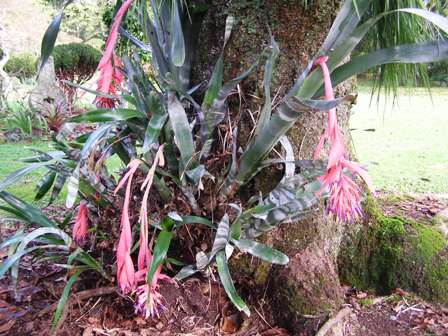
And while the winter/early spring bulb season is just starting (Narcissus bulbocodium, galanthus, leucojums and the early lachenalias), it is the bromeliads which are the unsung hero for winter colour this week. If you can grow broms, they sure are eye-catching in bloom.

Bromeliads for winter colour. This one is a Bilbergia.

Bromeliads for winter colour. This one is a Bilbergia.

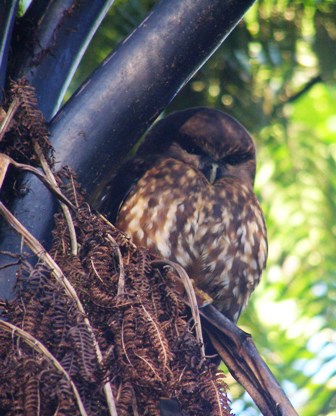
Meet Hedwhig the Morepork

Hedwhig the New Zealand Morepork

Hedwhig the New Zealand Morepork


Our New Zealand owl, morepork or ruru does not often make itself obvious during the day but the alarmed calls of the other birds alerted us to Hedwhig perched in a ponga tree. Alas his beautiful big golden eyes are not visible but he was keeping a very close eye on our dogs three metres below him. They are a familiar sound at night as they make their call (“More pork, more pork”, they call with a particular pitch) and from time to time we see the flash of feathers as one swoops in to pick the moths attracted to night time lights.
Hedwhig – a New Zealand joke, or maybe even a highly specific Whanganui reference.