In the Garden this week: Saturday 23 April, 2011

• I was wrong. The first wintery blast did not wait for Easter but arrived last Monday morning. Fortunately we should not stay cold for a while yet, but it was a good reminder to make the most of remaining mild autumn weather in the garden. Nothing saps gardening motivation faster than cold, wet conditions.

• Easter should signal the time to be out doing the autumn clean up. Tell yourself that you are working off the extra calories consumed by most of us at this time. Remove spent crops in the vegetable garden and do a weeding round. If you don’t need to use all the area for winter and spring crops, either sow down bare areas in a green crop or at least mulch it to keep the invading weeds at bay.

• Silver beet is a rewarding vegetable to grow for those who are willing to eat it (and apparently some people like it) because you can continue harvesting repeatedly from the same plants. It is also hardy so makes a good winter stand-by. It is best to put in small plants this late in the season. There is not a lot of growing time left before winter.

• In the ornamental garden, the time for autumn feeding is over in colder, inland areas and fast running out in milder parts. The idea of feeding now is to allow the plant to take up the goodness before growth slows down or stops during winter. There is no point in feeding dormant plants.

• Last gasp, too, for perennial cuttings this season. After this, perennials need to be increased by division, not cuttings.

• Slugs and snails are undeterred by the cold. Watch for signs of them around emerging spring bulbs and set up bait stations if need be. We often use a low-sided plastic bottle top such as those from milk containers with a paua shell covering it to stop the bait from dissolving.

• Wrench plants which you intend to move to another site. Wrenching involves making straight cuts down two sides of the plant’s roots now, following up with cutting the other sides in two or three weeks’ time. This reduces the stress on the plant but is only necessary for well established plants which have been in the ground for some time (as in more than a year or two). Plan to take as large a mass of roots as you can physically manage.

• If you have not yet given hedges a tidy up trim, don’t delay on it. Trimming forces a new flush of growth and you don’t want it so fresh and tender that the first hint of frost will burn it off.
Tikorangi Notes: Friday 15 April, 2010
Latest posts: Friday 15 April, 2010:

1) Plant Collector this week is about Rhopalostylis sapida, better known to New Zealanders as the nikau palm – in this case the Pitt Island version of same. The Pitts are one of our more remote islands and the nikau is the world’s southernmost palm tree – and one of great beauty.

2) Garden tasks for the week with particular reference to autumn treatment for hellebores and a note about kang kong (which is an Asian green veg as opposed to a misprint of a giant ape).

3) Outdoor Classroom this week is the second instalment on garden mulches. We look at options which are usually available free but what you save in dollars across the counter, you will likely spend on your time assembling these options.

Tikorangi Notes: Friday 15 April, 2010
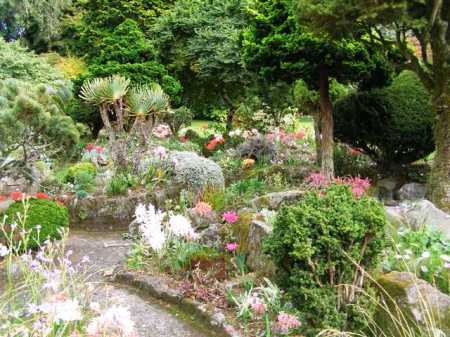
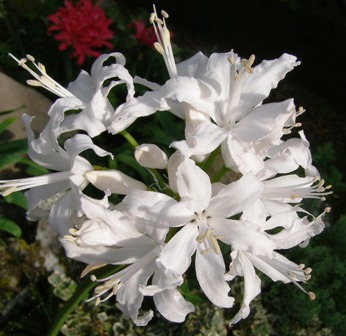
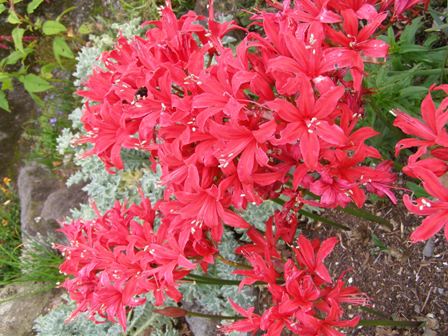
Our magic run of autumn weather continues. Dead calm days (always appreciated in a windy climate), mild daytime temperatures in the early 20s (Celsius) and cool nights. Rain is forecast, which is good because all my recent efforts on dividing perennials and relocating shrubs need watering in. Our avenue gardens consist of five parallel borders around 50m in length (each). I have finished three borders plus the one across the end. Just two to go so, realistically, I may have finished in another fortnight. In the meantime, the rockery continues to please. Nerines have a good long flowering season and they continue to look splendid. While we grow some of the species, it is the sarniensis hybrids which are the showstoppers. I will forgive them their foliage which hangs on until late spring, looking ever tattier. Our autumn flowering would be so much the poorer without them.

The rockery in autumn

The rockery in autumn

Plant Collector: Rhopalostylis sapida

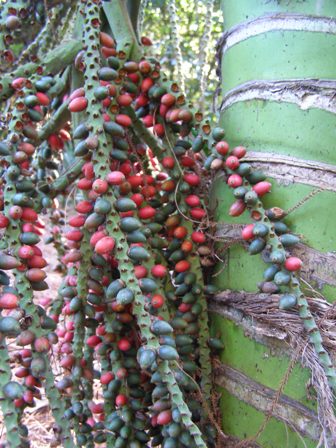
The ripening seed on the Pitt Island nikau palm

The ripening seed on the Pitt Island nikau palm

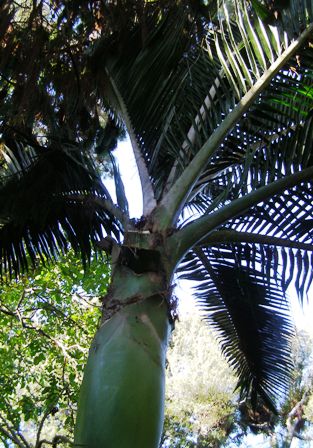
The botanical name for this native plant does not trip off the tongue easily. It is much easier to refer to it as a nikau palm. And yes, it is indeed a palm. In fact it is the world’s southernmost palm. This form is even more south eastern than most, as it is from Pitt Island. Nikaus are often regarded as very slow growing but it is curious fact that the variation that is endemic to the Chatham Islands (which includes Pitt) is much faster growing and sets viable seed years earlier than the mainland form. They are hardy throughout most of New Zealand (except for deep inland or alpine areas) but not widely seen internationally because they don’t like extremes of heat, dry conditions or the cloaking of cold, dry arctic air which is very different to the chilly air movement that we get with wintery blasts.

The handsome crown of the nikau palm

The handsome crown of the nikau palm

Nikaus are exceptionally handsome plants but they get large. This plant is already around eight metres to the top of its crown and the arching fronds are about four metres long. It will keep growing and get larger. In the juvenile stage, the unfurling fronds wrap around the whole plant and the shape is reminiscent of an old fashioned shaving brush or feather duster but that hardly does justice to these handsome plants. We find that they seed down very readily throughout our garden and we just dig out those plants in inappropriate places. They are not the easiest plant to transplant as they get larger. Their roots go straight down and you have dig well below the base plate to extricate them without damage. The seed turning red is a sign that it is ripe.

In the garden this week: Friday 15 April, 2011

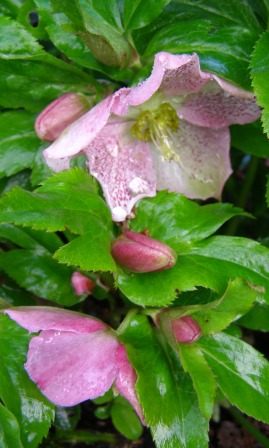
A little attention now will ensure a better winter display from hellebores

A little attention now will ensure a better winter display from hellebores

* It is time to give hellebores (winter roses) a little attention. We go through at this time and cut all the old leaves off, removing them to the compost heap. This gets rid of any aphid infestations, allows the flowers which will start emerging in a few weeks to be visible and the fresh foliage is much more attractive than tired old leaves. You can go through with a slasher if you wish. A weedeater is faster but tends to leave chewed looking stems. Feed and mulch the crowns.

* Most hellebores, particularly the common H.orientalis, are not the most amenable plants to divide. They take several years to build up to a good size so if you plan to divide a clump, make them large divisions. We prefer to go through and remove all the seedlings to prevent too much competition, leaving the large plants alone.

* Autumn is a good time for pruning and shaping most woody trees and shrubs.

* Sow lawns without delay while the weather is still mild. If you don’t do it straight away, you will have to wait until spring because grass seed won’t grow in winter.

* In response to phone calls, the pumpkin crop we grew for hull-less pumpkin seed was called Austrian Oil Seed and we bought it from Kings Seeds. Only the seeds are edible although the pumpkin may be suitable for stock food.

* In the curious world of vegetables, Sydney daughter reports that amongst the various bok choy/ pak choi variants at the market, she found a different veg called kang kong which she thought looked like a weed so she bought some to try. She says it was “quite nice”. Upon looking it up, she worked out why it looked like a weed. It is a convolvulus. I have yet to see kang kong offered here. Most Asian green leafy vegetables are quick maturing so ideal for a short term crop.

* While on the topic of seeds, the new autumn catalogue from Franchi Seeds is available on line at http://www.italianseedspronto.co.nz. These are predominantly summer crops but you may like to browse the traditional tastes of Italy in anticipation of sowing seed later in the year. Mark is planning to try some of the tomato crops and I am encouraging him in this because the most delicious tomatoes I have ever eaten were in the south of Italy. By no means are all tomatoes equal in the flavour stakes. Make the most of the pleasant autumnal weather which is brilliant for gardening. We frequently get the first wintery blast over Easter. No matter when Easter falls, the weather gods spy the event, not the date.

Tikorangi Notes:

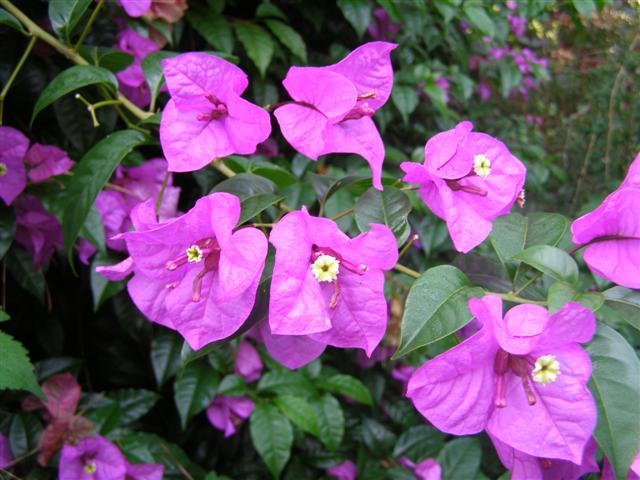
Decidedly rampant, extremely spiny but quite spectacular - the bougainvillea

The Battle of the Bougainvillea

Latest posts: Friday 8 April, 2011

1) One of the very best ornamental oxalis (or wood sorrel, if you prefer euphemisms) – purpurea alba in Plant Collector this week. And it is not in the least bit invasive so comes with our recommendation as garden safe.
2) Nostalgia rules, but it takes time. Relearning the old ways while getting to grips with new technology (aka freezing tomatoes and making grape jelly while learning about power points) – Abbie’s column.
3) Garden tasks for this week – from gathering swan plants and walnuts to sowing green crops.

Tikorangi Notes: Saturday 9 April, 2011

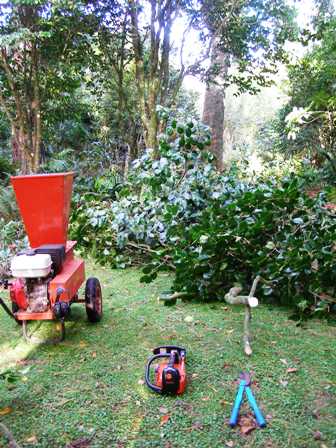
Dealing with the mountains of debris

Dealing with the mountains of debris

Ours is a typical large New Zealand garden in that we maintain a fair area with a minimum number of people. In our case it is about 25 acres or 10 hectares, although only 7 acres of that is intensively maintained garden but we do that with only three of us. Inevitably there are areas that we maintain but do not intensively garden. By that I mean we tidy, prune and groom, keep the area weed free, mulch it and refill large gaps but we do not spend large amounts of time actually beavering away gardening it in detail. But as we plan relatively large new gardens (these ideas can be slow in the gestation phase), I feel the need to make sure we can manage the area we already have. For the past sixteen months, this has meant a major reworking of well established areas. I am now well on the way in the Avenue Gardens which is a bit like the last major frontier. It never ceases to amaze me how much we can prune, saw, rake, trim and haul out from the borders to be cleared away without it being obvious at all what has gone. That, of course, is precisely the result we are aiming for. The gap between woodland garden and impenetrable forest is only a few years. Today has been the Battle of the Bougainvillea and those who have never grown one of these plants may not realise that they are armed with extremely sharp spikes all over. Allied to ambitions for world domination. The pruning is done. Now I am just deeply grateful that our Lloyd will be back at work on Monday. He is a whizz when it comes to dealing with garden rubbish – abracadabra and soon there is nothing remaining.