Category Archives: Garden lore

Wisdom and hints

Garden lore

“(Gardening) is not graceful, and it makes one hot; but it is a blessed sort of work, and if Eve had had a spade in Paradise and had known what to do with it, we should not have had all that sad business of the apple.”

Elizabeth, Countess von Arnim, (1866-1941).
002 (2)

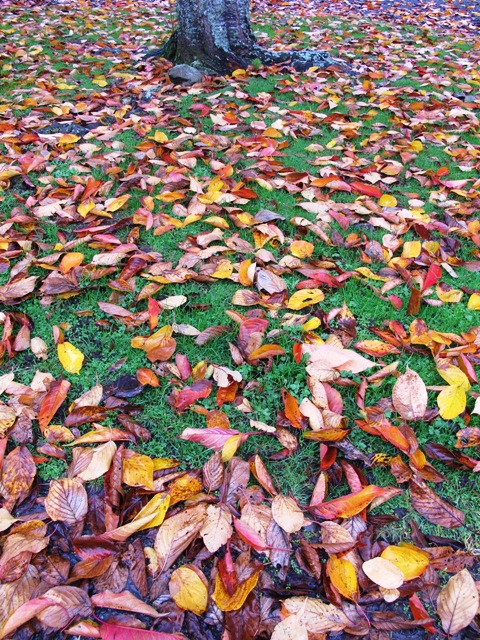
Autumn leaves
Most of us are probably at peak leaf fall at the moment. One more strong wind and they will all be on the ground where they will turn uniformly brown and sludgy. Do not think of fallen leaves as a bother but as a resource. Never tell me you burn your leaves.

That is just bad and wasteful. Leaf litter is not as nutritious and balanced as good compost but it has merit and should be regarded as an important part of the cycle of nature.

The simplest method is to use a leaf rake to scoop all the leaves back discreetly under the trees where they can gently break down to humus with the winter rains and microbial action. Come spring time, you can rake them back out to use as garden mulch if you wish.

Dried leaves can be put through a composting process where they count as adding carbon content.

In our vegetable garden, which has a couple of very large deciduous trees which drop a prodigious amount of autumn leaves, we use a simple circle of chicken netting tied together. All the leaves get piled into it and left to decompose. It stops the birds from making a mess of the piles.

It pays to clear fallen leaves out from fishponds. Rotting leaves will increase the nutrient levels, leading to later problems with algae growth and, in really bad cases, can kill the fish by reducing oxygen levels as they break down.

First published in the Waikato Times and reprinted here with their permission.
Garden lore

“A honeybee would have to fly around 100,000 kilometres and visit over a million flowers to find the nectar to make two kilos of honey. As it happens, they can only manage about 800 kilometres before they exhaust themselves and die.”

Niall Edworthy, The Curious Gardener’s Almanac (2006).

Green crops
It is your very last call for sowing green crops if they are to be of any value this winter. Green crops are a time honoured method of conditioning soils. They are a particularly useful tool on heavy soils. These can compact badly when left bare through a sodden winter and then turn to concrete when they dry out again. The roots penetrate the soil and keep it open, making it easier to work when it is time to dig again.

Green crops also slow the leaching effect of winter rains. They take up nutrients which would otherwise be washed away and release these nutrients in the spring when dug in to the soil. Think of them like a nutrient bank.

Recommended practice is to dig in green crops two to three weeks before you start replanting in spring – which means about the beginning of October. If you are not using all your vegetable garden in winter, green crops also look a great deal tidier than a forest of weeds and seedlings. Logic says that forest of weeds will also act as a green crop but you only get the full benefit if you dig the entire plant in later and you don’t want to be digging weeds with seed heads already formed into your ground.

Lupins and mustard are other winter options. Lupin is good for adding nitrogen. Mustard is reputed to kill undesirable nematodes by a form of natural sterilisation. Oats are the quickest growing option and will germinate the fastest. At this late stage, they are probably the best choice.

First published in the Waikato Times and reprinted here with their permission.

Garden lore

“… the truly formal garden is all about showing off your ability to groom and control. The more attention you pay to detail and maintenance, the better your garden will look, so don’t go there if you take a casual approach to chores. Consider rethinking the way you mow. The perfectionist will always mow lawns in straight lines parallel to the main axis.”

Xanthe White , NZ Gardener (May 2013).

???????????????????????????????

Pine bark
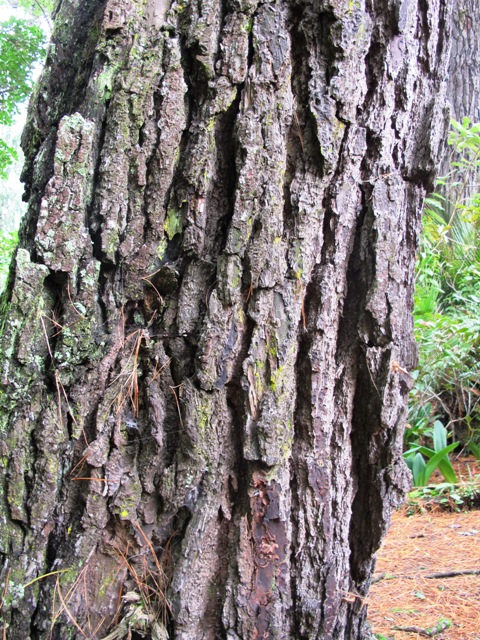
Pine trees produce a prodigious amount of loose bark and given the number of pine trees we grow in this country, pine bark has become a garden staple. Ground up and composted, it is now the major source of potting mix. As a renewable resource, it has done a great deal to save the peat and sphagnum bogs formerly raided for this purpose. Chipped to various grades, it is widely used as garden mulch. But, you need to understand that the reason pine bark is so useful is because it is remarkably inert and stable. It takes years to rot down so it does next to nothing to condition the soil even though it is an organic product. When a whole branch or trunk is chipped or mulched, it will break down quickly and add carbon content, but not straight bark.

So stable is pine bark that we use large flakes from our trees as an informal garden edging, stacked as you might stack thin pieces of old concrete. It lasts for years. If you are buying bark mulch, the mixes of bark and pine fibre will look more natural (and the fibre will break down faster, adding some nutrient to the soils). The chunkier bark nuggets look a little… clunky but will last for ages. The finer screened bark mulches will look smart in that urban landscaped look but can wash away in heavy rains. I have not seen the horror of died bark mulches that are favoured in Australia. Don’t go there. Your garden will not look better for being mulched in red, tan, blue or green pine bark.

First published in the Waikato Times and reprinted here with their permission.

Garden lore

“In the plan of human conduct there is a marked difference between the mind which sees beauty in a simple violet and that which sees it in a pompous rose or dahlia. On the one hand we have a love for the free and untampered flowers of God’s creation, on the other hand for a flower of social ills, sophistication and conceit.”

Jens Jensen , Siftings (1939).

The aphid infestation on old hellebore leaves

The aphid infestation on old hellebore leaves

Hellebores in autumn Hellebores are one of the easiest care perennials there is, but even the most common H. orientalis benefits from a bit of seasonal grooming. I dead head in spring to stop excessive seeding and because the spent flowers can get heavily infested with aphids. By autumn, the foliage can be infested too. There are the tiny white tufty aphids and a whole lot of sooty residue which is the result of their honey dew excretions. I am going through now removing most of the old foliage. It looks a little bare until the fresh leaves and flowers appear, but it means the nodding blooms are much more visible and the new foliage is much prettier, while reducing the aphid infestations. Auckland plantsman, Terry Hatch, once told me he puts the lawnmower over his hellebore patches. I do it by hand with snips. I also remove the abundant fresh seedlings. A blanket of compost tidies up the area afterwards and feeds the plants. Timing is everything. If you leave the trimming too late, you have to work around each emerging flower and new leaf which makes it a fiddly job.

First published in the Waikato Times and reprinted here with their permission.
Garden lore

“If you wish to be happy for a day, get drunk;
If you wish to be happy for a week, kill a pig;
If you wish to be happy for a month, get married;
If you wish to happy for ever and ever, make a garden.”
Chinese proverb

The phlomis age quite gracefully....

The phlomis age quite gracefully….

The autumn garden clean up

There are two schools of thought as to when one should be cutting back the summer perennials. The higher moral ground belongs to those who advocate leaving them all standing until early spring in order to feed the birds over winter. I feel slightly defensive about being out there cutting and clearing as part of the autumn garden clean up. Does this mean I am depriving the ornithological population of much needed winter sustenance?

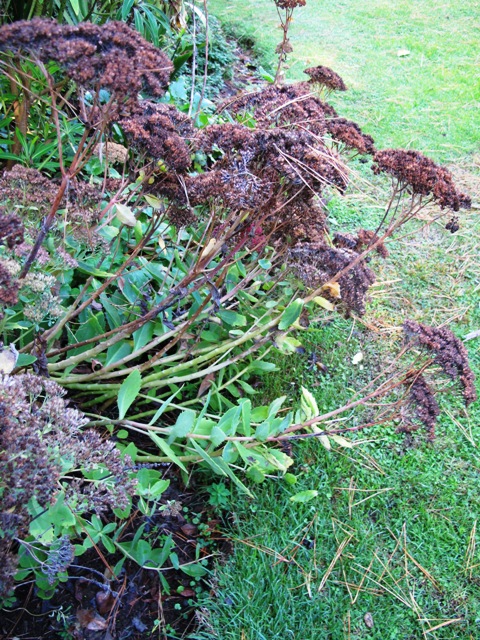
...which is more than can be said for the messy sedums

…which is more than can be said for the messy sedums

Well, yes and no. I suspect the advice derives from much colder climates where gardens are put to bed for winter and our feathered friends have a much tougher time. Here, where we have growth all year round, albeit much slower in winter, the birds do not have problems with lack of winter feed. And so many of those summer perennials are downright scruffy and unattractive now. It is one thing to leave plants like the phlomis which has attractive, upright seedheads and tidy rosettes of foliage but the sedums and asters flopping all over the place are not things of beauty. I cut and clear now, often thinning clumps as part of that process. If you do a garden tidy round now, you can get a blanket of mulch on and the garden stays looking remarkably neat until it rushes back into growth in spring.

First published in the Waikato Times and reprinted here with their permission.