
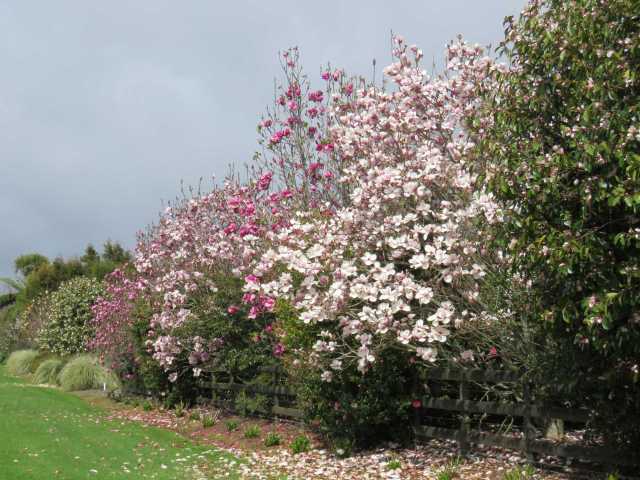
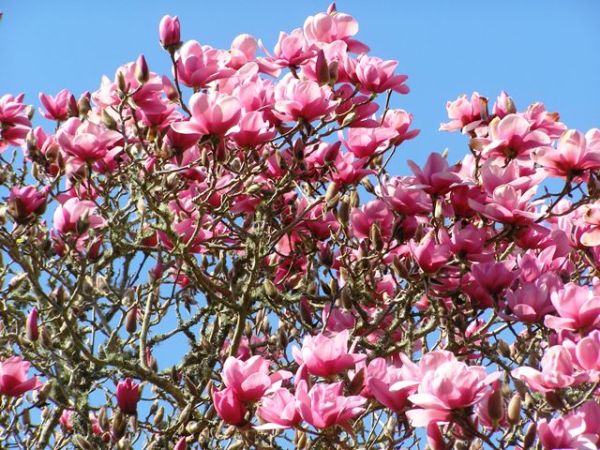
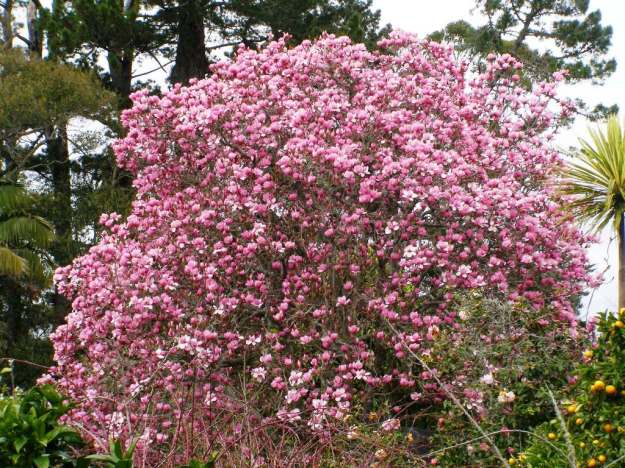
I see it was twelve years ago that I wrote about generous gardeners. Not those who readily share plants but those who plant up areas for other’s enjoyment. I remembered that article this week because of a beautiful stretch of roadside on the outskirts of our small town that I drive by almost every time I leave our property. It is a spectacular row of magnolias that goes from strength to strength every year. It edges grass paddocks where the owners graze a few stock.
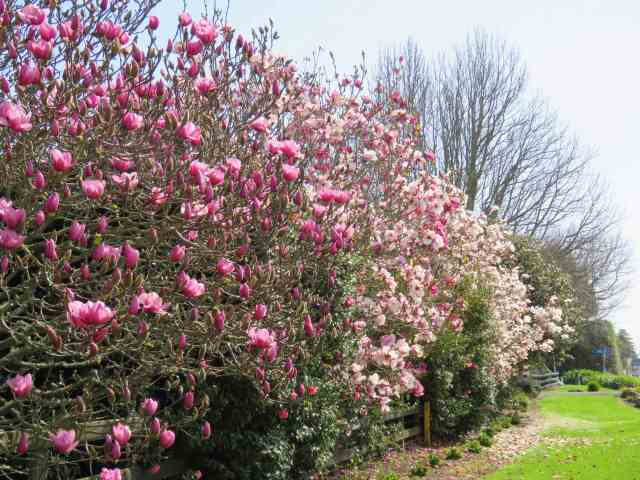
The thing about this row of magnolias is that its purpose is to delight passers-by. The owners, Pat and Brian, can’t see it from their house which is on the adjacent section. Pat, in particular, is a keen gardener and they keep a detailed and heavily ornamented garden around the house but the row of magnolias is for the benefit of passing traffic, be it in vehicles or on foot.
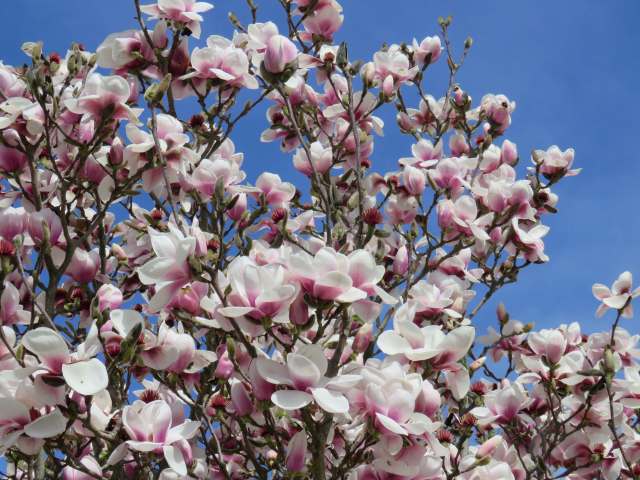
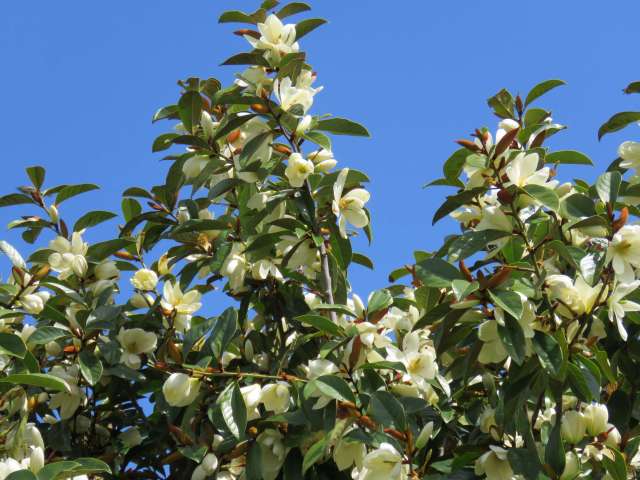
I called in yesterday to ask their permission to share the photos and, with their usual generous spirit, they said ‘any time. Our garden is your garden’. I had thought I might ask Pat if I could photograph her but it was a rushed visit and I didn’t want to embarrass her. She commented that she thought the magnolias were better this year than ever before and many people are admiring them. “I tell everybody they are Abbie’s magnolias.”
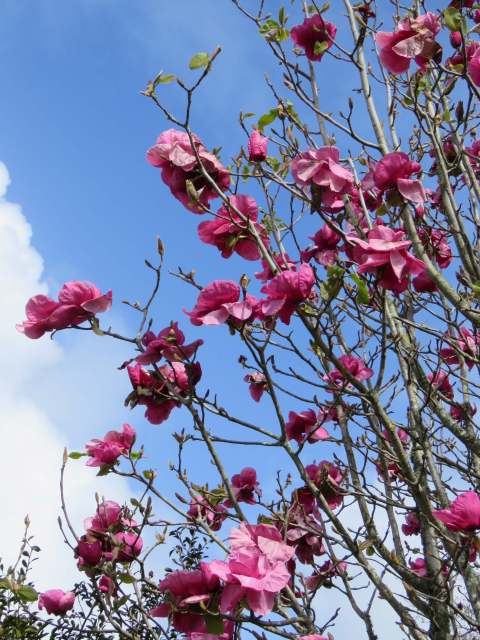
We have had this conversation before. What you have to understand is that this row of magnolias is not far off being a complete collection of Jury magnolias. In vain, do I tell her that they are Felix and Mark’s plants. In Pat’s mind, they are mine.
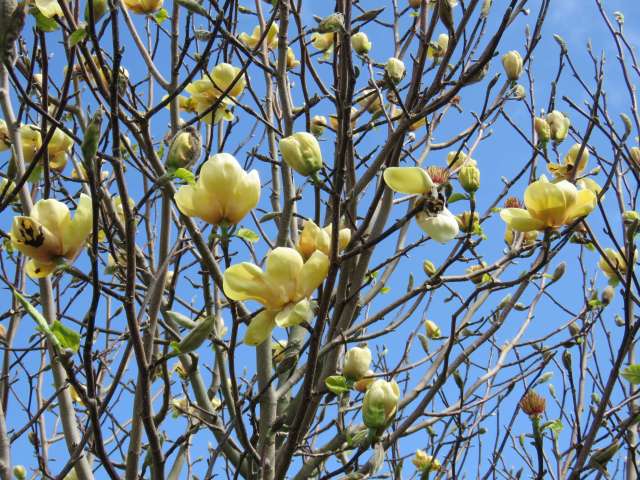
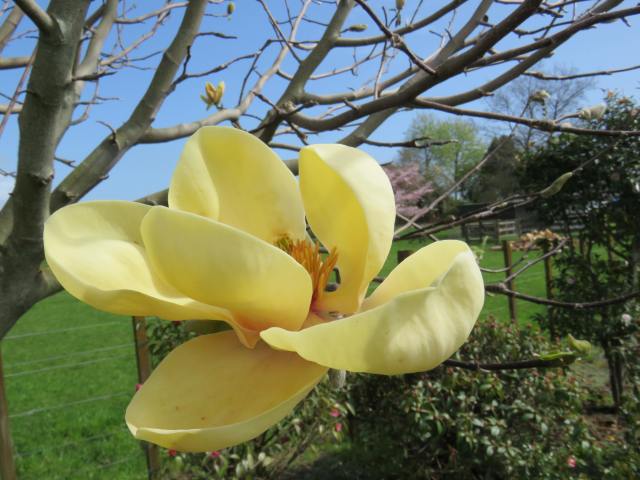
She remembers me giving her most of the plants. I remember giving her one and may have given her a few more but she was a very good customer of ours in the days when we used to retail plants. I have always admired Pat’s eye for a good plant. She lacks any curiosity about plants, rarely remembers names, won’t grow bulbs because they are untidy when they finish flowering but she has a good eye and picks out plants she likes solely on their appearance. She has a garden with plants like Camellia yuhsienensis, Rhododendron veitchianum and other choice varieties tucked in with garden centre utility options and plants she has picked up on special. I find her approach to gardening refreshingly honest and unpretentious while also being very capable.
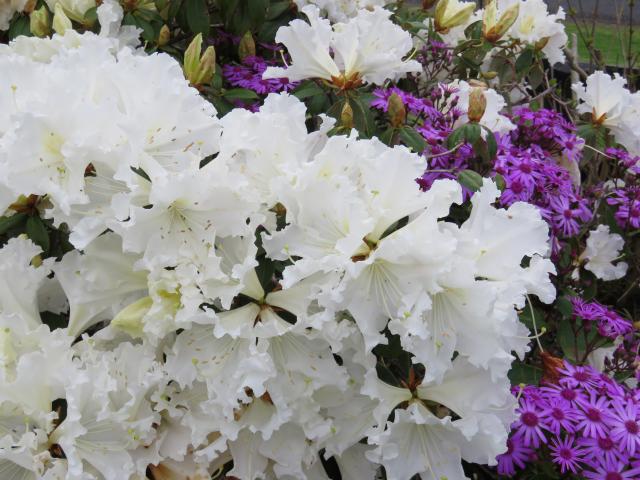
What makes these magnolias interesting to us is that Pat and Brian garden very differently to how we do. The magnolias are planted in the open, exposed to pretty much every wind that blows. They are not mulched and the ground around them is kept bare. They are not trimmed or clipped. I would guess that they were well fertilised when getting established but are now left to their own devices. In those exposed, open conditions, they are performing better than many of the ones we have here in our own garden which is sheltered from most winds.
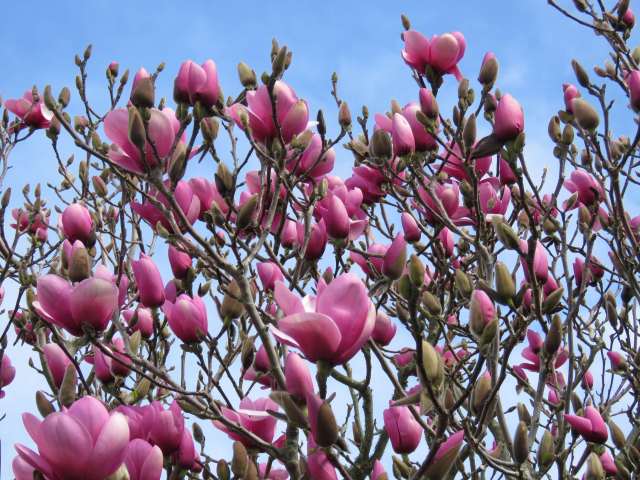
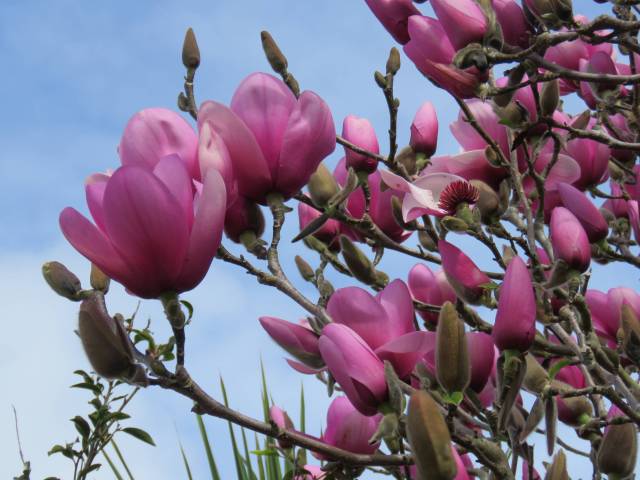
Wind is a big issue in this country of long thin islands set amidst vast oceans. Wind hardiness is a big factor in the selection of magnolias in our breeding programme. Petals that are of a softer, thinner texture and flower forms that are looser in structure fall apart when it blows hard. We see it every year on some of the magnolias here – particularly M. sprengeri ‘Diva’, M. sargentiana var. robusta and even the stellatas (star magnolias) and their hybrids. We have seen spectacular displays on some of these and similar magnolias in less windy countries – memorably in the Dandenongs in Australia and in the north of Italy. We don’t have that leeway here. So, it is interesting to see the Jury magnolias in very open conditions, still putting up mass displays of blooms that are largely untroubled by the many storm fronts that pass over in our early spring time.
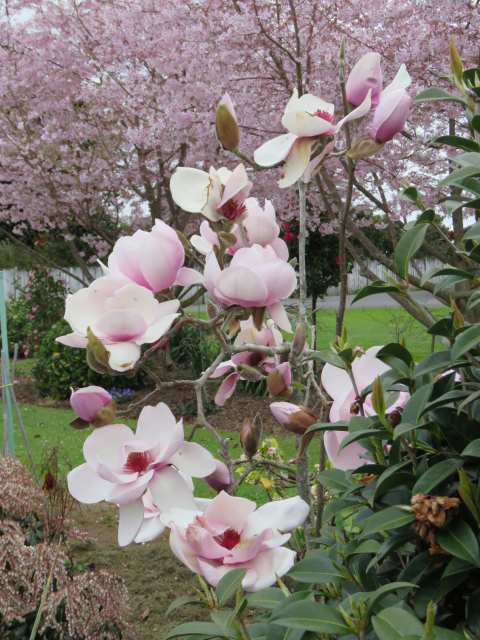
A few doors down from Pat and Brian’s home is a house with this little Magnolia ‘Iolanthe’ in bloom – showy enough for me to stop the car and photograph from the roadside. The plant can only have been in the ground two or three years and I haven’t noticed it in flower before, although there is a young plant of ‘Felix Jury’ a few metres away in the same garden that catches my eye when in flower, every time I drive past. But look at ‘Iolanthe’ strutting her stuff! I counted around 30 blooms and opening buds on this very small plant.
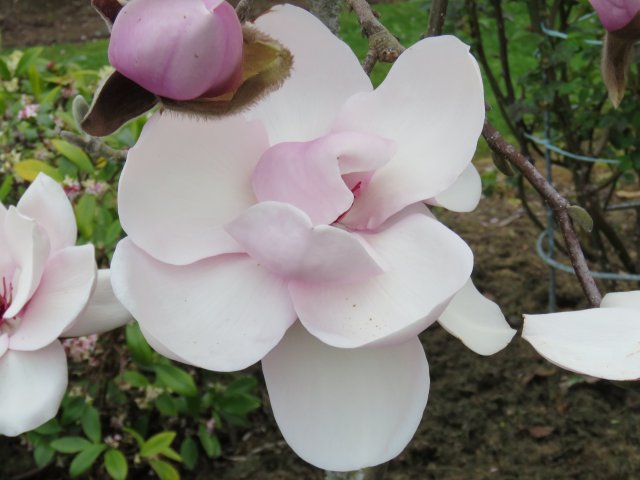
I am a big fan of front gardens and roadside plantings. They make the world a better place for us all, or at least for those of us who notice them.


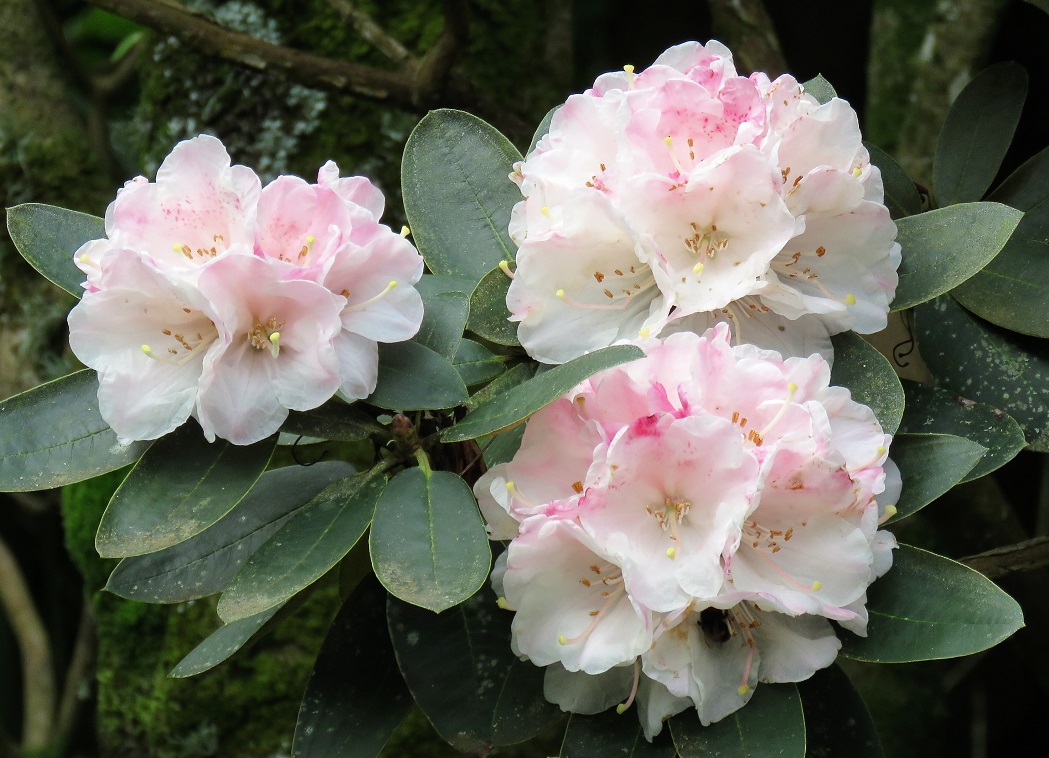
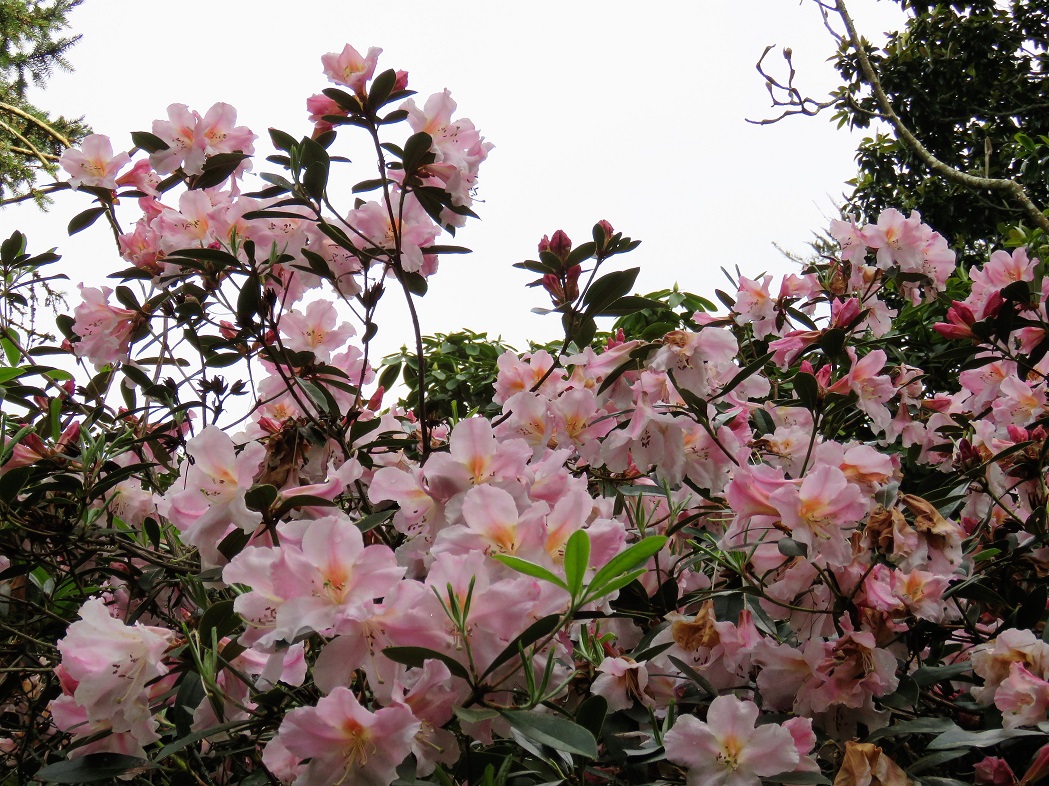
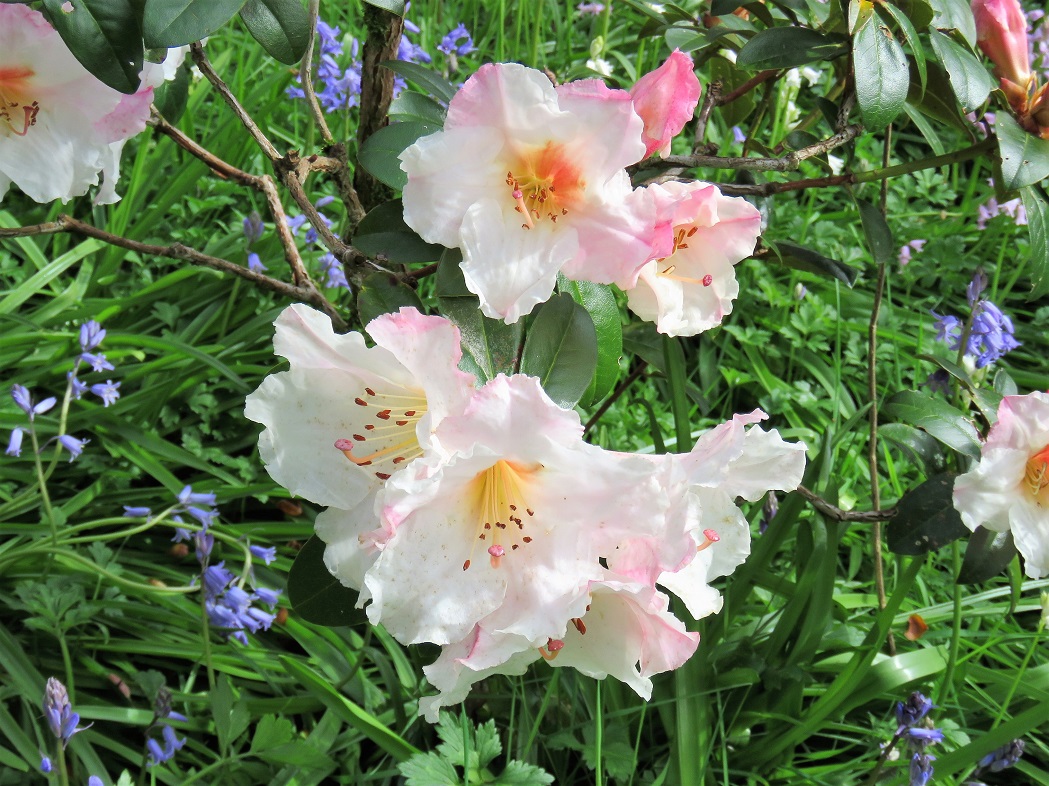
 And a few more pinks to finish off – this is one of the Dendrobium ‘Bardo Rose’ group of orchids which thrive in our open woodland areas. They flower for a long time and the scale is right for detailed woodland plantings – by which I mean, not as big and dominant as the cymbidiums.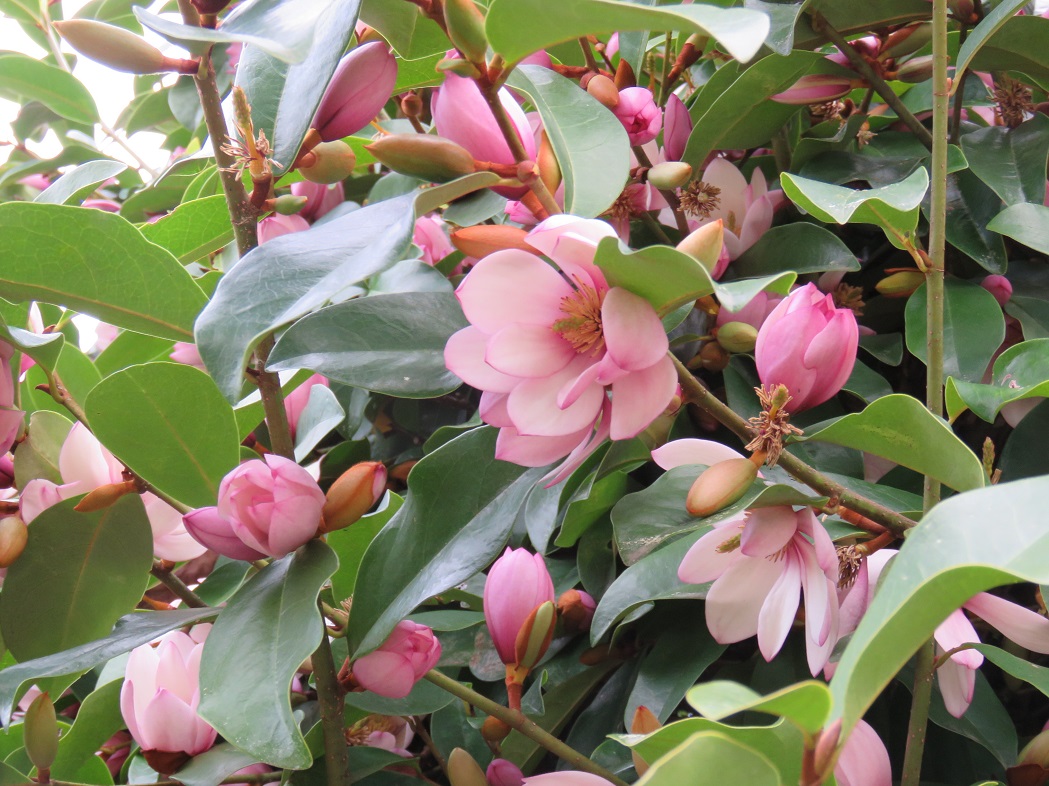

 More lilac than pink, it is pleione orchid time. This is another group from the orchid family that thrives in pretty laissez-faire woodland conditions (in other words, benign neglect) but the flowering season is much shorter than the dendrobium ‘Bardo Roses’.
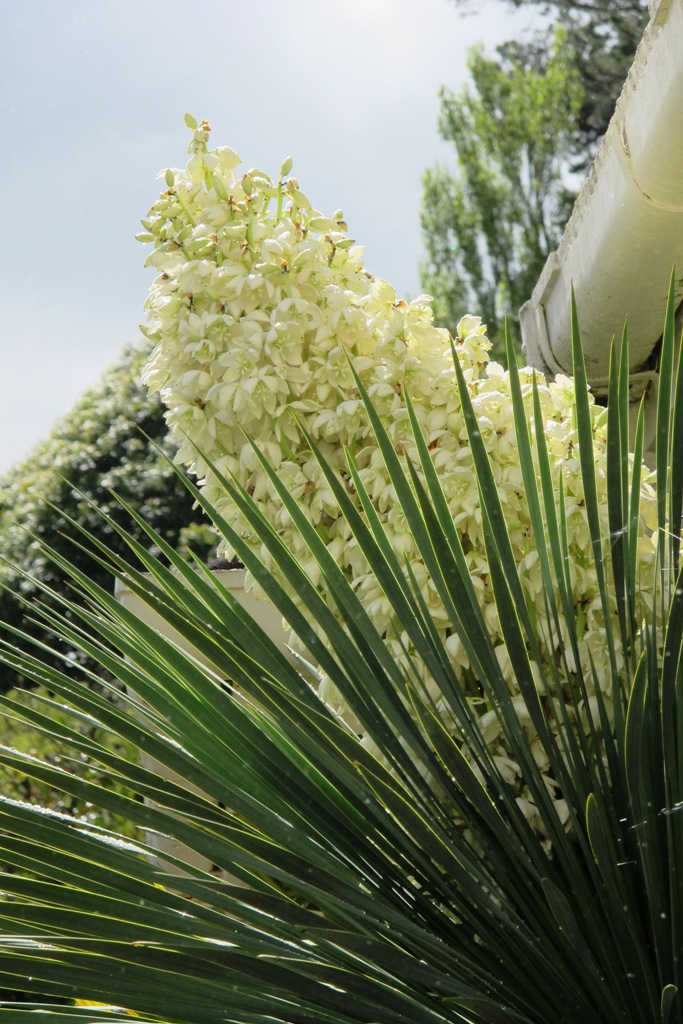
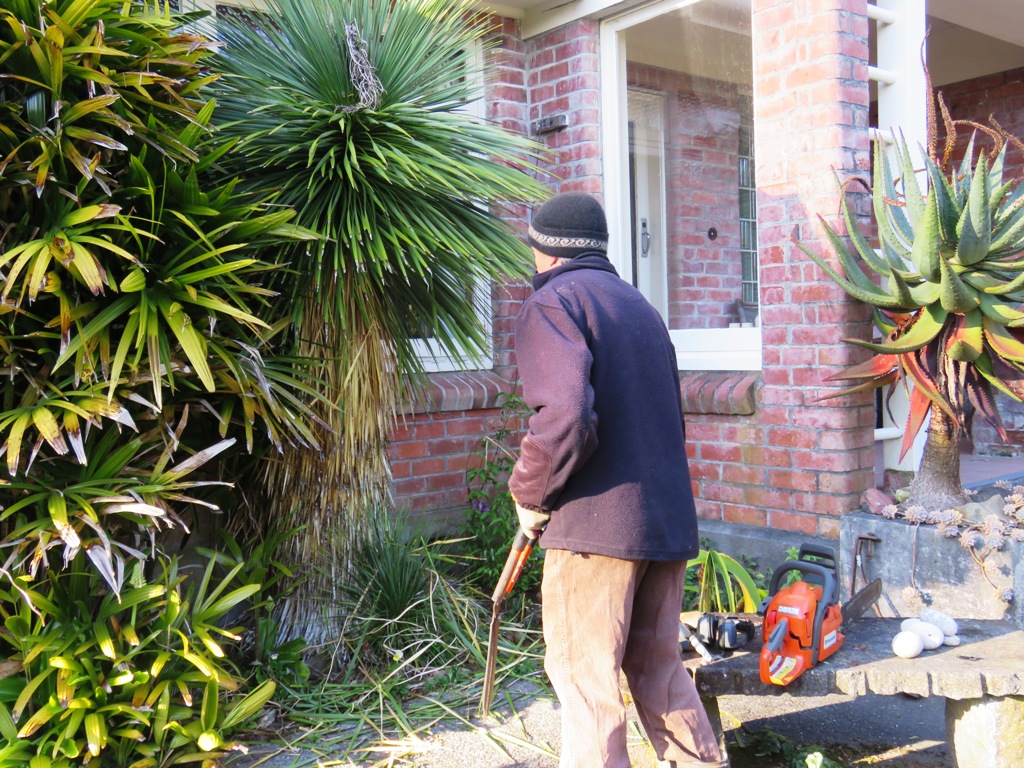 But other needs were always more urgent so the moving of the yucca had not taken place. Nor had the windows to what is our TV room been cleaned for many years. But yesterday the day came, forced by the arrival of the glaziers to install retro-fitted double glazing in our wooden window sashes. It was not an easy task. Mark had thought he could probably chainsaw the top off but the fibrous nature of the spent foliage merely jammed the chainsaw. At this point it is in two pieces. The top will be replanted on the sunny bank in the north garden where it will likely recover. The base, with a new rosette well-formed already, will be dug out and also relocated. It will, I tell you it will. I like the garden view out of the windows which is now visible again and while cleaning windows is not my favourite activity, I do like to be able to do it when necessary.
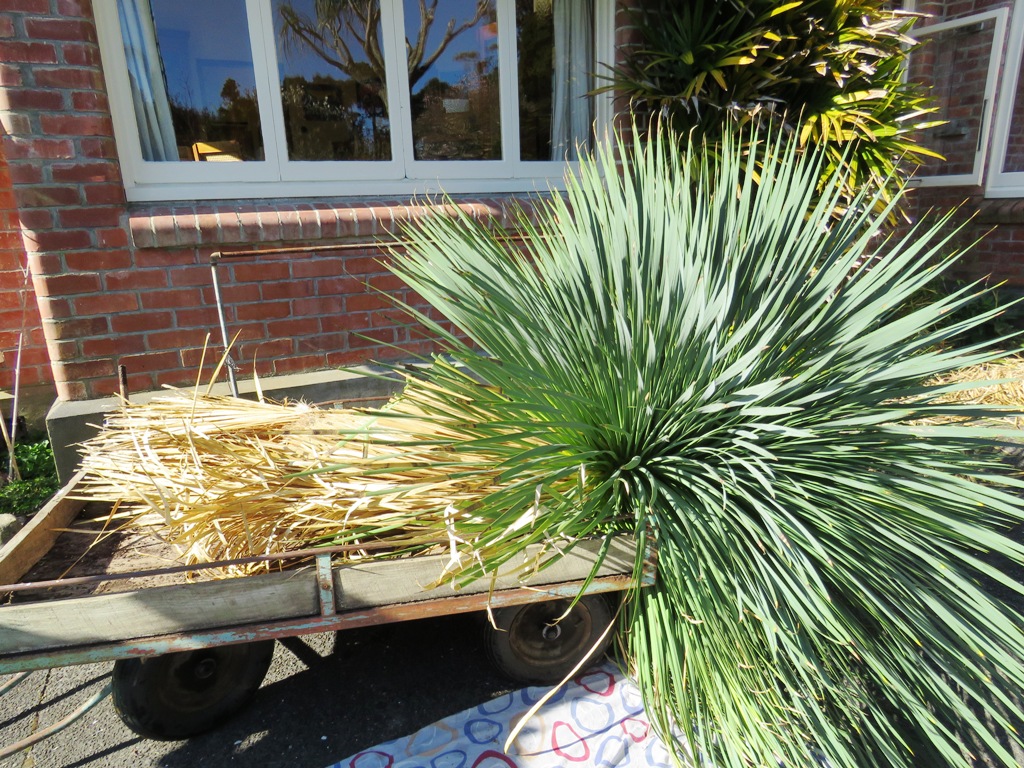 As far as we know, this is Yucca whipplei, also known as Hesperoyucca whipplei, chaparral yucca, Our Lord’s candle, Spanish bayonet, Quixote yucca or foothill yucca. So Wikipedia tells me. Apparently the most common name is Our Lord’s candle. It being native to southern America from California through to Mexico, it clearly felt right at home in the bone dry conditions of the house border beneath the eves. In the meantime, Our Lord’s candle is no long alight at our place.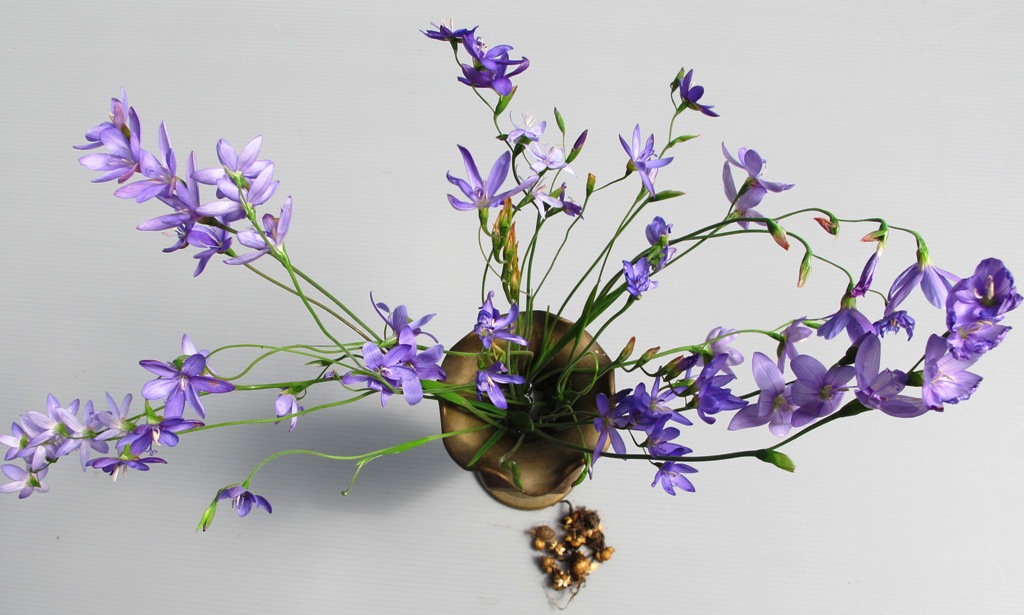

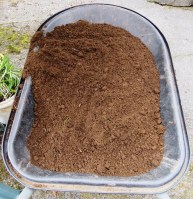 I have been forced to extreme remedial action in the rockery in the Battle of the Geissorhiza. Such a pretty weed and so dreadfully invasive. Each bulb is surrounded by many little baby bulbs that peel off as soon as you look at them, ready to grow into the future. In the worst affected pockets of rockery, I am lifting everything and washing the roots to make sure no dreaded geissorhiza bulbs are lurking in there hiding. Then I dig out all the soil and replace it with clean soil. I was surprised that one pocket generates almost a full barrow of soil. The contaminated soil is being dumped in the deepest, darkest shade where I hope nothing will germinate and if it does, as a last resort it can be sprayed. This somewhat extreme and labour intensive treatment should, I hope, get me closer to victory and the extermination of this pretty but hideously invasive bulb.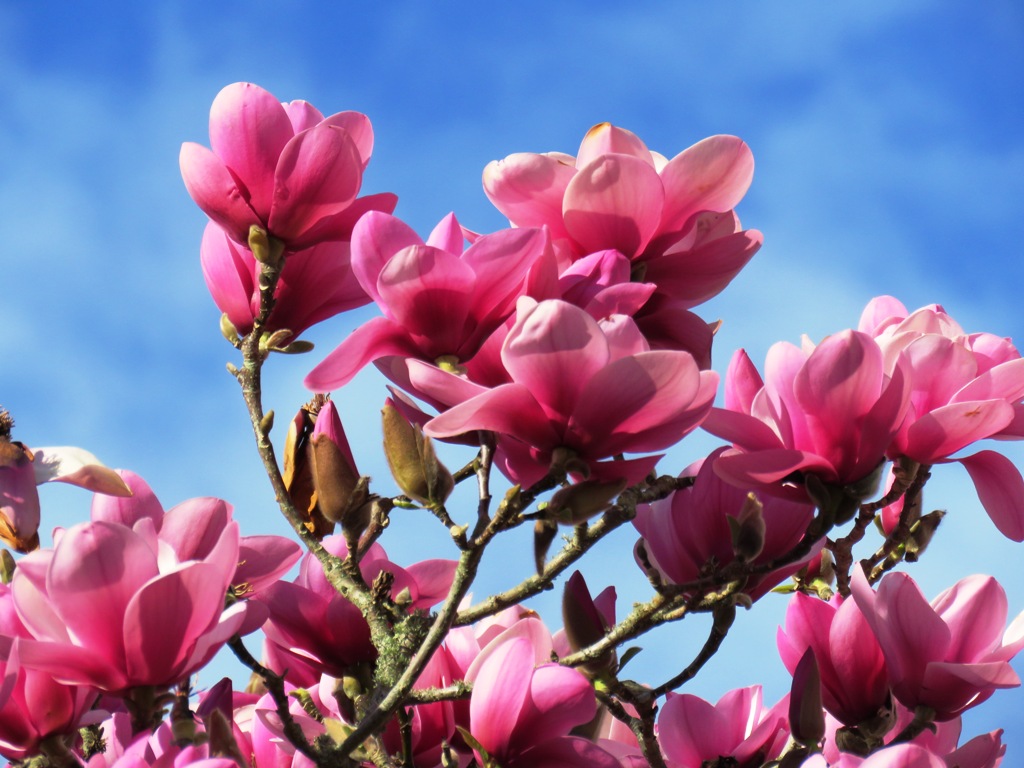
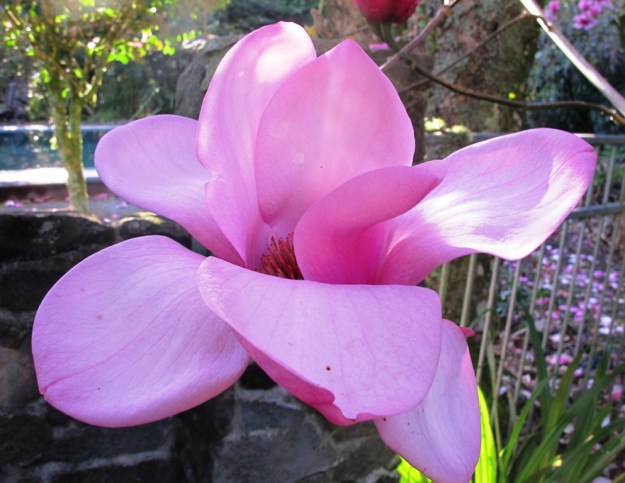 Being so late to flower, Serene is an excellent choice for people in colder areas or prone to late frosts. It also tends to miss the worst of the equinoctial winds. Cold conditions will make the plant adjust to blooming even later but Serene does get its flowers through before its foliage. We are picky here – we want deciduous magnolias to mass flower on bare stems before the new season’s leaves unfurl. When the leaves do come, they are a particularly good deep green and tidy in form so Serene stands out as a good summer foliage plant in a way in which few deciduous magnolias do. It will also set a flush of summer flowers which is bonus territory.
