
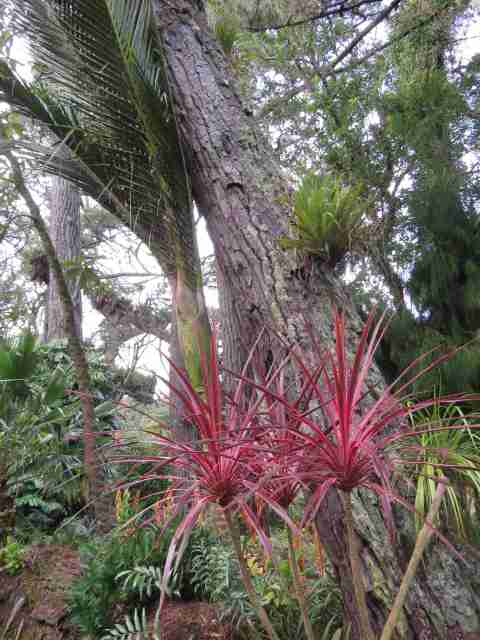
I use the term ‘fall’ not in the North American sense of autumn, nor in any spiritual, biblical or metaphorical usage. I mean it literally. One of our big old pine trees will fall and I am picking sooner rather than later. It has always had a bit of lean to it but that lean has increased significantly in very recent times and it appears the base is parting company with the ground.
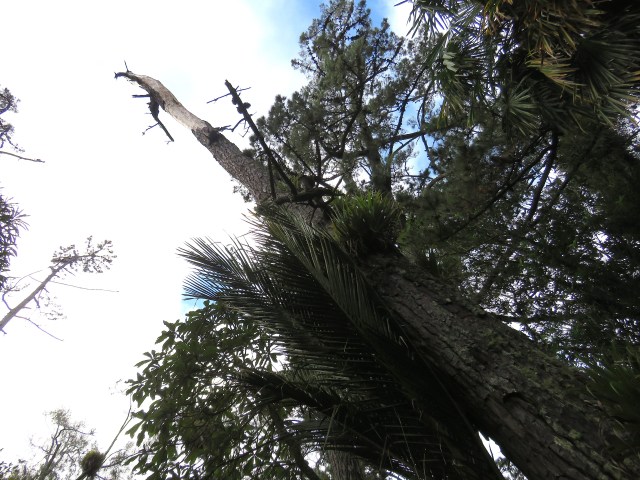
It shouldn’t be devastating when it happens. It is already dead and has lost its side branches so it is just a long thin length with a predictable fall area. It is just that the length is probably over 40 metres. Our old pines are dwindling in number and we are well practiced at dealing with them when they fall. They are Pinus radiata, original seed planted by Mark’s great grandfather in the 1870s, so long before this country settled on selections of that particular tree as its forestry tree of choice. They are at the end of their lives.
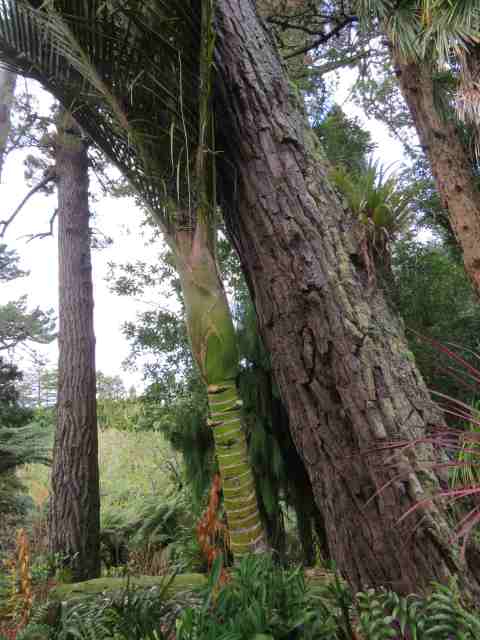
Why not get the arborist in to drop it now, you may wonder. There are additional reasons as well as the cost. The tree is dead; we don’t know how much is rotten or soft and trees with extensive decay are hazardous to the operator when it comes to felling. But also dropping a tree that size would require bringing it down in sections and the amount of damage caused by it coming down in sections would likely be greater than letting it fall on its own. Because we have no access for larger machinery to that part of the garden, it would all have to be reduced to the largest size that could be handled by two men and our very small tractor.
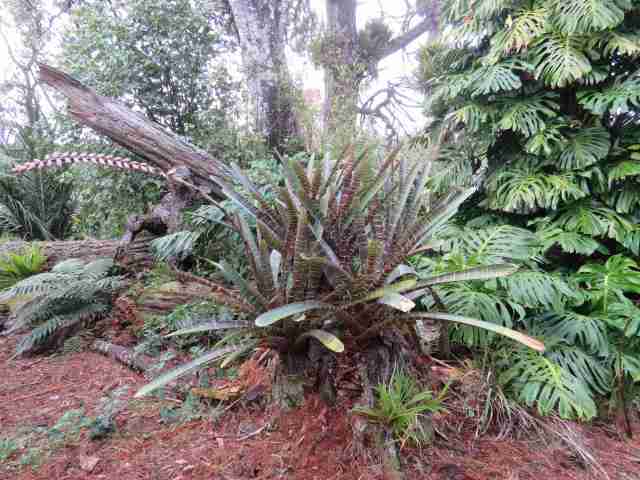
No. It can fall when ready and we will do our usual clean up. This involves cutting through to reopen pathways and clear lawn areas, removing all broken branches, pruning any other trees or shrubs it damaged as it fell and then just gardening around the lengths that remain in place. It only takes six months to a year for it to have all settled down and the lengths remaining in situ give added height and natural structure in the garden.
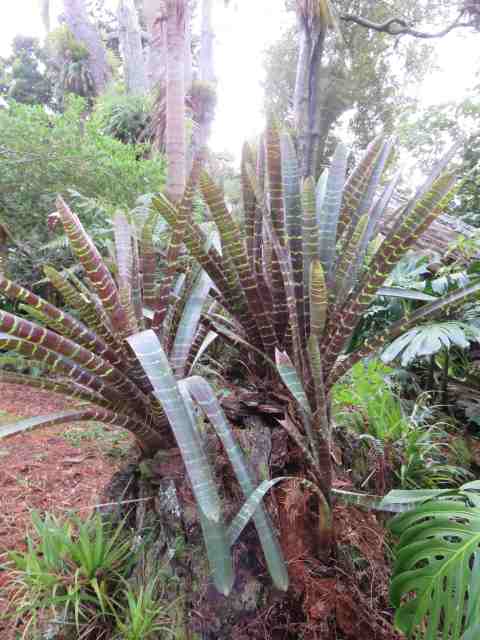
In the meantime, Zach has relocated a few plants that we would be sad to lose – the vireya R tuba, a charming little wedding palm Lytocaryum weddellianum and an excessively robust bromeliad that has taken some years to reach its current size.
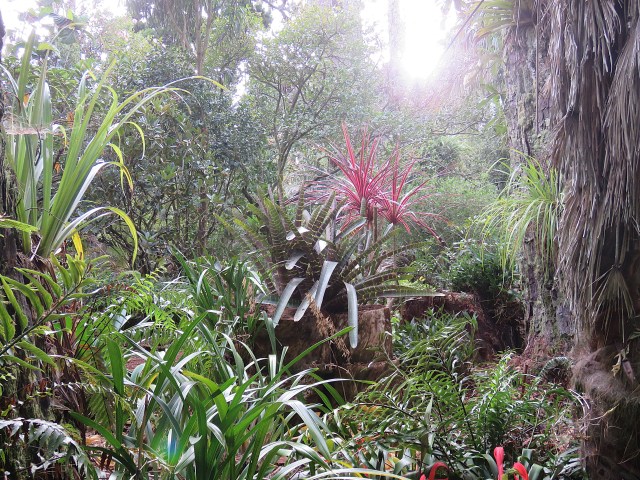
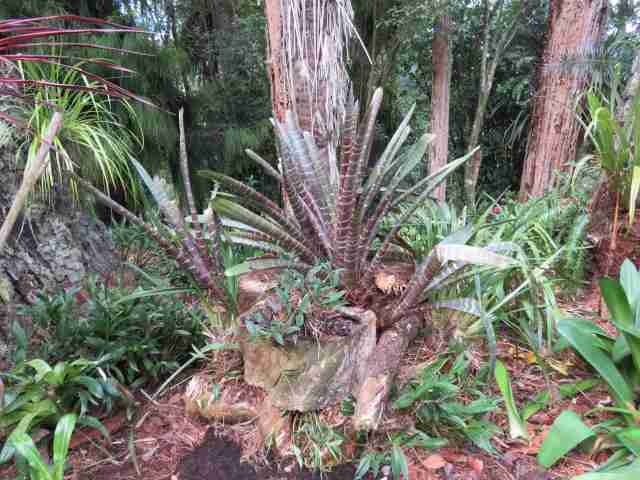
I gave Zach a health and safety briefing which largely consisted of three pieces of advice. The first was to be very aware if he is working in the projected fall area and to think in advance which side to retreat to if necessary. Move sideways rather than trying to run away. And not to wear Bluetooth ear pods when working in the fall area so he can hear the first cracks before the crash.
Zach wondered if we should be running a sweepstake on when each of us thinks it will fall. I say any time but probably soon. Lloyd was guessing the next storm. Mark was saying it was dead and he thought it would just break up and fall over time – but I don’t think he had looked at the increased lean from all sides as Zach and I had.


Will it be like the creaking door which never falls?
I very much doubt it.the less is getting greater and it is clear at the base that it is loosening. We just don’t usually get as much warning. It is more common to hear a mighty crash and head out to see what has fallen.
Dangerous gardening!
Always useful to get some advance warning when a big tree is going to fall so you can prepare. Last October we had a 35 metre pine go suddenly without warning in a strong wind. I was working in the garden, looked up when I heard the noise and let out a cry of horror when I saw it go down. It lifted the corner of an outbuilding that was next to it about a metre in the air, but the building remained more or less intact apart from that and has been saved. An arborist friend of our son’s and our son-in-law cut the tree into rings. As a result of that coming down we had two others near to it that were double-headers cut down, because if either of them split in a storm there is no guessing where they’d have landed. The biggest was almost 40 metres. Those trees were less than 45 years old.
You are certainly treading a similar path to us, Tim. In this new era of extreme weather events, it seems wise to sort out which trees have the potential to threaten life or to cause major damage to structures if they fall.
6/5/26 Here in the USA, my arborist has a piece of equipment called a “spider” which requires only a small area to move in and travels on tracks. The operator is in a basket which can be extended to a variable height. From that basket the operator removes sections of a tree with a chainsaw and drops the sections to the ground.
We call them cherry pickers. Great machines but still not an option here unless we clear a bigger space around the tree. And dropping multiple shorter lengths but still heavy pieces into one space also requires more clear space than we currently have. If we let it fall as it seems it will, there will be damage but very localised.
Pingback: The storm with no name | Tikorangi The Jury Garden