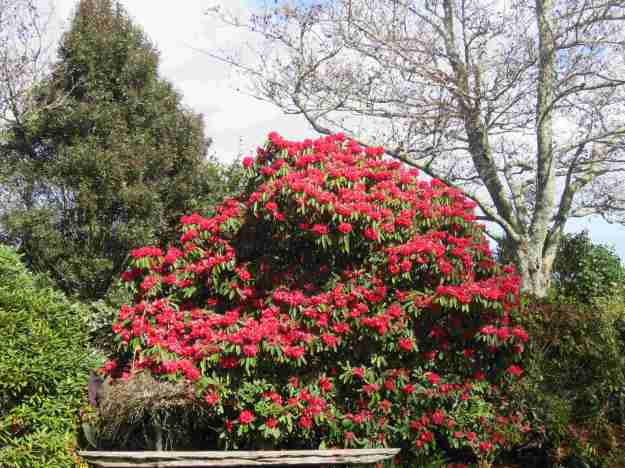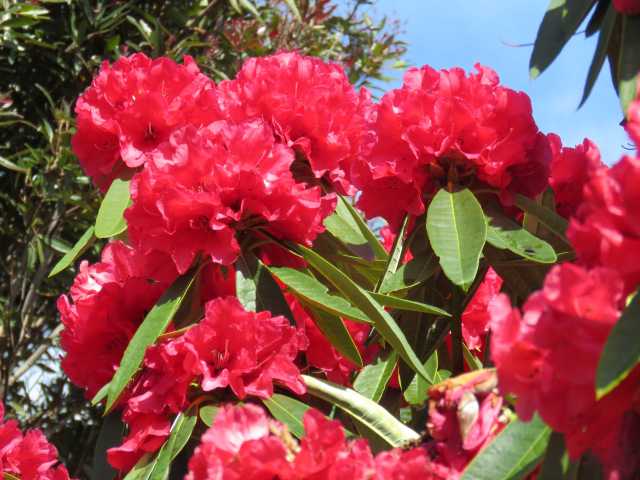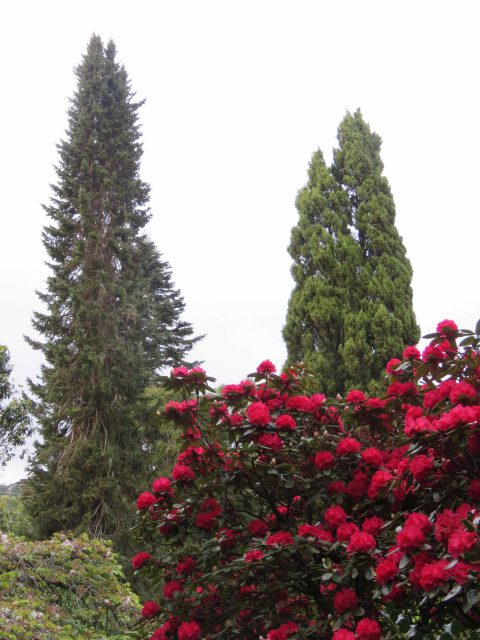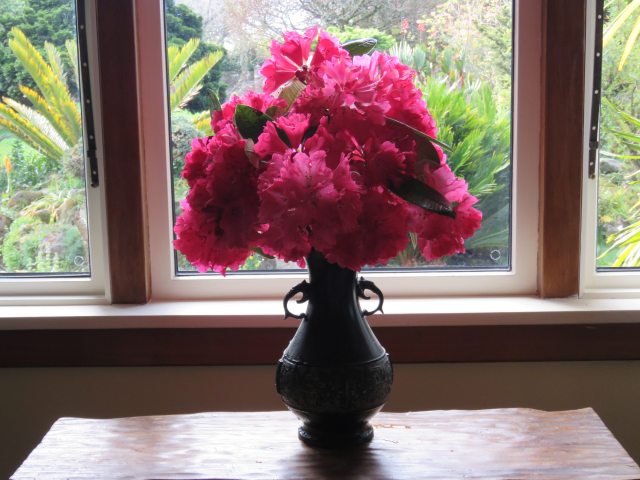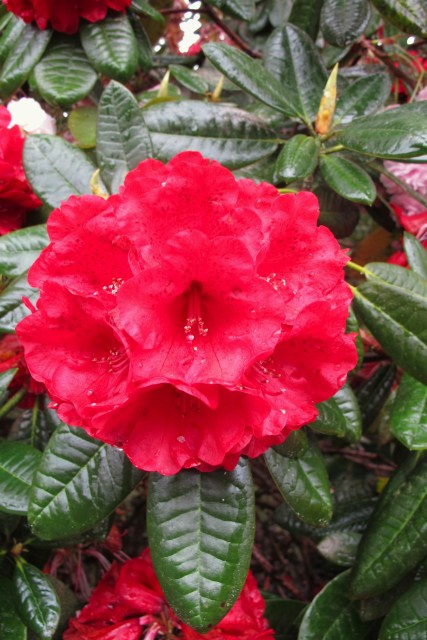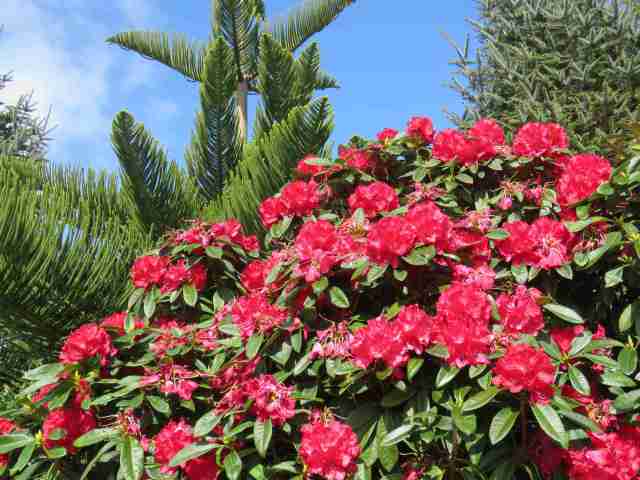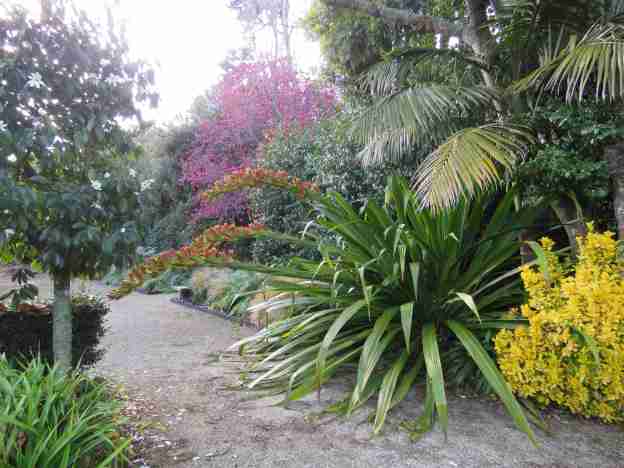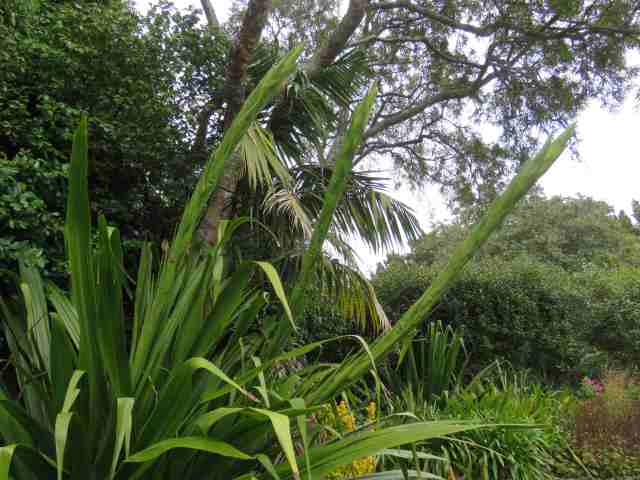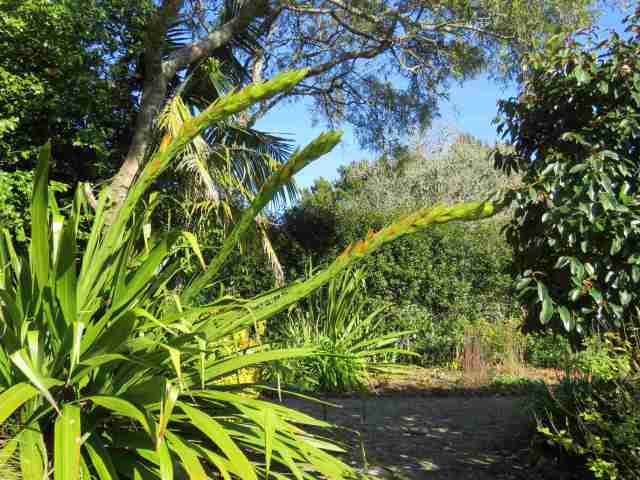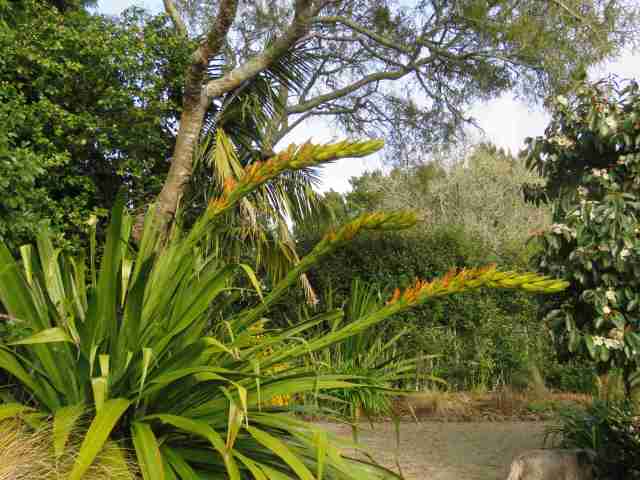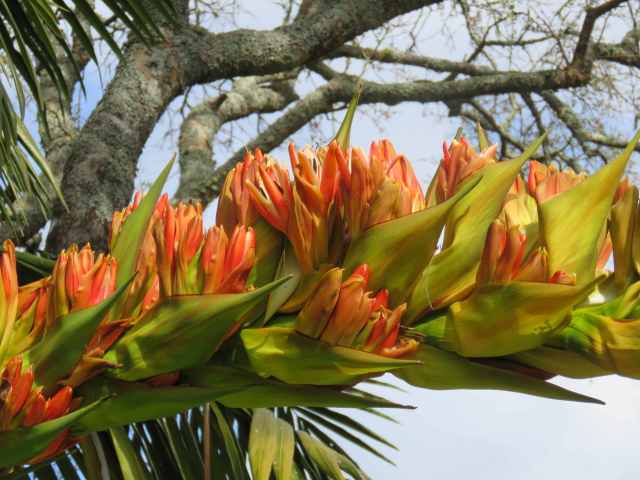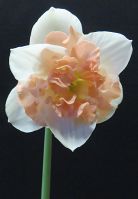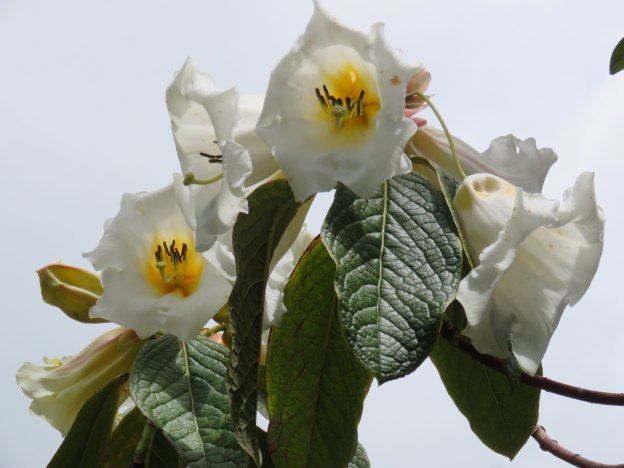
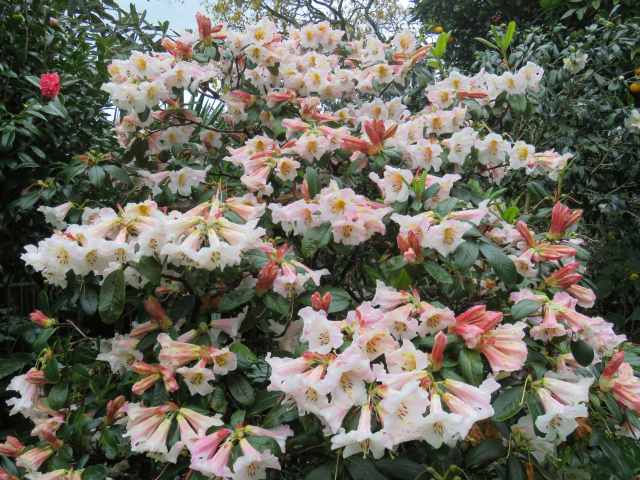
This particular rhododendron is looking splendid in the Avenue Garden and scenting the air around it. It has no name. It is one of Mark’s unnamed seedlings from the breeding programme. His comment was that it looks terrific in bloom and pretty anonymous for the rest of the year. To be fair, that could be said of the majority of rhododendron shrubs.
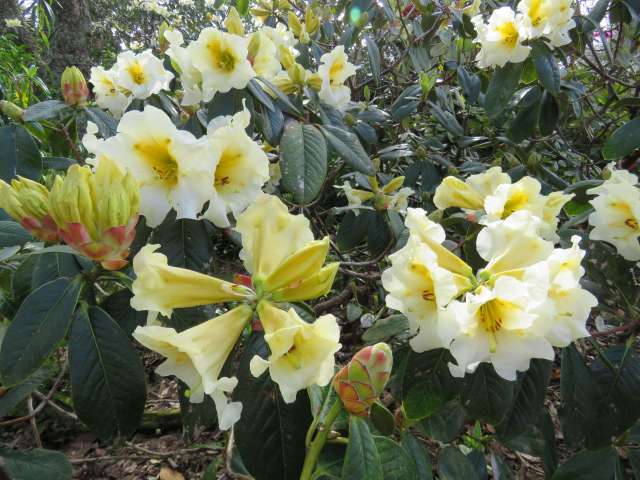
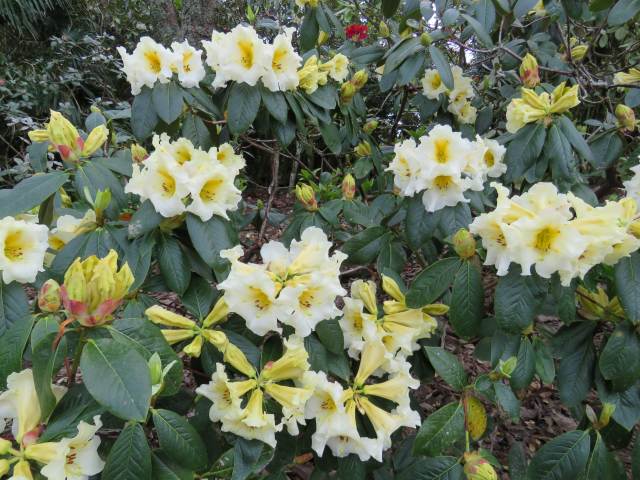
Years ago, Mark crossed Rhododendron ‘R. W Rye’ with R. sino nuttallii. From the resulting seedlings, he chose ‘Floral Sun’ to release commercially. Those who know how understated and reserved my Mark is, will understand why I have never forgotten him looking at plant of ‘Floral Sun’ in our garden and sighing with satisfaction, saying: “If I never breed anything as beautiful as that, I will still die happy.” He doesn’t remember saying that now.
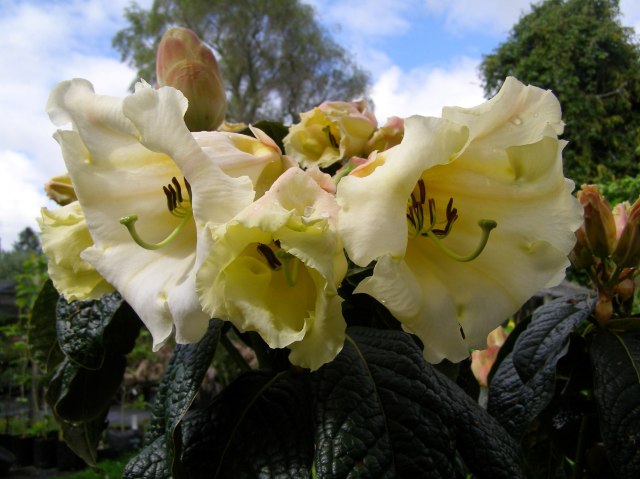
A controlled breeding programme means one usually ends up with a row of sister seedlings and it then becomes a case of assessing whether any are worth selecting for further trialling and commercial release. Mark’s practice was always to select only the best one of a cross to name, to plant the runners-up in the garden and cut out the rest. We have a lot of runners-up or also-rans in our garden.
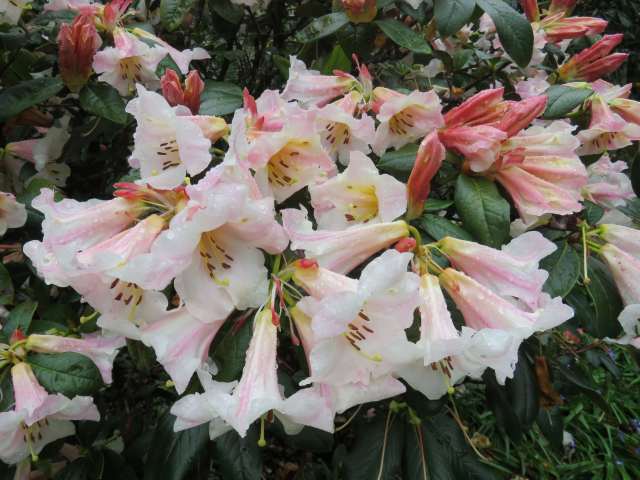
Curiously, from that cross, every single one flowered yellow except this pink and cream confection in Avenue Garden.
I had to eat my words. When he told me he was doing this particular cross, I quipped that he would probably end up with a whole lot of small flowered white rhododendrons with no scent. But no, he ended up with a whole lot of scented, soft yellow sino-nuttallii types, most with heavily textured foliage.
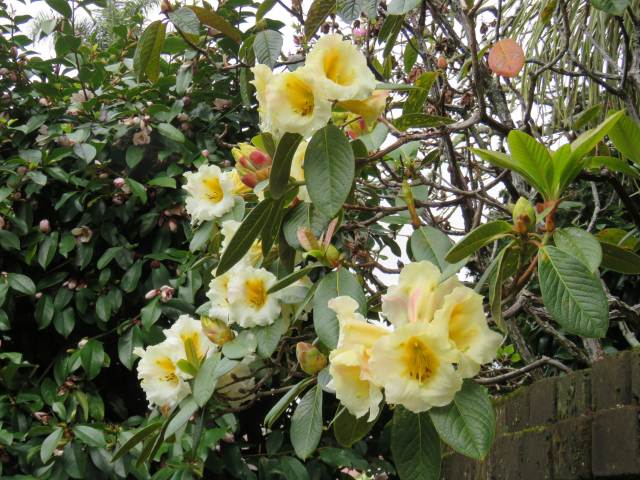
He tried back crossing ‘Floral Sun’ onto R. sino nuttallii again and we have a few of the progeny of that cross planted out. None were ever named or selected because pretty flowers are not enough to warrant selection. The growth habit is equally important and he wasn’t happy enough with any to go further.
I can’t find a photograph on line that is free for me to use of Rhododendron R. W. Rye but it is a smaller flowered hybrid which is a strong yellow. The ever-handy internet did at least tell me who it was named for. Mr Rye was the head gardener at Castle Kennedy Gardens, near Stranraer on the east coast of Scotland. The only reason why I remember Stranraer is because it is where the ferry from Belfast used to land. Back around 1992, I spent a deeply stressful week in Northern Island as part of an international group being hosted by the British Foreign Office at a time of considerable tension during The Troubles, as that period of time was euphemistically labelled. As Stranraer hove into sight, I breathed out and relaxed for the first time all week.
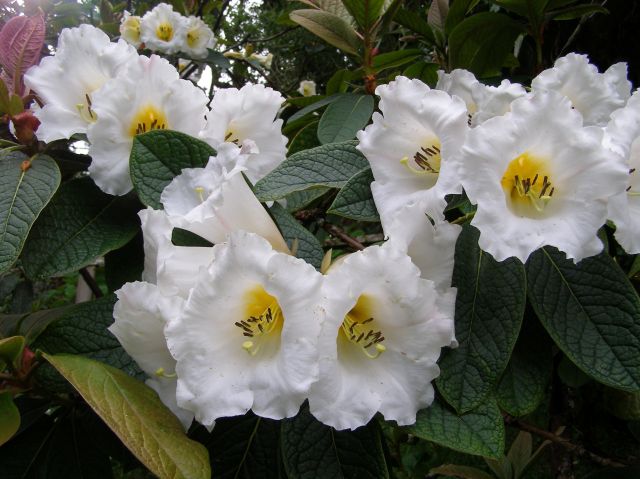
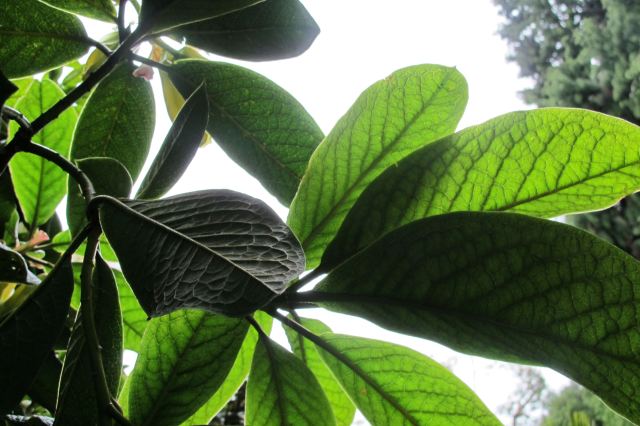
Rhododendron sino nuttallii photographs feature strongly in my photo files. It is my absolute favourite rhododendron and we grow many of it, as well as nuttallii hybrids. It is naturally white with spectacular trumpets although we also have a white flushed pink form. I can see why Mark wondered if he could extend the colour range of the species.
As the magnolia season wanes, the rhododendron season is starting to hit its stride. Nothing marks the passage of time more than the garden.