I had to go Wiki Commons to find a pear photo because in all my photo files, which are quite extensive now, there were no pears at all. None of these varieties photographed are the little brown one we refer to as a honey pear.
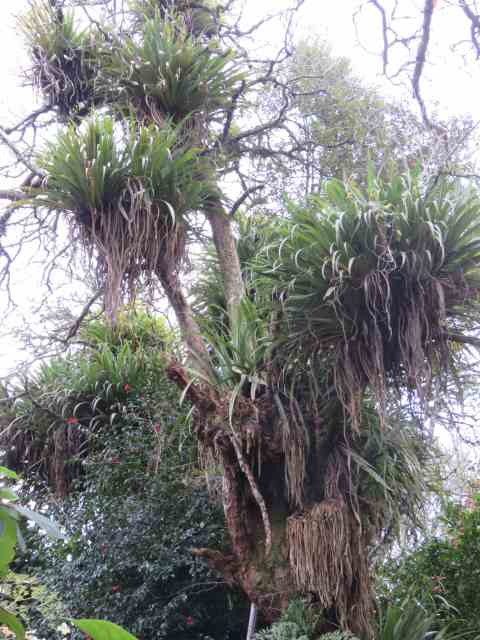
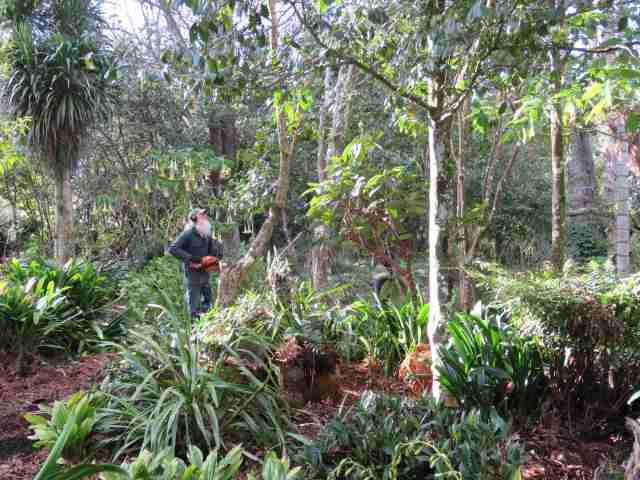
The before photo of the pear tree. No wonder the crop has been dwindling over the years. Those epiphytes are astonishing.
I planned to write about our pear tree this week, mostly because I remembered to take before and after photos this time and the weight of epiphytes was astonishing, This is a multi-grafted pear, presumably not on dwarfing stock, planted by Mark’s father many decades ago. Mark thinks it came with four or five different pear varieties on it to start with, of which there may be two or three left. The most successful is a delicious little honey pear that we harvested most years. But over the years, the tree has grown ever taller, requiring the extension ladder at full reach to pick the fruit, and we have grown correspondingly older and more cautious around ladders.
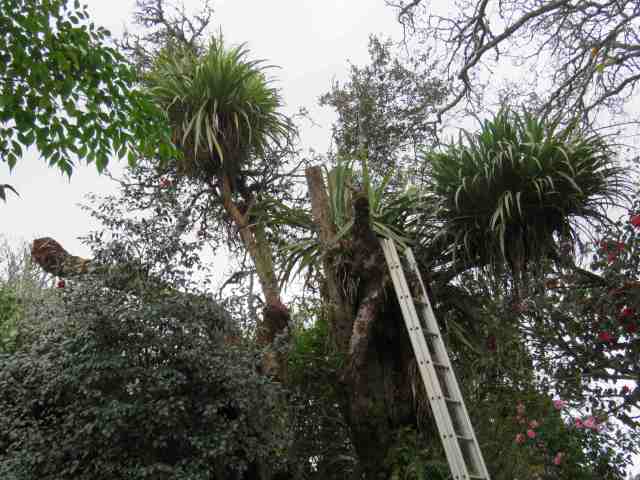
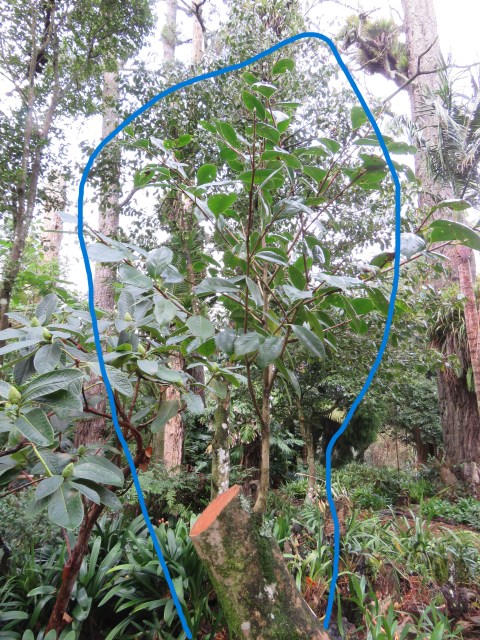
The pear tree after its dramatic prune but with some epiphytes still to removed while the ladder is in place. Zach pointed out that the extension ladder has in fact been in place there since he started work here which was 2021.
Time for drastic action and this required our friendly, neighbourhood arborist. Only time will tell how much the tree will respond in spring with fresh growth. In the meantime, with the ladder still in place and the tree reduced in height, I have asked Zach – as the youngest here – to dislodge the remaining epiphytes.
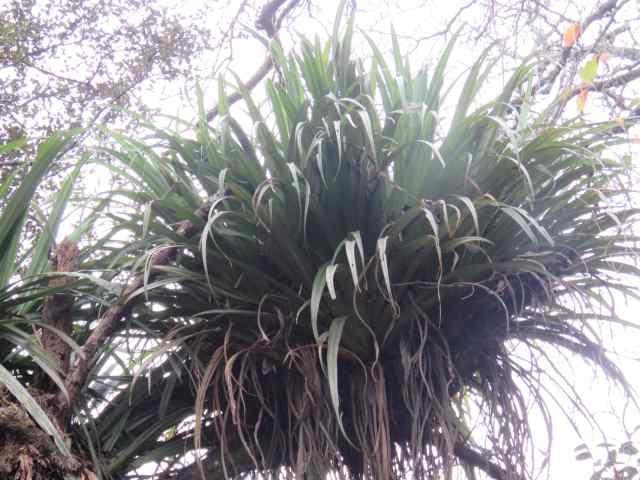
A single clump. The rats sit in them to eat macadamia nuts, leaving the shells behind.
Our epiphytes here are largely seed spread by birds and wind, dominated by native astelias and what we have known as collospermum. “I think that has been reclassified as an astelia,” Mark said. I went to check and he is right – now Astelia hastata. I was hugely amused when checking that fact to find that the deeply irritating AI answer that pops up first whenever I do a net search now, appears to have decided that I, yes – moi, yours truly, is an expert to be quoted on the subject of epiphytes, based largely on this piece I wrote back in 2018. I am very aware of my limitations and it confirmed for me that the unsolicited AI pop up is totally untrustworthy. Skim past it to original and credible sources for better information.
Artificial intelligence will have to improve a lot before I trust it as a primary source! I am more embarrassed than flattered at this.
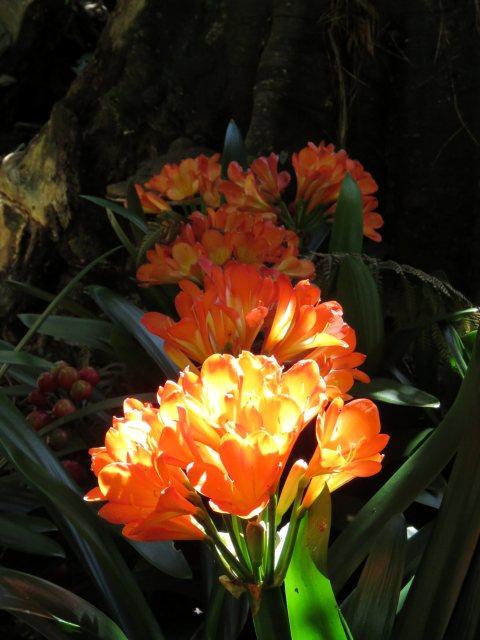
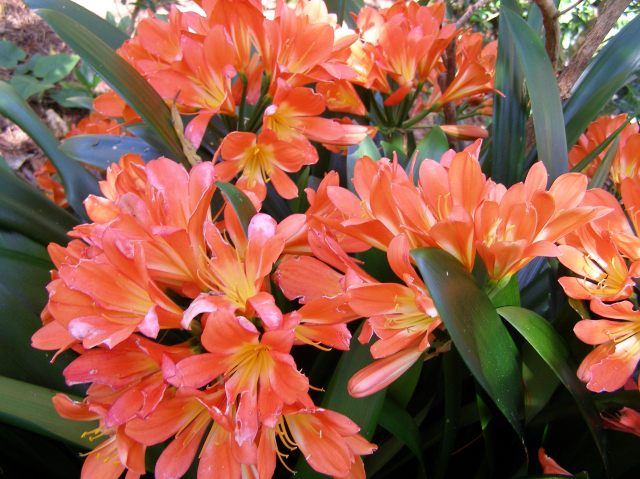
I was amused recently when Zach cast a jaundiced eye over a moderately large planting of clivias and sniffily declared that really, they are just a classier version of agapanthus. When I reminded him of this comment a few days later, he showed even greater disdain, suggesting that maybe clivias just think they are of higher status.
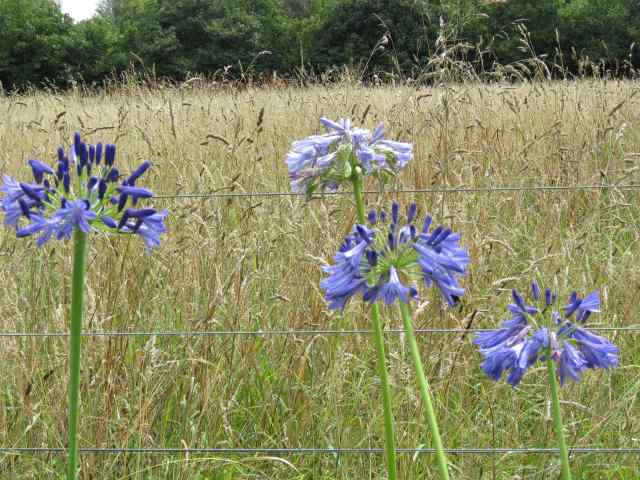
There is a certain je ne sais quoi to clusters of rural letterboxes in this country and I like that good blue agapanthus by our pink letterbox
For overseas readers, it is hard to think of a more derided plant in Aotearoa NZ than the humble agapanthus. Maybe a few dwarf or variegated forms are in some gardens, but they are generally dismissed as roadside weeds and every summer brings out the I Hate Agapanthus Collective. Personally, I can see their merits and I enjoy their summer flowers but I am in a minority. I think they suffer from familiarity breeding contempt.
It is true that the clivia and agapanthus both have long, fleshy, narrow leaves, form very big clumps that can be intimidating to remove if you don’t tackle them with a sharp spade and remove them in sections. They grow in areas shunned by many other plants and are low maintenance. Both set seed freely but the seeds are heavy so fall straight down to germinate close to the parent rather than being spread by wind and bird.
The clivias flower over a good period of time in winter and spring and the dominant colour is orange. Their ability to thrive in shade and dark areas is much lauded. Agapanthus flower freely over a good period of time in summer and their dominant colour is blue. Their ability to thrive in harsh conditions on roadsides and clay banks is cursed and derided; they are never lauded for their resilience and dependability.
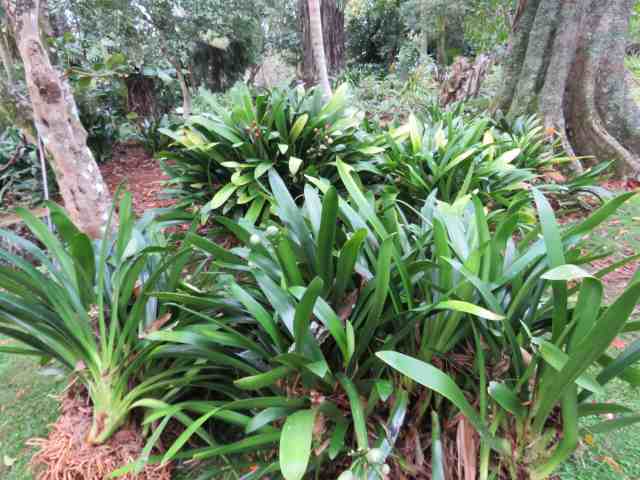
I have seen gardens afflicted with the TMC syndrome (Too Many Clivias) and as Zach and I stood looking at one area in our garden, I was slightly shocked to see we had slipped into that same gardening affliction.
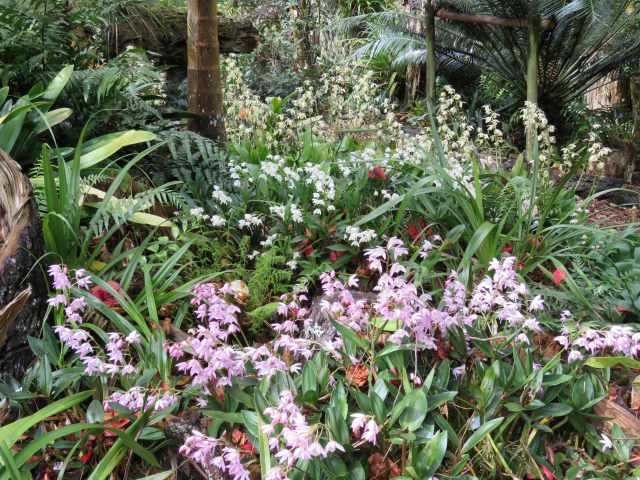
The orchids in this area are very lovely but even in this 2023 photo, I can see the ferns and clivias squashing them from the back.
In times gone by, I used to remember to take before and after photos of garden projects. My mind was always on possible material for my newspaper and magazine writing. I don’t usually remember these days so I am missing the before photo. The closest I can find is slightly to the right because it is focused on the orchids. But even this area was in danger of getting swamped by encroaching clivias and ferns.
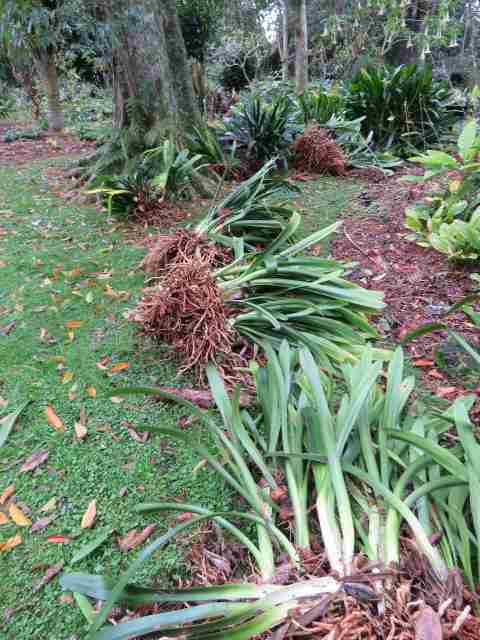
Behold, the surplus clivias
I can at least give you some indication of the scale of clivias we removed from just this one area. A friend took them as she wants ground cover in a large, shady area and – being a precise person – she reported back that she planted 143 clumps – not separate divisions but manageable clumps. That is a lot of clivia from an area that can not have been much more than three or maybe four square metres.
Zach has evolved his own style for planting and displaying orchids
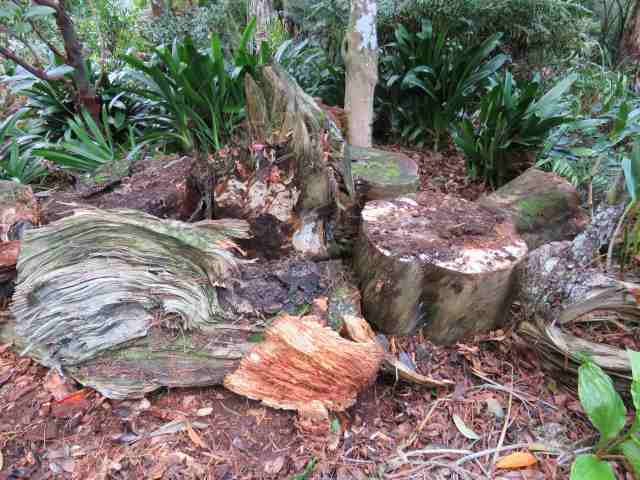
Meantime, with a bit of juggling and the creation of another of Zach’s orchid theatres (think, auricula theatre but more au naturelle) of old rings and stumps from our pine trees, it is not at all clear from where those excessive clivias were removed. It does, however, look as though we have given the more precious plants in the foreground room to breathe.
This was an old area planted out entirely in Felix’s camellias until 1990 when Mark took it in hand. We have kept some of the camellias for shelter as much as anything else but the plants are between 50 and 70 years old and many are very stretched, reaching for the light. We took some stray branches off to let more light through but targeted one camellia to cut back to a strong new growth about a metre above the ground. That meant removing about four metres of growth above that height. It will recover and be bushy and lower for the next decade or maybe two. We do a few camellias each year to let the light back in.
Gardens, especially large gardens with many trees and shrubs, can close in on you at a pace that is so gradual that you don’t actually notice the change in conditions over time. In a young garden, the focus tends to be on cramming more plants in to give a well-furnished, established look.
All those clivias that were removed came from the left hand side of the this photo and the middle ground.
It is the opposite in a mature garden. It becomes an exercise in thinning out plants and keeping light and space within the garden, retaining detail that can get swamped out. In my experience, this is the skill that many garden owners struggle with. Too often, it is left too long to take action and then all they can think to do is a major slash and burn to restore juvenility to the garden. Our aim is always to tread lightly, to carry out such renovation and thinning may be necessary but not to make it blindingly obvious.
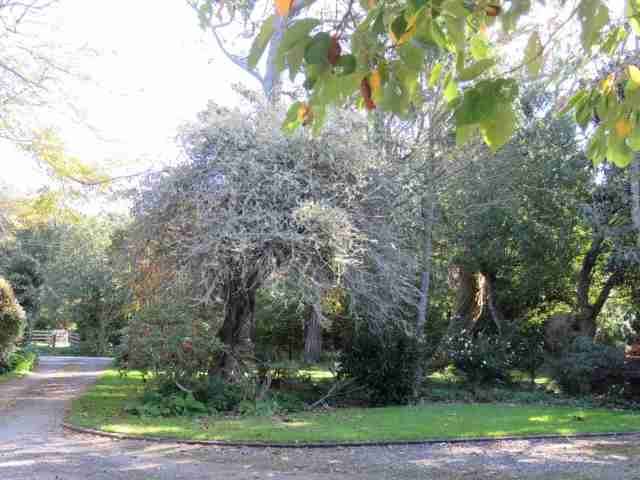
The grey coloured tangle of branches was the dead malus
We had our preferred arborist back this week. The dead malus in the entrance was not huge and access was easy but it looked like one of those jobs that would take us at least a couple of days but that he could complete by morning tea time. I was pretty much right on that. By 10.30, it was down, firewood cut to easy sizes and small stuff all fed through the mulcher.
A mere three hours later. Sometimes getting in the professionals is worth it.
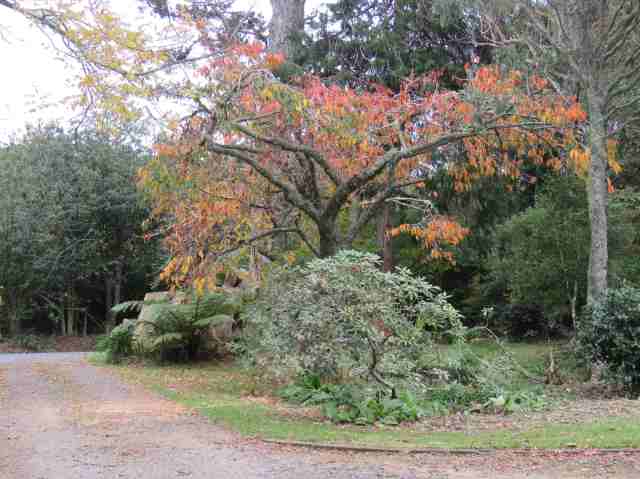
The arborist described it as being like a bird’s nest. It was an extraordinary tangle of fine branches. I wondered how much of a gap it would leave but, in the event, not much, really. The prunus that stood beside it is looking more glorious in its autumn raiment. It sent me down a rabbit hole, looking for earlier photographs of the area.
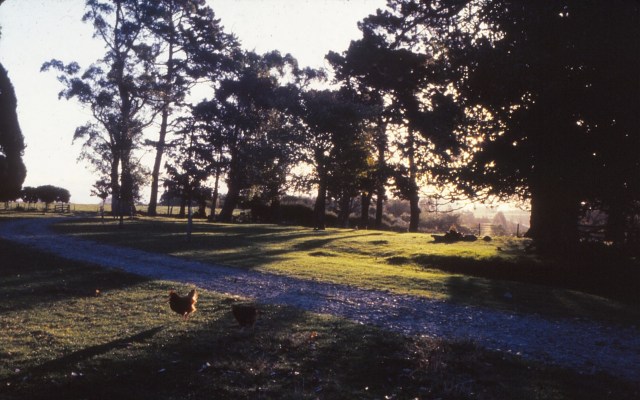
The entranceway back in 1986
Oh look. Here we have it looking remarkably romantic in April 1986. It was still being grazed by sheep and Felix still had his hens. And, looking carefully, it appears that the cherry trees and likely the crabapple were planted around this time so that particular tree lasted for close to 40 years.
The three diagonals heading upwards to the left are flower spikes
Same clump flowering in 2018. It has grown.
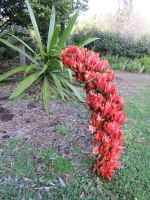
The Doryanthes palmeri has put up three flower spikes! I use the exclamation mark because this particular plant, commonly known as the Queensland spear lily, has only flowered once for us, back in 2018. It was pretty remarkable, with the flowering lasting a good five months. In the years since, the clump has grown substantially and the entire Court Garden area has been developed and planted. Like the cardiocrinum lily, each rosette only flowers once after many years but it then sets offshoots which will also take many years but then flower spectacularly. They are surely the sturdiest flower stem of any plant we grow but not for the faint-hearted or small gardens. Our clump is now around five metres across.
Zach and I have been reviewing the adjacent Court Garden. It is time for some significant thinning and a major cull on the Miscanthus ‘Morning Light’. I see I wrote three years ago:
What amazes me is that this plethora of Miscanthus ‘Morning Light’ all descend from just one small plant that Mark bought originally. It was still just one plant, albeit a large clump, when I first lifted it and started dividing it in 2017. We have just kept dividing since. In those six intervening years, that one original plant has now yielded several hundred sizeable clumps.
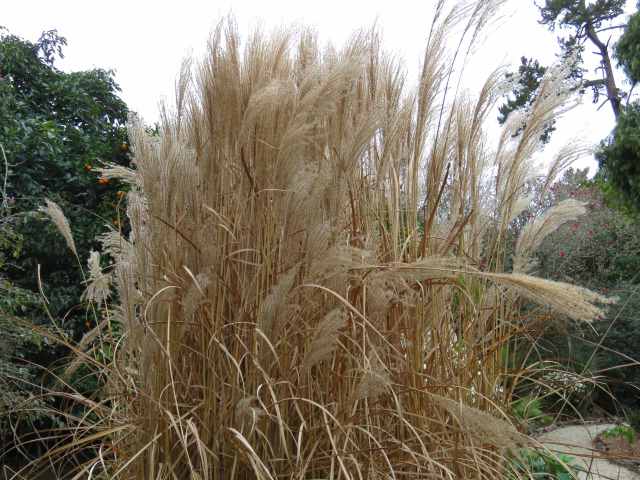
The miscanthus is falling apart after just three years – a sign that it needs more attention than we are willing to give it on an ongoing basis
Just three years ago, every miscanthus in that garden was dug out and carted away (to Pukeiti Gardens, no less). Zach had smaller clumps ready to go straight back in, divided from one of the plants. Three years on, they need lifting and dividing again. Already. This is not light work, the clumps are huge and falling apart.
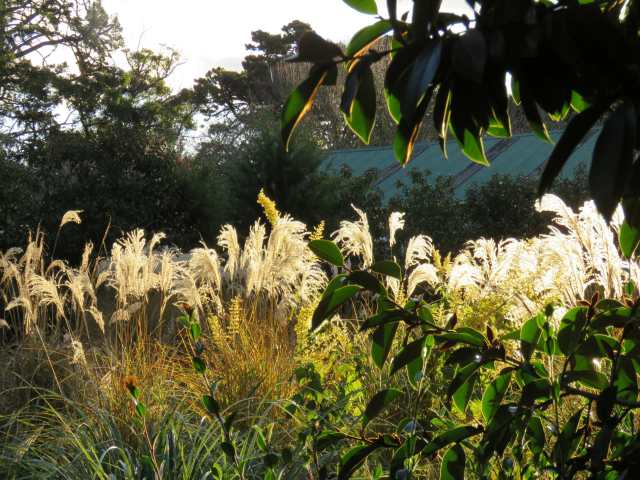
At its best, shining in the lower angle of the winter sun
Too demanding of attention – this plant will collapse apart with rain.
It is a good looking and obligingly easy grass. As far as I am concerned, its best season is around the winter solstice when the sun comes in at its lowest angle, lighting up the pale flowerheads like moving lanterns. That is a magical sight. But we don’t need 25 to 30 clumps of it in the Court Garden to shine like lanterns in low winter light, all needing lifting and dividing every three years. I think we can make do with a third of that number. It is not worth the effort required to keep it looking good in larger numbers.
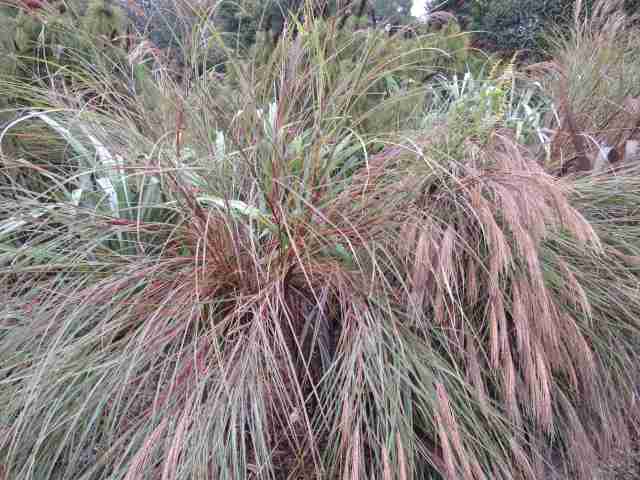
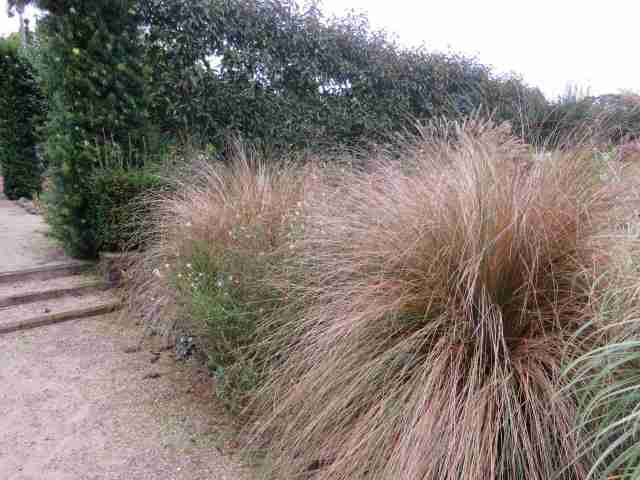
Our native red tussock – Chionochloa rubra – is just a fantastic plant, given room to festoon
It might be time for me to update The Grass Report. The brief conclusion will be that if you have the space – at least two metres across in all directions – the low maintenance, looks-good-all-year-round, shining star of the grassy garden here is our native red tussock – Chionochloa rubra. I wouldn’t be without it.
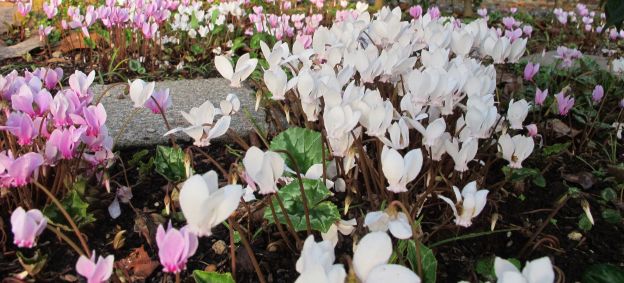
Plenty of cyclamen flowering in shades of pink and pure white
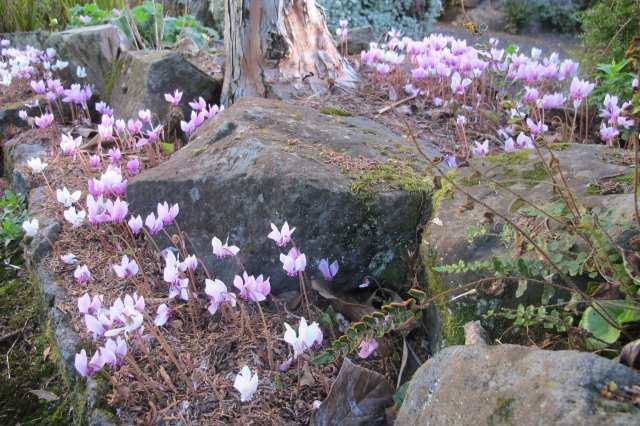
Unlike earlier months, the April bulbs here have been a narrow range of different varieties, although certainly not in terms of numbers. The rockery in particular is a carpet of Cyclamen hederifolium but, as that became full, we have gently encouraged its spread to anywhere it wants to grow. It is very much the easiest and most adaptable of the cyclamen we grow.
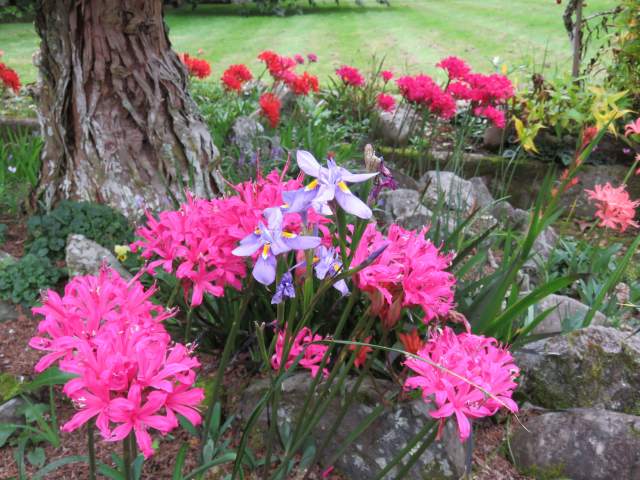
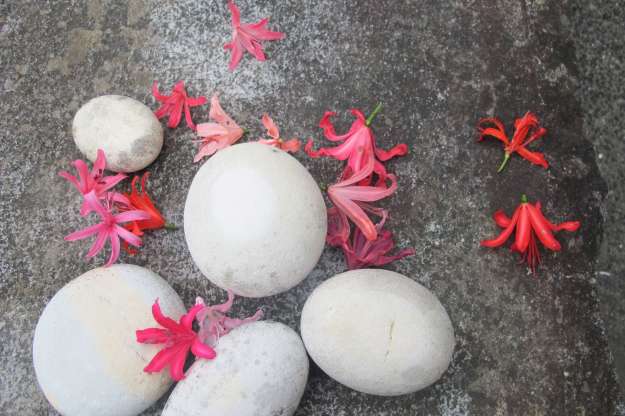
Nerines and Moraea polystachya together
I wrote about both the Nerine sarniensis and the Moraea poystachyalast month as they hit their peak. Both are heading towards the end of their season now but a six week season is a long time for a bulb.
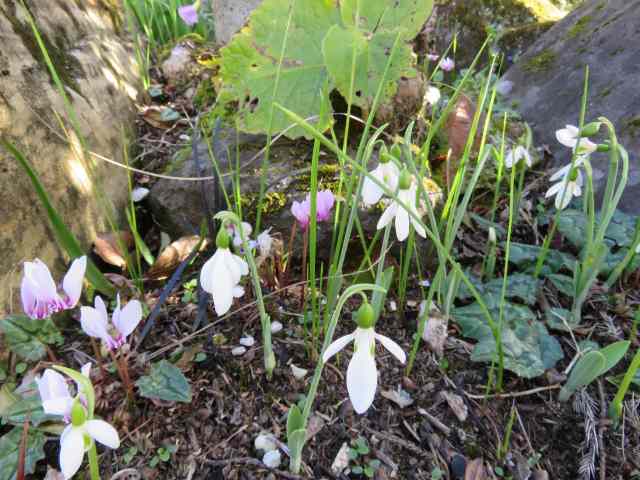
The autumn snowdrops are always a surprise but at last I looked them up and I am pretty sure that these are Galanthus reginae-olgae, Queen Olga’s snowdrop. In the likelihood that few readers, if any, even know who this Olga was, I can advise that she was Olga Constantinovna of Russia who was also Queen of Greece at the time when a Greek botanist identified this species native to the area.
Now to commit the name Galanthus reginae-olgae to memory….
Mark often cites this snowdrop as an example of how even the most charming of bulbs is most charming when it flowers in the season when we expect it. Snowdrops, he feels, belong in late winter to earliest spring – harbingers of season change – and most of them do flower then and we are delighted to see them. It is why, as a plant breeder, he wants plants to flower at their allotted time of the year, not to appear as a novelty at the ‘wrong’ time.
I digress, but when a new species of camellia, known first as C. changii but then renamed to the less helpful but correct in plant nomenclature C. azalea, became available, his interest in acquiring it for breeding was decidedly lacklustre. Its main flowering is in summer whereas pretty much every other camellia flowers in autumn (for sasanquas and some species), winter or early spring. A summer flowering camellia still strikes him as fundamentally on the fringes of the natural order; after all, he argues, we have an abundance of other summer flowering plants and we don’t need a range of camellias flowering at the same time.
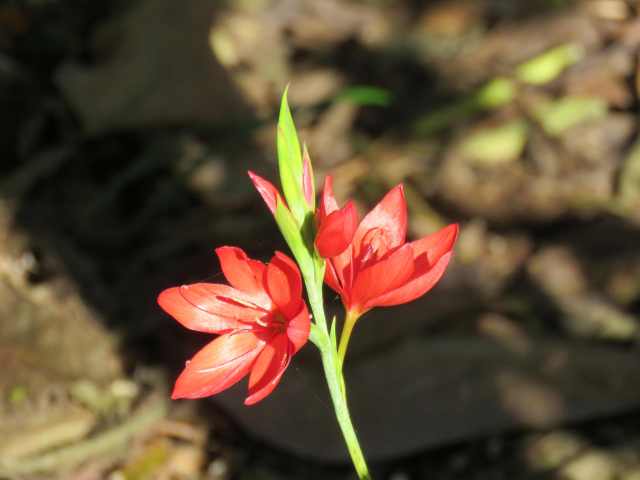
Schizostylis oo hesperantha. Or river lily, apparently.
A somewhat unsung but easy autumn rhizome is what we know of as a schizostylis but I see it is more correctly named as Hesperantha coccinea. I am not sure which name is easier to remember but maybe its common name of ‘river lily’ could be helpful, even though it is an iris, native to southern Africa and Zimbabwe. I see photographs on line of it growing in big clumps, but its foliage is unremarkable. I divide it up and dot it through the cottage gardens we refer to as the Iolanthe garden to add an extra bit of autumn colour and interest. It seems to be more favoured in the UK where it has a history in the cut flower industry and various named cultivars selected and even awarded by the RHS. Perhaps we are not so much into autumn bulbs in these southerly climes.
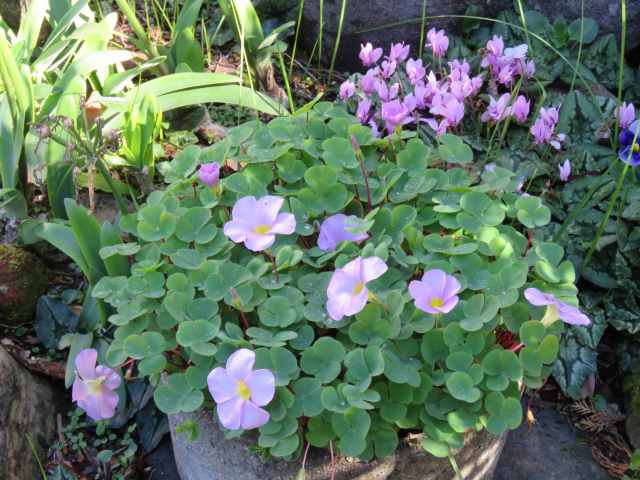
I made the mistake of planting O. eckloniana in a rockery pocket and have been weeding it out ever since. It is mighty handsome in a pot, though.
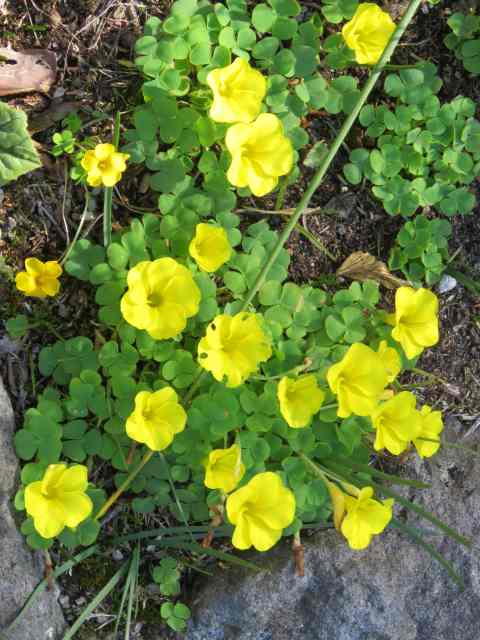
The other main group of bulbs just hitting their stride are the ornamental oxalis. Set aside your prejudices about oxalis – there are a few that are real pests and downright weeds but there are also some that are extremely ornamental – pretty as. But they are not all equal. Some have good looks but a fleeting season in bloom (here’s looking at you O. fabaefolia and flavas pink and white). Some are downright dangerous with thousands of teeny tiny bulbs that if you liberate in your garden, you will never get rid of unless you replace the soil entirely. Some are not strong enough to survive well in garden conditions and need to be nursed along in pots. But some are excellent in the garden and not a problem at all.
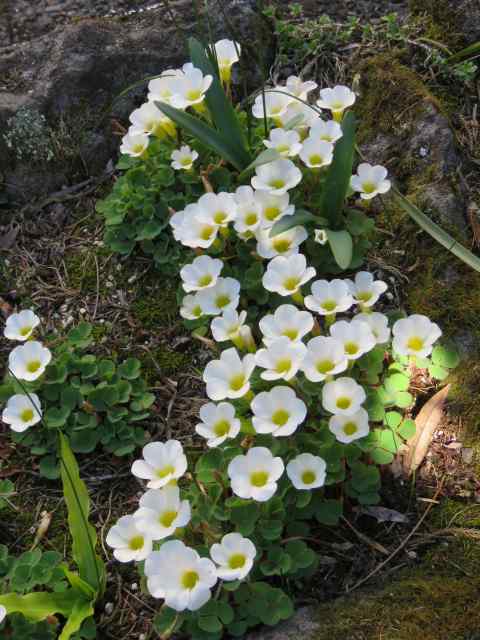
Oxalis purpurea alba. We find the pink flowered forms of this species invasive but this lovely white form is reasonably strong growing but not weedy and it is easy to remove entirely if required.
I would give the same verdict on O. luteola – long flowering season and garden friendly.
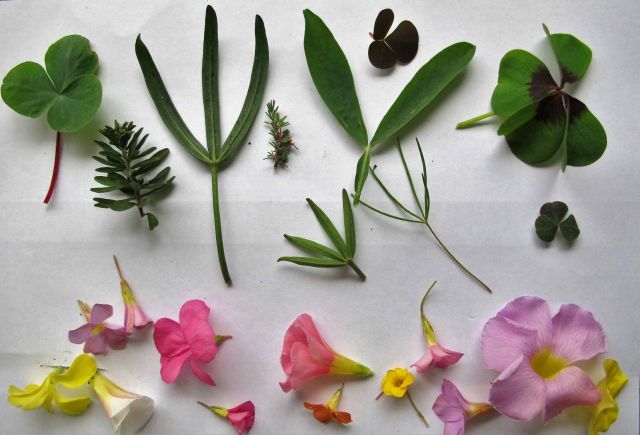
When our Zach was doing his apprenticeship here, he was required to curate a collection of plants and he chose oxalis. He has a collection of over 30 ornamental species now, most retrieved from the garden where I had planted them (and regretted some). They are variable in terms of garden merit but it is hard to beat O. purpurea alba and O. luteola as garden plants. Call them by their common name of wood sorrel if it makes you feel better.
Just a small sampling of the more than 30 varieties we have in the oxalis collection. There is a wide range of leaf type, flower size and colour.
And so to May this coming Friday. The new month will open with Nerine bowdenii, the last of the nerines to flower for us each season and the easiest to grow and bloom. I see its first flower has opened.
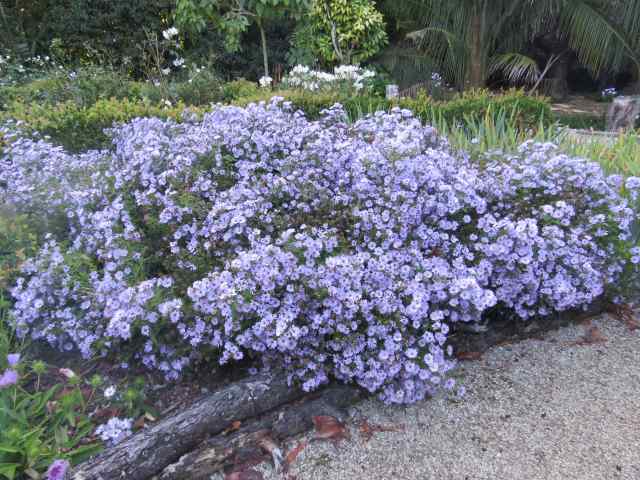
I photographed this patch of asters trimmed to the ground because I thought it was a good example of when not to let sleeping asters lie. Digital photography is very handy for dating things and I see it is only three years since these were last dug and divided. It had become a seamless carpet of aster in the time since. Both Zach and I noted that it did not look as good as it should have last summer. They weren’t helped by getting hit by mildew which has not happened before, but there was no mass flowering.
It should have looked like this last summer, but it didn’t. This is from summer 2024.
Time for a dig and divide, which Zach did this week. A perennial that has to be lifted and split every two to three years is on the high maintenance side and we don’t have many in that category. My friend, Sue, who leads the team of volunteers at the pretty Te Henui cemetery, told me she is culling plants that are too high in maintenance for their labour resources and this aster might fit that category. I must ask her for her latest list of culls. Fortunately I have Zach to carry out such tasks or I might be casting around for a less demanding plant option.
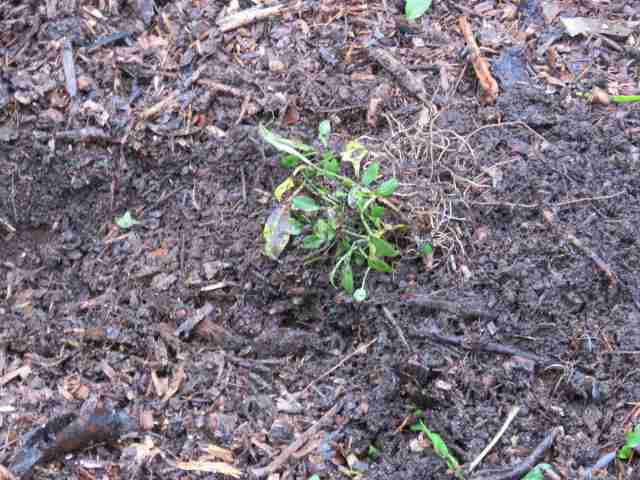
Enter the rabbits. After a quiet few months on the rabbit front, they are back and there is nothing they like more than an area of soft, freshly dug garden and mulch to dig. I sent Zach a text yesterday telling him that the rabbits were undoing his work. He was equally unimpressed but at least the photo shows you the size of division he split off from the previous carpet to replant.
I have just replanted the casualties, filled in the holes and spread blood and bone. The rabbits don’t like blood and bone and will stay away from that area but it does need to be replenished after rain and we have had plenty of that this week.
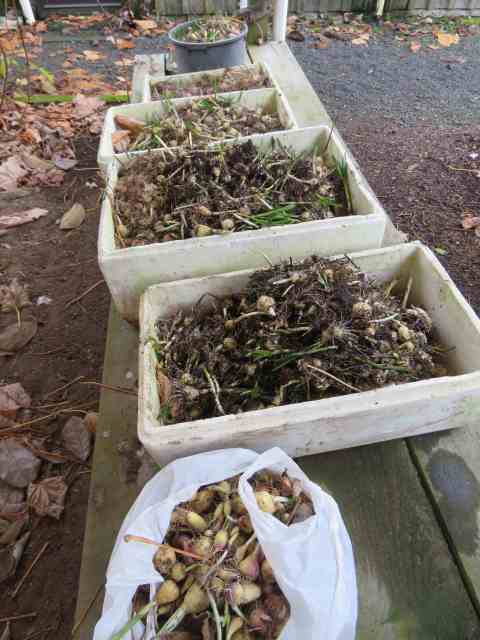
A whole lot of bluebell bulbs, just from the Iolanthe garden. There were more. I have already disposed of some.
The war on bluebells continues and I am at an advanced stage of boredom. I took this photograph as proof that I am not exaggerating. This is by no means all of the bulbs I have dug out of just the Iolanthe garden. Most were never planted there but I will have spread a few when I planted that area in 2019. Some have already been disposed of and still there are more to be dug.
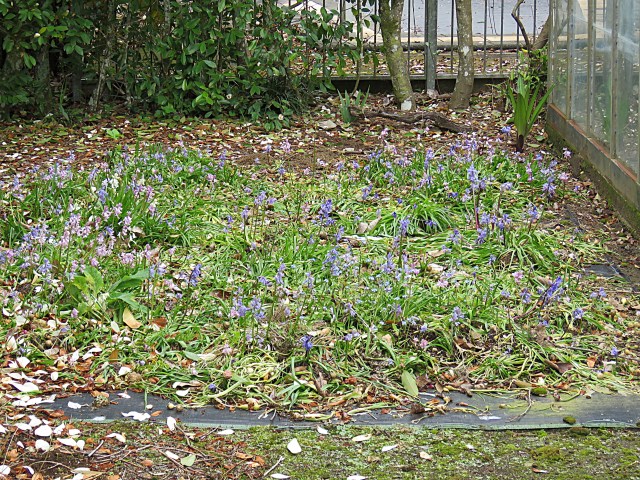
They did not dehydrate in the summer sun. They grew instead.
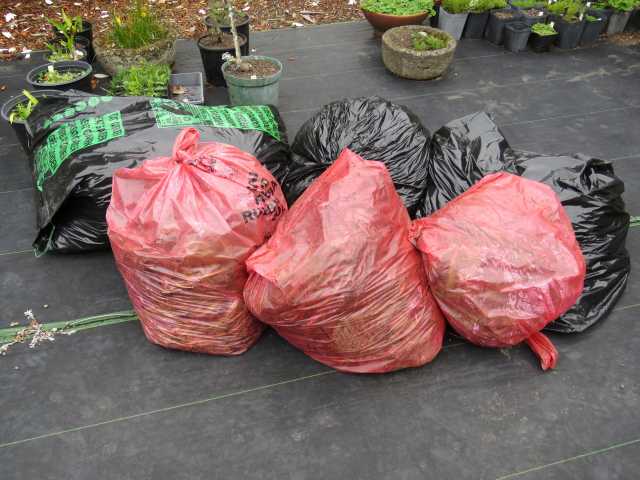
Bluebells have no place in the cultivated garden. I found a couple of photos from last year, recording our attempts to deal with some culled from the Avenue Gardens. I worried about how many we were dumping on our wild margins and they don’t rot down in the compost. I had the idea that if we spread them thinly on weedmat, they would dehydrate and die in the summer sun. They didn’t. They kept growing. I then thought they might compost in plastic bags in the sun, as wandering tradescantia does. Some did over the summer months but others in those bags were still firm and viable. Responsible disposal is quite a big problem.
Nor did they rot down in the plastic bags, as I hoped.
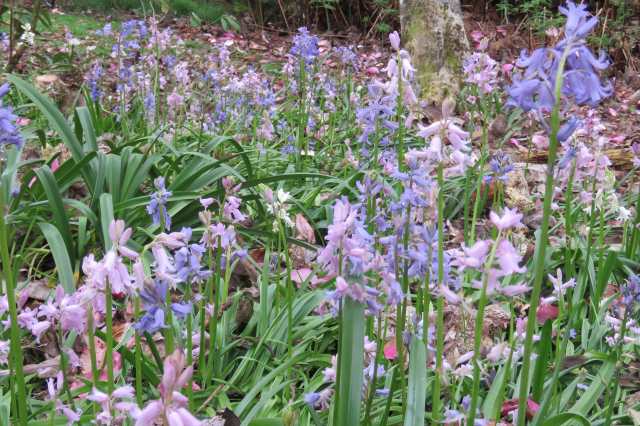
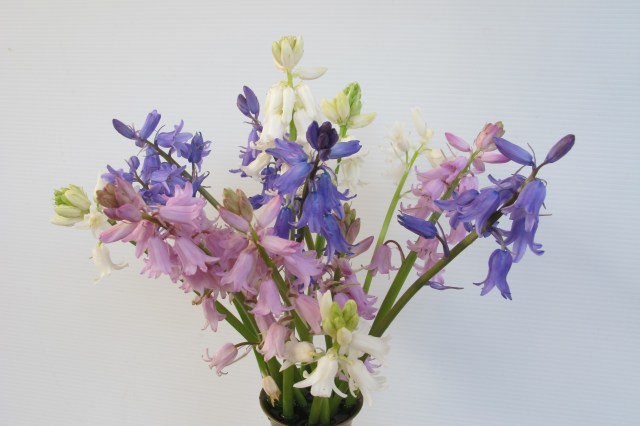
We have a lot of bluebells in the park and the Wild North Garden and they can stay there. To get rid of them, we would have to go for repeated use of some heavy-duty sprays and we try and avoid that. Besides, they are very pretty in spring. Ours are all Spanish bluebells or hybrids; the more desirable English bluebells are extremely scarce in this country. I don’t think I have ever seen them.
“If they stank like onion weed, they would be seen as a weed,” said Mark. “They are a weed,” I replied.
If we had our time over again, we would think twice about introducing them to our property. Mark put a bit of work into building up numbers in the first place. A decade or so on, I am putting a great deal more work into digging them out from some areas, all but sifting the soil to get the baby bulbs. You have been warned.