Tag Archives: Moraea polystachya

The flowering bulbs of May and June

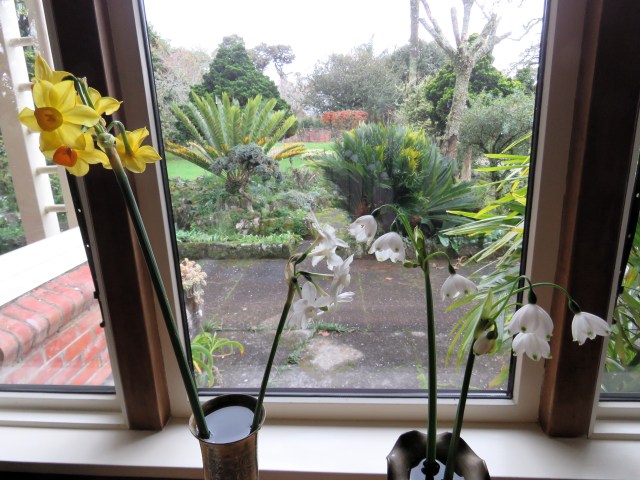
I seem to have found the quietest bulb months of the year and they are May and June. I didn’t even feel there was enough to bother writing about in May – just the oxalis, Nerine bowdenii and the carryover from late April. There is not a lot more now but the earliest narcissi are already flowering, along with the Leucojum vernum and they herald a new season as we enter the winter solstice.
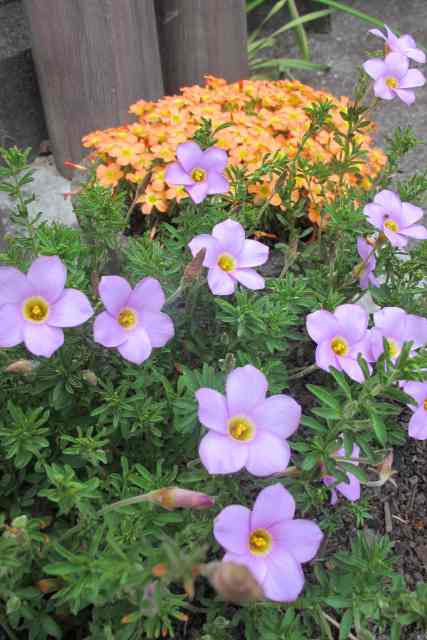
Oxalis massoniana (top) and hirta lavender (bottom) are very pretty but their season and overall display pale beside purpurea alba and luteola

As I wrote two months ago, not all of the ornamental oxalis are of equal merit. But here we are and O. purpurea alba and O. luteola are still looking showy and well behaved. That is more than can be said for most of the remaining twenty eight species here.
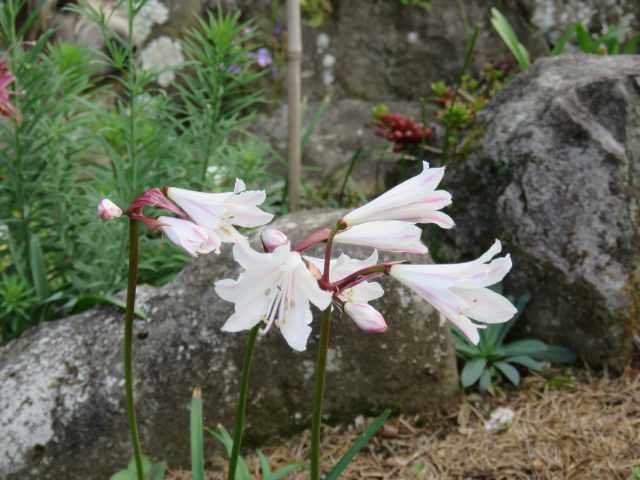
Nerine pudica is a dainty little species but I can not say it is very free-flowering for us.
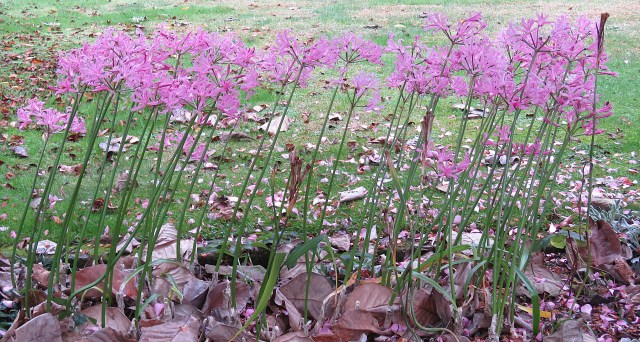
Nerine bowdenii in sugar pink

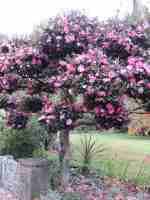
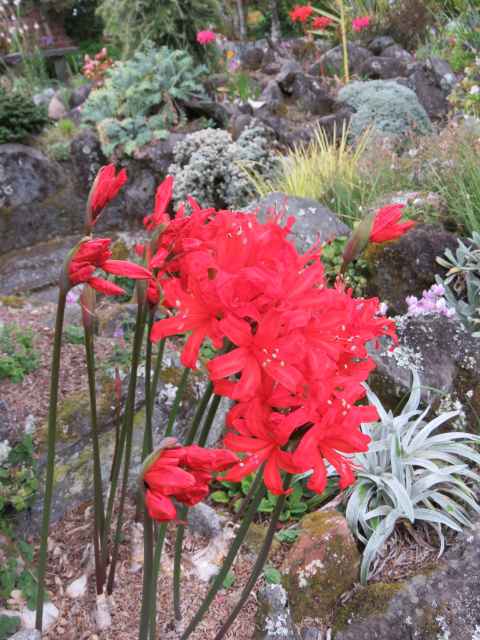
The nerine season signs off with dainty little Nerine pudica and Nerine bowdenii, a species that is arguably downplayed when compared to its showier sarniensis cousins. You do need to like the shade of sugar pink seen in most bowdenii and I am not sure it is ever declared as ‘choice’. But it has a long flowering season, blooms reliably every year and is considerably easier to grow and flower. That is not to be sniffed at. The planting above is below Camellia sasanqua ‘Elfin Rose’ (left) in a perfect colour match that delights us every year.
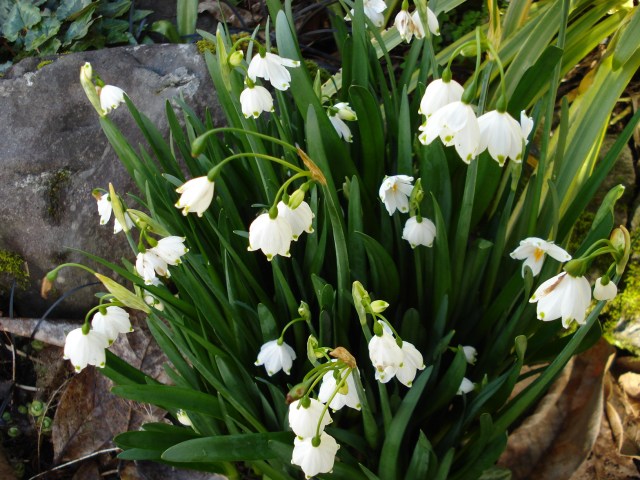
Leucojum vernum or the common snowflake
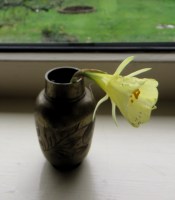
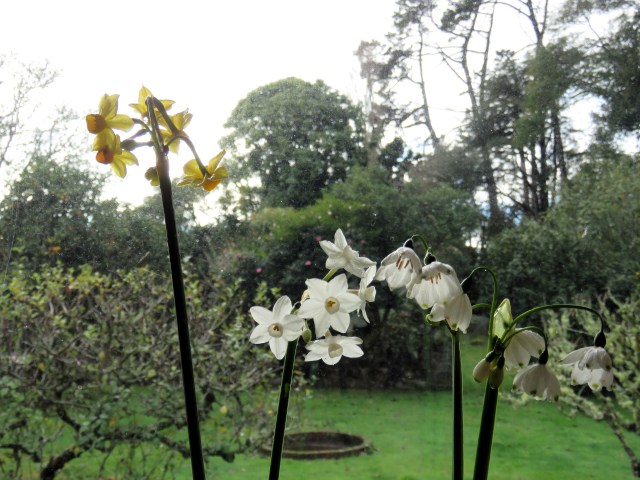
Narcissus ‘Grand Soleil d’Or’ in yellow, one of the Narcissus jonquilla in white and the humble snowflake. The first Narcissus bulbocodium citrinus of the season are opening – the hooped petticoats of the daffy scene (below left).

Similarly, the modest snowflake – Leucojum vernum – is not often praised. Maybe many of us remember it as a survivor that we used to pick from old house sites dating back to the mid to late 1800s, along with wild daffodils. Some will recall those sites, marked by a brick chimney and a few garden plants, particularly those common bulbs and a camellia or two. The leucojum or snowflake is a not-quite-doppelganger of the classier and much more highly prized galanthus or proper snowdrop. But, in our climate, the snowdrop is a fleeting delight over a couple of weeks only whereas the leucojum just quietly flowers on in an understated way from early winter to mid spring. It deserves a little more credit as a garden plant than it is often given.
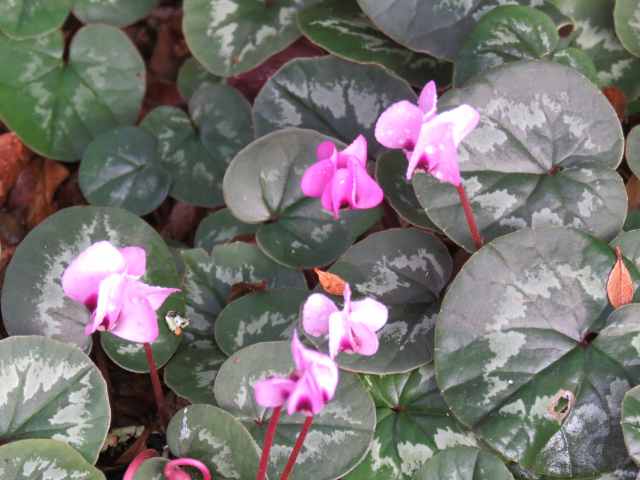
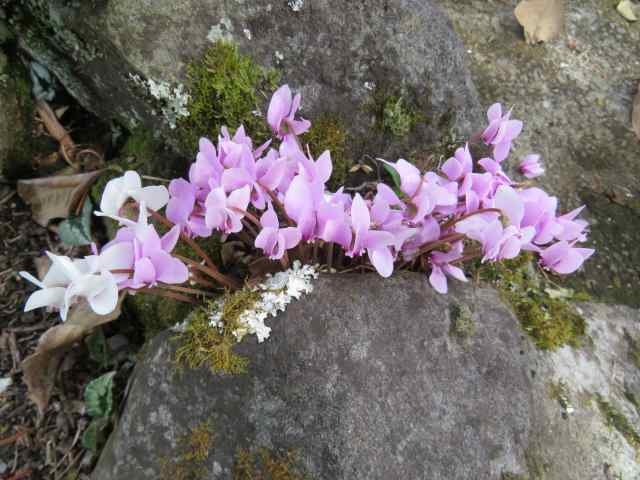
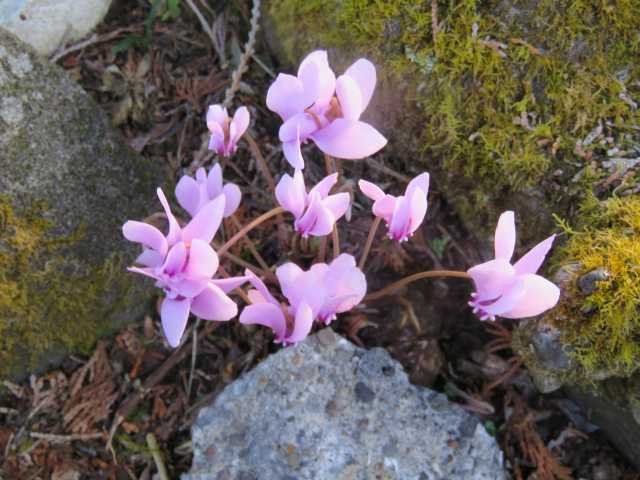
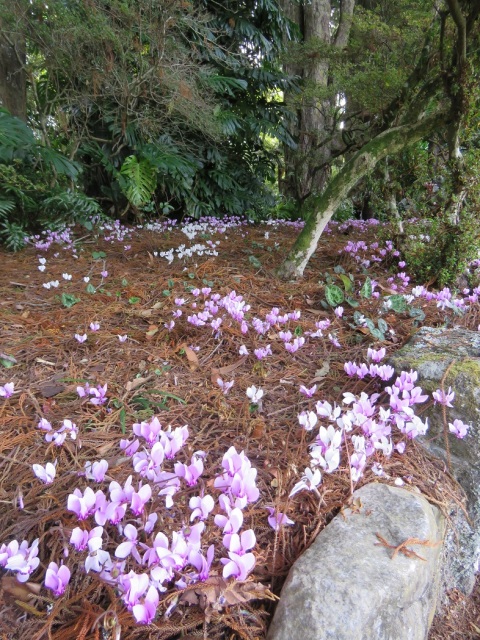
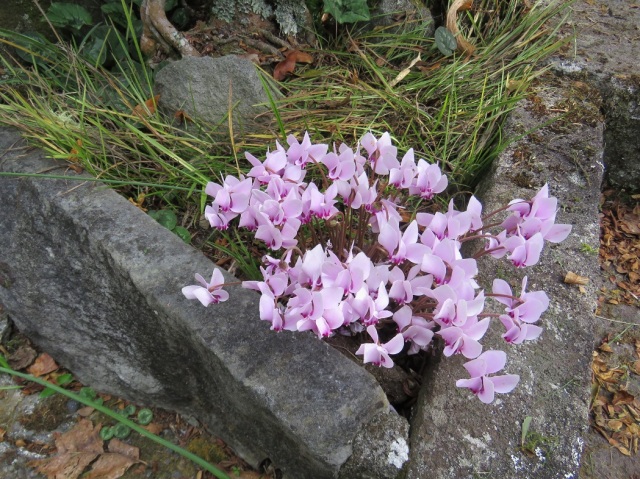
Cyclamen coum is our main winter flowering species

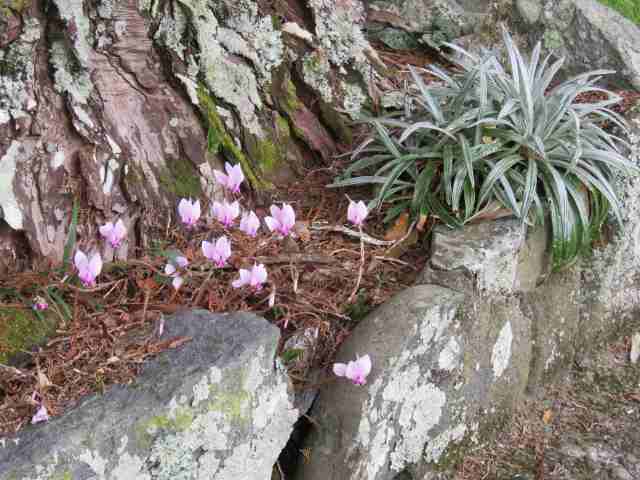
The Cyclamen hederifolium have largely finished their flowering season although they continue to earn their keep with their handsome foliage. It is now time for their cousins, Cyclaman coum to star. Over the years, we have tried any of the species cyclamen that we could lay our hands on. They generally hail from drier climates in southern Europe, around the Med and the Middle East and north Africa. My personal favourite is C. libanoticum – from Lebanon – but there are three that are standout garden plants in our conditions – add C. repandum to the aforementioned hederifolium and coum. Of them all, those three have settled in and increased happily so we can measure them by the square metre rather than as individual plants. We only grow the species but I might have been tempted by the genuinely purple hybrid I saw people commenting on in local garden centres this autumn.
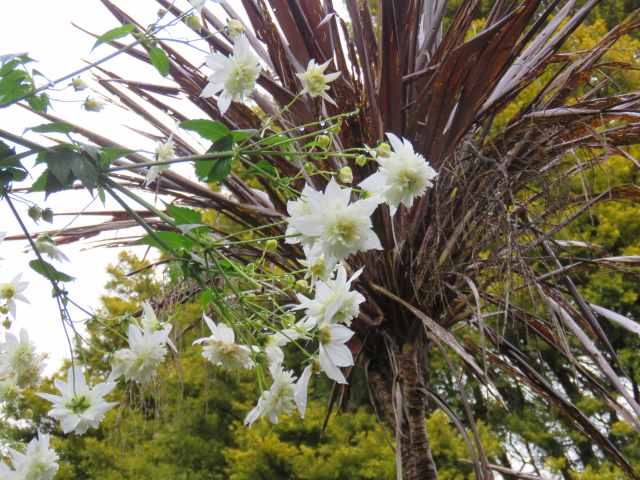
Dahlia excelsa can sometimes be taken out by frost and wind but we have had no frost yet and little wind this autumn so it is flowering at its best.

I could have padded these listings with dahlias and orchids. With the current fad for OTT show dahlias in weird colour mixes and full forms of a size that suggests steroids, our preference for modest single flowers on garden plants just seems out of step. But I note that the last dahlia of the season is blooming now and that is the OTT Dahlia excelsa that towers above most plants at a good 4 metres or more.
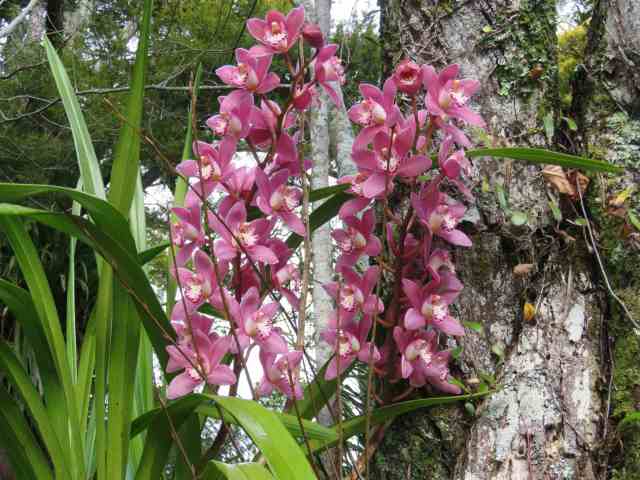
Cymbidium orchids have pseudobulbs which are not botanically the same as bulbs and they make excellent garden plants in the right conditions.

And the paucity of more usual bulbs does not give credit to the psuedobulbs of the cymbidium orchids. Our interest is in orchids as garden plants, not for show in an orchid house or cut for indoors but grown fully outdoors alongside a range of other plants. Cymbidium orchid season is just starting and will last for several months.
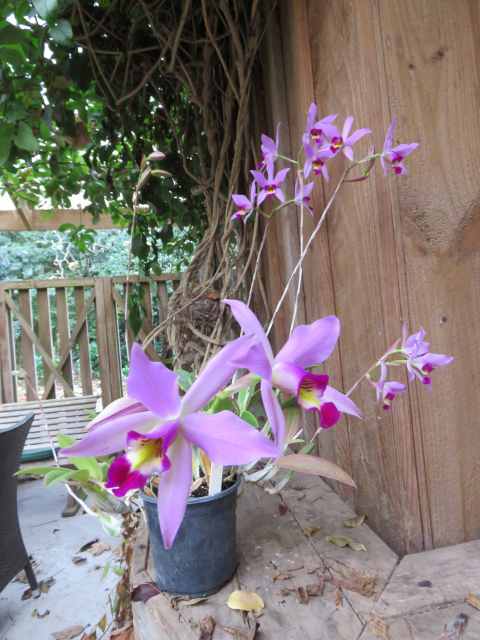
Eighteen gorgeous flowers on the hardy Laelia anceps orchid, now to be planted in the garden as it has finally flowered.

This Sunday is the winter solstice. Matariki is due (the rising of the Pleiades star cluster) with the official holiday on July 10. Magnolia campbellii is coming into flower, Magnolia ‘Vulcan’ will start showing first colour in a few weeks. The earliest of the narcissi – the strong scented jonquil types – are already starting to bloom and the many spring bulbs are in full growth. We are yet to plunge into full winter, where we live at least. It would be churlish to complain about the weather at this stage.
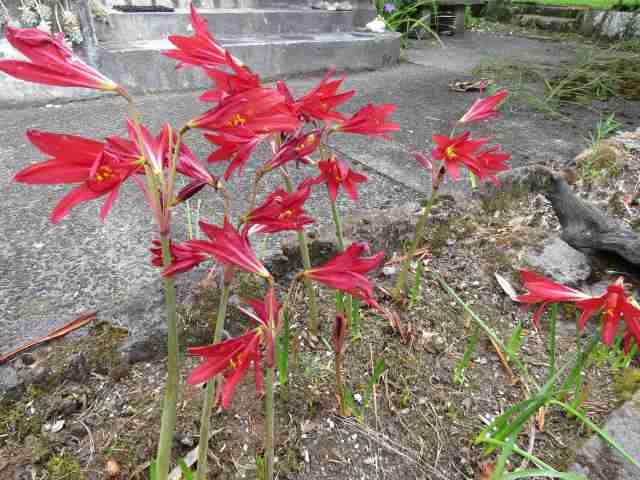
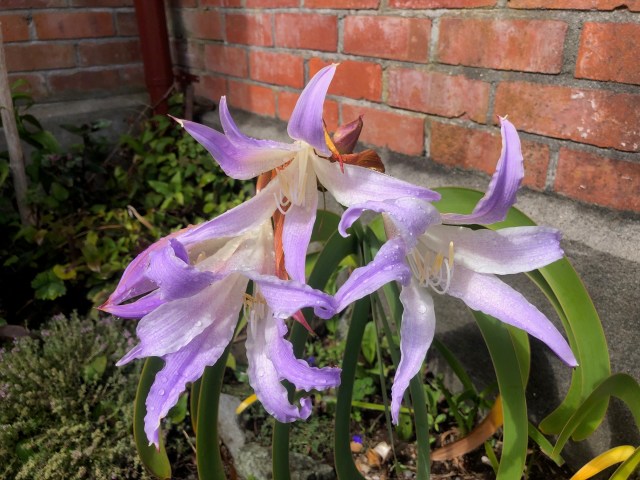
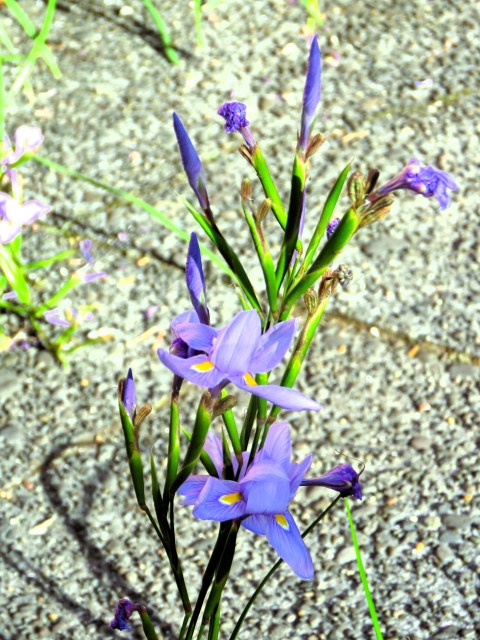
Finally, all credit to the autumn peacock iris, Moraea polystachya. I commented back in February that it was opening blooms and that it had a very long season in flower. I have never timed it before but it is now into its fifth month of opening fresh buds. That is an exceptionally long season.
March bulbs in autumn

Autumn can be a magical season here. It is not guaranteed but, more often than not, we get warm, sunny, calm days with cool night temperatures. And dry. Ours is not a climate noted for extended dry periods but when it does happen, it is in autumn. These are perfect conditions for the autumn bulbs.

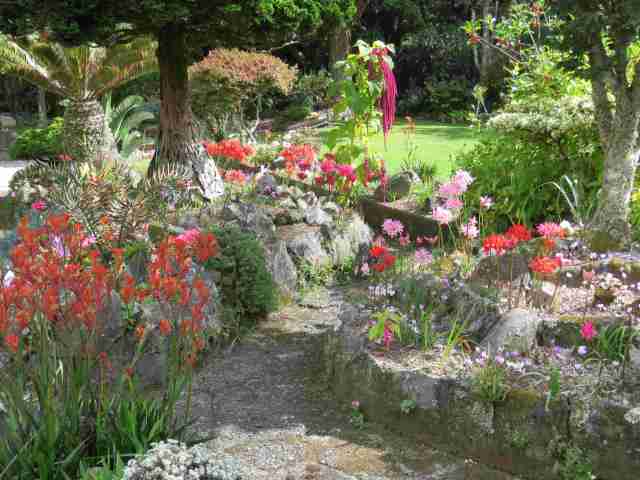
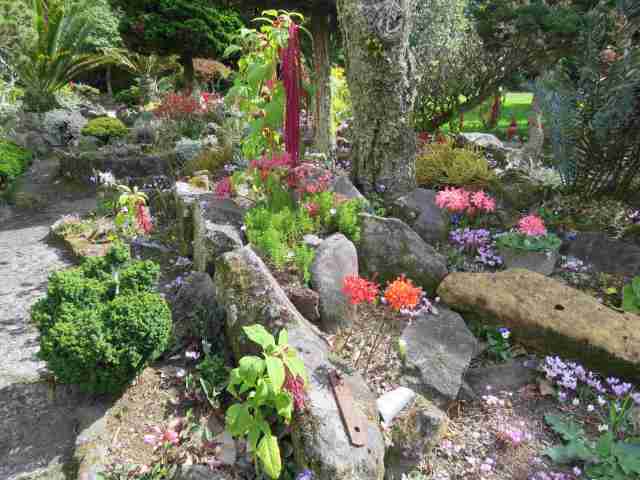
We say of our reasonably expansive 1950s rockery that it peaks in two seasons – autumn and again in early spring. We are entering the autumn peak but it is perhaps more in quantity than range of different bulbs.

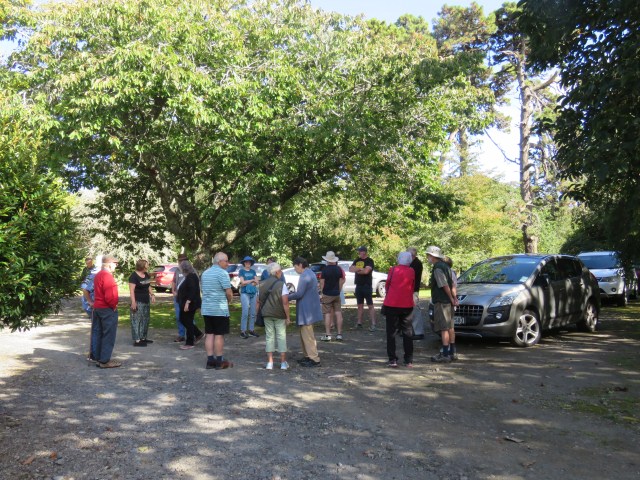
We don’t accept many groups these days, but the Pukeiti members’ visit came from a special request, even though their visit was a few weeks too early to catch what we would describe as the autumn season.
We had the Pukeiti members visit three weeks’ ago and, as I commented to them, when it comes to bulbs, what they are looking at here is over 70 years of building up the volume. Mark, like his father Felix before him, started with just the bare minimum – one if it was an expensive bulb, maybe 3 or 4 if it was cheap enough and available to buy. Otherwise it would just be gifts of interesting bulbs from other gardeners. Over the years, we have lost a fair number of bulb varieties that did not like our conditions, but those that survived and increased have often thrived.

Cyclamen hederifolium, happily naturalised and seeding around but in a non-threatening way

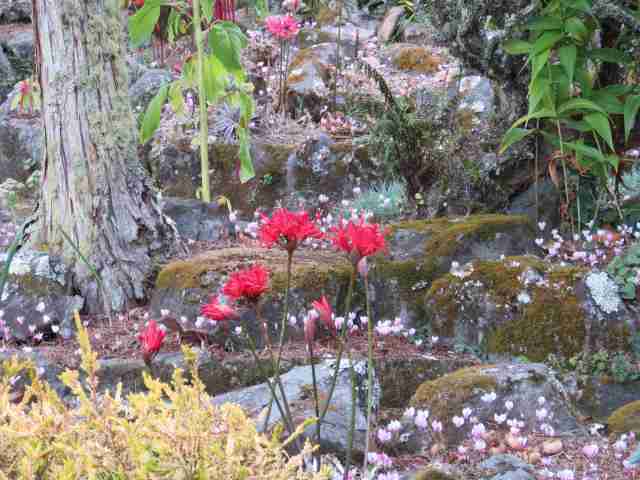
The rockery is a carpet of Cyclamen hederifolium, in shades of pink and white. Sometimes referred to as the ivy-leaf cyclamen, it is native to the Mediterranean area and one of the most amenable and easy to grow species. These days, we mostly let them seed down in situ and from time to time, I will lift clumps of tubers when they get too congested.  We have also had success naturalising them on bulb hillsides in meadow conditions but we need to get the summer cut on the grass done at the right time so we can see the flowers. Somewhat to Mark’s surprise, just scattering seed proved as effective as planting tubers but it does take a few years for them to get enough size to be visible.

The nerines have just their peak. We do a good line on nerines – well, a rockery filled with them really and we have managed to keep the colours separate. Most are hybrids based on Nerine sarniensis, Felix started with a few good ones, although we don’t know how he came by the Inchmery nerines from Exbury. From there, he and then Mark started trying out controlled crosses to build the range we have today. They are the absolute stars in the autumn rockery, underpinned by the carpet of cyclamen.

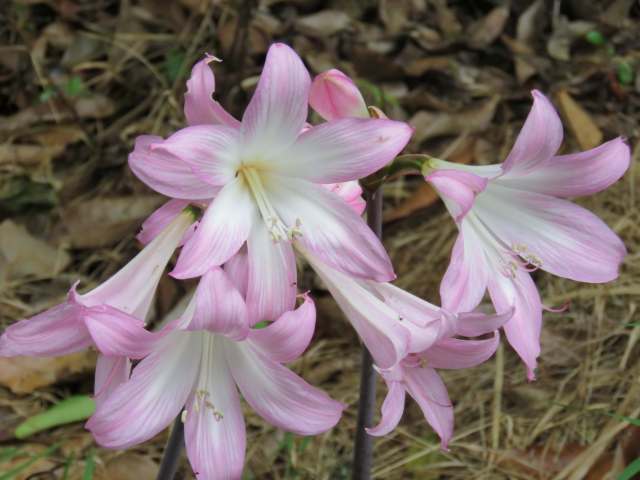
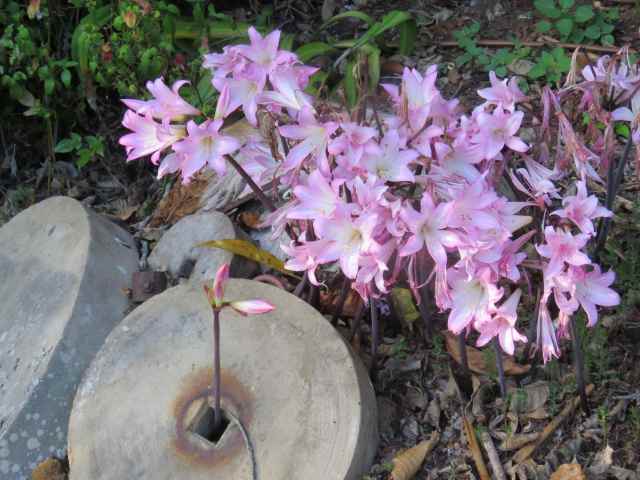
Belladonnas are somewhat under-rated as an autumn bulb – too vigorous in growth habit and too much foliage for the rest of the year, but they certainly put on a great show in bloom with absolutely no care or attention.

Most of the big bulbs of summer have finished, but I will eat my past words on the short flowering season of belladonnas. I have never tracked them before but seven weeks in full bloom and still going is not a short season at all, by bulb standards. We just take them for granted, really, and fail to recognise what a hard working family they are.

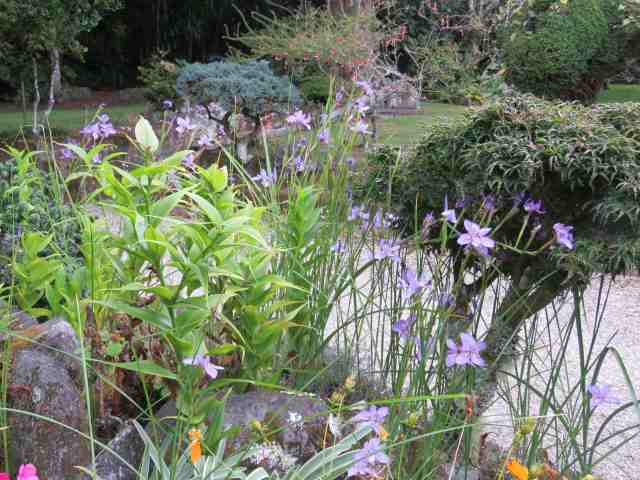
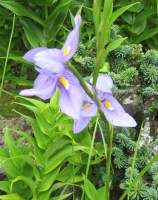
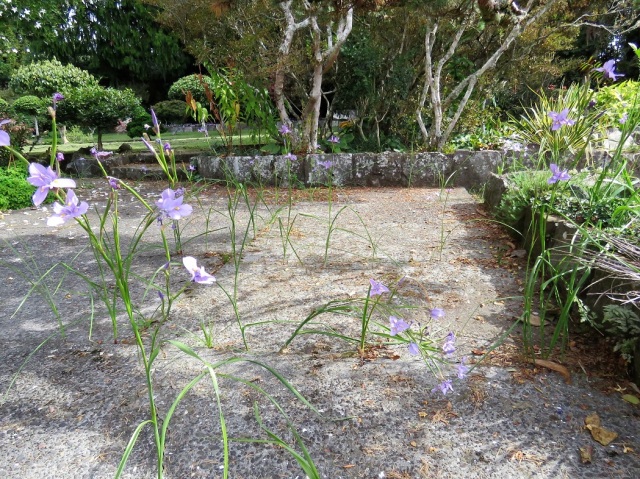
Moraea poystachya in blue, choosing where it prefers to live. It particularly likes cracks in concrete.

The moraea family is a large one of many different species, the most common being M. villosa and M. aristata – the spring flowering peacock iris. Some are invasive and some are not worth having, but in autumn each year, Moraea polystachya delights us with its blue iris flowers. It sets plenty of flowers down the stem, unlike many bulbs that set just one bloom per stem. It seeds down but not badly enough for us to decide it is invasive and dangerous. It is just gently spreading and generally delights us,

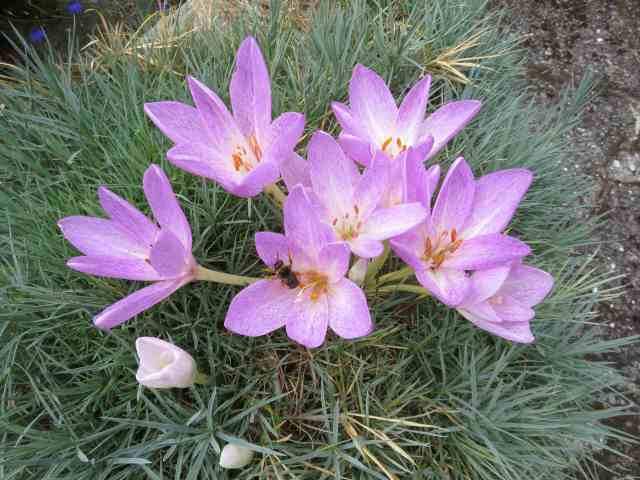
Having different species of colchicum means the flowering season is extended by several weeks.

Beyond that, the second species of colchicums are in full bloom now (either C. autumnale or C speciosum – one flowers earlier and one flowers now and one day, I will find out which blooms first). So too are the true autumn crocus in bloom. There are a fair swag of different species of autumn crocus (NOT including colchicums and sternbergia which are often inaccurately referred to as autumn crocus even though they have no connection to crocus at all). The one we have most success with is blue, almost certainly from the C. serotinus group, maybe salzmanii.

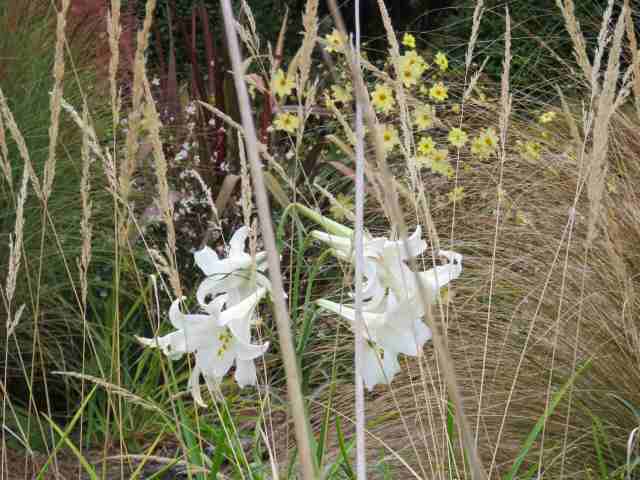
The controversial pure while Lilium formasanum close out the lily season in March. They are controversial because of their seeding ways and indeed are banned from commercial sale but not prohibited in the garden. They do need deadheading, though.

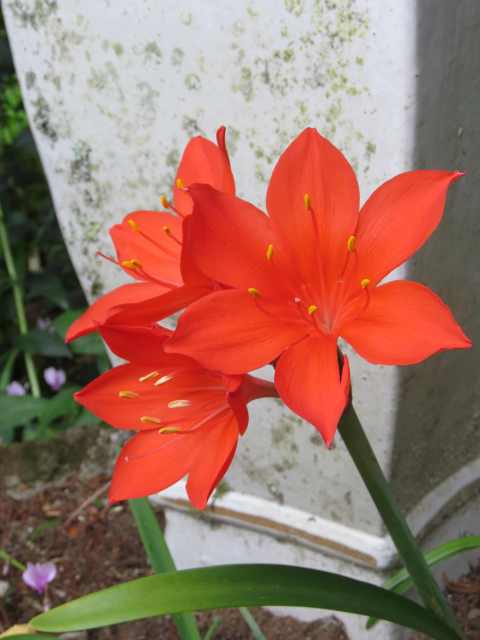
Other bulbs during March that came and went included Haemanthus coccineus, Brunsvigia josephinae and the controversial Lilium formasanum (syn. weedy, also banned from sale). 

Sometimes this run of settled autumn weather can last until the shortest day. After a particularly indifferent summer, we have our fingers crossed.

February bulbs signalling seasonal change

Will my bulbs of February be the month when there are slim pickings, I wondered at the start of the month. But no. I begin to think that there may be no such months, in our garden at least.

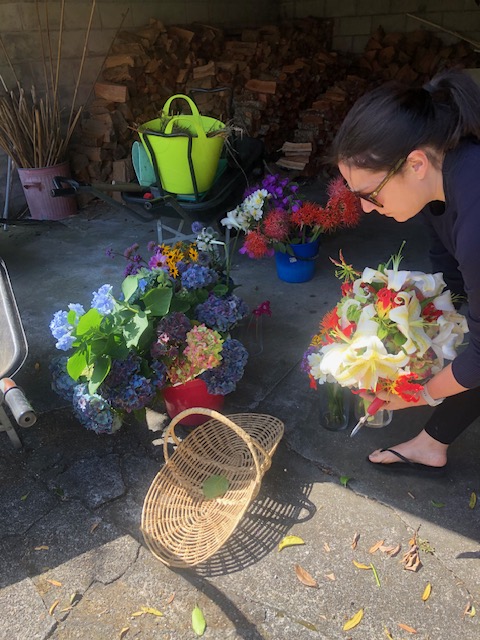
A wedding posy largely comprised of auratums and gloriosas. The bride also chose to wear gloriosas in her hair.

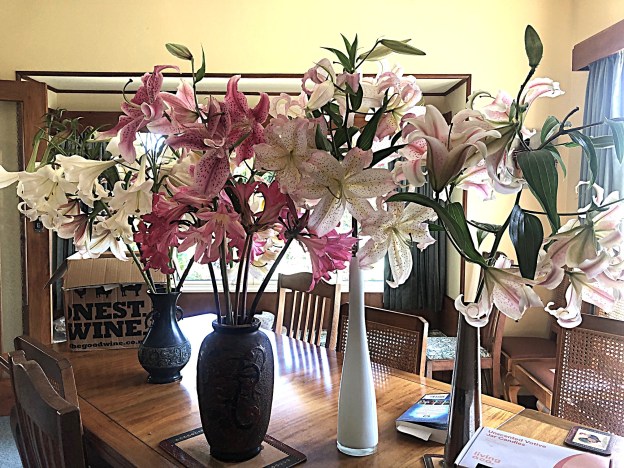
February was marked by a bit of a rollover from January, notably auratum lilies, gloriosas and Scadoxus ssp multiflorus katharinae. All are excellent cut flowers. I knew the lilies were but I have never cut the scadoxus before and they show a remarkably long vase-life. This discovery was made because our middle child came home for a small, intimate wedding in the garden here – an event we never expected to see. In the spirit of this informal occasion where the vows were both heartfelt and a central part of the whole event, she did her own wedding flowers from the garden here. She made her posy and a smaller one for their two year old to carry as well as the vases for the long table while I did the big showy vases of OTT lilies – mostly auratums but with a few Lilium formasanum and belladonnas.

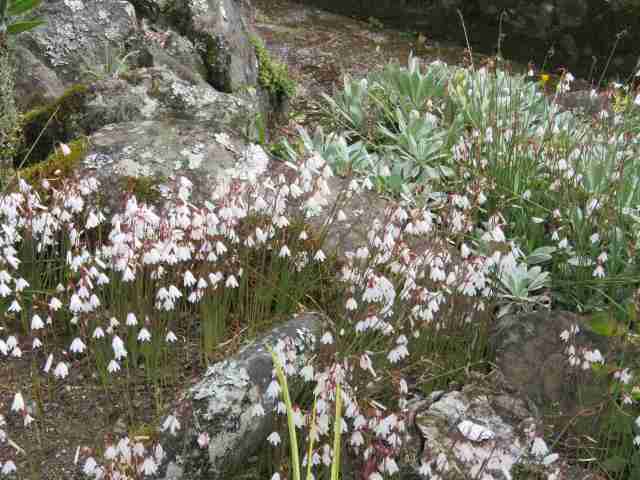
The ephemeral delight of a sea of tiny Leucojum autmnale – autumn snowflakes – in the rockery

Some bulbs are a fleeting delight. The daintiest, tiniest little flowers of the autumn snowflake – Leucojum autumnale – all bloom at once as harbingers of the change in season. The Worsleya procera came and went in the first ten days of the month. No less spectacular, the Paramongaia weberbaueri impressed with its debut performance this very week. I do not think it will have a long season in bloom.  
Moraea polystachya

Then I pondered the fact that many of the bulbs that I declare have a long season are in fact bulbs that we have in the garden in abundance, counted in the high hundreds. If we had 500 worsleya, they are likely to flower more in succession and might have me admiring their long season in bloom. That is the case with the blue Moraea polystachya just opening and likely to flower for a good couple of months. But it is not each individual moraea bulb that is flowering that long, although it does set buds that open successively. It is having many bulbs around which open for their weeks to star.

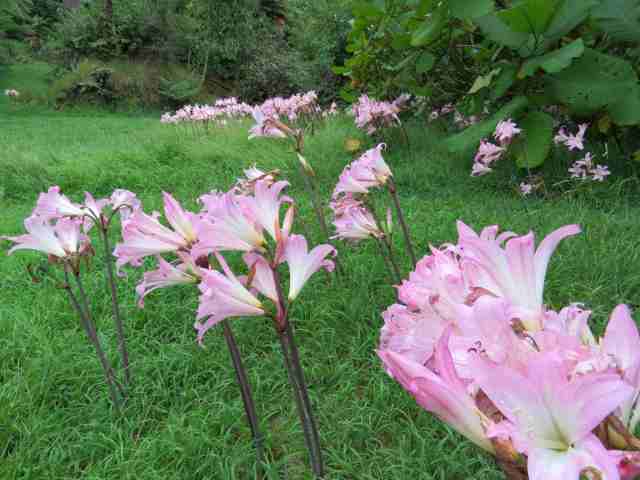
Belladonnas – showy but not choice

Some are short in season but somewhat glorious. The belladonnas – Amaryllis belladonna  -are more wildflower or roadside plant than one for cultivated garden but that does not diminish their charm on the day. They last well in a vase, too.

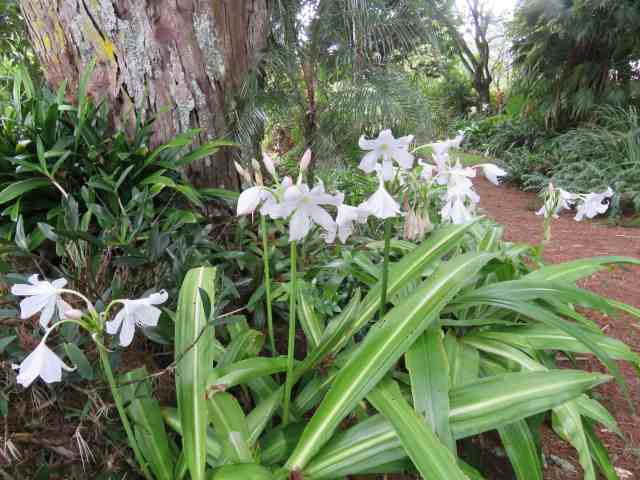
Crinum moorei var. in the woodland gardens

Crinum moorei variegated has spectacular foliage in late spring and early summer but the foliage starts to whiff off a bit, sometimes losing its variegation, as the perfect, white, scented blooms open. I would prefer it to time the foliage and the flowers to perfection but the gardener’s personal preference is irrelevant. It remains an excellent bulb, showy for a long period with the foliar lead-in followed by lovely blooms. We always grow it in the shade gardens because that foliage will burn in our bright summer sun.

Little Cyclamen hederifolium is all through the rockery and woodland margins – naturalised but never a problem

As the big blowsy bulbs of summer pass over, the autumn snowflakes are joined the by the dainty Cyclamen hederifolium which we have in abundance – decades of letting it gently seed around to naturalise.

A zephyranthes now, which was news to me. We have it in red and pink.

We have known this plant as Rhodophiala bifida, following on from a period of it being Hippeastrum bifida but apparently it was classed as Habranthus bifida prior to that; now, now it has been moved again to Zephyranthes bifida. I do hope it has found its forever home in the zephyranthes family. It doesn’t have a long season in flower; nor does it increase quickly but it is lovely in its time.

Nothing rare or unusual about this bulb but it is no longer a valotta, now being in the cyrtanthus family

Whereas what we once had as a valotta (and was it also once an habranthus?), is now to be known as Cyrtanthus elatus. I do try to be botanically accurate but it is not always easy to do so. For those railing against name changes, they may be inconvenient but there is scientific data to justify the reclassifications. I would assume it is all DNA-based these days.

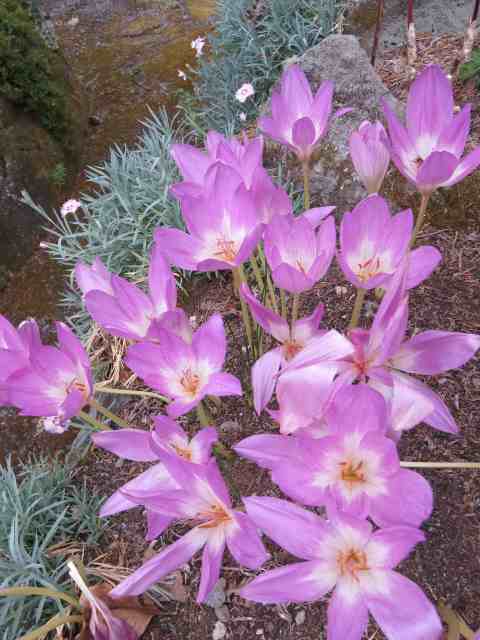
Colchicums! Not autumn crocus, but I am not sure whether this is Colchicum autumnale from northern Europe or Colchicum speciosum from Turkey. I think we have both.

Haemanthus coccineus may be the most fleeting of all the late summer bulbs we grow, but mostly this plant is grown for its spectacular foliage, colloquially known as elephant ears. Colchicums, too, have a brief season but not as brief as the haemanthus. They are oft referred to as autumn crocus but that is not botanically correct at all.

The bulbs are telling us that we are on the cusp of summer turning to autumn.

Worsleya procera – choice but not prolific.

Let there be flowers and the gentle change of seasons

In a world that seems to be growing more chaotic, unstable, downright dangerous and even vicious by the day, let there be flowers.

I know I am not alone in limiting my time following the news and on social media. Never in my life did I think I would be taking life guidance from RuPaul but his advice to ‘look at the darkness but don’t stare’ are words that I repeat to myself every day. It is one thing to be aware of what is happening but it can be overwhelming if I spend too much time following it closely.

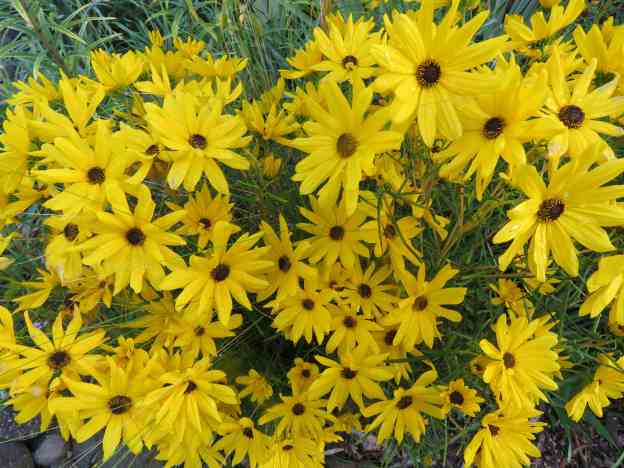
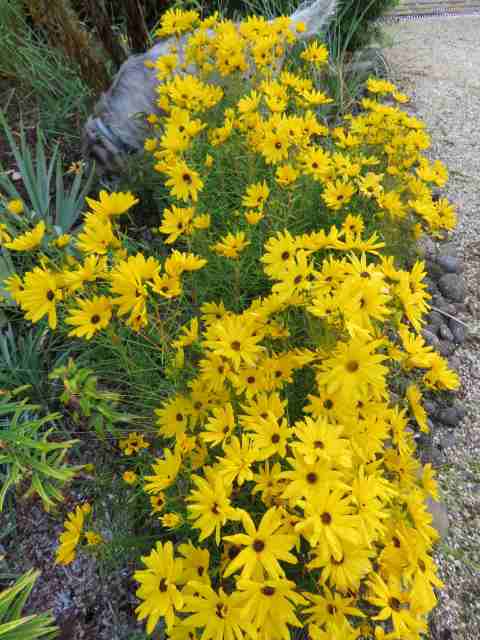
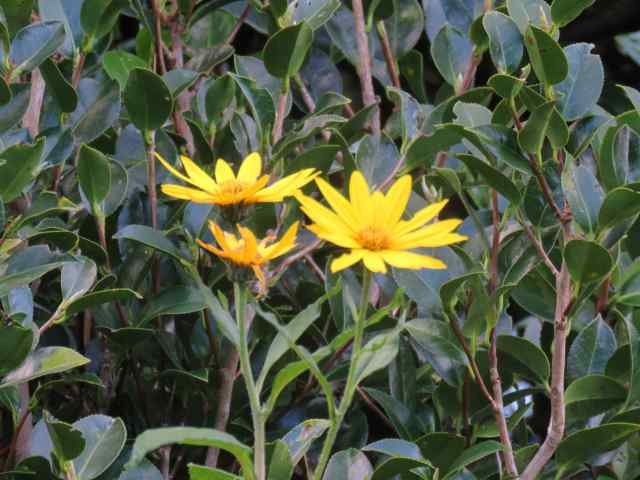
The bright cheer of the dwarf helianthus makes me smile. This is a named cultivar but I have forgotten where I recorded the name.

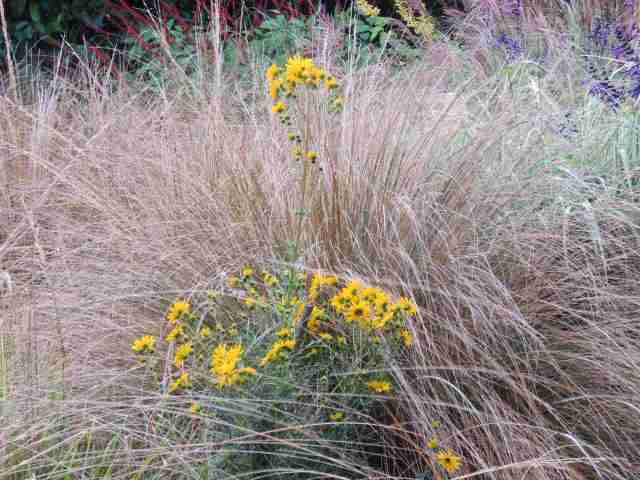
Instead, I give you the gentle predictability of the change of season from summer to autumn here with photos from yesterday. I have used the shorter version of the helianthus in the borders but the tall leggy form – likely closer to the species or as it is found in the wild – seemed to fit better in the controlled abandon of the Court Garden. No more. We are in danger of losing it because it is not as capable of coping with competition as I thought. As soon as this remaining clump has finished flowering, I will relocate it to the more cultivated environment of the borders where it will be given its own space to thrive.

The Jerusalem artichoke is also a member of the helianthus family but it does not justify its place as an ornamental plant. Not enough flowers, I am afraid, but an abundance of tubers which I dare not eat. While tasty, no matter how hard I try, I can not find ways to prepare it that improve its digestibility without the unfortunate side effects. Its name as fartichoke is fully justified.

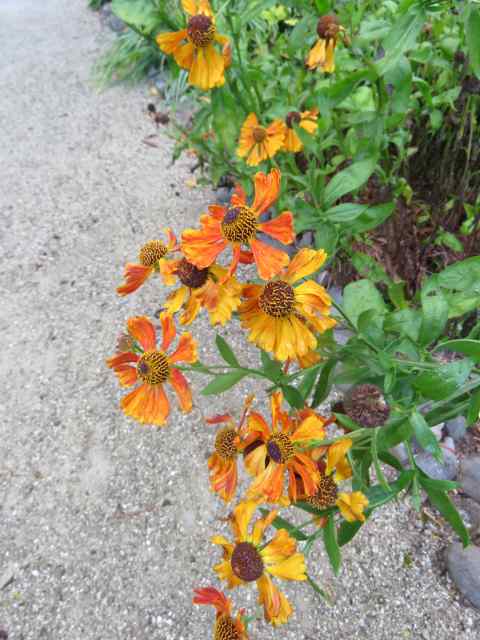
The heleniums are in the twilight of their season but remain eyecatching. These have one of the longer flowering seasons of the summer perennials and fully justify their prime position in the borders.

Cyclamen hederafolium are coming into their autumn peak and what a delight they are. We have many of them, many many in fact because we encourage them to seed down in their pretty pink and white charm. I am not a fan of the bigger cyclamen hybrids but the species are a source of great delight throughout the garden.

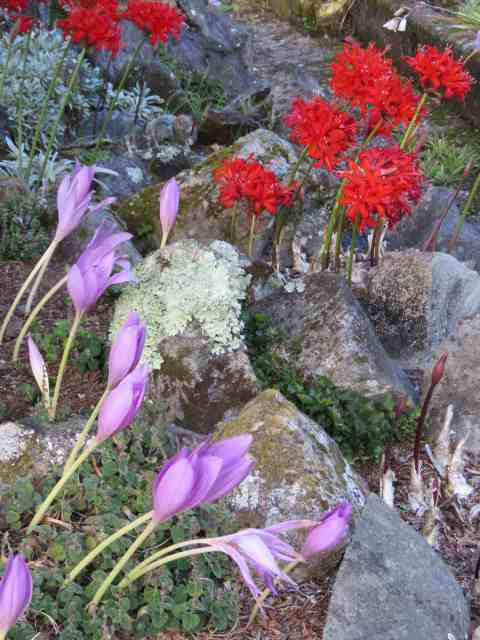
The rockery is hitting its stride with its autumn display. The colchicums are a fleeting delight but one we would not be without. The nerines are just starting, mostly red so far but plenty about to open in other colours. I live in hope that the Lycoris aurea will stage a reappearance. I planted a pot of flowering bulbs out in the rockery years ago but I can’t remember where and it has never flowered since. It may have gently withered away to nothing or it may still be masquerading as a random clump of nerines which I just haven’t noticed aren’t flowering. Perhaps our hot, dry summer will have triggered it to flower. Or maybe not.

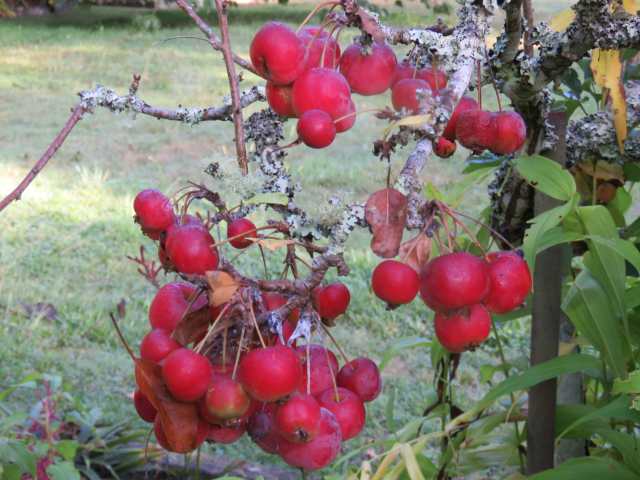
We have two dwarf crabapples in the rockery, standing little more than 1.2metres high after about 50 years. Their flowering is insignificant and their form and foliage unremarkable but they justify their place with their ornamental fruit in autumn.

Moraea polystachya, an autumn form of the peacock iris, seeds around enthusiastically but harmlessly and rewards us by popping up randomly – on the edge of the drive in this photo – and having one of the longest seasons in flower of any of the autumn bulbs because it keeps opening a generous succession of buds.

The belladonnas are bold, a bit scruffy and have bulbs and foliage that are too large to make them obliging garden plants. But they are a welcome addition in wilder areas, in this case on the site of the old woodshed we removed this summer before it fell over of its own own accord. We don’t know anything about the grinding wheels except that Felix must have gathered them up fifty years ago and there are three in graduated sizes.

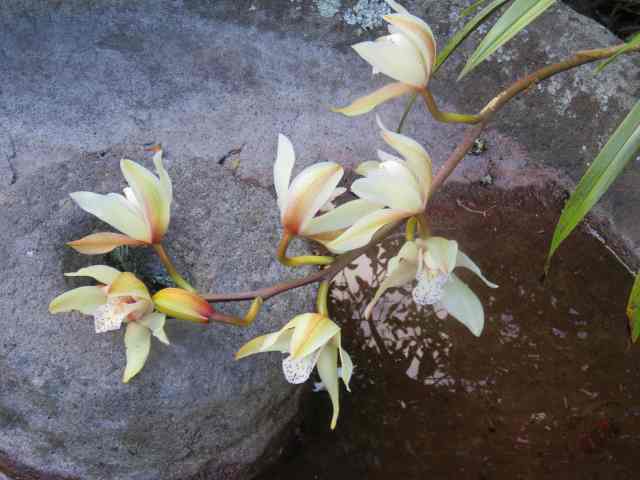
The first cymdidium orchid is opening. This somewhat understated one is always the first of the season and is a top performer in its spot, arching over the old stone millwheel which has been repurposed a bird bath.

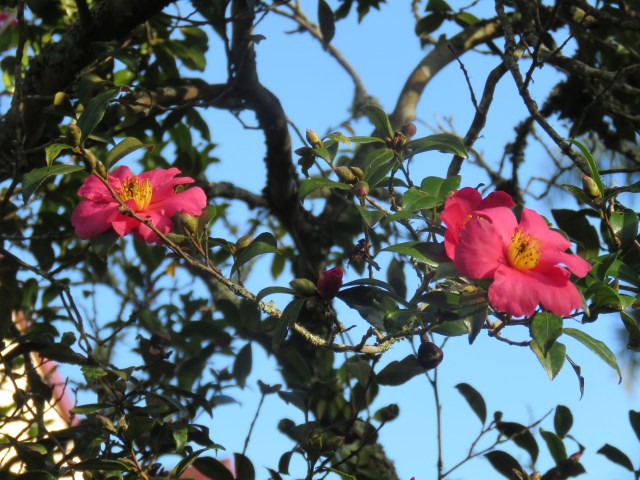
Finally, camellia season has started. Camellia sasanqua ‘Crimson King’ is always one of the first to open. Even with climate change, there is a reassuring predictability in the cyclic nature of the seasons.

May there always be flowers. I can stare at them as long as I like without fear of being overwhelmed by a sense of despair, anxiety and helplessness. In the flowers and the seasons lie promise and joy and we need a whole lot more of that at this time.

Autumn flowering self-seeders

Cyclamen hederafolium gently drifting itself in a most rewarding fashion

Over the years, we have tried growing any and all of the cyclamen species we could find. I see there are 23 species but we wouldn’t have had that number available to us. Most of them come from dry parts of Europe and North Africa, often with cold, dry winters – conditions that could not be further from ours. This is why we have only ever succeeded in naturalising three different species. Coum is our winter cyclamen, repandum in spring but it is the carpets of hederafolium that are delighting me in autumn.

Cyclamen grow from round, flattish discs that start tiny but can get steadily larger over the years. This is just one tuber, about the size of a saucer, with a big show-off display of flowers.

We didn’t plant all these hederafolium in pretty pink and white. We probably started this area with maybe three or four tubers but, over time, they have gently spread. That is what I mean by naturalising. We have them growing in cultivated conditions all through the rockery and in other garden beds and also growing in grass in the park meadow. I thought this drifting area was interesting because of the conditions where they have spread and the showy display they make.

For context, this is the wider view of the drift of cyclamen in the top photo. That ground is never fed and never watered so is very poor and dry but cyclamen are adapted to such conditions

They are growing in extremely poor ground, bone-dry and bereft of goodness because the enormous rimu trees suck up all the available moisture. There is also a natural carpet of rimu needles covering them. But, there is no competition from other bulbs or shade loving perennials. This means they never get swamped or crowded out by other plants or so wet in the shade that the tubers rot when dormant. And when the seed spreads, it has a fair chance of germinating and growing because the whole area is largely left undisturbed. Hederafolium sets seed freely and Mark has been pleasantly surprised when he has scattered the seed further afield and found cyclamen flowering there a few years later. It is best sown or scattered fresh, though. Gather the ripe seed and spread it at the same time rather than storing it for later.

Moraea polystachya gently seeding its way around

While on bulbs naturalising, I don’t mind the lovely blue Moraea polystachya seeding down in even less hospitable conditions – the cracks in the old concrete. It gently seeds itself through the rockery but not at an alarming rate and it cohabits happily with other plants. Also, the corms are large enough to find easily if I want to move them. It also has the longest flowering season of any of the autumn bulbs because it keeps flowering down the stem. They are iris-like in appearance and if you trace back the family tree, you get to what most of us might call the broader iris family.

Windflowers or Japanese anemones

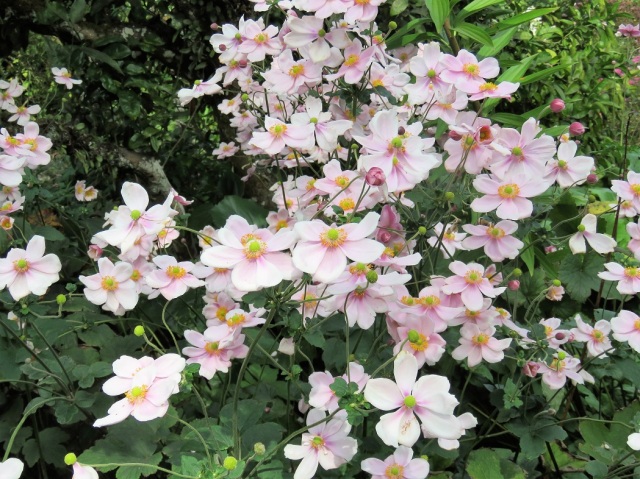
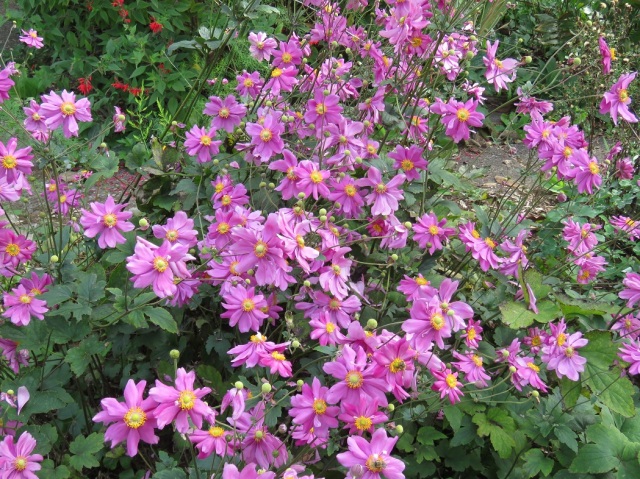
Also spreading alarmingly are the Japanese anemones which aren’t even from Japan, commonly known as windflowers. I love them and am prepared to wage ongoing war on their spreading ways but they should always come with a warning. Don’t plant them anywhere near treasures of a more refined disposition because they will swamp them. It is best not to plant them near trees and shrubs because they spread below ground and you will have them all through the root systems of other plants all too soon. If you can, define a space and keep them to it which means having a clear area around them so you can see when the roots are popping up growing tips beyond their allotted space.
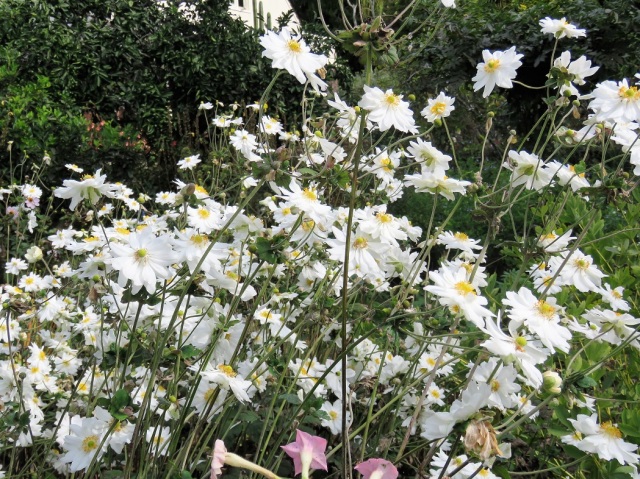
Japanese anemones

Naturally, I haven’t done this myself – at least not on these clumps which are in the Iolanthe cottage garden/meadow. I know I will regret it but I still have a sentimental fondness for them at this time of the year.

Finally, unrelated in subject matter, but the recent cyclone opened up a view of the sunrise that we can see as we sit companionably over the pre-breakfast cup of tea. It is an ill wind etc