
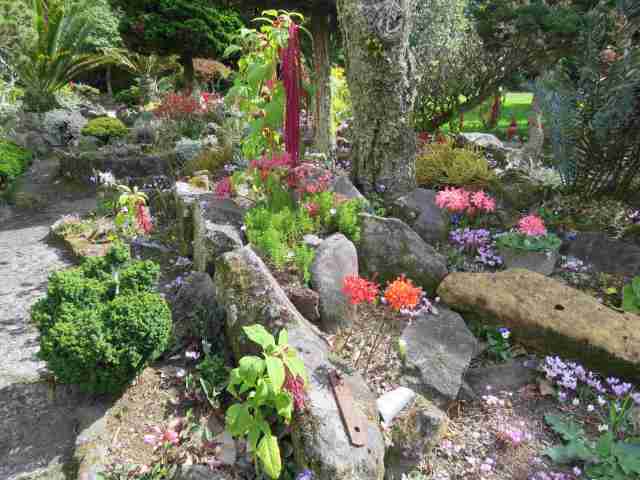
Autumn can be a magical season here. It is not guaranteed but, more often than not, we get warm, sunny, calm days with cool night temperatures. And dry. Ours is not a climate noted for extended dry periods but when it does happen, it is in autumn. These are perfect conditions for the autumn bulbs.
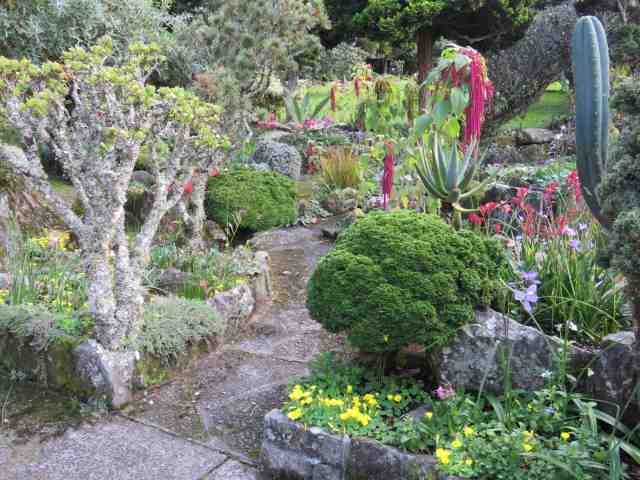
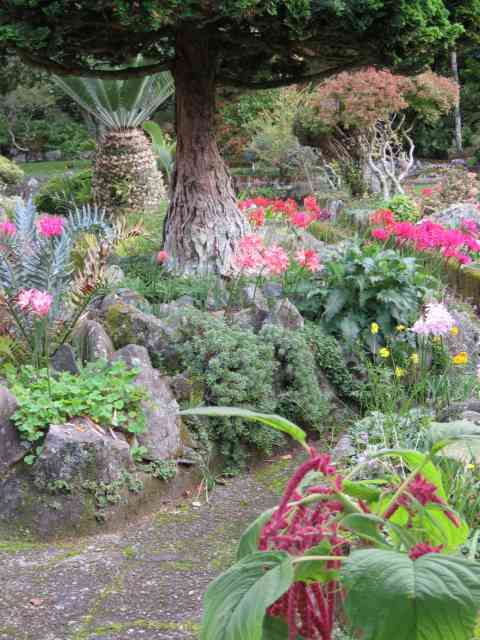
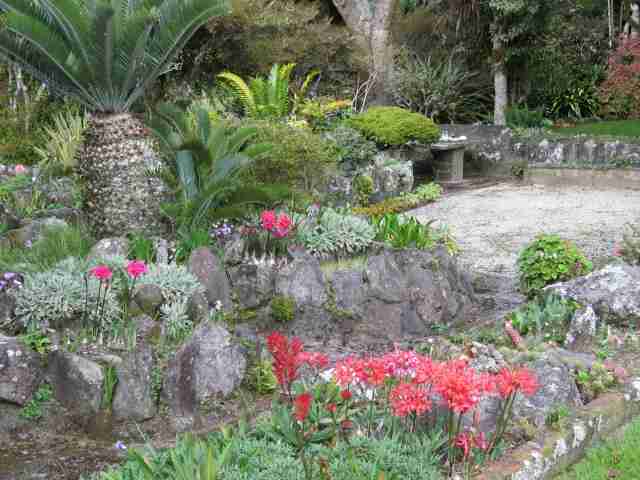
We say of our reasonably expansive 1950s rockery that it peaks in two seasons – autumn and again in early spring. We are entering the autumn peak but it is perhaps more in quantity than range of different bulbs.
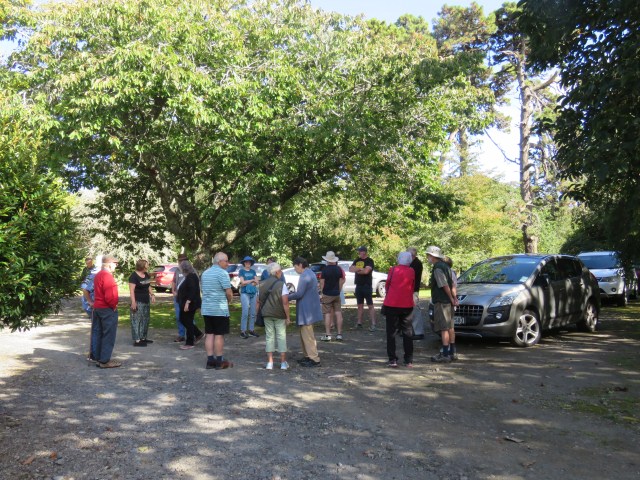
We had the Pukeiti members visit three weeks’ ago and, as I commented to them, when it comes to bulbs, what they are looking at here is over 70 years of building up the volume. Mark, like his father Felix before him, started with just the bare minimum – one if it was an expensive bulb, maybe 3 or 4 if it was cheap enough and available to buy. Otherwise it would just be gifts of interesting bulbs from other gardeners. Over the years, we have lost a fair number of bulb varieties that did not like our conditions, but those that survived and increased have often thrived.
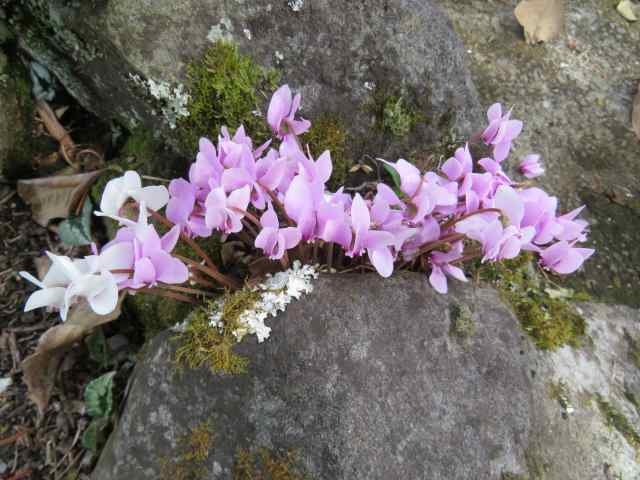
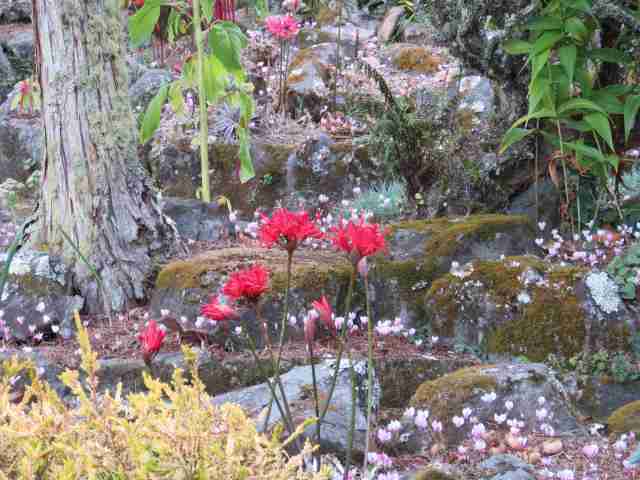
The rockery is a carpet of Cyclamen hederifolium, in shades of pink and white. Sometimes referred to as the ivy-leaf cyclamen, it is native to the Mediterranean area and one of the most amenable and easy to grow species. These days, we mostly let them seed down in situ and from time to time, I will lift clumps of tubers when they get too congested. We have also had success naturalising them on bulb hillsides in meadow conditions but we need to get the summer cut on the grass done at the right time so we can see the flowers. Somewhat to Mark’s surprise, just scattering seed proved as effective as planting tubers but it does take a few years for them to get enough size to be visible.
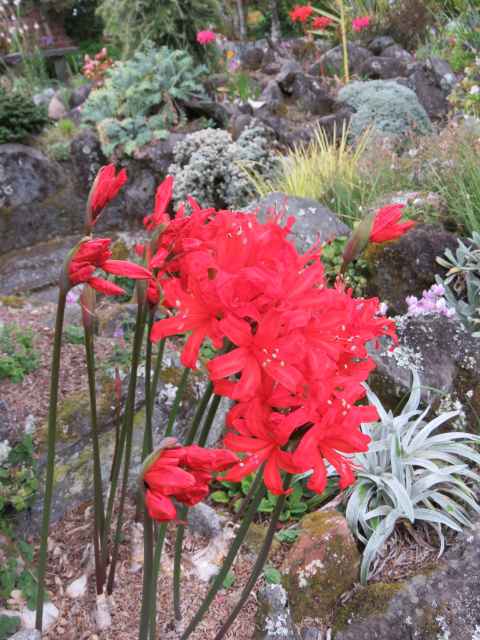
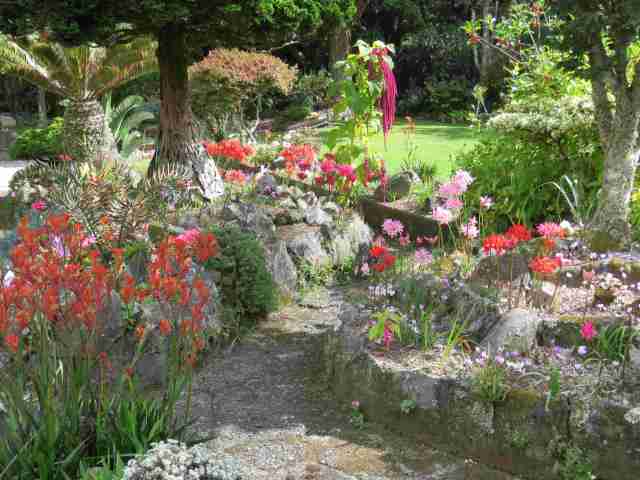
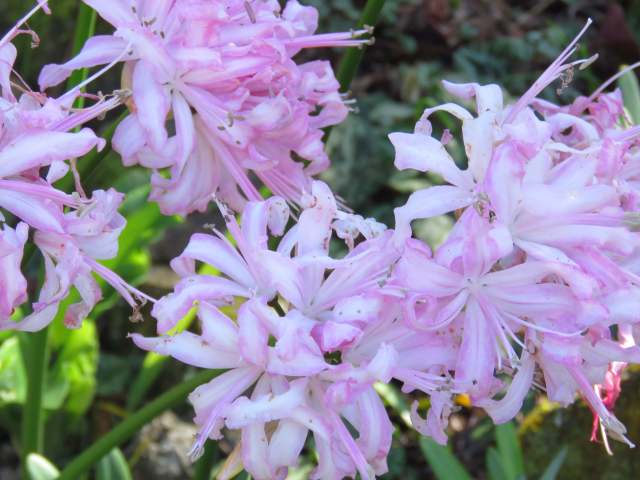
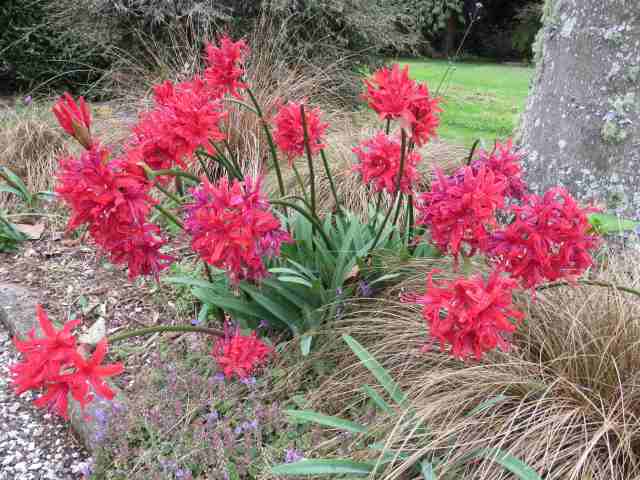
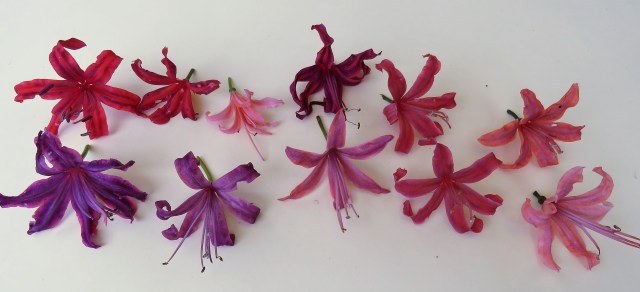
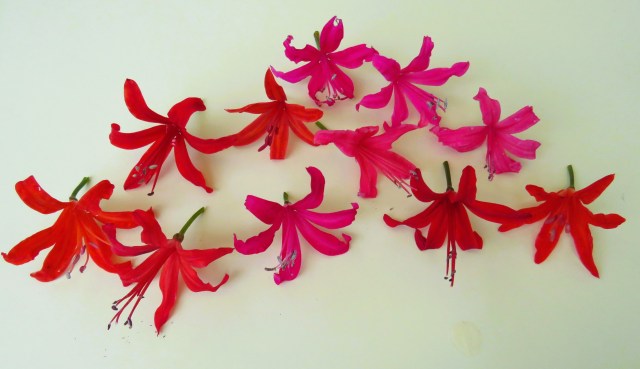
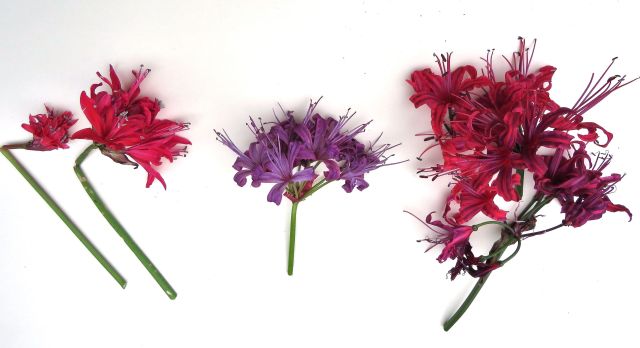
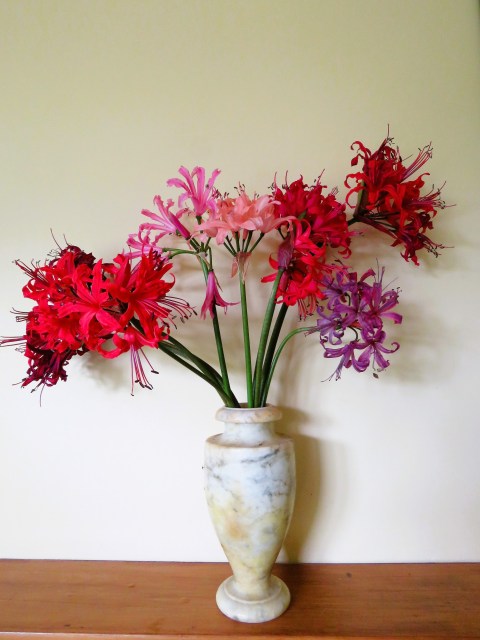
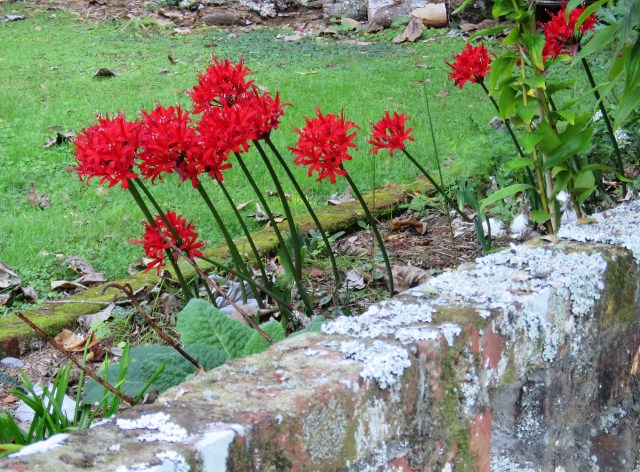
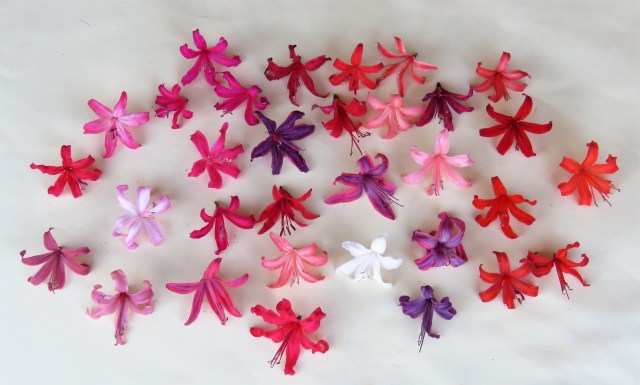
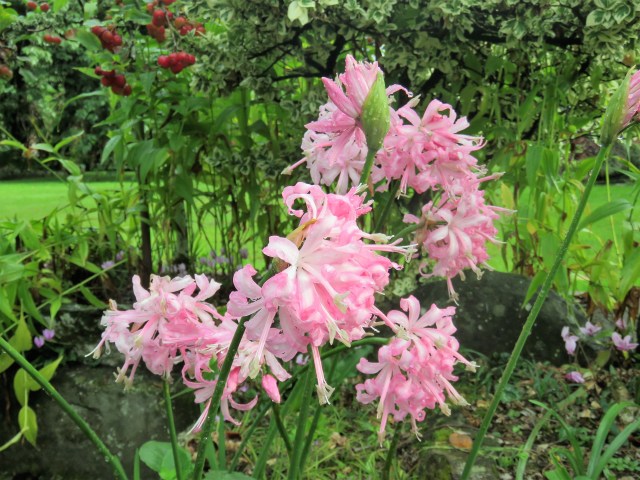
The nerines have just their peak. We do a good line on nerines – well, a rockery filled with them really and we have managed to keep the colours separate. Most are hybrids based on Nerine sarniensis, Felix started with a few good ones, although we don’t know how he came by the Inchmery nerines from Exbury. From there, he and then Mark started trying out controlled crosses to build the range we have today. They are the absolute stars in the autumn rockery, underpinned by the carpet of cyclamen.
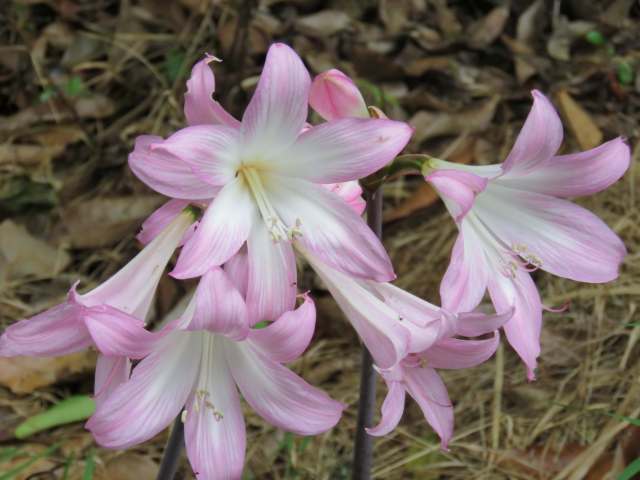
Most of the big bulbs of summer have finished, but I will eat my past words on the short flowering season of belladonnas. I have never tracked them before but seven weeks in full bloom and still going is not a short season at all, by bulb standards. We just take them for granted, really, and fail to recognise what a hard working family they are.
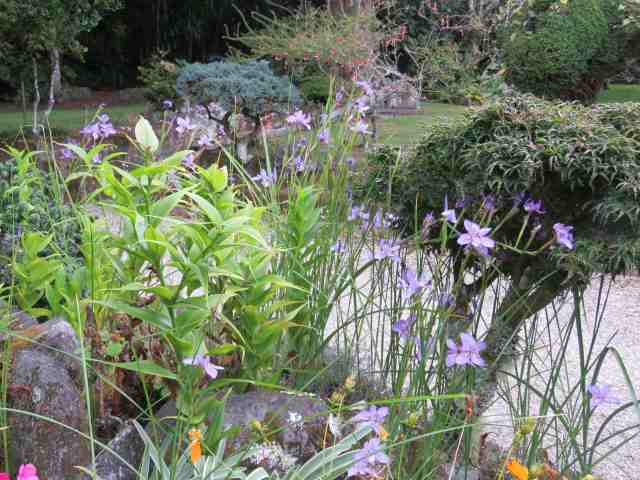
The moraea family is a large one of many different species, the most common being M. villosa and M. aristata – the spring flowering peacock iris. Some are invasive and some are not worth having, but in autumn each year, Moraea polystachya delights us with its blue iris flowers. It sets plenty of flowers down the stem, unlike many bulbs that set just one bloom per stem. It seeds down but not badly enough for us to decide it is invasive and dangerous. It is just gently spreading and generally delights us,
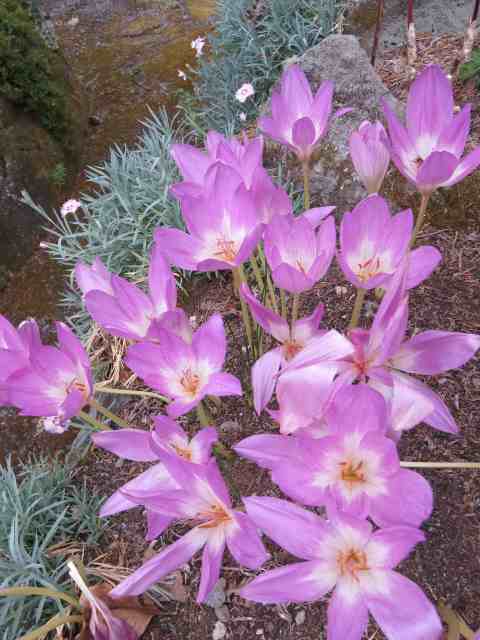
Beyond that, the second species of colchicums are in full bloom now (either C. autumnale or C speciosum – one flowers earlier and one flowers now and one day, I will find out which blooms first). So too are the true autumn crocus in bloom. There are a fair swag of different species of autumn crocus (NOT including colchicums and sternbergia which are often inaccurately referred to as autumn crocus even though they have no connection to crocus at all). The one we have most success with is blue, almost certainly from the C. serotinus group, maybe salzmanii.
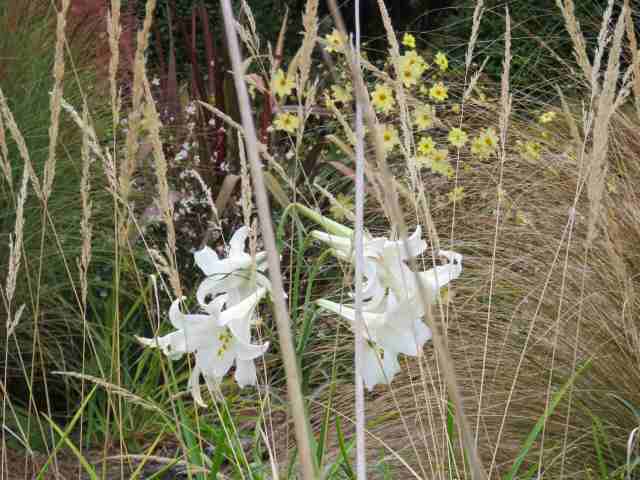
Other bulbs during March that came and went included Haemanthus coccineus, Brunsvigia josephinae and the controversial Lilium formasanum (syn. weedy, also banned from sale).
Sometimes this run of settled autumn weather can last until the shortest day. After a particularly indifferent summer, we have our fingers crossed.













 As 2018 draws to a close, I decided that I do not have anything to say on
 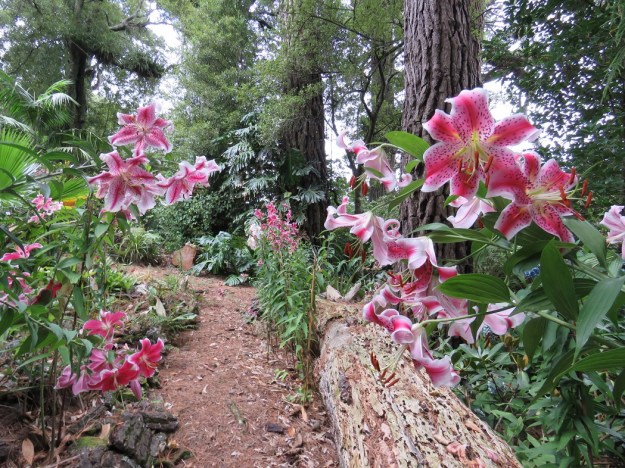 Firstly, January is for lilies.
 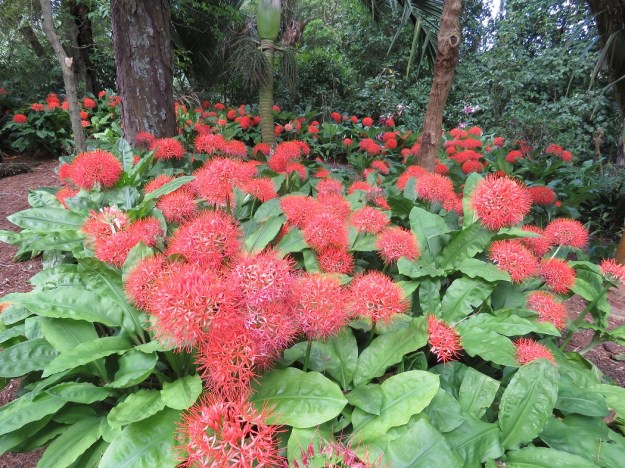 February is peak summer here, when we get the most settled and warmest weather. And the
 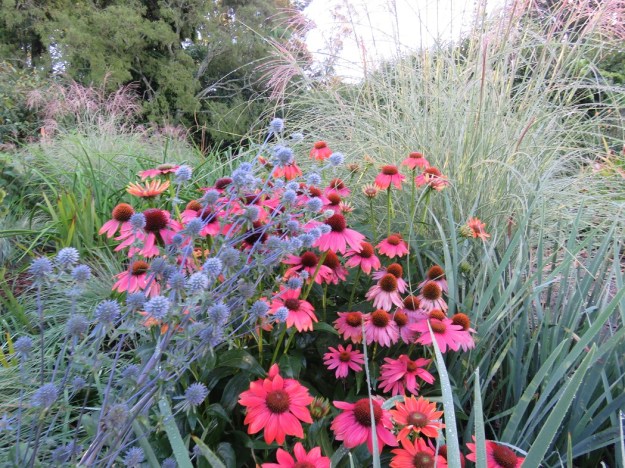 March is still summer here although the day length is shortening and the nights noticeably cooler. It used to be a very green time for us, because we have so much woodland garden and there is not a whole lot of high impact flowering in later summer woodland. We went to England three times to look at summer gardens and it is the sunny perennials that flower into this time. It has been really exciting putting in a large summer garden in full sun. I am extremely impressed by the echinaceas which flower from December to April and I have a very soft spot for the blue eryngium, even if I often need to put a stake in to hold them upright.
 By April, we can no longer pretend that summer will go on forever. The flowering of the
  May brings us the early camellias in bloom, in this case
  June is early winter here. Definitely winter. I could have chosen Mark’s Daphne ‘Perfume Princess’ which flowers on and on through the winter months, but instead I picked Vireya Rhododendron macgregoriae. This particular plant has
  July is our bleakest, coldest month. But there is light ahead. July brings us snowdrops and by the end of the month, we have the earliest blooms opening on both the deciduous magnolias and the early michelias. Nothing shouts spring more than the earliest spring blooms. Mark would like some galanthus varieties that flowered later in the season as well and he has tried all that are available, but none of them compete with Galanthus ‘S. Arnott’ for showy and reliable performance and the ability to naturalise in his bulb meadows that are a long-term project.
 August – yes there is a lot of snow on our Mount Taranaki. All the better to frame our
 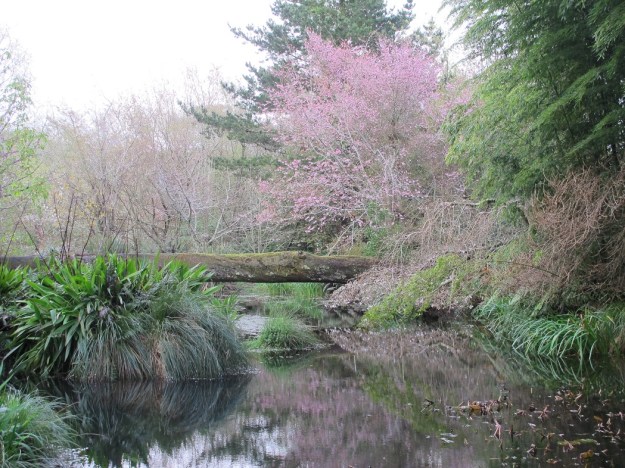 I gave September to the prunus, the flowering cherries. It is probably the campanulatas that are the showiest and they flower in August and I had already allocated that month to magnolias. But we grow quite a range of flowering cherries and this one is down in our wild North Garden, an area that we find particularly charming at this time of the year.
 October is mid spring. And for October, I chose the clivias yellow, orange and red, seen here with Hippeastrum papilio and dendrobium orchids in the Rimu Avenue. As I selected photos, I realised I was leaning to what we might call our backbone flowering plants – the ones we have a-plenty. Not all of them. I had to skip the azaleas, the michelias, the campanulatas and the hydrangeas owing to my self-imposed restrictions of one per month.
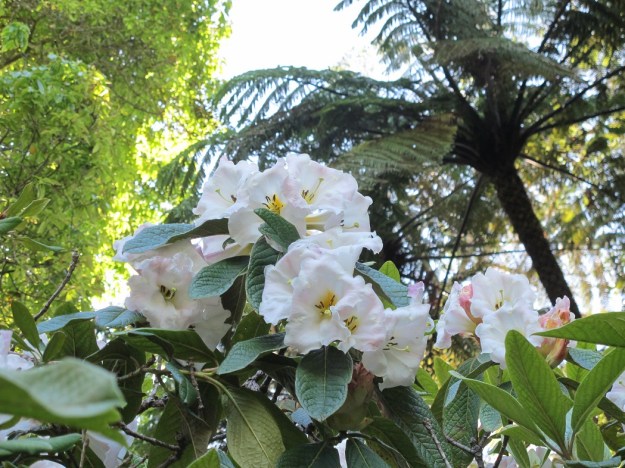 November brings us peak nuttallii and maddenii rhododendrons. The rhododendrons start in August, sometimes the first blooms as early as July, and flower well into December. But the beautiful nuttallis and maddeniis peak in November and are a source of great delight.
 Finally, December is marked by the Higo iris down in the meadow in our park. What prettier way to end the calendar year? And gardening being what gardening is, we start the cycle again with a new year. Best wishes to all readers for a happy and rewarding 2019.
