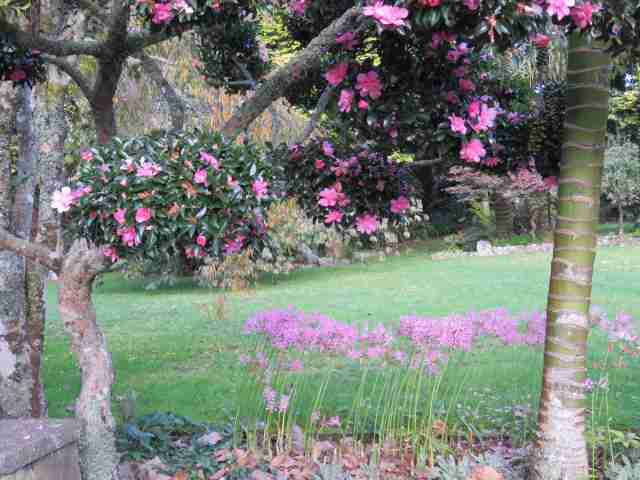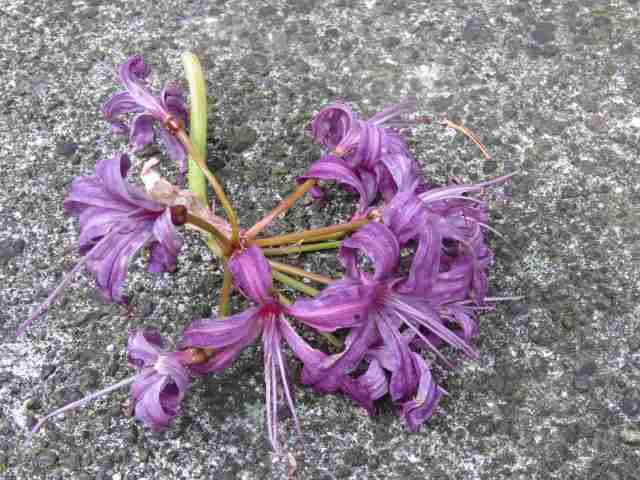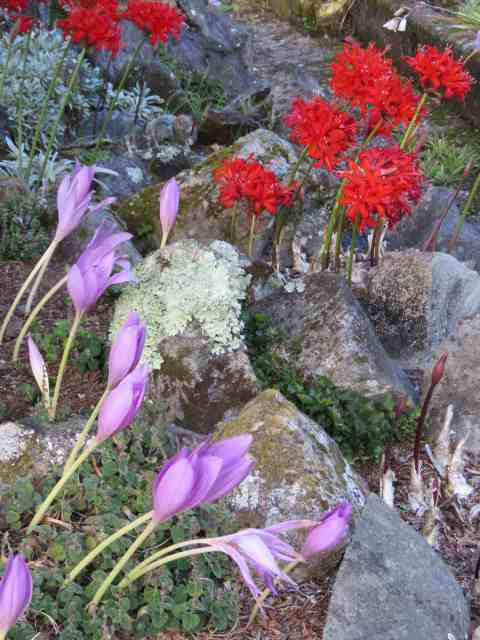
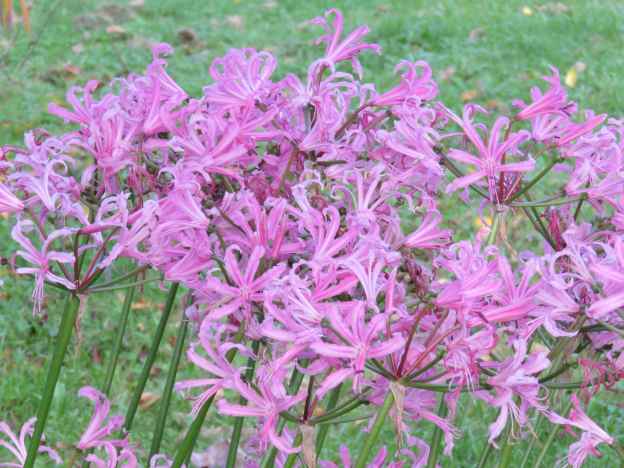
As we adjust to lock down and our personal worlds become so much smaller, I did at least solve a small mystery yesterday. I saw a lovely combination of vibrant pinks when we visited Cloudehill Gardens in the Dandenongs outside Melbourne last year. I can repeat that in my new perennial meadow, I thought.

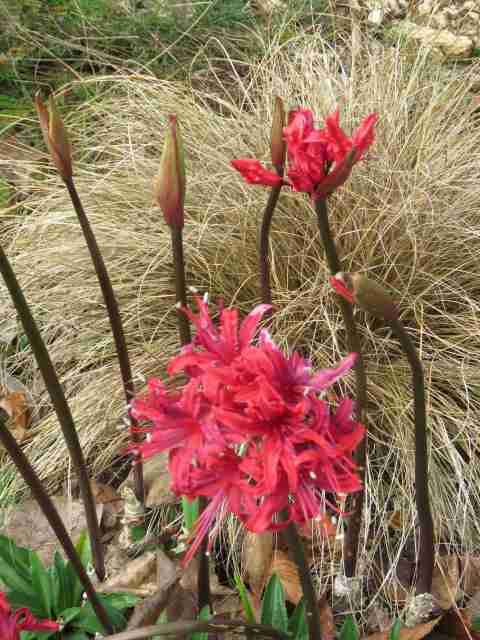
Nerine bowdenii flowering in late May here

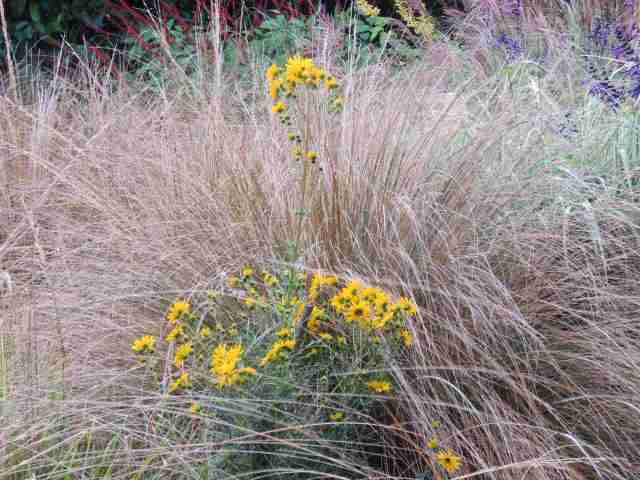
My perennial meadow planting with hidden N. bowdenii
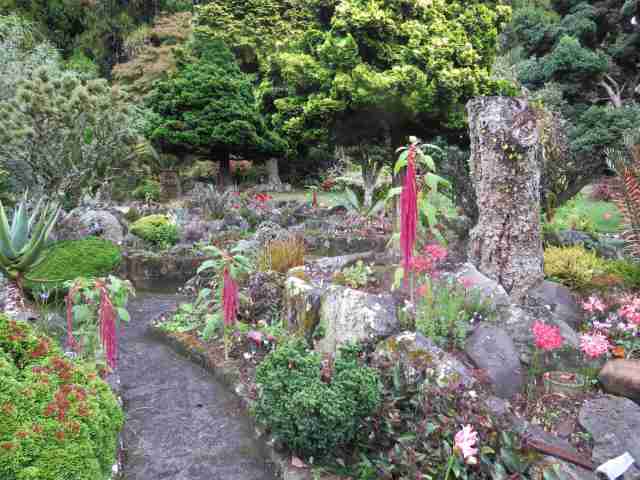
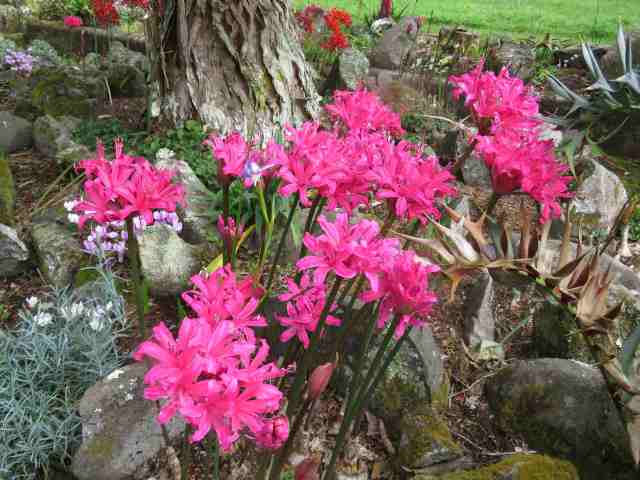
In my mind, I had it as a combination of the deep pink Japanese anemone and Nerine bowdenii. As the anemone came into flower, I found myself wondering where the nerine was before realising that of course it flowers much later here. I considered the possibility that Cloudehill had a selection that flowered much earlier in the season and kicked myself for not checking the flowering times here – easily done in these days of digital photo files that give dates. There seemed to be a story in there about not assuming that combinations seen in different climates will also work at home. I found my photos.

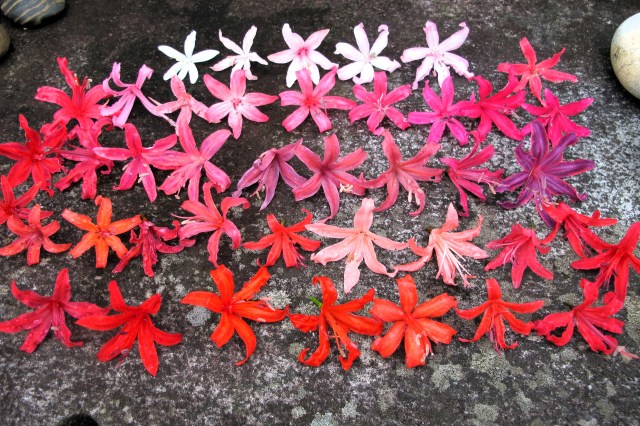
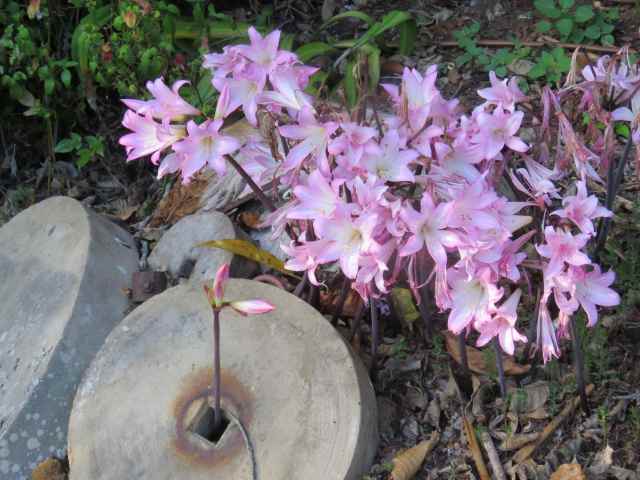
Belladonnas at Cloudehill! Of course. Not N. bowdenii. But then the Japanese anemone actually comes from China. The world is looking more confusing by the day.
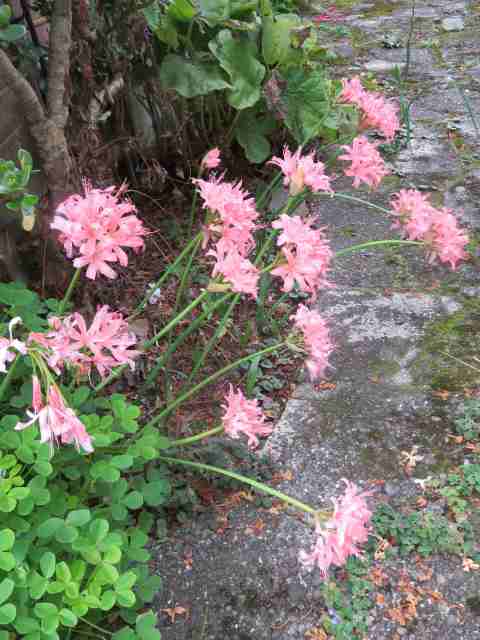
Eagle-eyed readers will have already spotted my mistake. It was my memory. Not Nerine bowdenii at all. Those are belladonnas. That explains it. I am not sure that I want to bring big, thuggish belladonnas into the garden. We have them in abundance on the roadside and on our margins but they aren’t the best garden candidates. In fact we already have both on our roadside and all I need to do is shuffle some of the right pink tones closer to the anemone there.

I just need to relocate some pink belladonnas in the right tones on our roadside and I will have that combination.
As Mark and I had a leisured start to our morning on day two of lock down, he quipped that half the houses around the nation were currently undergoing paint jobs. Lloyd, our garden staffer, had gone in to a Mitre10 Mega on Tuesday and reported that everybody else was in there buying paint and they had sold out entirely of his preferred brand.
We are in the garden so there is no major change for us, except the absence of Lloyd during the week. I have found, however, that my focus and concentration are scattered all over the place. I am telling myself that there is plenty of time – a whole month at least – and it is fine to allow myself a few days to mentally settle into the peculiar new reality we are all facing. Friends have noted the same phenomenon. It doesn’t matter if major tasks get left for a little while.

Fiddly faddling on the Magnolia laevifolia. But where is Lloyd when I need him? He is always most obliging about dealing to my piles of prunings.
This is why I spent yesterday entirely distracted by a very small garden with an untidy Magnolia laevifolia draping itself over the garage roof, leading to a build-up of leaf litter composting on the corrugated iron roof. It is a smaller, defined project that I can complete before my scattered brain gets distracted elsewhere. Fiddly-faddling, I call it. Mark describes it as montying – a reference anybody who watches BBC Gardeners’ World will understand. May you all fiddly-faddle or monty in tranquil safety wherever you are.

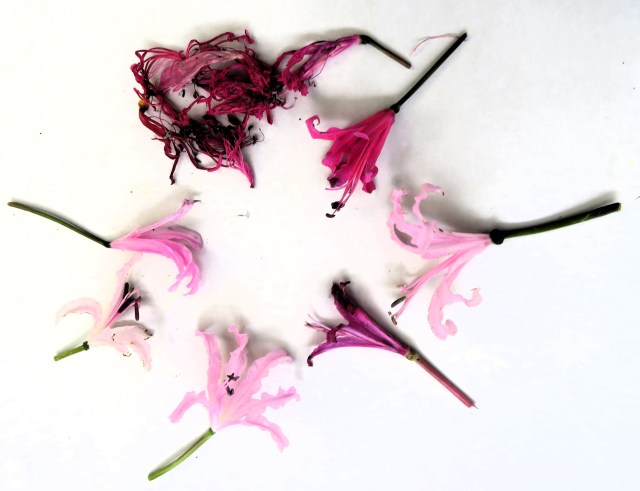
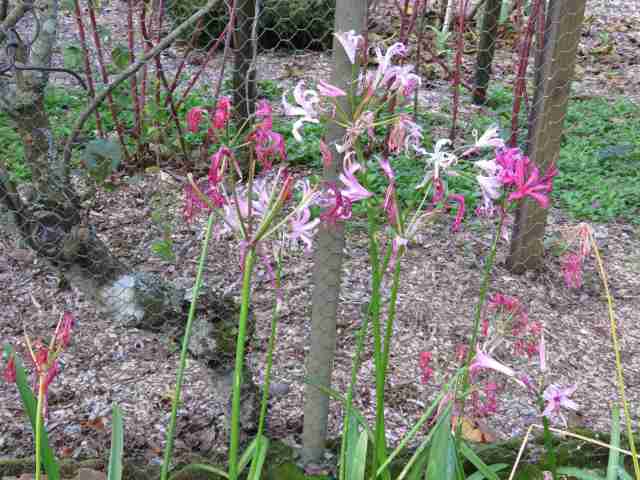
Belladonnas we have a-plenty in a variety of hues but their flowering season is brief and their season is full, smothering leaf is very long


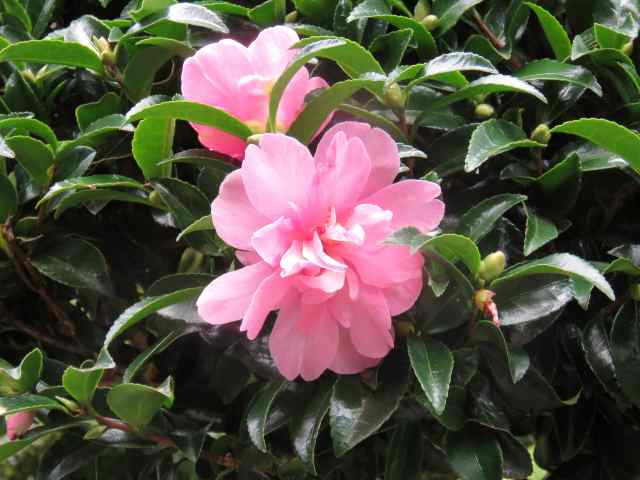
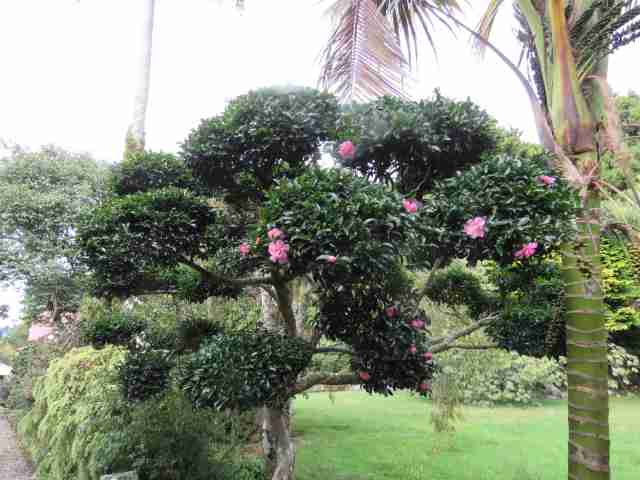
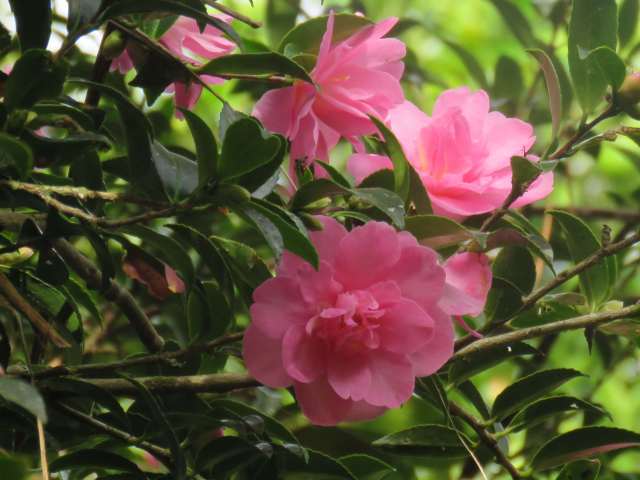
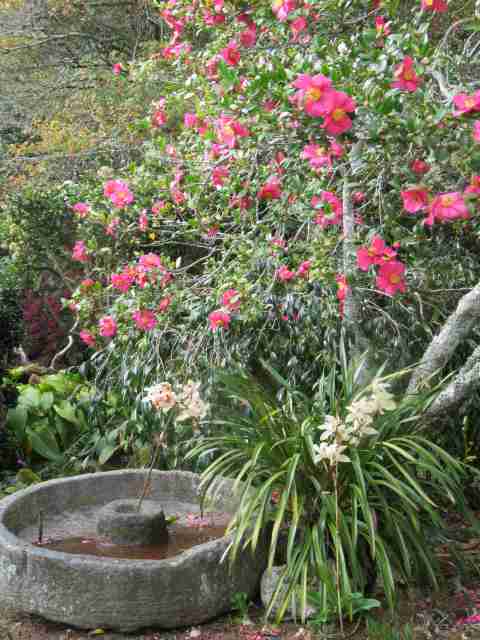
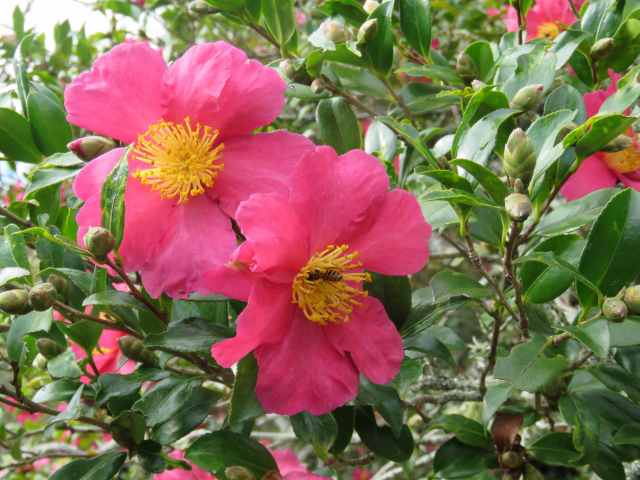
But every autumn, as the sasanquas come into flower we both derive huge delight, particularly from the 


First published in the May issue of NZ Gardener and reprinted here with their permission.
It is indubitably autumnal, but no sign of the leaves colouring or dropping yet as we gently drift into the cooler seasons. I shall do a survey of the plants that take us through autumn, I thought, and headed out to the garden with snips and a basket.
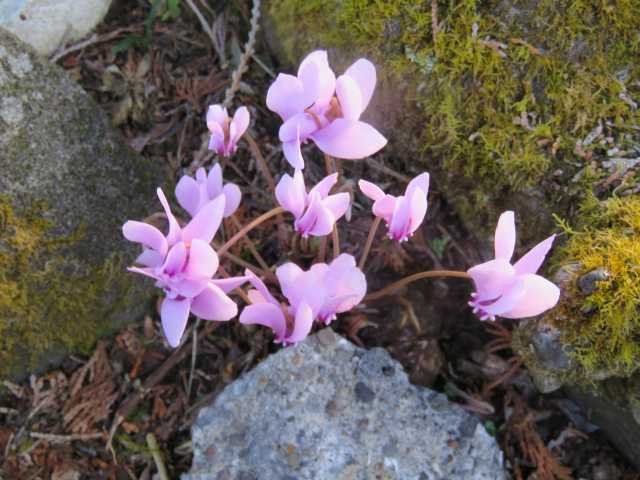
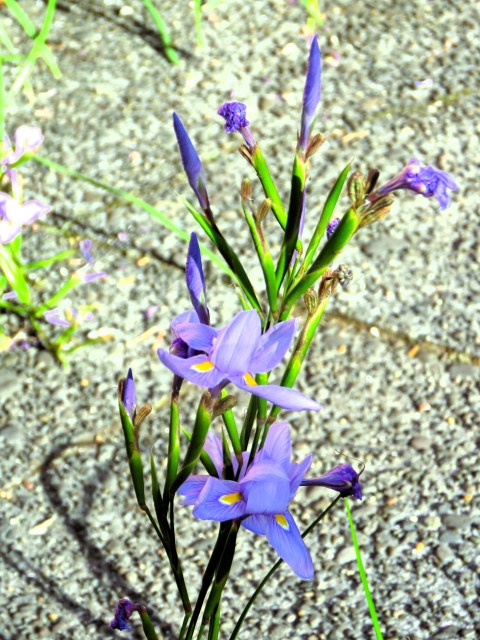
Despite that slight sense of mournful decay that can characterise the autumnal garden, there was so much flying the flag for flowers that I had to group them. It is still early for the autumn bulbs. There is a whole lot more to come but the nine in bloom at least indicate that not all bulbs belong to spring. Starting with the white flower at the top of the photo, going clockwise, these are: Crinum moorei, belladonna, Colchicum autumnale, one of the autumn crocus (could be C. serotinus), Moraea polystachya which is an unsung star amongst the autumn bulbs, Cyclamen hederafolium both pink and white, the dainty little Leucojum autumnale, the earliest of the oxalis (hirta, luteola, massoniana and lobata) and the first of the nerines that will become the rockery stars over the next few weeks.
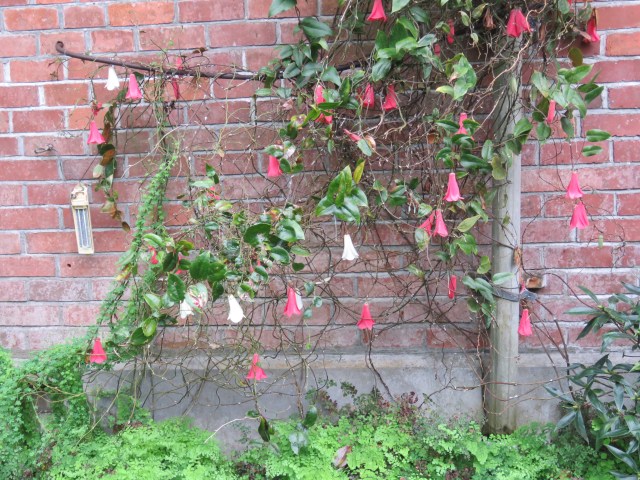
Climbers can be a little bothersome to place. Too many are strangling, invasive things, smothering their host as they scramble to the top, or, like the Rhodochiton atrosanguineus, seeding down in perpetuity. Others are such retiring little dainties that they can be difficult to keep going. Flowering for us at the moment are the bougainvillea (very much in the rampant camp) and one of the more garden-friendly jasmines at the top but we have lost track of which one it is. It has good fragrance, flowers pretty much all the time and is strong growing – bordering on rampant – but not as aggressive as the weedy jasmines. It is planted on the corner of the bedroom once inhabited by our daughter of the same name. Immediately below, the purple flower like a mini streptocarpus is on a soft vine, but its name escapes us at the moment. Well, I have never known it and Mark thinks he raised it from commercial seed but has yet to recall what it is. To the right are the lapagerias – Chilean bell flowers – with their wonderfully long blooming season and obliging habits. Sure it can take several – many, even – years to get a vine established but once there, these are rewarding plants for the shaded side of the house.
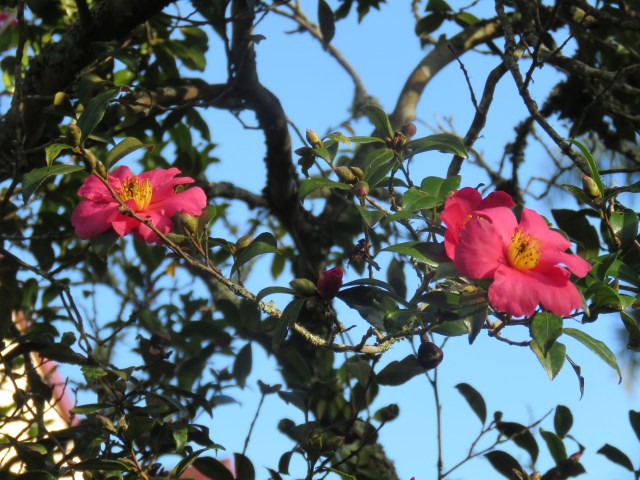
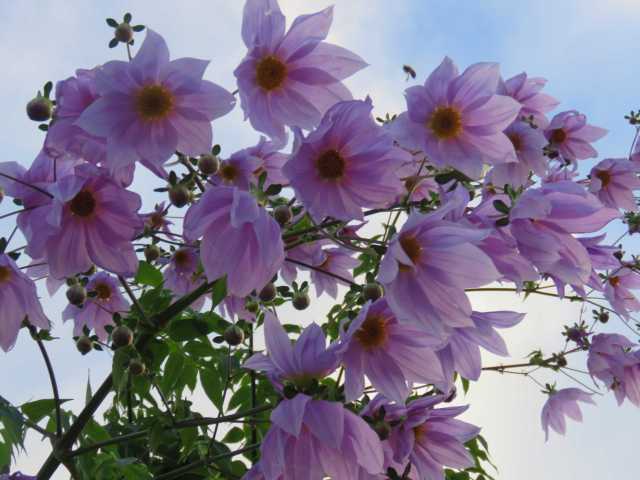
The flowering shrubs and trees are not so numerous at this time of the year. Top row left, we have Radermachera sinica (more on this below), Hydrangea Immaculata which is still at peak rather than that fading over to dusky spent flowerheads, next row down is the fragrant osmanthus (though not sure which one) and the so-called African butter knife plant or Cunonia capensis. Then comes the white flowered tibouchina which seeds down far too freely here but does compensate by flowering pretty much all the time in semi woodland conditions. Fuchsias are not a strong point for us, but the one on the left has been here forever it seems, surviving even falling over, splitting apart and drought. The one on the right is the attractive but dangerously weedy Fuchsia boliviana. Second row from the bottom is a sampling of vireya rhododendrons – have enough of these around the place and there are always some in flower, 52 weeks of the year. In the bottom row are the first of the evergreen azaleas embarking on their marathon blooming from early autumn right through to mid spring and the first camellia.
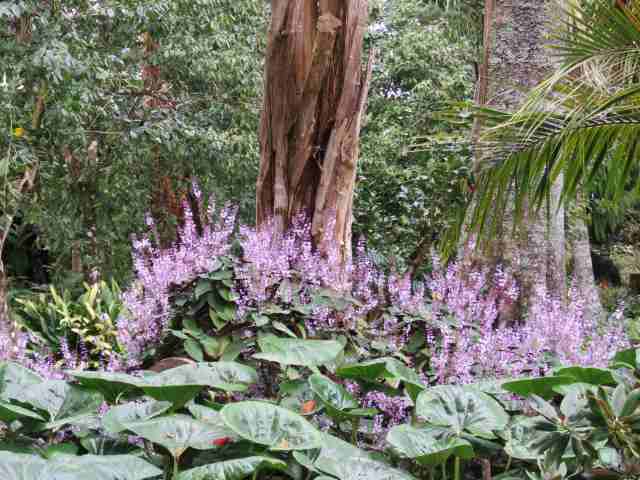
Camellia sinensis will no doubt be of interest to some. It is always the first to flower though with such insignificant blooms that they are easy to miss. This is the tea camellia, and yes, sometimes we do harvest the young leaves to make green tea. White flowered tea camellias are more common and we have a plant somewhere – in the “plant out” area, I think, waiting to get out of its pot.
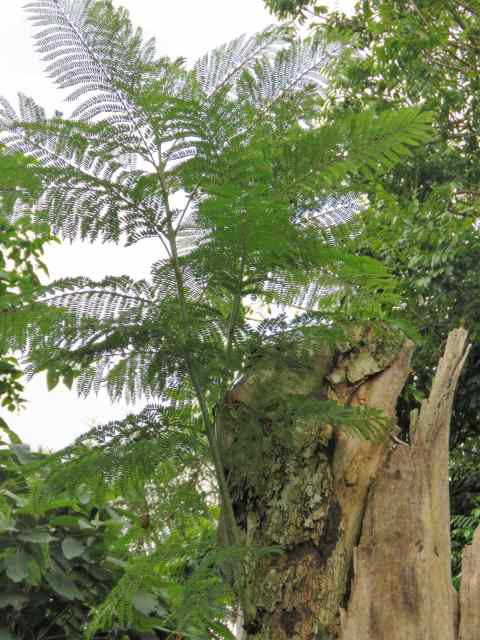
I was pretty thrilled by the Radermachera sinica when Mark alerted me to it in bloom. It has a divine and heady fragrance. The trouble is that it is sub tropical to tropical so treated as a house plant in the temperate world. But it is a tree and ours is shooting skywards. Besides, we don’t do houseplants so we are yet to decide what to do with this plant besides enjoying its current flowering.
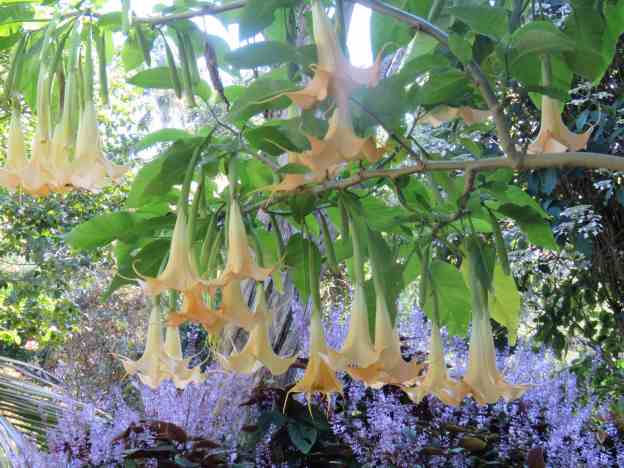
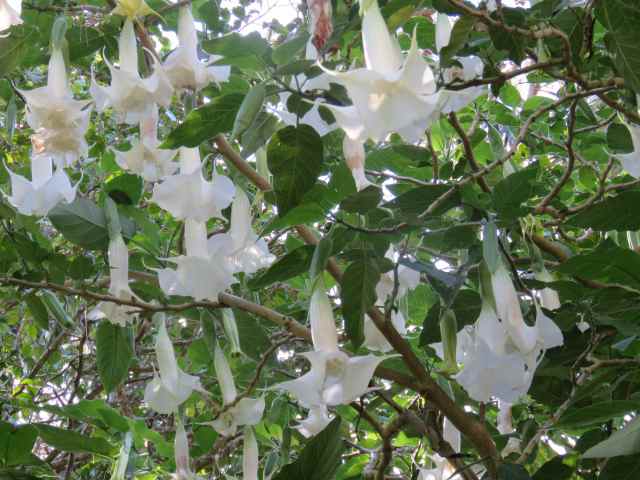
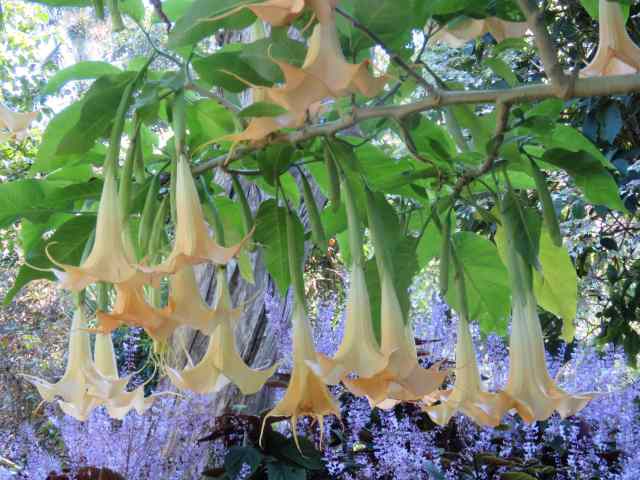
Finally there are the perennials and annuals still in full bloom. In brief in the yellow tones, we start with a damn big yellow salvia at the base and head around clockwise: kniphofia species, one of the gesneriad family whose name we have currently forgotten but which makes an excellent woodland plant, datura, dahlias, simple little autumn zinnias (none of the over-bred, bushy, compact, modern hybrid bedding plants), a handy yellow ground cover which flowers for a very long time and whose name will come back to us at some point, Hibiscus trionum and the common wildflower oenothera which is remarkably rewarding when it comes to blooming on and on.
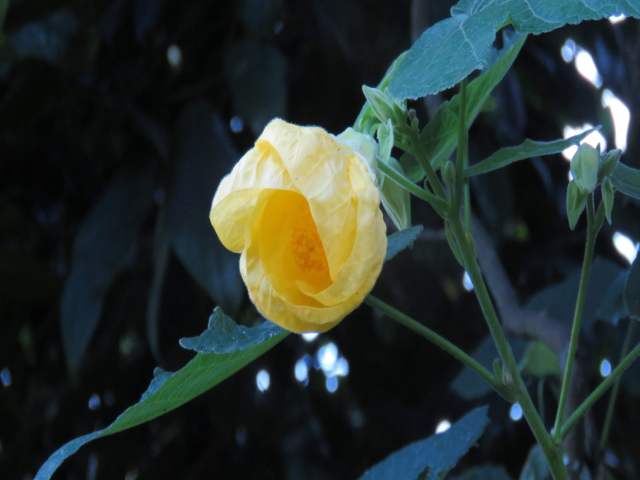
In the pinks and whites, we start at the top with the under-sung white plumes of Actaea racemosa (syn Cimcifuga racemosa) whose fairy candles light up a woodland area, a simple dahlia seedling, the annual Amaranthus caudatus which is self sown, the lovely wind anemones, assorted daisies, streptocarpus (bit of one-upmanship here – we use these as permanent bedding plants in frost-free locations), one of the saponarias, a really old, self-maintaining strain of impatiens that has naturalised in our woodland, a self-seeded abutilon which should have been amongst the shrubs and some rather large and resilient begonias.