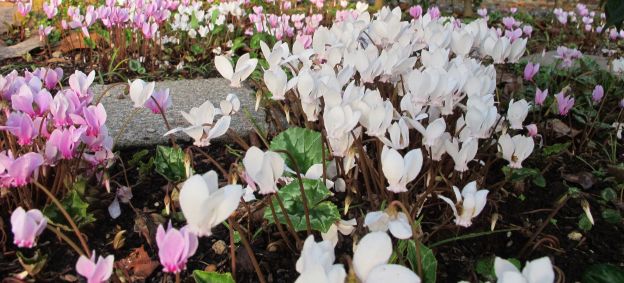
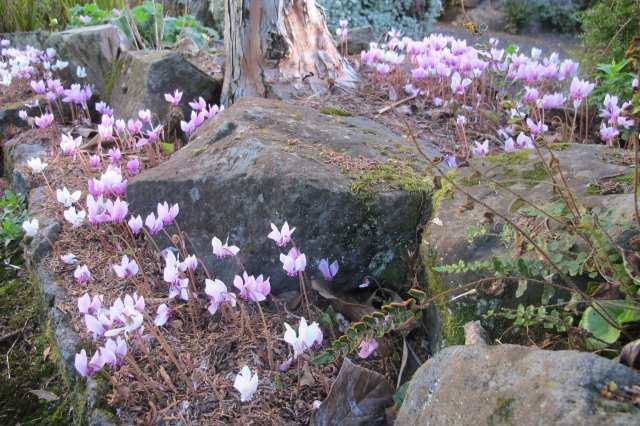
Unlike earlier months, the April bulbs here have been a narrow range of different varieties, although certainly not in terms of numbers. The rockery in particular is a carpet of Cyclamen hederifolium but, as that became full, we have gently encouraged its spread to anywhere it wants to grow. It is very much the easiest and most adaptable of the cyclamen we grow.
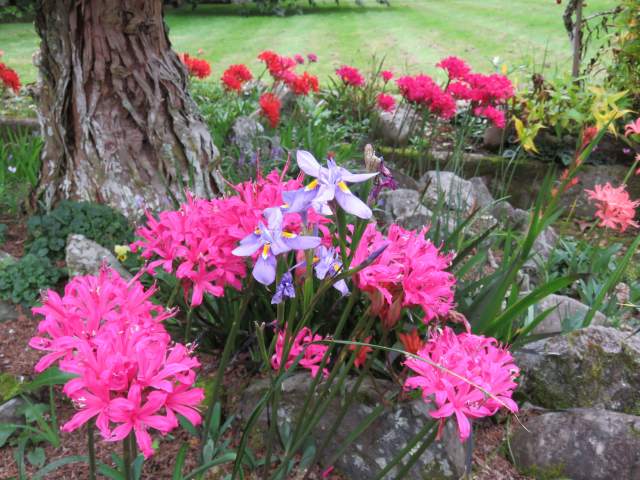
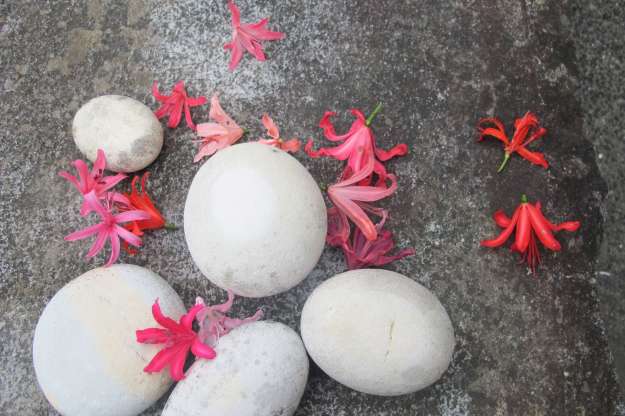
I wrote about both the Nerine sarniensis and the Moraea poystachya last month as they hit their peak. Both are heading towards the end of their season now but a six week season is a long time for a bulb.
The autumn snowdrops are always a surprise but at last I looked them up and I am pretty sure that these are Galanthus reginae-olgae, Queen Olga’s snowdrop. In the likelihood that few readers, if any, even know who this Olga was, I can advise that she was Olga Constantinovna of Russia who was also Queen of Greece at the time when a Greek botanist identified this species native to the area.
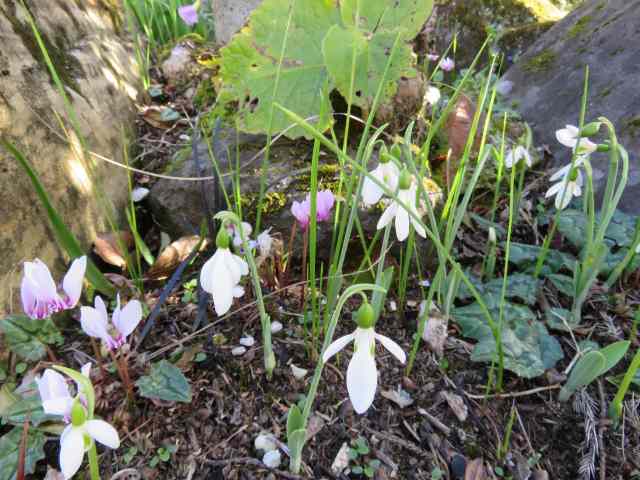
Mark often cites this snowdrop as an example of how even the most charming of bulbs is most charming when it flowers in the season when we expect it. Snowdrops, he feels, belong in late winter to earliest spring – harbingers of season change – and most of them do flower then and we are delighted to see them. It is why, as a plant breeder, he wants plants to flower at their allotted time of the year, not to appear as a novelty at the ‘wrong’ time.
I digress, but when a new species of camellia, known first as C. changii but then renamed to the less helpful but correct in plant nomenclature C. azalea, became available, his interest in acquiring it for breeding was decidedly lacklustre. Its main flowering is in summer whereas pretty much every other camellia flowers in autumn (for sasanquas and some species), winter or early spring. A summer flowering camellia still strikes him as fundamentally on the fringes of the natural order; after all, he argues, we have an abundance of other summer flowering plants and we don’t need a range of camellias flowering at the same time.
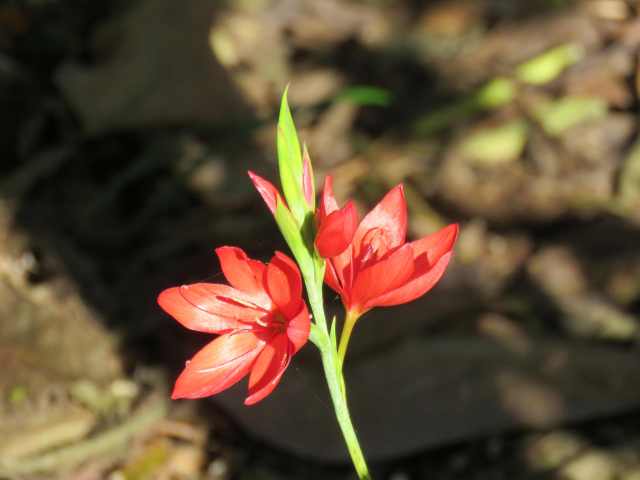
A somewhat unsung but easy autumn rhizome is what we know of as a schizostylis but I see it is more correctly named as Hesperantha coccinea. I am not sure which name is easier to remember but maybe its common name of ‘river lily’ could be helpful, even though it is an iris, native to southern Africa and Zimbabwe. I see photographs on line of it growing in big clumps, but its foliage is unremarkable. I divide it up and dot it through the cottage gardens we refer to as the Iolanthe garden to add an extra bit of autumn colour and interest. It seems to be more favoured in the UK where it has a history in the cut flower industry and various named cultivars selected and even awarded by the RHS. Perhaps we are not so much into autumn bulbs in these southerly climes.
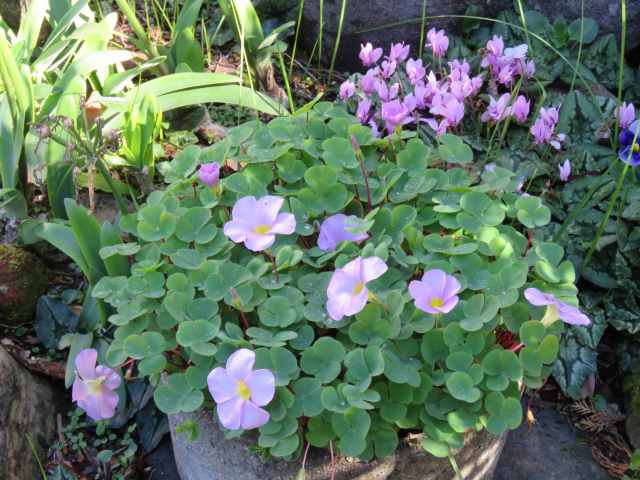
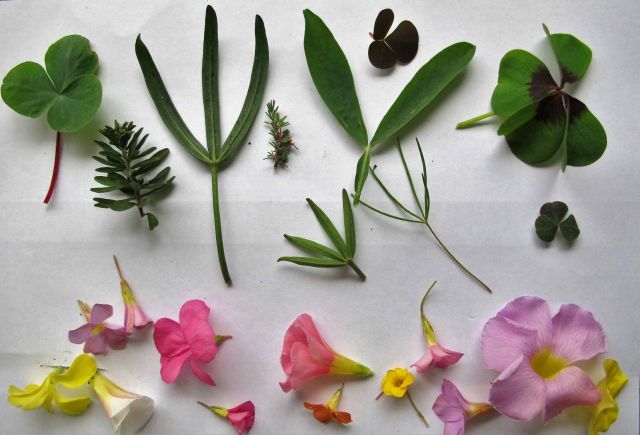
The other main group of bulbs just hitting their stride are the ornamental oxalis. Set aside your prejudices about oxalis – there are a few that are real pests and downright weeds but there are also some that are extremely ornamental – pretty as. But they are not all equal. Some have good looks but a fleeting season in bloom (here’s looking at you O. fabaefolia and flavas pink and white). Some are downright dangerous with thousands of teeny tiny bulbs that if you liberate in your garden, you will never get rid of unless you replace the soil entirely. Some are not strong enough to survive well in garden conditions and need to be nursed along in pots. But some are excellent in the garden and not a problem at all.
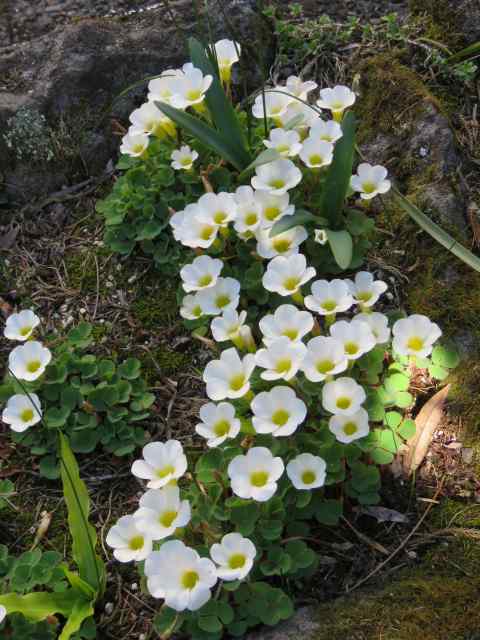
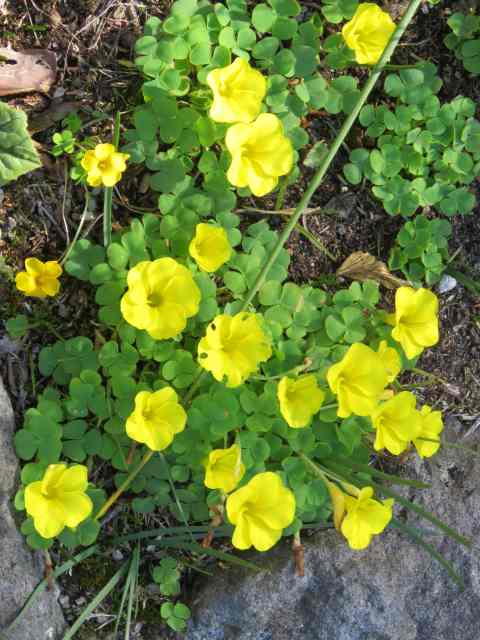
When our Zach was doing his apprenticeship here, he was required to curate a collection of plants and he chose oxalis. He has a collection of over 30 ornamental species now, most retrieved from the garden where I had planted them (and regretted some). They are variable in terms of garden merit but it is hard to beat O. purpurea alba and O. luteola as garden plants. Call them by their common name of wood sorrel if it makes you feel better.
And so to May this coming Friday. The new month will open with Nerine bowdenii, the last of the nerines to flower for us each season and the easiest to grow and bloom. I see its first flower has opened.