
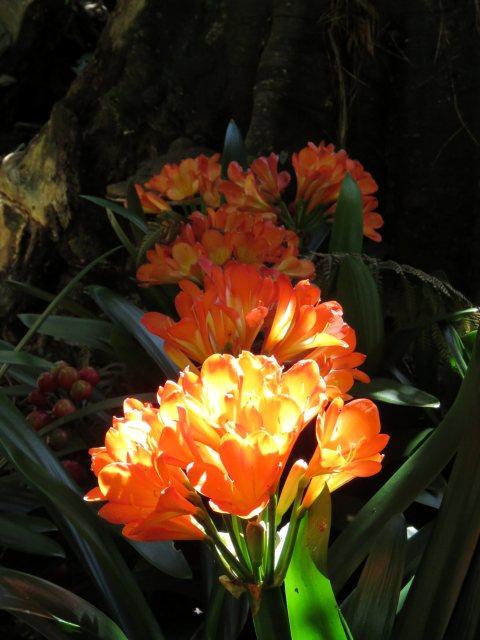
I was amused recently when Zach cast a jaundiced eye over a moderately large planting of clivias and sniffily declared that really, they are just a classier version of agapanthus. When I reminded him of this comment a few days later, he showed even greater disdain, suggesting that maybe clivias just think they are of higher status.
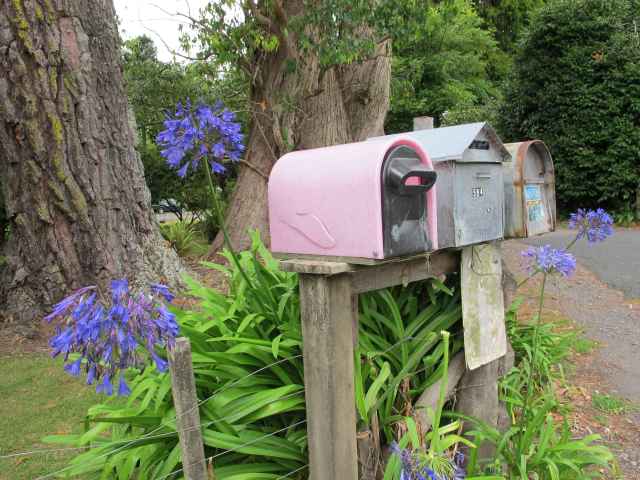
For overseas readers, it is hard to think of a more derided plant in Aotearoa NZ than the humble agapanthus. Maybe a few dwarf or variegated forms are in some gardens, but they are generally dismissed as roadside weeds and every summer brings out the I Hate Agapanthus Collective. Personally, I can see their merits and I enjoy their summer flowers but I am in a minority. I think they suffer from familiarity breeding contempt.
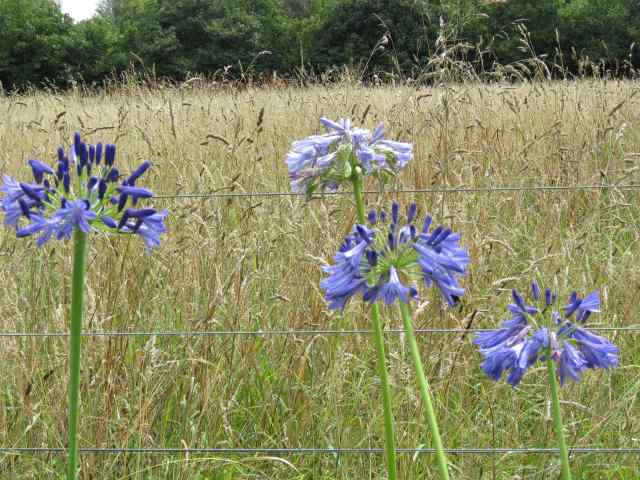
It is true that the clivia and agapanthus both have long, fleshy, narrow leaves, form very big clumps that can be intimidating to remove if you don’t tackle them with a sharp spade and remove them in sections. They grow in areas shunned by many other plants and are low maintenance. Both set seed freely but the seeds are heavy so fall straight down to germinate close to the parent rather than being spread by wind and bird.
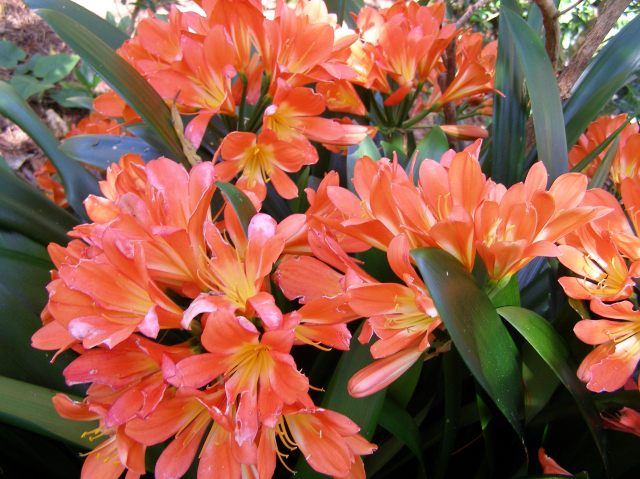
The clivias flower over a good period of time in winter and spring and the dominant colour is orange. Their ability to thrive in shade and dark areas is much lauded. Agapanthus flower freely over a good period of time in summer and their dominant colour is blue. Their ability to thrive in harsh conditions on roadsides and clay banks is cursed and derided; they are never lauded for their resilience and dependability.
I have seen gardens afflicted with the TMC syndrome (Too Many Clivias) and as Zach and I stood looking at one area in our garden, I was slightly shocked to see we had slipped into that same gardening affliction.
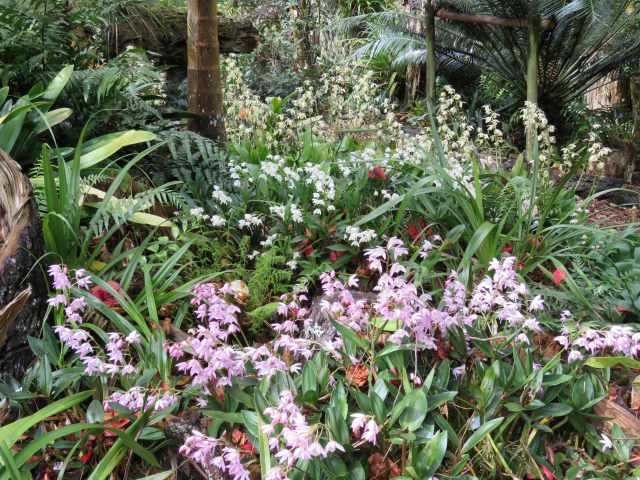
In times gone by, I used to remember to take before and after photos of garden projects. My mind was always on possible material for my newspaper and magazine writing. I don’t usually remember these days so I am missing the before photo. The closest I can find is slightly to the right because it is focused on the orchids. But even this area was in danger of getting swamped by encroaching clivias and ferns.
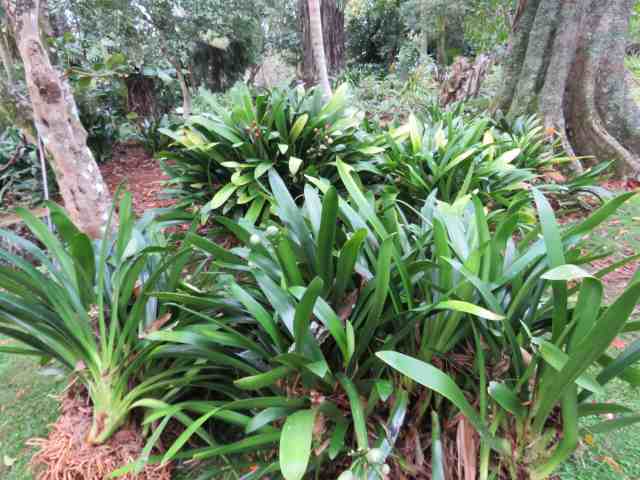
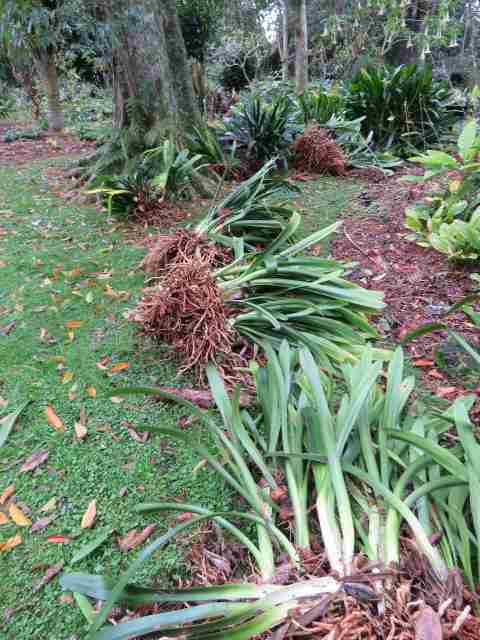
I can at least give you some indication of the scale of clivias we removed from just this one area. A friend took them as she wants ground cover in a large, shady area and – being a precise person – she reported back that she planted 143 clumps – not separate divisions but manageable clumps. That is a lot of clivia from an area that can not have been much more than three or maybe four square metres.
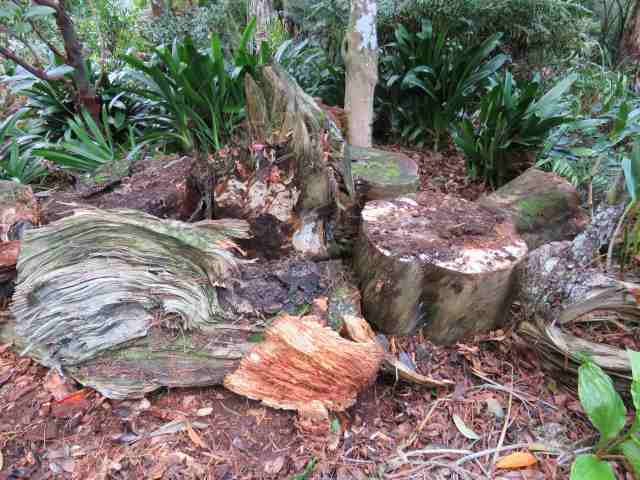
Meantime, with a bit of juggling and the creation of another of Zach’s orchid theatres (think, auricula theatre but more au naturelle) of old rings and stumps from our pine trees, it is not at all clear from where those excessive clivias were removed. It does, however, look as though we have given the more precious plants in the foreground room to breathe.
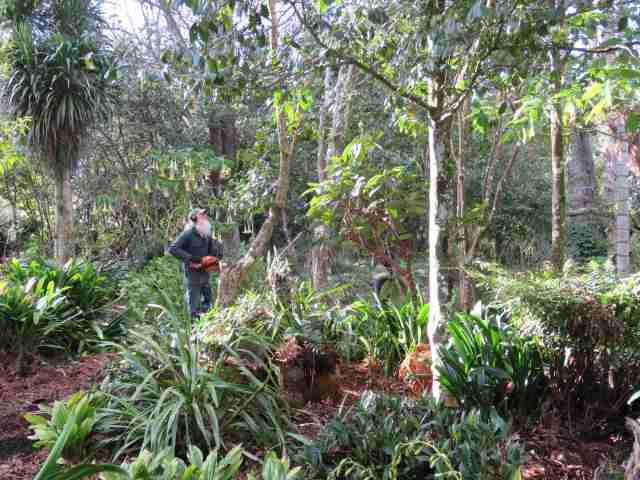
This was an old area planted out entirely in Felix’s camellias until 1990 when Mark took it in hand. We have kept some of the camellias for shelter as much as anything else but the plants are between 50 and 70 years old and many are very stretched, reaching for the light. We took some stray branches off to let more light through but targeted one camellia to cut back to a strong new growth about a metre above the ground. That meant removing about four metres of growth above that height. It will recover and be bushy and lower for the next decade or maybe two. We do a few camellias each year to let the light back in.
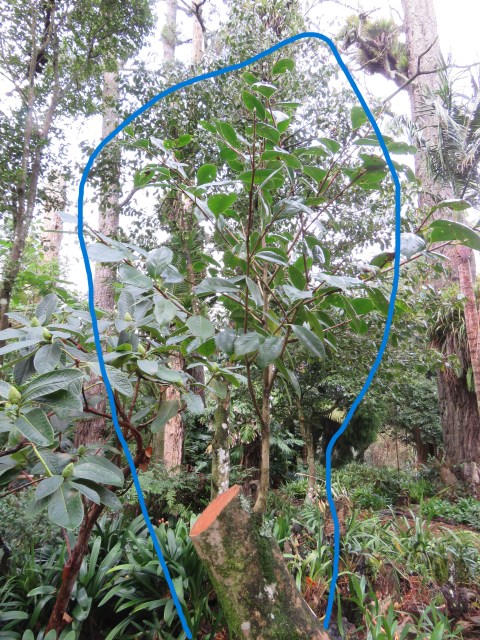
Gardens, especially large gardens with many trees and shrubs, can close in on you at a pace that is so gradual that you don’t actually notice the change in conditions over time. In a young garden, the focus tends to be on cramming more plants in to give a well-furnished, established look.
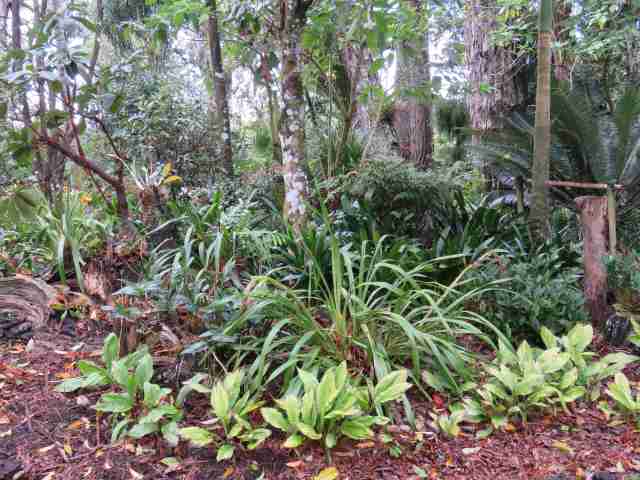
It is the opposite in a mature garden. It becomes an exercise in thinning out plants and keeping light and space within the garden, retaining detail that can get swamped out. In my experience, this is the skill that many garden owners struggle with. Too often, it is left too long to take action and then all they can think to do is a major slash and burn to restore juvenility to the garden. Our aim is always to tread lightly, to carry out such renovation and thinning may be necessary but not to make it blindingly obvious.


I fully agree with regard to mature gardens. By the way the double white tree Dahlia is D excelsa, not imperialis alba.
Keith
Dr Keith Hammett, QSM ~ Plant Breeder 488c, Don Buck Road, Massey, Auckland 0614, New Zealand TEL +64 (0)9 833 9453 | MOB +64 (0) 21 0227 4251
EMAIL keith@drkeithhammett.co.nz
WEB http://www.drkeithhammett.co.nz
>
Thanks, Keith. I will correct the name on the dahlia. I have a mental block on these species and have to check them. On this occasion, I was too careless.
You were very discreet on the clivia comments.
Tottally agree. Evfen at 8 years old we’ve had to remove several trees planted originally for screening. Thank goodness for capable arborists!
I wish we could get Clivias to grow like that and self seed as freely as some of the Agapanthus do. I think we may be just a little bit too cold for them to be happy in our garden, but we do have a few, they do flower and produce seeds and we have had a couple of seedlings grow. We rather like Agapanthus, but Mel is very rigorous in dead-heading them before they have a chance to produce ripe seed. They aren’t too hard to remove with a sharp spade in sections and I’ve found that any bits you want to replant somewhere else simply need to be dumped on top of the soil where you want them to grow and they will take root and do well without you ever needing to bother with digging a hole.
Our garden, at 35 years old, is at the stage where some of the earlier trees and shrubs that we planted have got pretty large. We periodically decide on areas that we want to change and cut out what we need to provide the space and light. One such area I finished clearing in the summer now has some Brugmansias planted in it that I had grown from cuttings the year before. I’m hoping they can do as well as that one in the background behind Lloyd in your photo. They are in the same sheltered area as our big tree Dahlia.