Category Archives: Garden lore

Wisdom and hints

Garden lore

“The area of a handsom Garden may take up thirty or forty Acres, not more.”
Philip Miller, The Gardener’s Dictionary (1724).
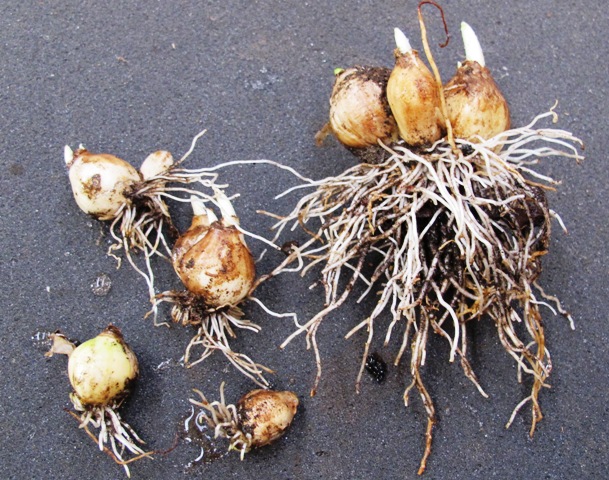
???????????????????????????????Breaking the rules on dividing bulbs

Traditional wisdom is that bulbs are divided when they are dormant. The problem is that when they are dormant, it is easy to forget where they are in the garden. Inspired by the fact that English gardening practice is to divide and replant snowdrops when they are in full growth (usually just after flowering), I have been breaking the rules about dividing other bulbs in recent years. Now when it comes to the likes of daffodils, lachenalias, crocus, nerines – in fact most bulbs – I split them up and replant at pretty much any time of the year. Gently does it, is the rule. You need to tease apart the clump of bulbs so that each one retains as many roots as possible. If they don’t tease apart, then replant them and do it when they are dormant and less vulnerable. It does not seem a good idea to replant any growing bulbs into heavily compacted ground so I dig over the ground well and add compost before gently spacing each growing bulb in place and covering with soil. Don’t let them dry out after replanting. That is it. Flowering is generally determined by the previous season, so dividing when in growth does not usually disrupt their display. If they are going to protest and sulk, it will be next year that they skip blooming.

First published in the Waikato Times and reprinted here with their permission.
Garden lore

“My garden, that skirted the avenue of the Manse, was of precisely the right extent. An hour or two of morning labour was all that it required. But I used to visit and revisit it a dozen times a day, and stand in deep contemplation over my vegetable progeny with a love that nobody could share or conceive of, who had never taken part in the process of creation.”

Nathaniel Hawthorne, Mosses from an Old Manse (1846).

002 - CopyAutumn planting

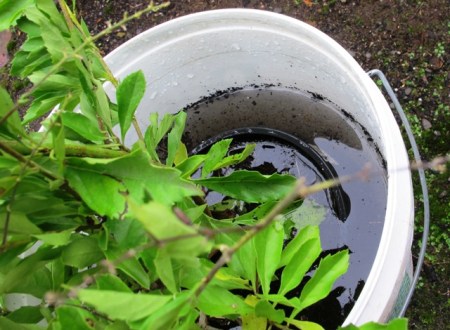
Autumn is the best planting time. That is not garden industry hype to encourage sales. It is simple fact, though often ignored by gardeners who only get inspired in spring and therefore drive peak sales at that time of the year. When you autumn-plant trees and shrubs, which includes all hedges, roses and fruit trees, they have time to establish their root systems during late autumn and winter before all their energy goes in to spring growth and flowering. This makes them much better placed to withstand the stress of subsequent summer heat and possible drought.

We are still very dry for this time of the year but there is much less evaporation happening as temperatures have cooled. Make sure you soak the root balls of the plants thoroughly before planting. This is best done by plunging the entire plant, pot or bag and all, into a bucket or tub of water and leave it there until the bubbles stop rising. This can take at least 20 minutes. If your soils are still bone dry, place the plant in the hole and then fill it up with water before you back fill the soil. With the light rains we are getting, this is probably enough to keep the plant moist without additional watering, until wetter times return.

First published in the Waikato Times and reprinted here with their permission.

Garden lore

“Now us the time to thin out the carrots…” (is) an observation which always makes me come out in a cold sweat, when I read it in a London paper. As though the earth were hardening, minute by minute, so that one must rush up to the country and do things before it is too late.”

Down the Garden Path by Beverley Nichols, (1932).

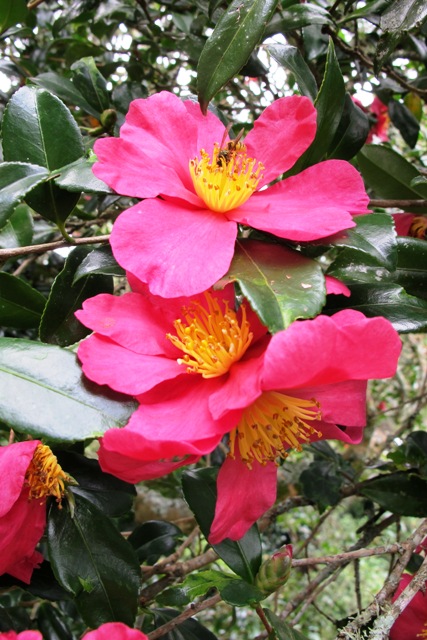
Camellia sasanqua Crimson King

Camellia sasanqua Crimson King

Autumn flowering sasanqua camellias
Most of the early camellias just coming into bloom now are sasanquas. Not snackwas, sankwas or other variants. Nor are they all white and called Setsugekka, as rather a lot of novice gardeners used to think.

Sasanquas come from Japan (most of the other types of camellias are Chinese) and are small woodland trees in their native habitat. They generally have smaller, darker leaves which is why they clip so well to hedges as well as being tolerant of full sun and wind. Being somewhat slower to get away as nursery plants, you may find plants for sale are a little smaller and more spindly than their stronger growing japonica cousins but they make up for it when planted out. While often described as scented, it is a mossy sort of scent rather than sweet perfume.

The big plus for sasanquas now is that they are generally free from petal blight which is decimating the flowering displays of many other camellias. Petal blight is what turns lovely camellia blooms splotchy and brown almost overnight. I hedge my bets.

We have never seen it on a sasanqua camellia here and we have been looking since seeing reports on the internet that it can attack them. As far as we are concerned they don’t get it in our conditions so we enjoy the full floral display through autumn into winter. If you don’t want a clipped hedge or a topiary shape, sasanquas can make graceful, light airy trees to about 3 metres over time.

First published in the Waikato Times and reprinted here with their permission.

Garden lore

“What is a weed? I have heard it said that there are sixty definitions. For me, a weed is a plant out of place.”

Donald Culross Peattie, (1896 -1964).

Weed plants
After my recent faux pas with Lilium formasanum, I was contacted by Carolyn Lewis, the national coordinator of Weedbusters, an organisation with support from many interested parties, dedicated to raising awareness of the problem weeds in this country. Too many of these are garden escapes and gardeners need to take some responsibility for unleashing vegetable time bombs. The website http://www.weedbusters.org.nz gives extensive information on individual weeds including how to eradicate each species in your area and useful suggestions of alternative plants to use instead.

Weedbusters are not covering the plants included in the National Pest Plant Accord (which are the banned ones) although there is a link through to the Ministry for Primary Industries section on these agreed pests. Some of the inclusions surprise me (Bartelttina sordida for one), others don’t. The arum lily, aristeas and agapanthus are widely recognised as problematic. I would have liked to have seen more information on where these plants are problems (national, regional or specific to just one area) because one region’s weed can be another region’s valued garden plant.

Without becoming too paranoid, take notice of those that seed down too freely or spread rampantly in your domain. If they are popping up all round the place, threatening to invade well beyond their allotted space and choking out other plants, or are extremely difficult to eradicate then you are probably looking at plants with significant weed potential for your conditions. While purists may advocate total eradication, in some cases we choose to manage such plants. We don’t want to be without our campanulata cherries that feed the tuis but we take responsibility for the seedlings and are vigilant weeders. The vegetable garden is not exempt either. We rated strawberry spinach as downright dangerous and went for eradication.

We don’t need more weeds in this country.

First published in the Waikato Times and reprinted here with their permission.

Garden lore

“Unless I’m missing out on something here, slug sex appears to be mightily different to human sex. The way slugs court is to circle each other for a while and produce a great big puddle of slime. Then, because they are hermaphrodite, they inject each other with sperm before slipping away to lay roughly three dozen eggs each.”

The Curious Gardener’s Almanac by Niall Edworthy, (2006). )

???????????????????????????????
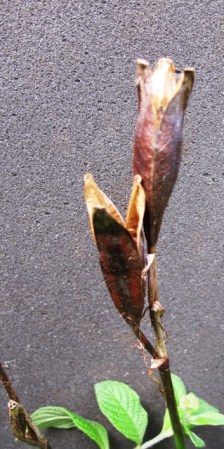
Saving seed
If you are organised, you can save your own vegetable and flower seeds and save money but there are reasons why buying packets of seed can seem expensive. Saving seed is one of those jobs which is glibly recommended but takes some skill if you want to ensure success. Firstly and most importantly, save seed from the very best produce – not as an afterthought from a slow maturing or substandard specimen. If your crop is an F1 hybrid (and the only way to know that is from the original packet), seed will be inconsistent and patchy. You can stabilise a good seed strain over time but it will take a few generations. Sweet corn is often F1 (in other words it is the result of controlled pollination from two superior parents). Some tomatoes, cucurbits and cut flowers can also be F1s.

Clean the seed, label and date it. Pack it in paper and then store in a sealed plastic container with a sachet of silica gel or even rice, to absorb any surface moisture. So cool, dry, sealed, rodent-proof and mould-proof. The mice will find it if you leave it anywhere accessible. The fridge is a good place if your house partners accept your seed gathering ways.

Not all seed is dry seed. Some needs to kept on the damp side but not so wet that it rots. Generally these seeds have a fleshy coating (like belladonna seeds or cyclamen). It is often easiest to clean this seed and sow it immediately because it has a very short life span, especially if you allow it to dry out.

First published in the Waikato Times and reprinted here with their permission.