Category Archives: Garden lore

Wisdom and hints

Garden lore

” Many gardeners will agree that hand-weeding is not the terrible drudgery that it is often made out to be. Some people find it a kind of soothing monotony. It leaves their minds free to develop the plot for their next novel or to perfect the brilliant repartee with which they should have encountered a relative’s latest example of unreasonableness.”

The Well Tempered Garden by Christopher Lloyd (1973)
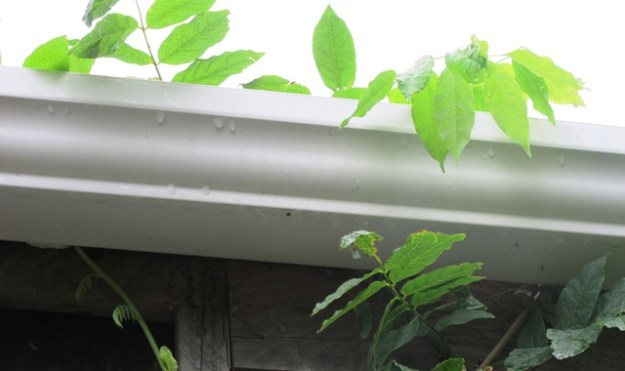
Thwart the wisteria's plans for breaking the spouting

Thwart the wisteria’s plans for breaking the spouting

Blue Sapphire is making quite a good effort at repeat flowering this summer

Blue Sapphire is making quite a good effort at repeat flowering this summer

Summer pruning wisterias

If you have any wisteria, summer prune them now. They are rampant growers and all their soft tendrils will wave around until they find somewhere to anchor themselves. If that somewhere is between weatherboards, the spouting and the barge board, underneath the verandah roofing or similar, all it takes is one season for such growths to thicken, become hard and woody and cause damage. I write from experience. We had to replace a length of split spouting.

Technically, summer pruning of wisteria should be trimming all those new growths back to the sixth leaf bud from the stem though I admit I don’t count the buds when I trim back. Cut with secateurs, stem by stem, not with hedge clippers if you want flowers next season. Winter is the time for the main pruning which shapes the bush. All those growths are then reduced to two buds from the stem. That is where they will flower.

Failure to flower at all in spring is usually a result of incorrect pruning. If you don’t want to prune your wisteria, my advice would be to take it out altogether. Left unpruned for several years, it will become a triffid of scary proportions.

First published in the Waikato Times and reprinted here with their permission.
Garden lore

” You have only to think of the front gardens you drive past in summer that are planted up almost entirely with dwarfs to realise how lacking in character and individuality they are. Such plants never get off the ground; they are mere colour explosions.”

The Well Tempered Garden by Christopher Lloyd (1973)

Summer lawn care

Set your lawnmower a notch higher for summer, or several notches higher if you are one who scalps your lawn. It is a myth that if you cut your lawn very short, it will need less mowing. In fact if you cut it very short, you weaken the grass growth to the point where it is likely to die off over summer and what you get instead is an invasion of weeds. Paspalum, kikuyu, summer grasses and flat weeds – all will thrive in the vacuum you are creating. Without exception, good lawns and turf are cut a little longer. If you have neglected, long, rank grass (which can happen at holiday homes), don’t try and get it down in one hit. Cut first on the highest setting. Wait a few days and then cut a second time to the desired length. Your grass is less likely to go into shock and die over summer.

First published in the Waikato Times and reprinted here with their permission.
Garden lore

If your relatives are coming for Christmas and you are worried about the state of your garden, prioritise. You don’t have time to clean up the lot so take a leaf out of the garden openers’ book. Hedges, edges and lawns are what present a garden well. Clip any wayward hedges, cut your edges to give sharp lines and mow your lawns (but not too short). Sweep hard surfaces and, if time allows, clean up the bit that people see first (usually around the letter box or entranceway). Only keen gardeners or those determined to find fault will see beyond that veneer of presentation. The rest will see tidy, sharp lines and not even think to look at the weed infested garden.

Garden lore

“I asked a schoolboy, in the sweet summertide, ‘what he thought a garden was for?’ and he said Strawberries. His younger sister suggested Croquet and the elder Garden-parties. The brother from Oxford made a prompt declaration in favour of Lawn Tennis and Cigarettes, but he was rebuked by a solemn senior…and was told that ‘a garden was designed for botanical research, and for the classification of plants.”

Is He Dead Yet by Rev Samuel Hole (1819-1904)

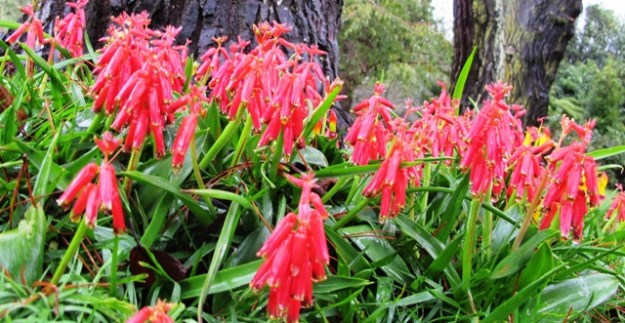
Late winter flowering Lachenalia bulbifera

Late winter flowering Lachenalia bulbifera

Digging and dividing part 2: bulbs

While the season has passed for planting trees and shrubs, think bulbs. All the autumn bulbs will be dormant now but ready to spring into growth with the trigger of summer rains. This takes in bulbs such as nerines, colchicums, many of the species cyclamen and ornamental oxalis. Lift them and spread them or repot them now if they were looking overcrowded last autumn. It is also a good time to do the same with the early spring bulbs such as daffodils, tulips, bluebells, lachenalias, snowdrops and snowflakes. Many of these still have vestiges of foliage hanging on so you can actually find the clump without having to exploratory excavations. If the clump is pushing itself up out of the ground, it is a sure sign you need to thin them out.

First published in the Waikato Times and reprinted here with their permission.

Garden lore

The more one gardens, the more one learns; and the more one learns, the more one realises how little one knows. I suppose the whole of life is like that

by Vita Sackville-West.
(1892-1962)

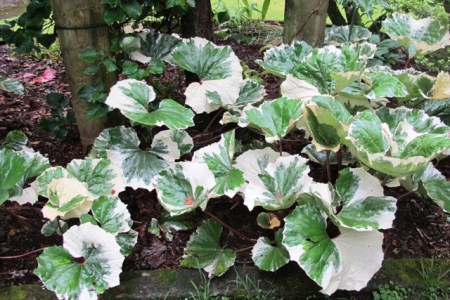
Farfugium tussilagineum argenteum - standing up well after being dug and divided last autumn

Farfugium tussilagineum argenteum – standing up well after being dug and divided last autumn

Digging and dividing

While the advice is freely given to dig and divide perennials, it is often the garden task that slips so far down that it falls off the to-do list because it is rarely urgent. If you have clumping, leafy plants which are either dying back in the centre or flopping all over the ground, that is a sign that they will benefit from being lifted, divided into smaller pieces which are then cleaned up and replanted into well dug and composted soil. This patch of Farfugium tussilagineum argenteum (some of you will know it as a ligularia) received this care and attention last autumn and now it is sitting up looking much more attractive, rather than falling apart with leaves lying on the ground.

In our comparatively mild climate, we can do this pretty much any time of the year though hot, dry summer is best avoided unless you water twice a day. In cold climates, plants can rot out if dug and divided when dormant, so times of growth in spring and summer are usually recommended.

First published in the Waikato Times and reprinted here with their permission.