Category Archives: Garden lore

Wisdom and hints

Garden Lore

Then in we went, to the garden glorious
Like to a place, of pleasure most salacious
With flora paynted and wrought curiously
In diverse knottes of marveylous greatnes.

Anonymous (reprinted in “Up the Garden Path” by Laura Stoddart.
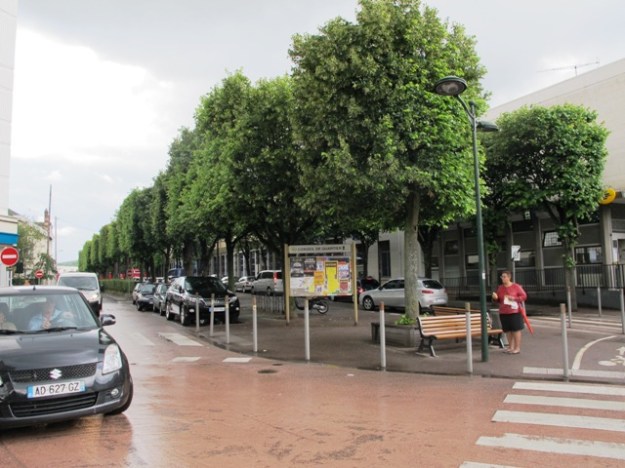
Clipped rather than pleached but certainly on stilts

Clipped rather than pleached but certainly on stilts

Pleaching

It is quite recent that pleaching has become synonymous with a hedge or row of trees on stilts. Technically, pleaching is the interweaving of adjacent plants on a relatively two dimensional plane. There is a school of thought that it dates back to animal proofing hedges by making them more dense but the sophisticated version came into European gardens as much as 400 years ago – the elegant, grand allees of trained, matched trees which give architectural structure.

Think of it as a dense espalier where the horizontal branches are trained and interwoven. However it is more likely these days that what is called a pleached avenue is simply limbed up trees which have been allowed to merge together on the upper storey and are then shaped as one – in other words a hedge with bare legs. I am pretty sure that is what is being done in this street scene I photographed in the little French town of Vernon. It appears that a hedge trimmer may be used to shape the canopies to something resembling cubes and over time, when the trees join together, it will create a flat plane. These are tilias or lime trees.

If you want a pleached avenue, the advice I have seen is never to go less than 2.5m spacings. You can’t magic these creations up quickly. The trees take time to grow and the effect relies on generous spacings which allow each plant trunk to shine in its own right. Otherwise, you are just planting a hedge.

First published in the Waikato Times and reprinted here with their permission.
Garden Lore

I wandered lonely as a cloud
That floats on high o’er vales and hills,
When all at once I saw a crowd,
A host, of golden daffodils;
Beside the lake, beneath the trees,
Fluttering and dancing in the breeze.

William Wordsworth, Poems in Two Volumes (1807)

Bug hotels or insect hotels

Insect Hotels

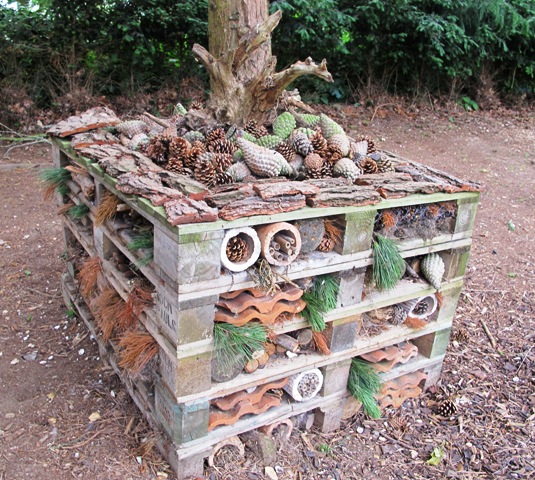
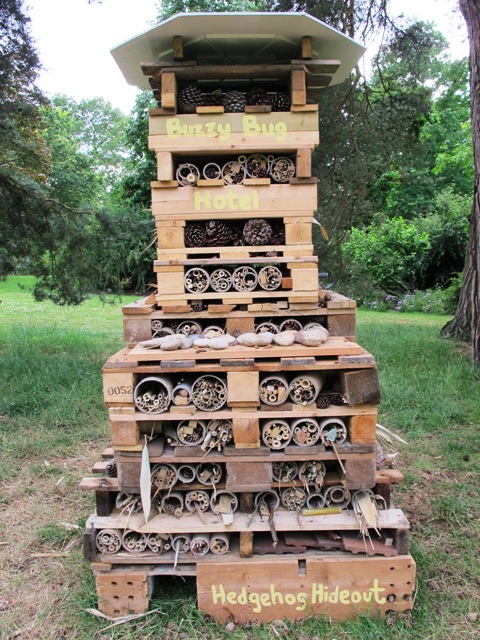
Bug hotels or insect hotels – are these the hot new accessory for gardens? This question comes from the house that inaccurately predicted the rise and rise of the garden obelisk a few years ago. These failed to make an appearance in every second garden in this country, as we expected. The insect hotel has a certain rustic and childlike charm and I am sure we will see at least some installations. The trick appears to be the use of a range of different materials to attract hibernating insects, giving them somewhere to over-winter. They need to be located in sheltered positions, out of the wind, rain and direct sunlight.

I liked the optimism in one publication which talked about appealing “to a wide variety of beneficial insects” (italics mine). Unless you are going to set up an audition for all incoming guests, there is no way that you can separate the beneficial ones from their less desirable colleagues. It is highly likely that queen wasps may find it a perfect location for over-wintering. It won’t be all charming ladybirds, damsel flies and dragon flies. There will be a fair number of slaters, earwigs, centipedes and spiders so if the children in your life are squeamish about creepy crawlies, you may want to think again before going too far down the track of this as a child-centred activity.

These constructions are favoured in Britain where there is much more conversation about ecosystems and sustainable gardening than we have here. There is also greater pressure on the environment because of population density. Unless your yard is spartan and manicured to within a centimetre of its life, odds on the bugs will find natural spots of their own as they always have – hedges, leaf litter, wood piles, beneath rocks, sheltered cracks in paving and underneath the house. The only reasons I can see to construct insect hotels are that they can look cute and are an educative tool.

insect hotels
First published in the Waikato Times and reprinted here with their permission.
Garden Lore

What is a weed? A plant whose virtues have not yet been discovered.

Ralph Waldo Emerson Fortune of the Republic (1878)

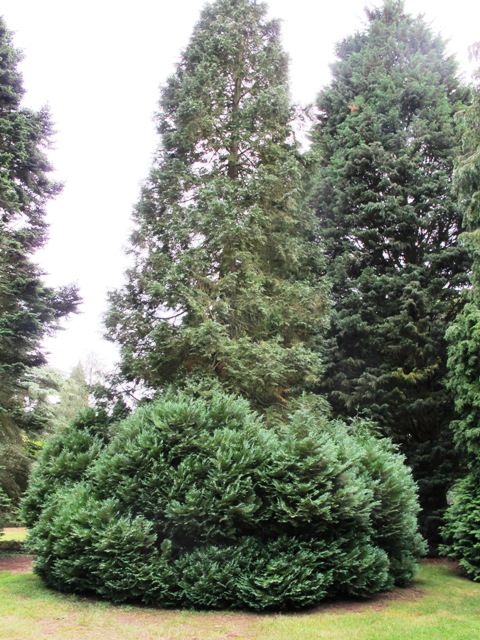
Chamaecyparis lawsoniana ‘Alumii’

Natural layering

This tree reminds me of that old song (and this will date me) “Look there Daddy, do you see, there’s a horse in striped pyjamas” except that it is a tree wearing stiff petticoats and a frilly skirt. No that’s not what it is at all, that’s a fine example of what people call layering. The tree is Chamaecyparis lawsoniana ‘Alumii’. Over time the weight of the lower branches must have dragged them to the ground where, left undisturbed, they have sprouted roots. While the original part of the tree looks a little thinner and paler with ageing, the skirt shows juvenile vigour. It is not common to see a tree layer so evenly all round.

The layers could have been cut off from the parent plant at an earlier stage, dug up and replanted elsewhere. Left to their own devices over time, the strongest growths will flourish at the expense of the weaker ones but there will be a thicket of Lawson Cypress.

First published in the Waikato Times and reprinted here with their permission

Garden Lore

“A little studied negligence is becoming to a garden.”

Eleanor Perenyi Green Thoughts (1981)

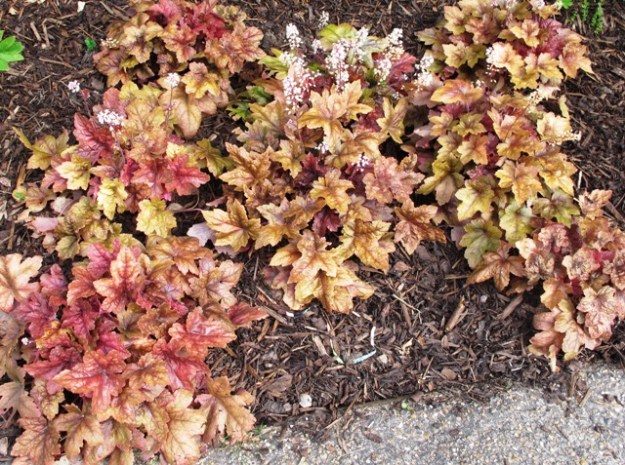
Neither spray damaged nor sickly - just hard to use well

Neither spray damaged nor sickly – just hard to use well

Modern heucheras

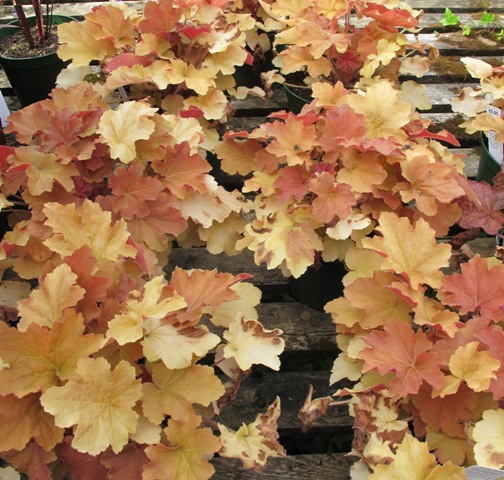
Having used Plant Collector this week to whole heartedly recommend a new plant, the same can not be said for the yellow and orange heucheras which you will also see in almost every garden centre. I have long raised my eyebrows at these and photographed some clumps on our recent garden ambles, garnering agreement from a number of other gardeners that not all heucheras are equal and some may be best avoided.

Heucheras are North American leafy perennials and have proven most amenable to the whims of the hybridists. Not all are a triumph in terms of garden performance and appearance. The lime green form looks attractive and useful but a retailer told me it is not as reliable as the others. This discouraged me because, despite considerable efforts, I have never been very successful growing the handsome deep burgundy foliaged ones. I have, however, admired them in others’ gardens where they make an attractive show.

It is just those yellow and orange autumn tones. Novelty plants, I call them. Plant them out and how do they look? Spray damaged, is Mark’s verdict. Sickly, I say. I have never seen those particular coloured heucheras used in a way that is attractive. Be cautious of novelties. I am reserving judgement on the coral shades at this stage.

Just don’t do what I saw one gardener do – buy one of each colour and plant them in a ring around the base of a deciduous tree. Not only will they suffer from root competition, it is the look of a novice gardener.

Great nursery plants - the autumn-toned heucheras look so interesting in the garden centre but I have yet to see them perform as garden plants

Great nursery plants – the autumn-toned heucheras look so interesting in the garden centre but I have yet to see them perform as garden plants

First published in the Waikato Times and reprinted here with their permission.
Garden Lore

Sir Frank Crisp’s eccentricities were reflected in his garden. In 1905 Lady Ottoline Morrell visited Friar Park where she found Crisp, dressed in frock coat and top hat, proudly showing his visitors around the garden, which had ‘Sham Swiss mountains and passes decorated by china chamois’. Twenty-three thousand tons of rock were used in the construction of this garden which accommodated an extensive collection of alpine and other rock garden plants.

Alastair Forsyth Yesterday’s Gardens (1983)

graft incompatibility
Graft incompatibility

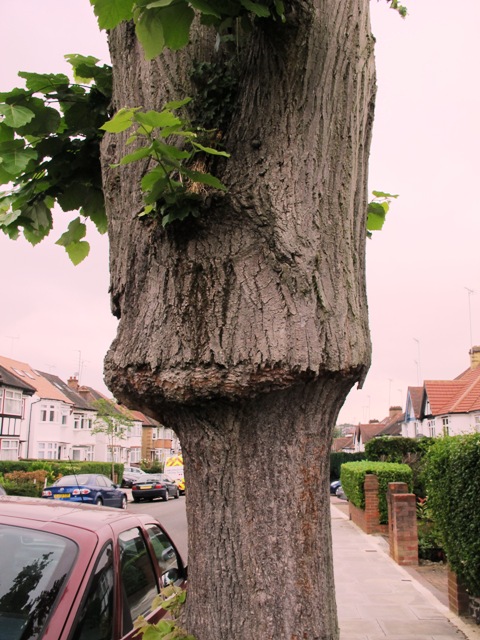
The odd growth on this tree is a fine example of what is called graft incompatibility. Many trees and some shrubs are grafted or budded – in other words the roots of a different cultivar are used to grow the desired top. There are many reasons to do this. Sometimes dwarfing stock is used to keep fruit trees – particularly apples and citrus – small enough for home gardens. Often a plant will have special characteristics – maybe variegated foliage, bigger flowers, weeping habit – but it cannot be raised true from seed and getting it to root from cuttings may be difficult, too slow or impossible. In that case, it is budded or grafted.

A closely related plant has to be used as root stock and as a customer you are reliant on the propagator or nursery knowing what root stocks to use. If they make a poor choice you can end up with this effect over time. It will be a weak point on the trunk. Where the top and bottom are fully compatible, it is hard to pick the join although it always pays to keep low growth removed in case it is the root stock coming away. It can out-compete the grafted top if left to its own devices.

This is a lime tree, or linden on a London street.

First published in the Waikato Times and reprinted here with their permission.