Tag Archives: garden quotes

???????????????????????????????

Garden lore

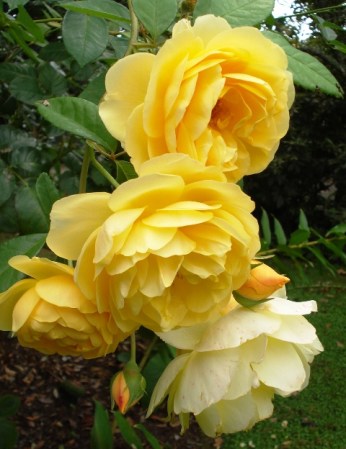
“As for roses, you could not help feeling that roses are the only flowers that impress people at garden parties; the only flowers that everybody is certain of knowing.”

The Garden Party by Katherine Mansfield (1922)

The value of growing your own veg

In strictly economic terms, the costs of growing your own vegetables can exceed the money you will save, particularly if you are buying plastic bags of potting mix and compost, fertilisers and sprays. Add in an hourly value for your labour and the economics look even more questionable. But of course the pleasure of harvesting your own vegetables and fruit, as well as the taste, the freshness, knowing what has been used on both the ground and the crops and the better nutritional value of eating straight from the garden far outweigh economic considerations.

That said, one of the predicted outcomes of the current drought is that the cost of buying fresh vegetables will skyrocket so it will be more economic now than before to grow your own. That is as long as you have water to spare for the vegetable garden. Asian greens will give you a very quick turnaround and you can be cutting tender young leaves in a matter of a few weeks. You can also be sowing salad greens and now is the time to get winter vegetables into the ground. They do their growing before winter and then hold in the ground when temperatures are low so that you can harvest when required. It is a bit late for root vegetables, though fennel is worth a try. The classic winter veg are the brassicas (cabbage, cauli, broccoli or cavolo nero for the sophisticates), winter spinach, silver beet and the like. Just remember, you are going to have to water thoroughly and often until the rains return.

First published in the Waikato Times and reprinted here with their permission.
Garden lore

“Nature is the gardener’s opponent. The gardener who pretends he is love with her, has to destroy all her climaxes of vegetation and make… an alliance with her which she will be the first to break without warning, in the most treasonable way she can. She sneaks in, she inserts her weeds, her couch-grass, her ground elder, her plantain, her greenfly and her slugs behind his back. The bitch.”

Gardenage by Geoffrey Grigson (1952)

???????????????????????????????

Grooming conifers

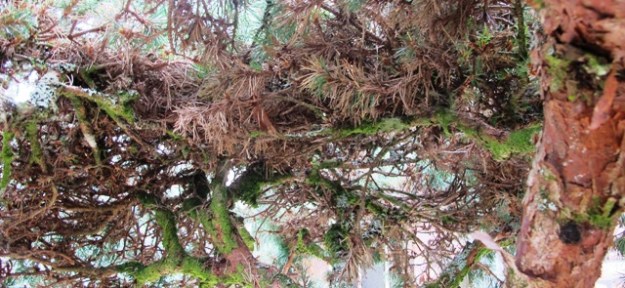
Conifers have had a bad rap in the NZ gardening world since their glory days of the 1970s. We regard this as entirely unfair. It is not the plants that are at fault, it is how we used them. If you are lucky enough to have some smaller growing conifers in your garden, getting in and cleaning them out improves the look, assists plant health by reducing problems with pests and diseases. They can build up an astonishing amount of decaying needles and debris which starts composting over time. What may look like a few brown tufts of foliage from the outside reveals a whole lot more if you part the branches to look within.

I just don gardening gloves and manually dislodge the debris, reminding myself I should start at the highest point I can reach and work my way down, rather than the temptation to do it the other way. I then follow up with secateurs to tidy up dead stems, trimming flush back to the branch. Snails like snoozing out the days in conifers, I notice. All plants benefit from some air movement and few appreciate composting material against their trunks.

First published in the Waikato Times and reprinted here with their permission.
Garden lore

” I had never ‘taken a cutting’ before…. Do you not realise that the whole thing is miraculous? It is exactly as though you were to cut off your wife’s leg, stick it in the lawn, and be greeted on the following day by an entirely new woman, sprung from the leg, advancing across the lawn to meet you.”

Down the Garden Path by Beverley Nicholls (1932)

007 - Copy Leaf drop – evergreen, semi evergreen or deciduous
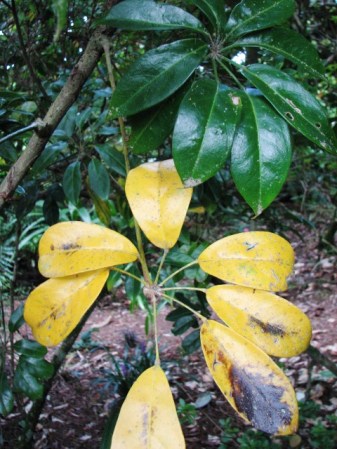
All plants lose a full set of leaves every year so the search engine terms I see like “a michelia that doesn’t drop leaves” shows a lamentable lack of understanding. What varies is how long the plants hold onto individual leaves and when they drop them. Deciduous plants drop them in one hit, triggered by declining day length in temperate and cool climates (ie autumn) or by the dry season in the tropics where day length stays constant. Semi deciduous plants usually drop all their leaves just as the new ones are coming through so the plant has a very short period without full foliage. Some plants will drop a lot of foliage around flowering time – Michelia Silver Clouds is an example of this.

Many evergreen plants gently drop old leaves all the time. It is just so gradual you don’t really notice it but you will see a build up of leaf litter below. The length of time an individual leaf stays on the plant can vary from a few months for bulbs to several years for bushy, dense evergreen plants but sooner or later, every leaf will either fall or wither away. A stressed plant will drop more leaves. It is the plant’s way of trying to reduce evapotranspiration (moisture loss).

If you want a plant which never drops leaves, you will have to keep to plastic or fabric. Living things have to renew themselves

First published in the Waikato Times and reprinted here with their permission.

Garden lore

” These are most anxious times on account of the slugs. Now every morning when I rise I go at once into the garden at four o’clock and make a business of slaughtering them till half past five, when I stop for breakfast.”

An Island Garden by Celia Thaxter (1894)

Snails – if you can’t beat ‘em, eat ‘em
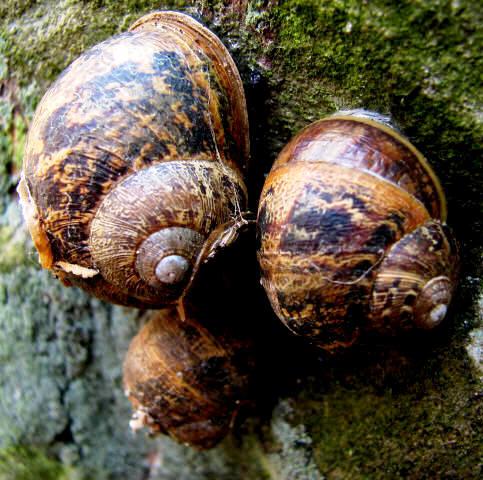
If you are inundated by snails, you could consider eating them. They do not have to be ooh la la francais escargots out of a tin. It appears that our common snail here is the internationally edible variety of Cantareus aspersa, formerly known as Helix aspersa. If you are keen to try, it is often recommended that you purge the snails for a couple of days. You can do this by starving them or by feeding them on bread. A genuine snail-eating Italian on Twitter told me that the technique is to bring them to the boil, wash them, boil them again and serve with lashings of garlic butter on a bed of lettuce. If you are squeamish about boiling live snails, the best way to euthanase them may be to put them in the freezer for a short while. The ever-useful internet tells me that each snail weighs about 10 grams and you need at least 6 per serving.

This advice is theoretical on my part. Our accord with the many birds in our garden means that we don’t have sufficient snails on hand to try it out.

First published in the Waikato Times and reprinted here with their permission.

Garden lore

“The gardener has a great faith in names; a flower without a name, to put it platonically, is a flower without a metaphysical idea; in short, it has not a right and absolute reality. A flower without a name is a weed.”

The Gardener’s Year
by Karel Čapek (d. 1938)

001 - Copy

Summer grapes

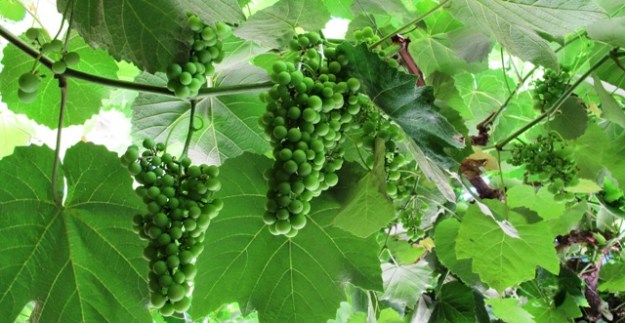
Grapes are not a fruiting vine that can be left to their own devices if you want a harvest. They need hard pruning in winter and a follow up in summer. If you haven’t yet summer pruned your grape, then get onto it immediately. Cut all the laterals (side growths) back to six leaves. This allows light to reach the bunches of fruit and concentrates the plant’s energies on ripening the fruit rather than supporting extra foliage.

At the first signs of the fruit ripening, get bird netting on. Our feathered friends rarely wait for fruit to ripen to the stage humans prefer. If you can keep the birds from pecking the fruit, it will reduce their attractiveness to wasps.

By far the most successful, outdoor grape variety we have found in our marginal conditions is Albany Surprise. It is an American hybrid and should grow well in areas which are not known for grape growing because of humidity, rainfall and mild temperatures.

First published in the Waikato Times and reprinted here with their permission.