Monthly Archives: January 2012

Tikorangi Notes: Friday January 6, 2012

Latest Posts:
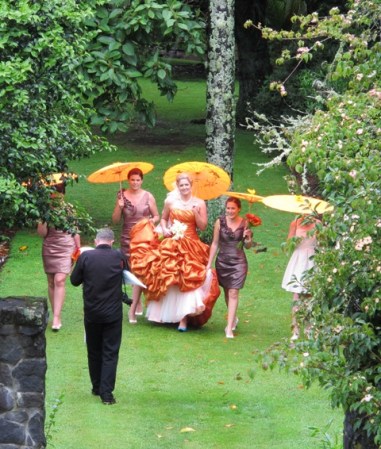
1) A cautionary tale about garden weddings and completely excessive rain (subtitled: “The Bride Wore Orange”).
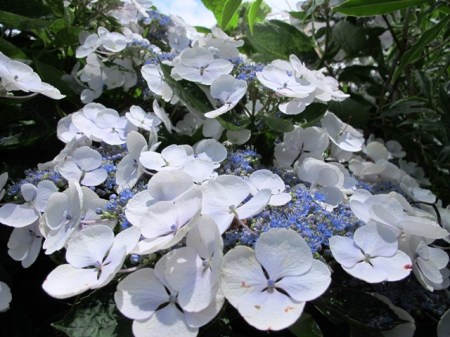
2) Hydrangea Libelle (white and blue lacecap) in Plant Collector this week.
3) Grow it Yourself – New Zealand yams (which just happen to be different to what the rest of the world call yams, for reasons unknown).
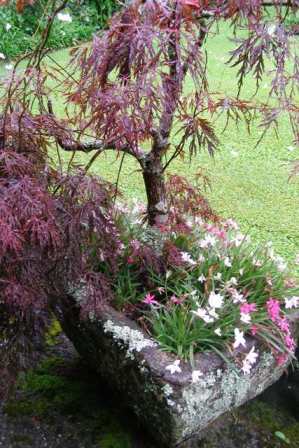
4) Of day to day matters in the garden – container plants and why we are not fans of water retention crystals.

And not my work at all, but check out the poignant study of “Locksley Avenue – A Portrait of a Street” by Adrienne Rewi. If you have ever wondered what happens to gardens when people are forced to walk away, Christchurch has many such examples. It doesn’t take long for nature to take over, even in a dry climate such as that of Canterbury.

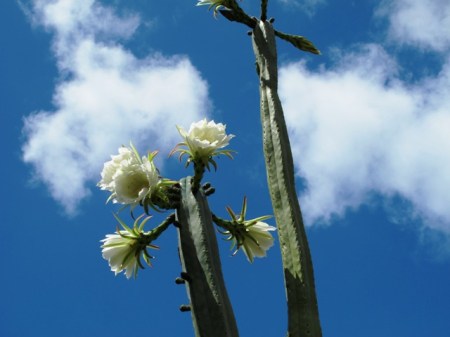
We just refer to it as The Trichocereus

We just refer to it as The Trichocereus

To be accurate, it is Echinopsis pachanoi (syn. Trichocereus pachanoi) and it is in full and fragrant flower again this summer.

A Cautionary Tale about Excessive Rain (subtitled: The Bride Wore Orange)

Did I mention the bride wore orange?

Did I mention the bride wore orange?

As a rule we don’t do garden weddings here but the request came from Second Daughter’s Best Friend so we made an exception on New Year’s Eve. It sounded like fun. The ceremony, cocktail party and dance were all to be in the one place, culminating in fireworks at midnight. Our greatest worry was the potential fire hazard if we had a dry spell. Ha!

The preparation was humming along when the rains started last week. We had the garden ready, edges and hedges sharp and the lawns mowed despite the rain. We just needed one dry spell of a few hours to do the final blower round to present it all at is best. The dry spell never came.
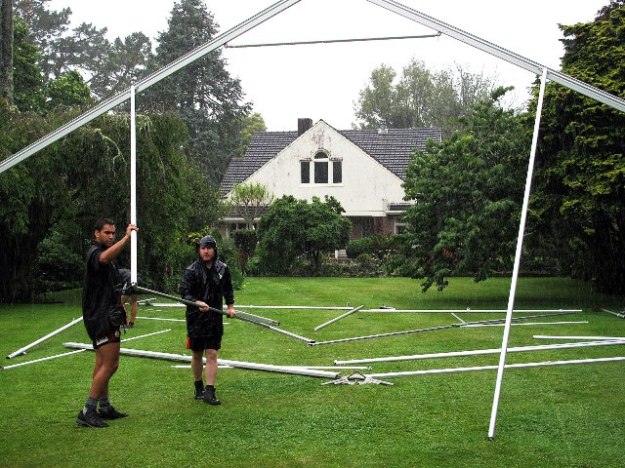
Just likeJust like putting up the family tent, really, but on a grand scale and without the arguments (even in the rain). Photo: Michael Jeans putting up the family tent, really, but without the arguments (even in the rains). Photo: Michael Jeans

Just like putting up the family tent, really, but on a grand scale and without the arguments (even in the rain). Photo: Michael Jeans

On the Friday morning, the marquee company came in. And the rains continued. In case you have wondered, putting up a large marquee (in this case 20m by 10m – we do have a large front lawn) is not unlike a glorified version of putting up the family tent but without the arguments. The marquee men were wet to the skin and had the second, smaller marquee up when the bride arrived to point out that the large one was not in the agreed place and it needed to be moved about two metres. To their everlasting credit, they moved it (in the rain) with remarkably good grace.

The second set of contractors was now on site to do the sound, lighting, furniture, stage and dance floor. They too were wet to the skin and amazingly good natured. But the wheels were starting to fall off. We couldn’t dress the marquee because 100% humidity meant tablecloths and seat cushions would all soak up too much moisture. Nor could the parquet dance floor go down. Practicing an aura of calm (after all, it wasn’t my daughter’s wedding), I told the bride’s mother not to worry and I would do it in the morning for her because the bridal party and family all had hair and makeup appointments.

In the morning, the rain was unrelenting. Now all the rain which would normally be absorbed into the lawn was being directed down the sides of the marquees and flowing like a small sea in underneath. Needs must. The dance floor was laid. I dressed the marquees. And as the rain got worse, the need for crisis management grew. We were doing a bit of reconfiguration using four extra small gazebos which was all we could rustle up. I established umbrella stations (we own quite a few brollies) for the dash between covered areas. The cake had to be brought in under an umbrella (couldn’t have the icing pockmarked). The band were loading in gear as fast as they could in the rain. We could at least park the caterers with undercover access though the bar staff were getting saturated moving alcohol and glasses to their location in a wheelbarrow.

By this time, I was soaked to the skin and dressed like an old tramp but abandoned all plans to find the time to get changed and flossied up (we were invited guests at the event) until after the guests had arrived on the three coaches. We have issues with the need to get large vehicles off our road here but are very experienced at managing our available space and can turn and park the largest coach. So did I need to meet prima donna coach drivers who tell me that I have no idea what I am talking about and there is insufficient space? No I did not. But rather than argue in front of guests (I was feeling at a sartorial disadvantage), I headed out to the road to manage any traffic there (it is designated petro chemical highway, is our country road) while the prima donna drivers disgorged passengers and then thought nothing of blocking both lanes as they fluffed around sorting out turning their coaches.

It was about this time, I noticed the rain had stopped. Such are the wonders of our drainage that we only need 20 minutes without rain and all surface water disappears.
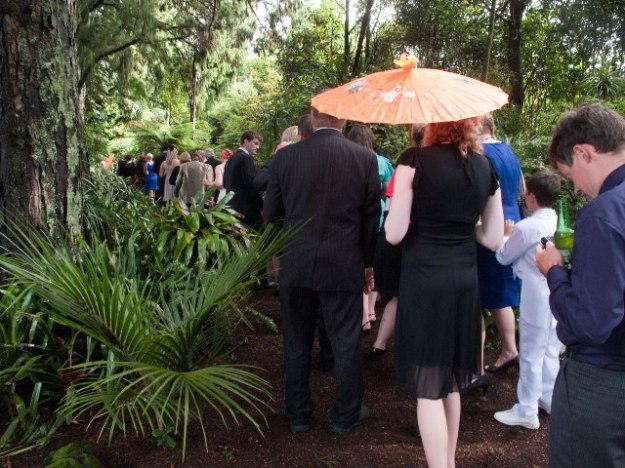
I had no idea the garden tour would be so popular

I had no idea the garden tour would be so popular Photo: Michael Jeans

Now, I thought, I shall go and have a hot shower. But no. Two late arrivals on the last coach had been flying for 20 hours and really needed to shower and change. Was that all right? Of course. Unfortunately for me, dear Reader, we may be a five loo establishment but we are a one shower household. All I could do was to change for the… wait for it… garden tour. When first suggested, I had scoffed. “People who come to events here are not interested in the garden,” I said. “They are here for the event and to party.” So I thought maybe 10 of the older guests would join me. In fact I had about 70 or 80. Given that they were teetering along in stilettos wearing cocktail attire, I only did the shortened tour of the top gardens but even so, herding up to 80 people along is a mission.
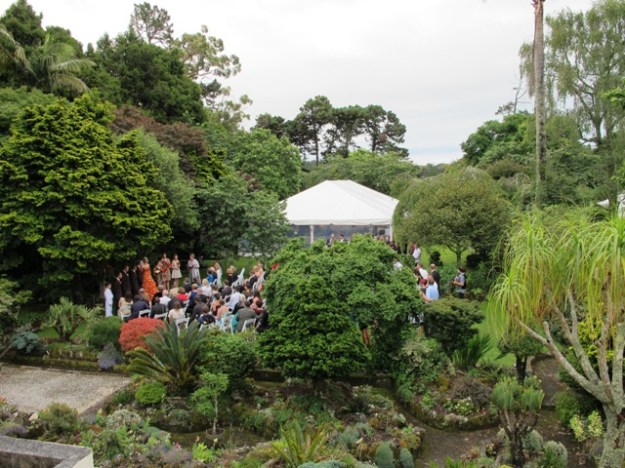
The rain stopped. It was a miracle. The ceremony could be held outside, as planned.

The rain stopped. It was a miracle. The ceremony could be held outside, as planned.

I finally got to shower and change. And the rains held off. The actual ceremony was, at the last minute, held outside as originally planned. The event ran seamlessly and everybody had a wonderful time and absolutely loved the venue. The fireworks at midnight were spectacular. Nobody wanted to leave so the band played on until 1.30am and I completely ignored the prima donna coach drivers who had to sit out on the road with their hazard lights on and wait for the extra hour. If they had been pleasanter earlier, I might have looked after them.

The torrential rains did not return until the pack out the following morning. Over 20 cm (8 inches) of rain we had in that period of under three days. But the lawns are fine. They will recover quickly.

I, on the other hand, have realised there are good reasons why we don’t do garden weddings here.

First printed in the Waikato Times and reproduced here with their permission.

Plant Collector: Hydrangea Libelle

Hydrangea Libelle

Hydrangea Libelle

Were we to host garden weddings here (which we will not), I would be targeting white hydrangeas for easy care summer display in semi shaded areas. The compact white moptop Immaculata is very, very good but perhaps just a little clichéd in a bridal sense. Hydrangea macrophylla ‘Libelle’ is looking equally good this week.

Libelle is a large grower. This plant is well over two metres even though I prune it every winter and it is growing in competition with an adjacent tall hedge. Its flower heads are appropriately large and abundant. It is a lacecap which means it has a flat head. The true flowers are the small blue clusters in the centre. The outer rim of large, white individual flowers are sterile (which means they do not set seed) and technically they are sepals. The blue and white contrast is a very clean and attractive combination. Later in the season, the white will turn to pink tones in that olde-fashioned antique colour range that hydrangeas do so well.

Hydrangeas are a wonderfully obliging plant family that is often taken for granted. But after the unrelenting rains of last week, when pretty much every other bloom was sodden and disintegrating, the hydrangea flower heads just serenely continued as if nothing would bother them. They can last for a long time on the bush and make a splendid cut flower as well.

First published in the Waikato Times and reproduced here with their permission.

Grow It Yourself: yams

Clearly an oxalis family member - the New Zealand yam

Clearly an oxalis family member - the New Zealand yam

It is curious that what every New Zealander knows as a yam is only a yam in this country. Overseas, yams are an entirely different vegetable and our yams are called oka or oca. This does not matter unless you are using overseas growing instructions or recipes. Our yam is a member of the oxalis family – O. tuberosa – and we all know they are the reddish thumb-like, nubbly tubers that are delicious roasted but can be a pain to prepare if they are too small.

Our yams are a root vegetable from the highlands of South America. They are not difficult to grow but the yield rates can be disappointingly small. The best ever yams we saw were grown in a neighbour’s garden in Dunedin which is an indication that they are quite happy with cooler temperatures, though frost kills off the foliage. Grow them like a potato. Plant the tuber and as you see smaller nodules forming on the stems above ground, mound up the soil to encourage those nodules to develop into tubers. In warmer areas, they will grow all year and more or less naturalise if you allow them to (great if you are into one of the trendy food forests) but even so, they will appreciate a gift of compost mulch from time to time. They appear to be largely immune to pests and diseases but they do need good drainage.

Yams sweeten up if you leave them in the sun for a couple of days after harvest. Because they are thin skinned and don’t need peeling before cooking, they are vulnerable to damage during harvest and they don’t have the storage longevity of potatoes or kumaras. You can layer them in sawdust or newspaper if you want to hold them longer term.

First published in the Waikato Times and reprinted here with their permission.

In the Garden: January 5, 2012

A fortnightly series first published in the Weekend Gardener and reproduced here with their permission.

I am very selective about container plants these days

I am very selective about container plants these days

As summer takes hold, I am grateful that I have dramatically reduced the number of plants I grow in containers. I am not particularly reliable at hand watering and there is nothing worse than feature plants in pots, troughs or containers that stand out because they are gasping for water, drooping and defoliating badly. It is also very difficult to get water into potting mixes which have dried out completely because the water just flows straight through. A squirt of detergent can act as a surfactant and help water absorption. Because I only grow bulbs, the odd large bonsai or choice shrubs in pots, I never add water retention crystals. With our high rainfall, these products keep the potting mix too wet, rotting out the roots and the bulbs. This is particularly so in winter when plants don’t want to live with their roots sogging in cold, wet conditions. The only time I have used water retention crystals was in my hanging basket phase (it passed quickly) and when I tried seasonal pots of annuals – which also passed quickly. We went on holiday leaving lovely big pots of blooming pink petunias and blue ageratum and came back to pots of withered, dead plants. The water retention crystals were not enough. I decided then and there that I preferred a more permanent and sustainable style of gardening.

In issue 323 of the Weekend Gardener, I wrote about plunging pots to reduce watering requirements while still keeping individual plants featured. It only works if the pots are porous (I keep to terracotta) and they still need the occasional water but they are much easier to maintain over summer. I have found I need to keep an eye out for slug infestations around the plunged pots. They like the damp, dark conditions and can take up residence on the outside surfaces of the pots. I found an entire slug convention on one pot recently but at least it encourages them into one area for easy eradication.

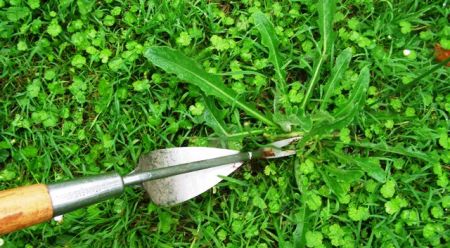
The peaceful, neverending task of hoicking out flat weeds

The peaceful, neverending task of hoicking out flat weeds

Top tasks:
1) Weeding is never ending. At this time of year, some of it can be done quickly by push hoe. If any weeds get away on us and set seed heads, we try and remove them from the area but the aim is always to get them before that stage so they can be left to wither and die in the summer sun.
2) The autumn bulbs will be starting to move very soon, putting out fresh roots. I need to thin the Cyclamen hederafolium, Colchicum autumnale (the autumn crocus) and check over the clumps of nerines (mostly sarniensis hybrids) before they are growing.
3) When I feel the need to do something quiet and mindless, I head out with the lawn tool to dig out flat weeds in the grassy areas of our park. It is a bit like King Canute holding back the sea but it makes me feel more virtuous than spraying and it is a soothing summer occupation.