

Today is brought to you by the colour lilac. Well, mostly lilac but also leaning towards purple, pink and blue. It is a colour I love although I can not think it is a colour I ever wear in clothing so maybe I only love it in the garden.

The Primula denticulata have been bringing me pleasure for weeks. We were given seedlings of it a couple of years ago. While the ones I planted in the Iolanthe Garden have largely survived, they are clearly not as happy in the sunny conditions there because these ones in heavier soil and partial shade have romped away with enthusiasm and are putting on a good show.

The lilac bluebells are commonly referred to as pink but really they are more mauve than pink, I think. This week we have swathes or drifts of bluebells blooming in various areas and I forgive them for their weedy, seeding ways. They do need to be actively managed, however, or they will take over in quick time. The white and mauve-pink bluebells are a delightful addition to the blue but in moderation – overall, think about 70% blue to 30% of the other two colours. If you have all white, people may mistake it for onion weed. The fact that the flower spikes are standing up straight tell you that these are Spanish bluebells, not the more desirable English species. Besides, only the Spanish ones come in colours other than blue.
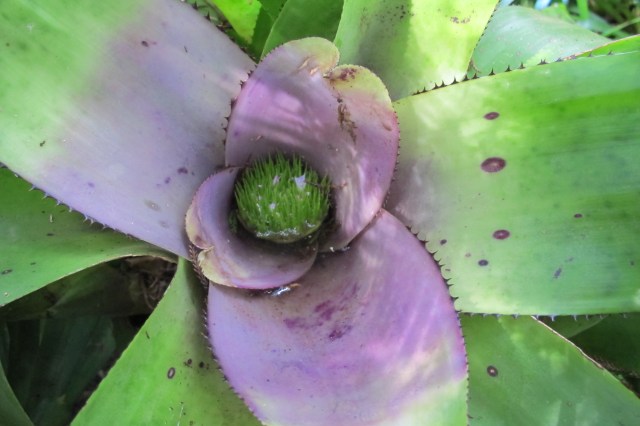
This week has seen me working my way along beneath the Rimu Avenue at precisely the same time I did the big sweep through last year – five weeks before we open for the Centuria Taranaki Garden Festival. I like the look of the bromeliads and the atmosphere they lend to this woodland area but I don’t like having to handle them on account of many of them being prickly, very prickly in some cases.
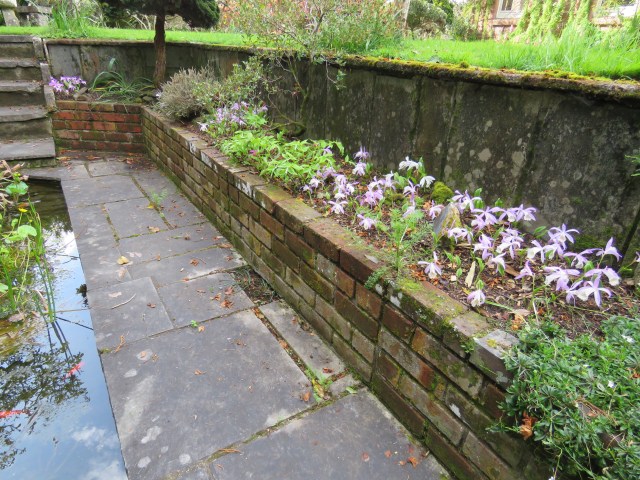
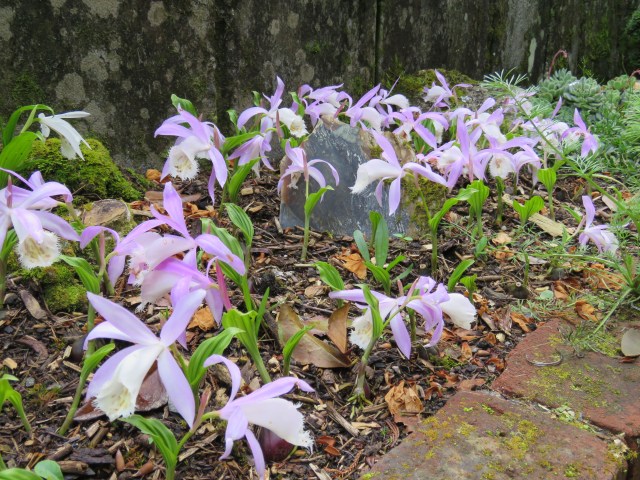
In the sunken garden, the pleione orchids are in full bloom. They don’t last as long as the cymbidiums and dendrobiums but they are an obliging seasonal pleasure which don’t require much attention year on year. Most of ours came from the late George Fuller and are his named hybrids although we have lost track of the names since George died. This one may, however, be the one he called ‘Lilac Beauty’ if the depths of my memory serve me right.

I post this photo of a pretty, lilac rhododendron less for the flower but so those in the know can admire the clean foliage. Back when we had the nursery and rhododendrons were a popular line, Mark spent some seasons breeding to get plants with full, ball trusses which keep healthy foliage. Burned or silver foliage (from thrips) is all too common in our humid, mild conditions and this plant has never seen even a whiff of spray but keeps excellent foliage. He succeeded – and with plants which flower in various colours – but too late for both our nursery and for public demand which had fallen away. None have been named or released and it is frankly not worth it commercially so we just get to enjoy them ourselves. For rhododendron lovers, this lilac one is ‘Susan’ X R. metternichii.
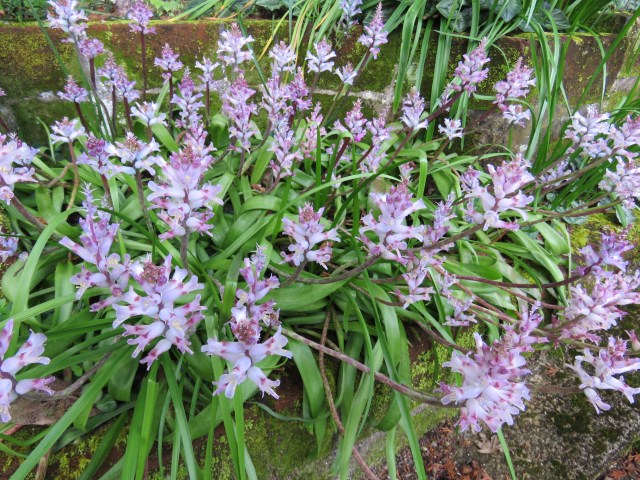
The later flowering lachenalias are in full bloom. Of the so-called blues, we have most success with Lachenalia orchioides ssp glaucina in the garden. Some of the less common varieties are not overly vigorous and this is one plant family that Mark tries to keep going with back-ups grown in pots under cover so we can keep the range going.

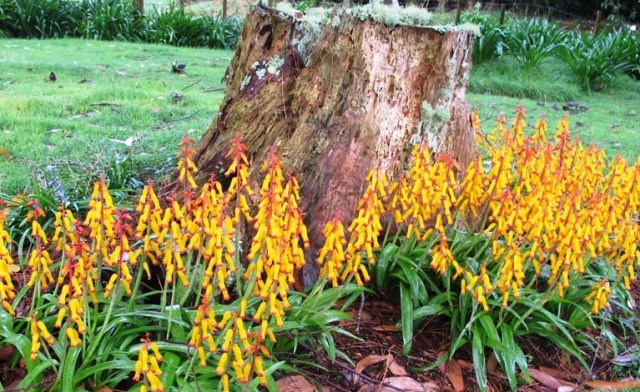
For those who have only seen the common orange and red form (Lachenalia aloides but still occasionally misnamed as Lachenalia pearsonii in this country) the huge range of other lachenalias may come as a surprise. They are native to South Africa and Namibia. We collected every obscure species we could find but they are very mixed and the names have never been particularly accurate because there is a lot of variation even within the same species.

Finally, off the lilac theme, I was looking at the lachenalias and picked these two. The one on the left is a variation on the most common species – the red and orange one that I think looks like a garish plant you might buy from The Warehouse – but in this case is Lachenalia aloides vanzyliae. It is nowhere near as vigorous as its less refined sibling. Of course it isn’t, the desirable plants never are, but it is so pretty and distinctive. The one on the right is mislabelled as L. arbuthnotiae but that may well be our mistake. Looking on line, I wonder if it is L. pustulata despite the lack of pustules on the leaves which generally give a characteristic warty look but maybe some reader with more expertise will know? It is a pretty and unusual colour combination, with good, strong stems.
Happy gardening this week.
 Tikorangi The Jury Garden
Purple and its various tints and shades are my least favorite color range; but as you know, there are SO many flowers that are at their best within that range. Rhododendrons are a classic example. It is impossible to dislike purple rhododendrons. However, although white is my favorite color, I am not impressed by many white rhododendrons, either because their color is bland, or because their form is . . . weird (like ‘Travis L.’). At work, I must rely on another horticulturist to select colors.
At least, Tony, you are not falling into that trap I saw back when we used to retail plants where almost all men ONLY liked red rhododendrons and women buying gifts for their husband routinely bought them red rhodos!
What? That is a new one to me; although it makes about as much sense as the popularity of purple.
Love your lilac flowers popping out everywhere