
We visit Australia fairly frequently on account of all three of our children living there these days and their native birds never fail to astonish me. Big, brash, vibrant, colourful and varied, they have an astonishing range of exotic birds. Aotearoa New Zealand also has a huge range of native birds but ours are far more restrained. Our iconic kiwi is, after all, all brown, lives on the ground and only comes out at night so is rarely seen in the wild. Most of our birds are in muted colours and need the light or a closer view to catch the iridescence in the feathers or the charming fluffy chests. But our birds sing sweetly whereas those brash Aussie birds squawk raucously.

So too, are our native plants of a more restrained persuasion in the showy, flowering stakes. Many of our natives have very small flowers while those of a bolder persuasion can have very short flowering seasons. A kowhai (Sophora commonly tetraptera) is spectacular but only for a week or 10 days if we are lucky. Similarly, our iconic pohutukawa (Metrosideros excelsa) is but brief in its Christmas raiment. We have very few native bulbs and we lack the range of flowering native perennials that many countries have.
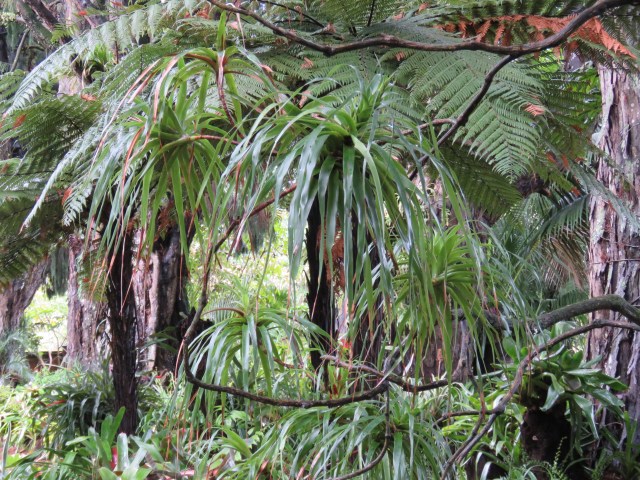
Our native forests are commonly referred to as ‘bush’ in this country but really, it is better to think of those remnants of original vegetation as neither bush nor forest but more as cool-climate jungle. At least it is jungle without snakes or other threatening wild life. The risks in our native bush are more to do with getting lost, falling over concealed cliffs or making very slow progress through dense growth in areas where deer, possums, pigs and goats (all introduced animals) have been kept under control.
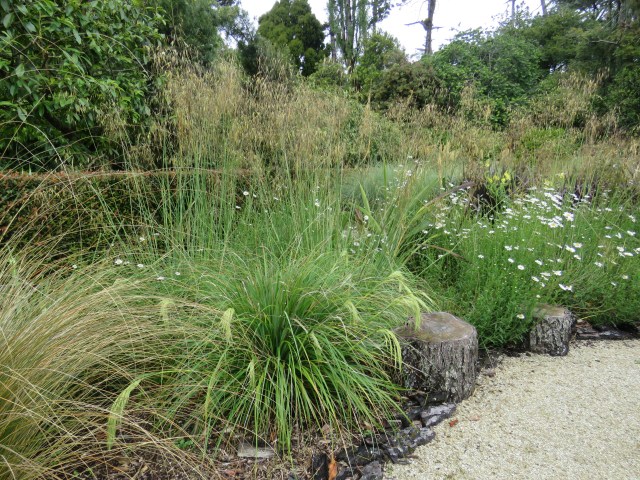
What we DO have in this country is a large range of very distinctive and unique plants – trees, shrubs and grasses – which are remarkable in their foliage, form and structure in the garden. Many are highly prized overseas – including our tree ferns, flaxes, grasses, cordylines and hebes.

We have always opted for a mid-line in gardening terms – using native plants but in conjunction with exotics. A few purists may go native only with the pinnacle of moral rectitude being eco-sourced plants from the local environment, while at the other end of the scale are those who eschew natives as ‘boring’.

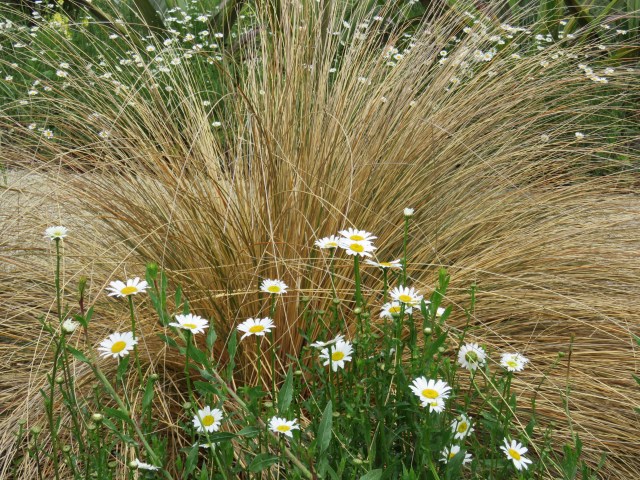
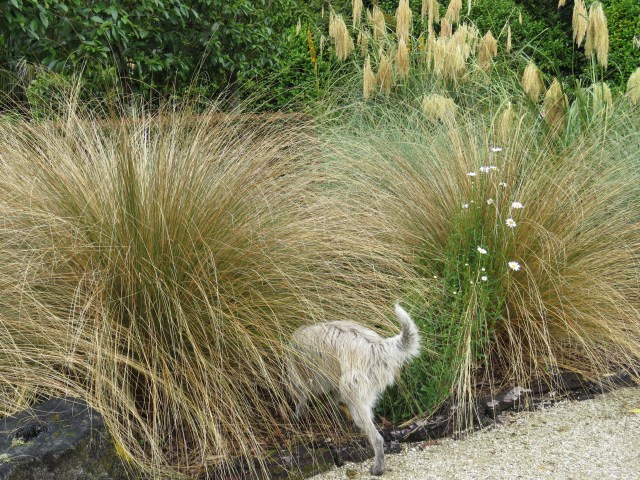
I was looking at the combinations of flowers and foliage that pleased me in the Court Garden and it is that mix of native and exotic. Of the structural plants I chose, nine are native and seven are exotic but all the pretty filler flowers that lift the scene are exotic. That was not by deliberate design although I did lean towards native grasses where I had a choice. I think it shows how effective some of our native plants are as bold, structural statements and how we make up for what we lack in showy flowers with some top-notch grasses.
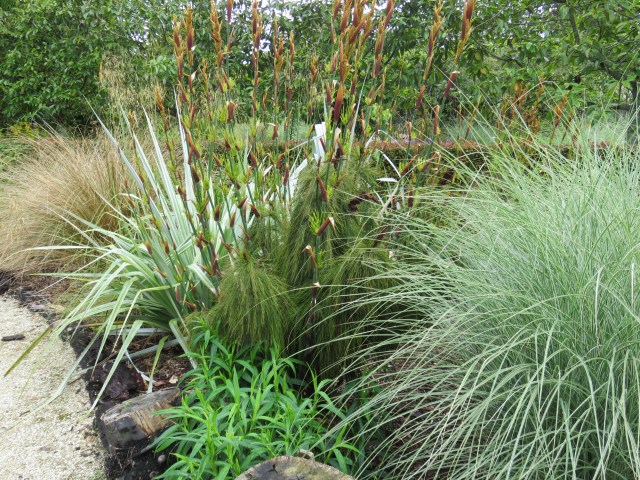
There is plenty of material to work with. Gardens do not generally replicate the natural environment but I find incorporating a range of our native plants satisfying in a faintly patriotic way. It is of course the access to a wider range of our unique native flora that makes NZ gardens different to those around the world. And when all is said and done, flowers are seasonal and ephemeral whereas form, substance and structure is with us all year round. Because our native plants are evergreen, they are ideal for filling that role.
 Tikorangi The Jury Garden
I would love to know the name of the plant with the tui (pink flower, strappy leaves.
That is Veltheimia capensis.
We use a lot of native plants, partly because I tend to leave those that look OK in place when I clear new ground to turn into garden, and then build the garden around them. Hence we have in excess of 100 tree ferns of various types and many hundreds of other ferns all over the garden, none of which we planted and some of which I am sure are not commercially available, such as some of the epiphytic ferns. Quite a few native trees too, and odd native tree seedlings seem to pop up here and there all the time, which I leave until I can identify them and decide whether they stay, go or get moved to a different spot. I love the mix of native plus exotic, a very New Zealand look.
There are plenty in the UK who don’t seem to find NZ natives boring, judging by the number of Cordylines we see in gardens that appear on Gardeners’ World. I’m sure many over there would go week at the knees if they were able to get hold of and grow tree ferns such as our Cyathea medullaris or Cyathea dealbata, but we get so many we have to weed them out, even though we love them!
Exactly!