
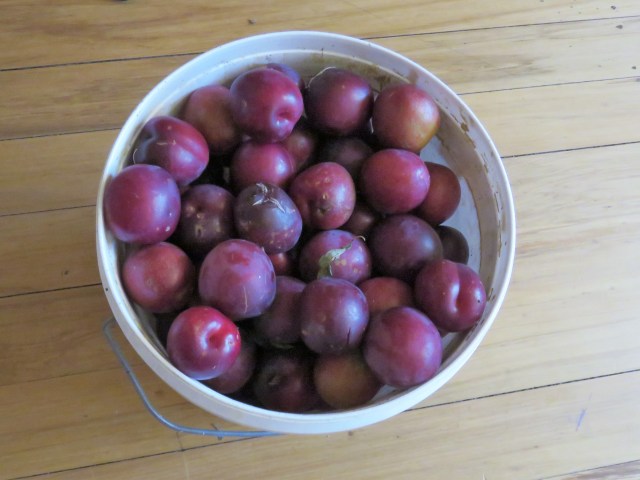
A plumcalypse! We must have had good weather around plum-blossom season because the crop is prolific this year. My will to ensure that no plum go to waste is fading fast. It is becoming more of an endurance test than a triumph of my inner Squirrel Nutkin instincts.

Many New Zealanders will remember the children’s book named ‘Jam’ by the late, great Margaret Mahy. The online blurb reads: “A delightful tale by Margaret Mahy about an industrious stay-at-home dad who is on a mission to ensure his family gets the most out of their plum harvest.” I can relate. I went looking for our copy of the book which dates back to when our children were small but as I couldn’t find it, I assume I sent it to Canberra daughter who went through a similar plummy summer, as I recall.
What to do with plums in a household where we don’t eat jam and where dessert is generally confined to Christmas dinner? I certainly never cook plum crumble, pie or duff and jammy sandwiches or jam on toast are not part of our diet here.
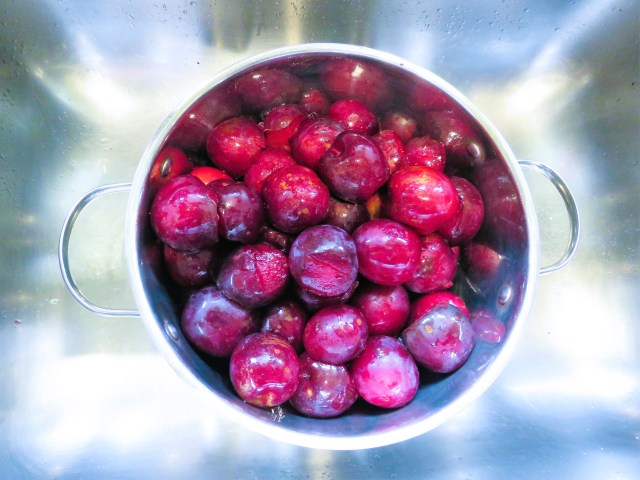
I have frozen as many lightly stewed plums as I think we will consume over the next year. Stewed fruit is never the top of my list – I would rather eat fresh fruit. But we eat fruit every morning with muesli and I find that Alison Holst’s vintage rhubarb sago recipe works very well with plums. It is very simple: add a scant ¼ cup of sago to a 2 or 3 of cups of fruit with sugar to taste and cook it until the sago grains are expanded and clear. I find the microwave is better than the stove element because the time between the grains being still hard and them softening enough to stick to the bottom of the pot is very brief. The result is a sort of jellied version of the fruit which I enjoy with muesli or yoghurt.
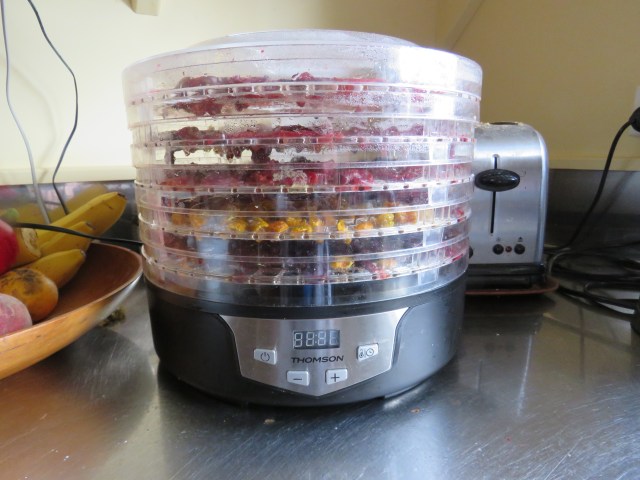
I have dehydrated a swag of plums. It condenses the fruit down to a very small space – a full bucket can reduce to four tiny snack bags. I bought a cheap dehydrator in the first year of Covid, as we now refer to 2020, and I have never regretted it. It was about $40 online and, unlike the early behemoths of dehydrators, it is small enough to fit in a cupboard and it has temperature controls. It is probably only worth owning if you grow your own fruit and vegetables but I no longer buy dried fruit for baking, although it means I substitute the variety of fruit specified in recipes. We now have plenty of dried and semi-dried plums.
Yesterday, I made spicy plum sauce but as a household of two, we don’t need litres of plum sauce so that only used 500 grams of plums.
And still the plums come. I have given them away by the bucket-load but now, when I ask others around me if they want some plums, there is a hesitancy in their replies which tells me they, too, have reached the point of over-load. But the last heavy-fruiting tree, the ‘Hawera’ is now past its peak so the flush is over. Just the damsons to come.
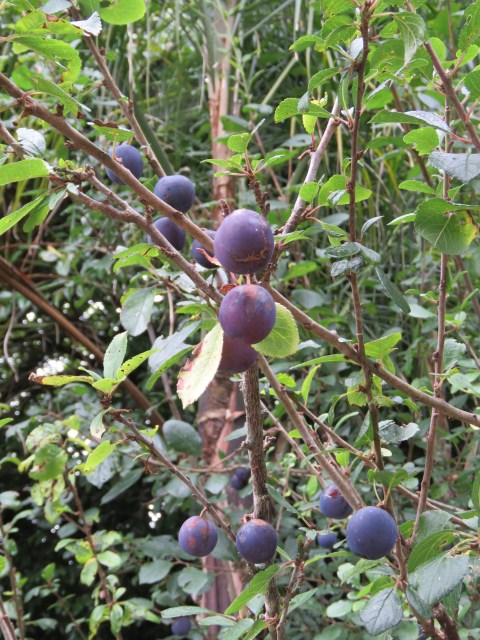
I differ from my colleague, Lynda Hallinan, in that I do not rate the damson tree highly. It really isn’t a good plum for eating fresh. It makes good jams and jellies. It dehydrates well. I take the stones out first so it does require a bit of faffing around because the fruit are so small. Beyond that, its main use seems to be making damson gin. I have made damson gin in the past but, along with shunning jam and desserts, we don’t like sweet drinks and damson gin is essentially a sweet liqueur. I would rather drink the gin without the long steeping in damsons and sugar. But I am not averse to pink gin and flavoured gins so I think I may try steeping the damsons in gin without the addition of sugar. Topped up with soda water, I think it might lift a cheap gin to a new level of interest and flavour. It leaves the problem of what to do with the byproduct of damsons pickled in gin in a dessert-free household. I will face that problem when I get to it.
The bottom line is that I wouldn’t recommend planting a damson tree where space is limited. There are many better eating options. ‘Hawera’ and ‘Sultan’ are our best eaters. The failure of the ‘Omega’ crop again is likely related to its location. The ‘Phillips’ plums are not the most exciting plum by any means but they are reliable, prolific croppers and early season. Sadly, we cut out the Blue Gage and the Green Gage because they didn’t crop in our climate. They likely prefer drier climates with more winter chill. So too do the apricots and cherries that I would prefer to grow.
Helpful readers identified the plum I photographed last week as a ‘Luisa’. I was all for buying one until I questioned myself as to whether we actually need yet more plums. Maybe not.
 Tikorangi The Jury Garden
Hey, I just pruned a plum tree today. (It is winter here.) The Santa Clara Valley was formerly famous for orchards. Apricots were likely the most common crop. Prunes might have been the second most common crop. The prune blossom is the Official Town Flower of Campbell. Yet, not many people here (of the very few who are aware that there were ever orchards here) know the difference between prune and plum. To complicate matters, dried prunes are now known as dried plums because they are more marketable that way. Anyway, plums were uncommon among the orchards, but were very popular in home gardens.
Plums are one fruit that can be grown here with minimal care, left largely to their own devices and never sprayed. So a good utility option although many of us would rather eat nectarines, apricots or good peaches. But I qm not going to be too critical of such h an obliging fruit tree.
Only plum tree worth growing if you don’t jam or sauce is Luisa. We got six perfect tasting beauties from our 2nd season tree here in north Auckland.