

There is something so innocent and wholesome about peak feijoa month in Aotearoa New Zealand. In a time when the world is chaotic and unpredictable, when problems seem to be mounting ever higher and the daily news is pretty darn bleak, this little green oval fruit appears in abundance and suddenly we are all talking about feijoas. Tables appear by gates as children gather the fruit and put them out with an honesty box. $2 a bag seems to be the going rate here, which is usually between a dollar and $1.50 a kilo.
News outlets come out with the usual fluff pieces. “Today, we have a guest in the studio who has never tried a feijoa (collective gasp of shock) and we are ready with the fruit sliced and a teaspoon for him to have his first taste.” True, I heard that on Radio New Zealand this week. And an evening TV show put up a segment on what to do with your surplus feijoas. Reader, I can tell you there are no magic answers to that issue. All they came up with was to give away your surplus to less fortunate folk who do not have their own, stew them, make feijoa crumble, muffins or feijoa chutney and not much else. I stew some for the freezer, dehydrate them for using in baking and muesli and we eat huge amounts fresh but that is about as far as it goes.
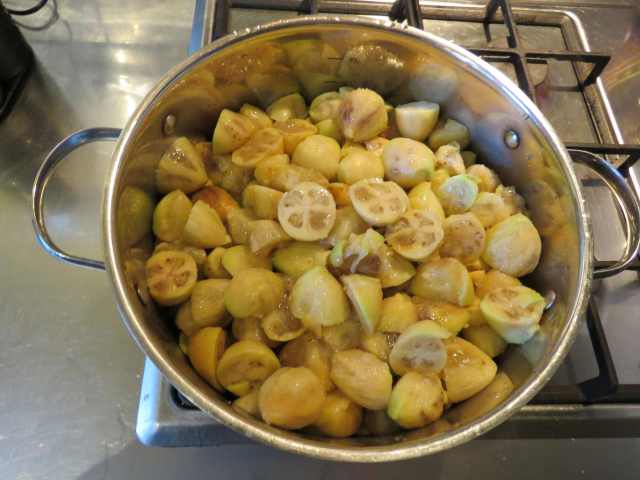
Predictably there are the naysayers who don’t like the taste or texture but they are a minority. While feijoas have a fairly widespread distribution throughout the country, being a warm temperate to subtropical plant, there are areas where they don’t grow or, if they grow, they don’t fruit consistently because of cold winters. People in those areas must wonder what feijoa mania is all about. But when it comes to home gardens across the nation, feijoas must rank close to lemons and daphnes as being one of the most ubiquitous plants grown.
This popularity has grown through the decades. They have been here since the 1920s but I had never heard of them until I moved from Dunedin to the North Island. With new and improved selections becoming available, their popularity and distribution have grown exponentially.
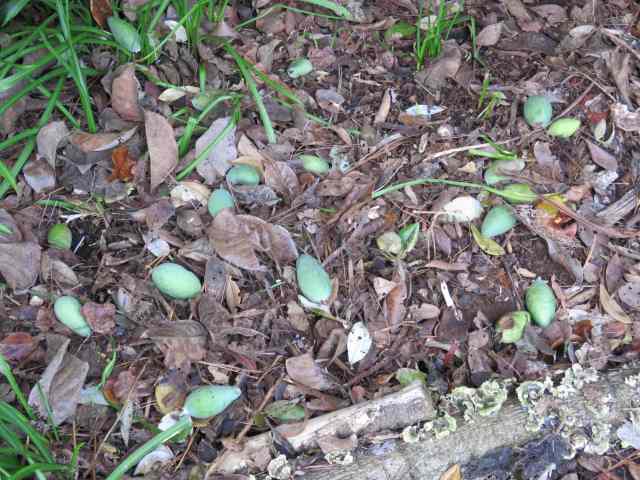
They are often referred to as the most democratic fruit or even a socialist fruit but Mark commented this week that really they are egalitarian more than democratic. Despite efforts over the years, they are not a high production commercial crop. They are so easy to grow and fruit so prolifically that their perceived dollar value is low and they bruise easily, making the repeated handling and shipping required by distribution chains problematic. There is an overseas market that is higher value but challenging to meet. The domestic market is very small because so many of us grow our own. Feijoas are something you share around; maybe they are our most socialist fruit after all.
Feijoa sellowiana syn Acca sellowiana is native to South America, particularly Brazil but apparently, we were the first country to introduce preferred selections as home garden plants. Why so popular? Because they are probably the easiest fruit of all to grow. They are evergreen. They don’t need feeding, they don’t need spraying, they don’t get diseased, they have few insect attacks and they are quite happy if you never prune them. You can just plant them in full to half sun and leave them. If you have a good variety and your winters are not extreme, they fruit generously every year.
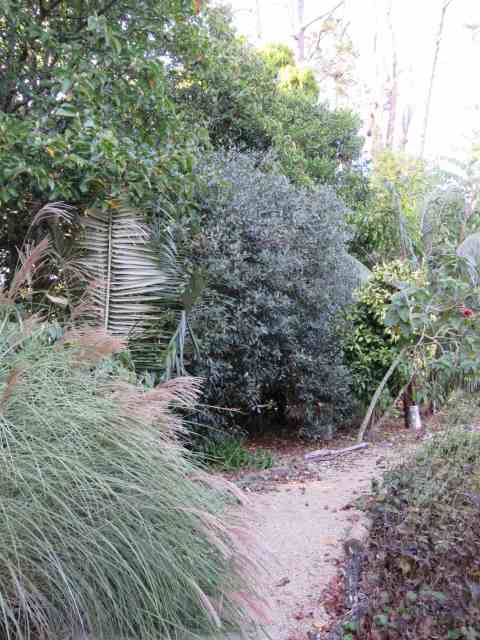
In days gone by, seedlings were often sold as hedging plants but honestly, seedlings are not worth having because they are extremely variable and usually have tiny fruit that are mostly skin. Buy named varieties from the garden centre. You won’t regret it. It can be the difference between fruit the size of your thumb versus fruit the size of duck eggs. If you live some distance from neighbours, you either need to buy a variety that is self-pollinating or grow at least two because not all feijoas are self-fertile. It is not generally a problem in urban areas because there are so many growing that your neighbours’ trees will be pollinators.
Sadly the guava moth has arrived in our country, likely blown over from Australia. It is another pest we could have done without. And in areas further north where it has become established, it spoils the reputation of the feijoa as the most easy-care of fruits. There is a lot of work being done on environmentally benign interventions to control guava moth infestations. The internet or your local garden centre will be able to advise you if you are finding fruit with nasty caterpillars and poo inside them. It hasn’t made its presence felt here in the mid-north but I am sure it will at some point in the future.
Even if we have to resort to pheromone traps or other techniques, it will be worth it to preserve our most egalitarian and generous fruit.
 Tikorangi The Jury Garden
Sadly, the guava moth takes the joy out of the feijoa, rather. I am reminded of cutting up stewing apples infested with codlin moth, as a child. The fruit bit is lovely – I just had some with my breakfast muesli – but you have to brace yourself for the disgusting parts that are badly affected, and have to be thrown in the bin rather than the compost. Practically the only food in my bin – feels all wrong. One thing at least to go in that food bin when we get that here in Auckland. A great shame, that damn moth.
It is awful but I fear it is something we will have to learn to live with. I only had a perfunctory look on line but it seems that pheromone traps may be the best way to go. There is a lot of research going into the guava moth because it attacks so many different host plants but hanging a few pheromone traps at the right time of the year may pay dividends if you are already being assailed by them.
Helga – up here (Kaipara) I put the guava moth bits of fruit in the freezer to kill the critters before throwing in the compost.
That is VERY disappointing. I hope they don’t reach us too soon.
We just freeze them whole and when they defrost they’re much like stewed texture. That’s if the pukeko and rabbits haven’t got to them first!
I can not understand why this is not more popular here than it is! It practically grows wild, as if it were native. It does not need much water, and can survive and even produce well without irrigation. Unlike other fruit trees, it is a practical ornamental that does not need much more maintenance than harvesting of the fruit. Yet, it remains uncommon. People are surprised to find that the fruit, which typically gets raked away and disposed of by gardeners, is not only edible, but very good. It seems to be more popular there, as well as in South Africa and Mediterranean regions of Europe.
I would describe it as pretty much our national fruit! No matter that it is South American in origin. We have some very good selections with larger fruit readily available now.
Daughter has a feijoa hedge in Christchurch not too far from the beach. The fruit is quite small but she advertises on the neighbourhood Facebook page and people take everything she leaves at the gate.
Being so close to the sea would moderate the cold nights in winter.
Your post prompted me to go and check our Feijoa bushes. Not a happy story. The newest one has died, the one that cropped OK last year had blown over in a storm, the one next to it has just 4 or 5 very small fruit on it and the biggest one by the hen house has no fruit at all. Sadly we know nobody who grows them who would have fruit to give away either. No feijoas for me this year :-(.
In the supermarket they are currently $6.99 per kg, same as the apples have been since the cyclone Gabrielle floods.
Lean times, Tim! Lean times indeed. I would share if you were closer.
Bit far to pop round for a bag of feijoas ☺️. I’ll just have to grin and bear it.
Feijoas are prolific in Southland. Not seen them in the Antarctic yet.