
We may be growing older but at least we keep learning things. I recall when our nation first learned about liquefaction in the Christchurch earthquakes. Next was graupel which must have been during the snow event of 2011. This year it is atmospheric rivers. I doubt too many of us knew about these before the Auckland anniversary floods followed by Cyclone Gabrielle. We received weather alerts this week about a potential atmospheric river becoming stalled over Taranaki from Wednesday.
In the event, it didn’t amount to anything close to the devastating floods suffered by many in more northerly and eastern areas of the North Island already this year. It rained hard on Wednesday night – over 90ml which is heading towards 4 inches, Mark tells me from his rain gauges – but since then it has just been showery and drizzly and unusually gloomy. Given that an atmospheric river can release more water than is in the Amazon, we feel we may have dodged a disaster this time.
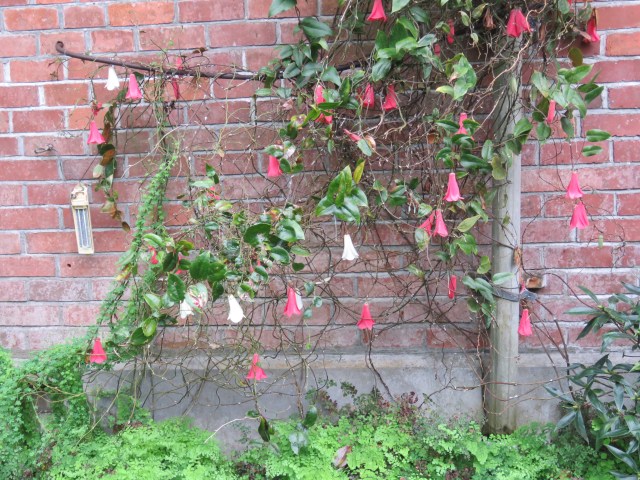
But gloomy is as gloomy does. At least it is not cold. While autumn is here, our daytime temperatures are still sitting around a pleasant 20 celsius and the nights are mild. When the rain stopped yesterday, even though it remained unrelentingly grey, I walked around the garden looking for bright spots.


I have been slow to be won over to the charms of the salvia family. The plants tend to be rangy, leggy, things lacking form but now I have the right places to grow them. They are generous in their blooming habits, flowering for months on end and what I earlier saw as formless sits comfortably in more casual plantings. I think I may need to expand the range and there are certainly plenty to choose from.
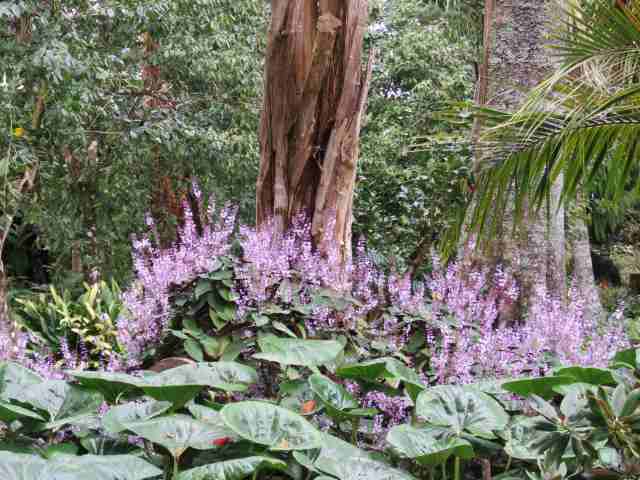
Plectranthus don’t have a good reputation but we accept a few in more casual areas. At least they are easy to hack back and to pull out when they start straying beyond their designated home space. I enjoy that lilac-blue haze behind the Ligularia reniformis. I have no idea which plectranthus this one is but it has a lovely burgundy colour on the underside of the foliage. That gnarly, dead-looking trunk in the centre of the photograph is the remains of my treasured jacaranda that was taken out by Cyclone Dovi in February last year.
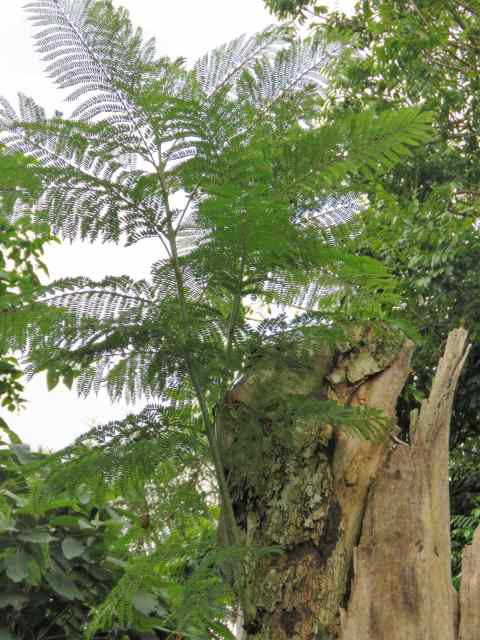
But wait! That is new life on the gnarly old jacaranda trunk. To our great surprise it is shooting again. When Zach spotted the first tiny signs of life, we thought it unlikely to survive because the outer layer of bark on the trunk had been stripped away entirely and we didn’t see how it could sustain new life. But here we are. That shoot is already quite substantial.
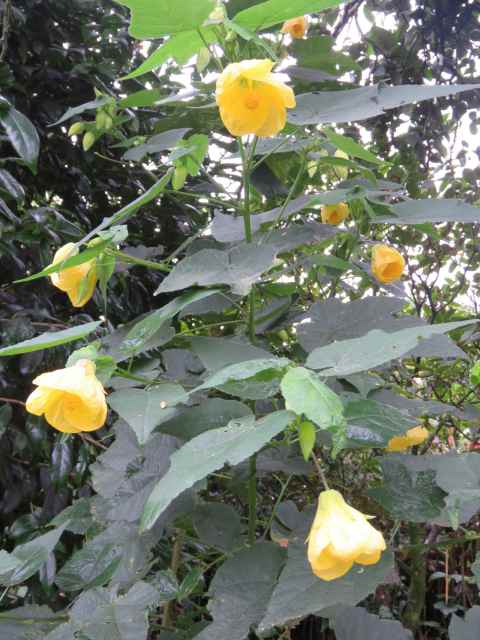
I am somewhat dismissive of abutilons which seed way too readily. We weed out most of them but I try and keep the odd one in pure yellow, at least one pure red one and any that have clearly crossed and come in a pleasing orange shade. Anything in murky colours – and there are plenty of those – or in the wrong place is unceremoniouly pulled out and consigned to compost.


Underneath the rimus, the bromeliads provide us with winter colour and a somewhat unique perspective on exotic woodland plantings. Ralph is a bit underwhelmed but he does have a resting sad face and that does not indicate a sad nature. The startling pink variegations in that photo with him are pretty interesting and seem to have stronger colour this year for no discernable reason.
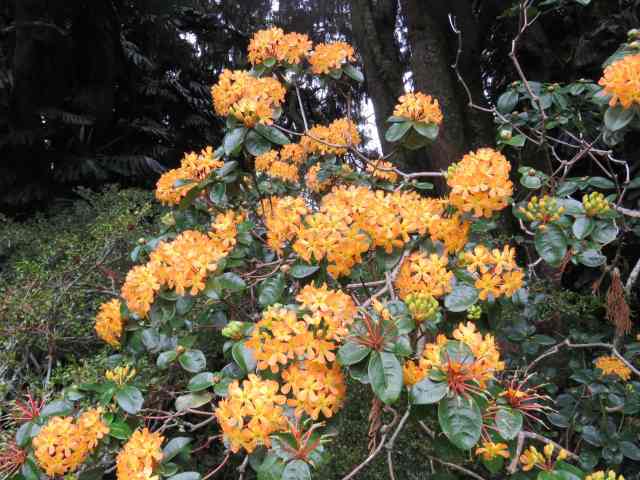
Right on cue, Felix’s New Guinea collection of R. macgregoriae flowers again, as it has done for sixty-five years now. For a vireya, that is an extraordinarily long life span. In our conditions, they are all too often short-lived. All we ever do is dead head it and take out any dead wood. It doesn’t get fed at all but each year it puts on a mass display.

I can not in all honesty say that my corner of the world has been gripped by Coronation fever but I was amused when Canberra daughter announced that the Coronation Quiche looked preferable to its predecessor, Coronation Chicken. Never having tried the latter, I had to google the recipe and that combination of chicken and dried apricot with mayonnaise is very 1950s/60s. Daughter entered into the spirit of the occasion by making an acquaintance with lard, albeit Australian lard, and even posted a photograph of her preparations.
Sadly, she was underwhelmed by the result. While the lard gave a good, flaky pastry, she declared the ratios to be “a bit weird, it’s a lot of cheese and a lot of spinach. The spinach made it a bit earthy and herbaceous. Plus I had forgotten I don’t really like tarragon.”
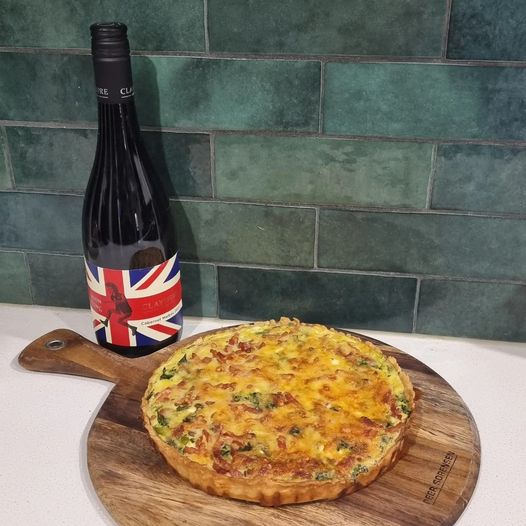
She remade it, substituting parsley for much of the spinach and adding bacon and declared that preferable.
Going back to Coronation Chicken, I do hope that the New Zealand version was not prepared with Highlander mayonnaise back in the day, Highlander mayonnaise being of a similar era and based on a can of sweetened condensed milk. But I bet it was. With added curry powder from Greggs. ‘The horror, the horror.’
 Tikorangi The Jury Garden
Back then, it would more likely have been called “bacon and egg pie” and in our household mayonnaise never came from a can!
I have seen some criticism of ‘quiche’ (froggy French, not British) and an egg-based dish at a time when there is a dire shortage of eggs across the UK.
Just beautiful!
That was my grandfather’s Highlander mayonnaise treat for me and him (with the old fashioned curry powder) and I still make it today. My children not so keen (anti sugar lot) but the grandchildren love it – like it’s sme kind of secret midnight feast. So sorry Abbie it has some real fans here! Love this article though.
Each to their own!
Did Mark and yourself celebrate World Naked Gardening Day yesterday?
Not our style.
The Coronation Quiche was mentioned as a possibity here but I think that’s as far as we will go in that direction.
Salvias are nice, . . . but I sort of missed the boat on that one also. A few grow wild here. Perhaps that is why I am less than impressed by most of the garden varieties. They really suit our climate well though. I can understand why they are as popular here as they are.
My colleagues were also questioning the ‘atmospheric river’ concept. We all sort of know what it means, but do not understand why that terminology now suddenly became the means with which to describe winter weather.
Not winter weather here, Tony. In fact the deluge that hit Auckland was summer. We can get torrential downpours here but never in the concentrations that we have had so far this year with the confluence of warm, wet tropical air becoming stalled, sometimes for days, by big anticyclones blocking their way. “An atmospheric river (AR) is a narrow corridor or filament of concentrated moisture in the atmosphere. Other names for this phenomenon are tropical plume, tropical connection, moisture plume, water vapor surge, and cloud band.”
Well, of course, but it only affects us during winter, which is summer there, because that is the rainy season here. There is no rain for summer.
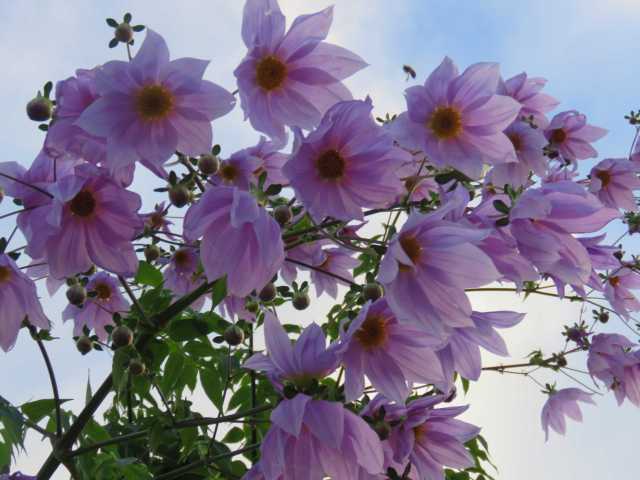
We have had a little less rain than you, but it has been abnormally warm for the last week. Today it reached 23.6, which is not only our warmest ever day in May, but we have only ever got as warm early in April in the last 2 years, so a very unusual autumn. I was excited yesterday to see that this has meant that at long last our Dahlia imperialis are forming flower buds: both the original tuber that we bought from a church plant fair and the two that I grew from cuttings this year. I am keeping my fingers crossed that the forecast cold snap that is due mid week won’t kill off the buds and prevent them turning into flowers. To be honest I never believed we’d be able to get it to flower here, but we love the structure and grow it for that reason.
We are very fond of Salvias and the late flowering varieties are all doing very well this year for us too, especially the red S. confertiflora and S. elegans. I have S. madrensis growing in pots so I can over-winter them under cover, but your photo shows how good they can look in the right conditions.
That jacaranda is amazing, you must have been very surprised and pleased.
Our problems with the tree dahlias come from them being so top heavy and towering, in an unstable manner, anything up to 4 or 5 metres high. They are very vulnerable to wind but good luck with yours.
Yes, we have our fingers crossed for the jacaranda but we are mystified by how the trunk can resprout when there is not a skerrick of bark left on it. The cyclone stripped it entirely.