Gardening here tends to come down to routine maintenance, emergency response (usually storm damage and fallen trees) and new projects. Projects are the most interesting but we have done all the large projects we planned so we are down to smaller ones now. It gives a break from routine maintenance which, by definition, is never-ending.
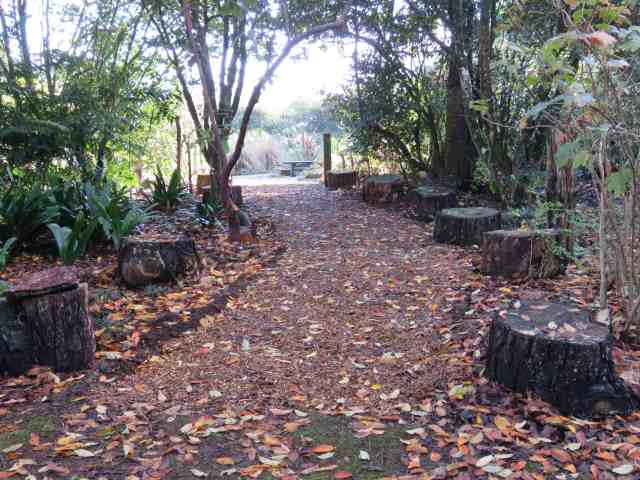
The latest project was getting the central path in to the Summer Gardens from the Avenue Gardens. It was always on the drawing board but sometimes it takes a bit longer to think through how best to achieve a good result. After three years of somewhat desultory thought, it was remarkably straightforward in the end. I was stuck on the idea that it had to be straight ahead, centred from the main Court Garden. The breakthrough came when Mark pointed out that while one end needed to be dead straight, where it came through to the avenues didn’t need to be. We could curve it so that the visual end-point was a large tree – a sterile Prunus campanulata, as it happens. That was the compromise that made sense to me.
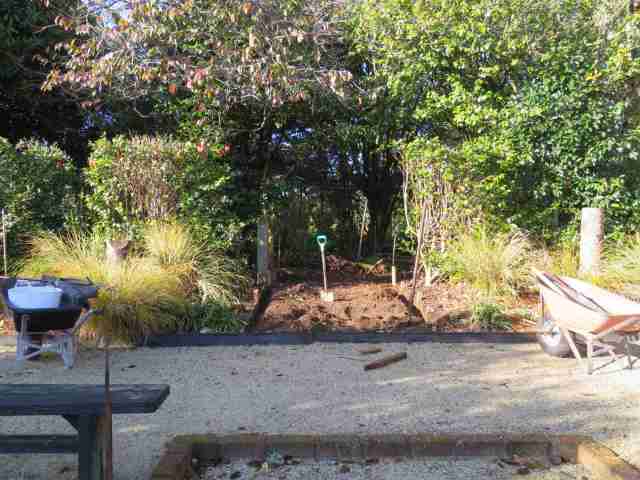
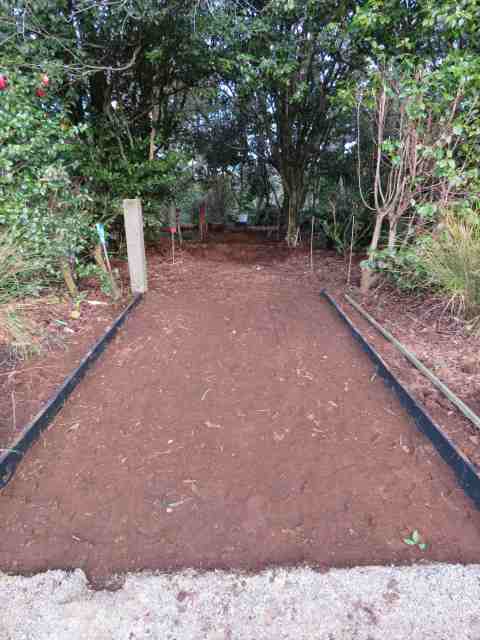
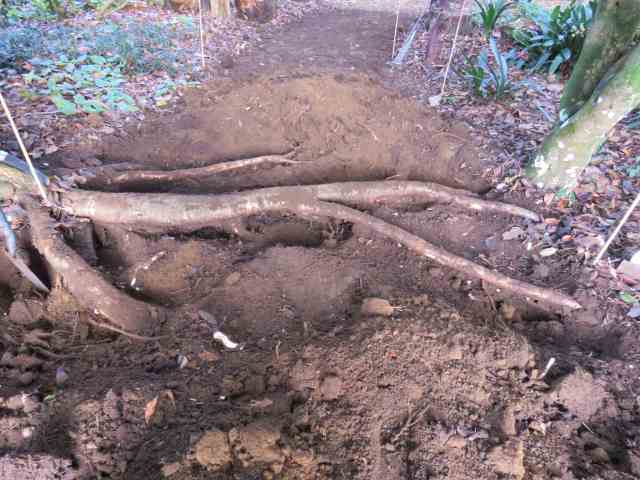
Lloyd and Zach set about removing plants that were in the way. Digging out about five solid camellias to create an opening in the hedge was the biggest job although removing some rather large roots from another tree also took some muscle. Lloyd, being a man of precision, set about levelling the path, laying a base course for drainage and moving leftover cream-coloured limestone and shell gravel to match the path surfaces in the Summer Gardens. Where we transitioned to the woodland area, he spread coarse woodchip and we will let leaf litter build over it.
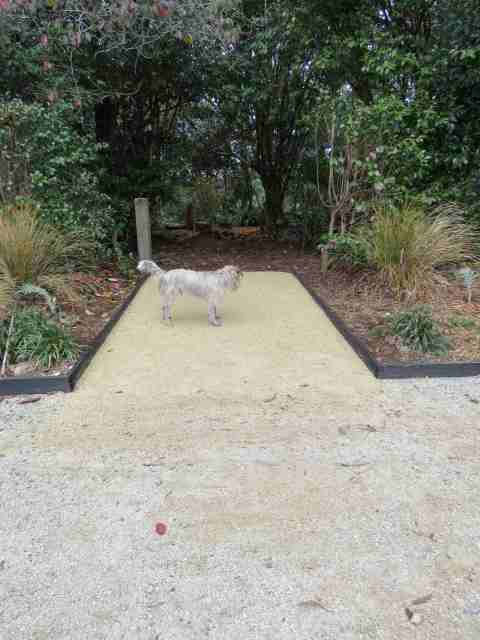
The line between the whitish gravel and the woodchip is a little stark at the moment, but otherwise, it all looks as if it has always been there and that is our goal – avoiding the look of something glaringly new in a well-established garden. The concrete post is still under debate. It is a relic from times past and Lloyd, who has already dug one out previously and therefore knows just how deeply those posts are bedded in the soil, has delegated this one to Zach, if we want it gone. I will wait and see if it annoys me over time.
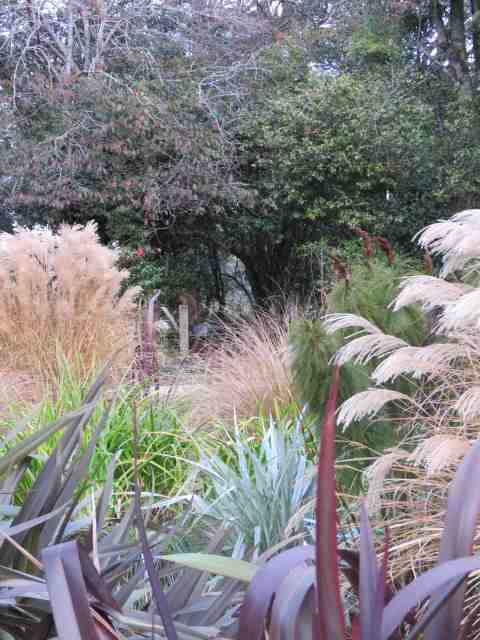
I am delighted by the fact that there is now a view shaft from the Court Garden through to the Avenue Gardens – a leafy tunnel that leads to light from both directions.
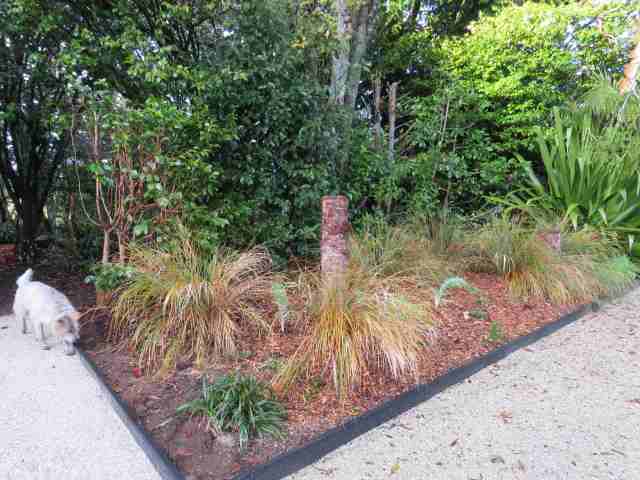
The end border of the Summer Gardens was never a feature border, just a softening backdrop. When we prepared to reopen the garden in 2020, I wasn’t sure what to do with it so I bunged in a whole lot of yellow Wachendorfia thyrsiflora and a selected blue agapanthus. It was pretty enough for three years but never a permanent planting. They are now gone to compost. In a job that I thought would take me about a week but Zach accomplished in a day, (oh to be young and strong!) the border was stripped out and replanted so the dominant plants are now our native wind grass or gossamer grass, Anemanthele lessoniana, and giant silver cardoons. Well, some of the cardoons are quite small because we were dividing the three I bought in last year, but they grew at an astonishing rate so I am hoping they all survive to be large this summer.
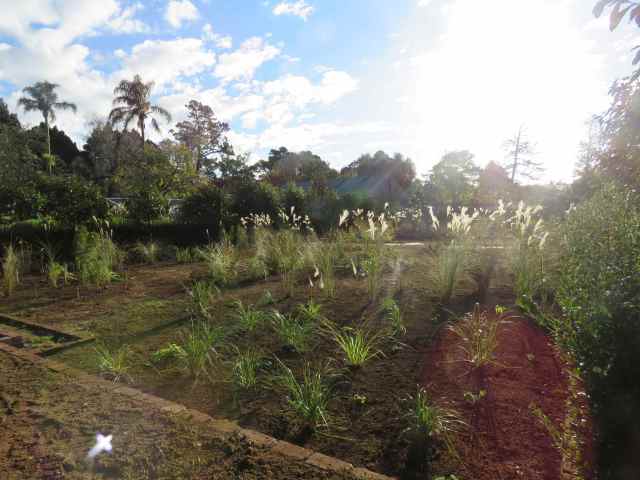
Then it was onto the Miscanthus ‘Morning Light’ in the Court Garden. When I planted this garden in 2019, I had drawn it all out on graph paper and thought I had the plant spacings right. I didn’t. We did one major thinning two years ago but still the miscanthus were getting too big and were planted without sufficient space between.
A senior staffer from one of the public gardens contacted me a few months ago to see if we had any spare miscanthus. He was struggling to find enough large plants to fill a big space. Why yes, we had plenty to share and it was a perfect solution. Because we had warning, Zach lifted and divided a few surplus plants from elsewhere, heeling them into the vegetable garden, ready for when we needed them.
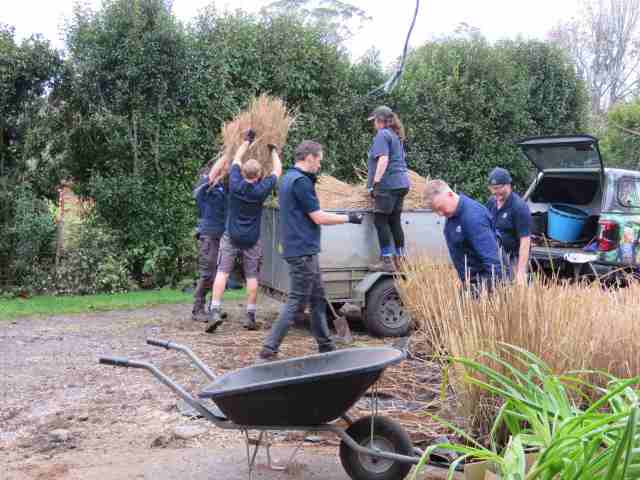
This week a team of six descended upon the area and efficiently dug out all the large miscanthus and loaded them out. I think there were 33 large clumps and when I say large, I mean they could be chopped into at least four, some maybe eight to ten sizeable clumps to replant and still give instant impact this spring and summer. There should have been enough to furnish a large area.
The next day, Zach replanted the divisions he prepared earlier but at wider spacings and fewer in number. Job done for another few years and very painless it was, with many hands.

What amazes me is that this plethora of Miscanthus ‘Morning Light’ all descend from just one small plant that Mark bought originally. It was still just one plant, albeit a large clump, when I first lifted it and started dividing it in 2017. We have just kept dividing since. In those six intervening years, that one original plant has now yielded several hundred sizeable clumps. Astonishing, really.
 Tikorangi The Jury Garden
Twice I have written a post, and not got to send it! I leave my writings to check on a plant name spelling, then can’t find my writings, although it tells me I have a draft. I am better at gardening than technology!! Anyway, I just so enjoy your articles!!
Thank you!
Thanks for saying so, Joy.
I am new to your blog and I do too (enjoy your articles, that is). They’re entertaining & so informative. Many thanks for sharing your garden in all its guises with the wider world,
Thank you, Veronica.
That concrete post could be creatively used to hide its ugliness. Maybe wire round it to grow some form of ivy or other plant to make it look like a shrub. Maybe secure a pot on top that has a cascading plant growing down to soften it. Maybe get a local artist to come and turn it into some form of art sculpture. Maybe make it part of a bee/insect hotel built around it ….there are many ways to solve a problem.
Lloyd and I have discussed this. We think if we ignore it, Zach is sure to take responsibility and find a suitable solution for it.
A garden project keeps the garden fresh and the interest level high! Constant work on maintenance can become tiresome!
Yes. Garden maintenance is like housework. Nice to look at when it is done but not exactly exciting.