
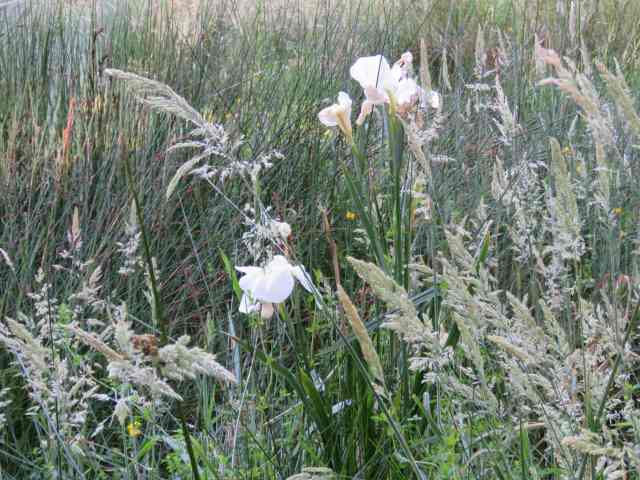
‘Wild’ gardening may be all the rage in the UK these days but it is not a discussion that we are rushing into with any enthusiasm in Aotearoa New Zealand. Maybe we are a bit sensitive in this country to the status of weeds, given that so many of our biological time bombs are garden escapes. Or maybe not. There is a possibility that the majority of homeowners in this country still prefer a neatly maintained section with tidy borders, sharp lines and an immaculate lawn.
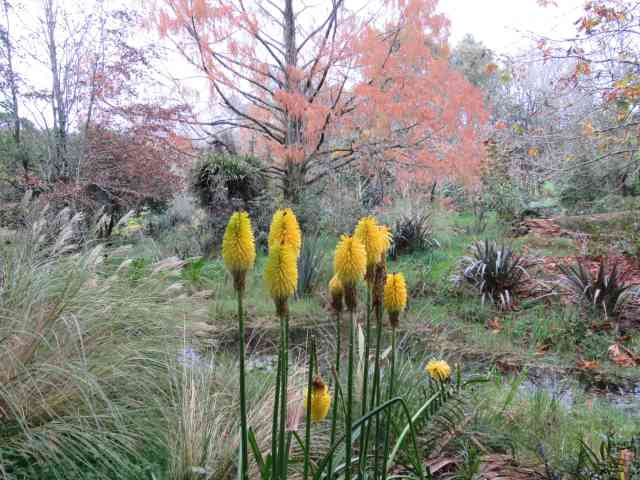
Whatever the case, I found this article interesting. We will gloss over the fact it is in The Telegraph, a UK publication of somewhat questionable political affiliations; it does seem to have some good gardening pieces. I will park Alan Titchmarsh to one side because I think he is a spokesperson for a past generation of gardeners. It was Monty Don’s comments that interested me because some of us are familiar with his garden through BBC’s Gardeners’ World and I would have described much of his garden as being ‘naturalistic’ in style, verging on ‘wild gardening’ at times. It seems that ‘wild gardening’ in the UK is a great deal wilder than I had thought.
“It is as though a so-called ‘wild’ garden that mimics natural conditions is somehow worthier and more moral than one in which mankind’s creative skills are more obviously played out.
“This is puritanical nonsense. If you want a truly wild garden then simply walk away. Leave any patch of ground completely untouched by human hand and it will happily become whatever it wants to be.
“The result might be beautiful and richly satisfying as well as very good for wildlife of all kinds, but it will not be a garden.”.
Monty Don in The Telegraph
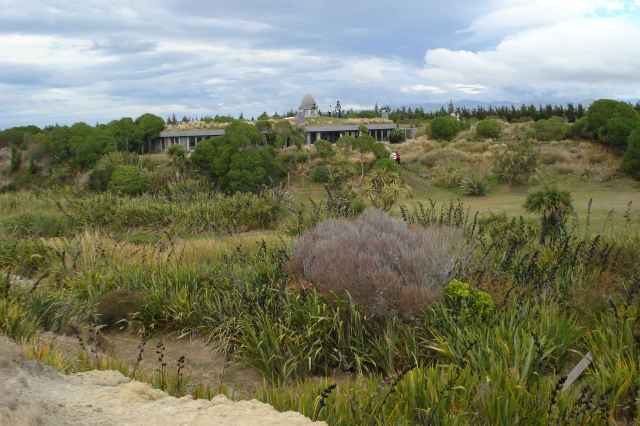
I think he makes a useful distinction. I see he has been on this topic for a while. The best in show title at Chelsea Flower Show last year was won by a so-called wild garden created by two people who describe themselves as “passionate ecological restorationists”, rather than gardeners. I can’t read the whole article about Monty Don questioning whether their display was actually a garden at all because I am not willing to sign up to The Telegraph, even though they offer the first month free. I have my own standards when it comes to media. Ecological restoration is a different kettle of fish, to my mind. It involves eco-sourcing plant material (limiting plants to those sourced from local plant populations), keeping to native plants only with a purist vision of returning land to how we think it may have been in earlier times, usually prior to European settlement. Aesthetics are not a factor when it comes to ecological restoration, although the end result may well be visually pleasing to some.
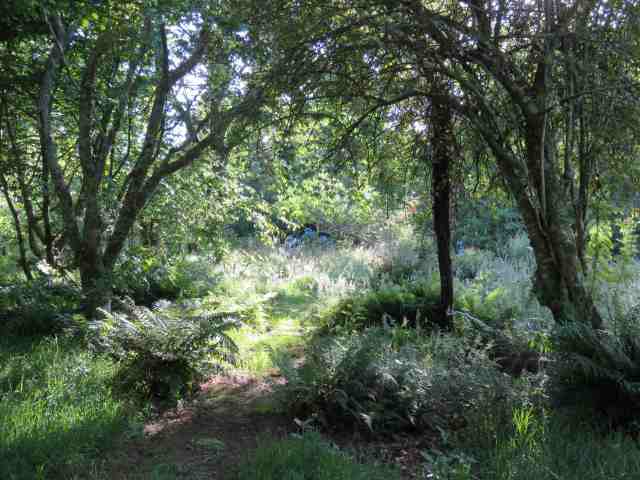
Of course, many of our weeds in this country are native wildflowers in the UK so rewilding with those may have a prettier result without being tainted by the connotations of rampant, invasive pest plants. We are a bit thin on pretty- flowered, native perennials and annuals in this country, although we have a wealth of beautiful flowering trees and shrubs and some splendid grasses.
Our personal take on wild gardening here at Tikorangi would not meet the purity test. Not by a long shot. We started the Wild North Garden with a mix of both native plants and exotics and have continued with that. We still carry out weed control. We have to in our conditions or it would deteriorate into a weedy mess in a single season. But we don’t remove every weed as we attempt to in the more tightly managed areas of the garden.
Wild gardening is NOT a case of shutting up an area and letting Nature take over, as some assume. It is not an excuse for lazy gardening. It is a different way of managing an area, a lighter hand, way less emphasis on tight control and instead viewing an area through different eyes with different expectations.
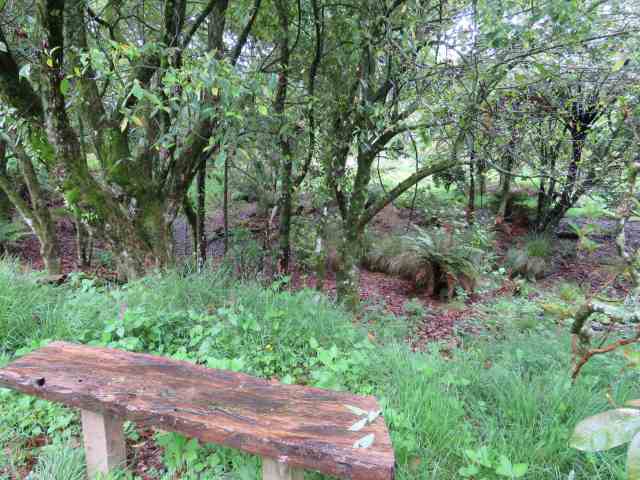
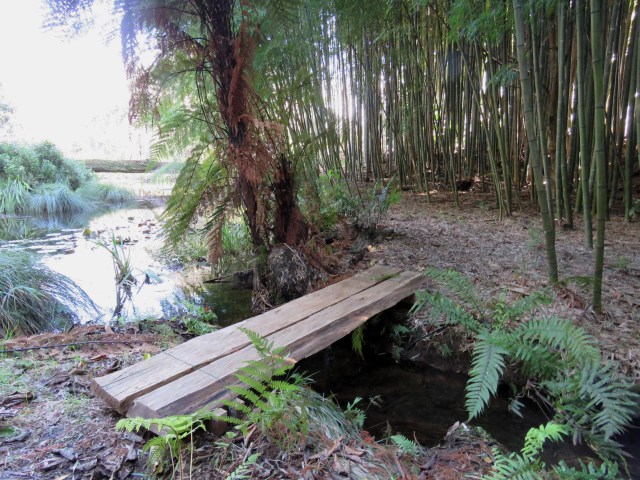
We have shunned contrived ‘focal points’ and garden features that are clearly made by human hands. The simple bridges and a couple of bench seats are the only man-made structures although, in reality, the whole area has been reshaped, re-formed and planted by human hands. We do a lot of lifting and limbing to get view shafts and a sense of distance in the area. There are no defined borders or garden beds but we continue to add plants that we think can blend in, add interest, compete with competition from other plants and survive with minimal maintenance. There is no deadheading, seasonal cutting back or staking. Management of the area – which our property title tells me is close to 4 acres or a hectare – is light-handed but manage it we do.
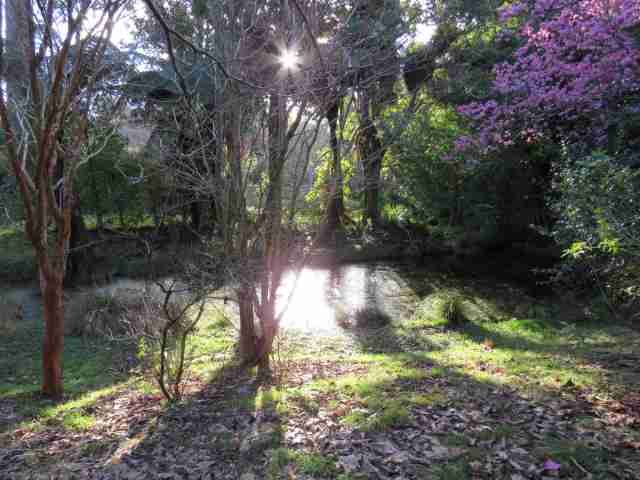
That is what we are calling wild gardening. At a personal level, when I am leading people through the garden, I always finish up in the Wild North Garden and as I walk down the hillside to enter it, I can feel myself breathing out and relaxing. I find I talk less and more quietly. It feels different to every other area of the garden and very, very different to the more tightly maintained, detailed areas. I love that different feel.
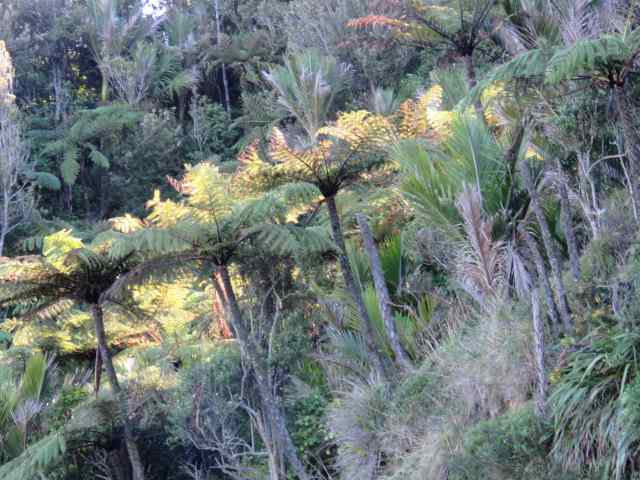
I am with Monty Don, though. I think, by definition, a garden requires a human vision, a sense of aesthetics and human hands in its creation and ongoing management. Nature can be very beautiful and natural environments can nourish the human spirit or even take one’s breath away; Nature can establish and support an extensive ecosystem if given the opportunity. But that does not make it a garden. Wild gardening or naturalistic gardening is a human attempt to find the meeting ground between a garden and the natural environment that also fulfils a purely human aesthetic.
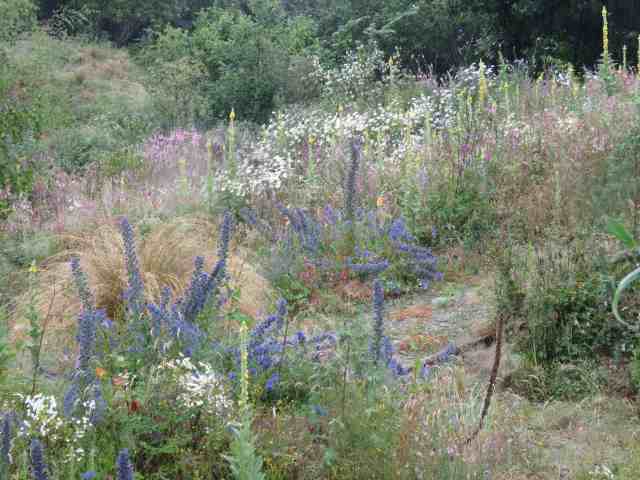


 Tikorangi The Jury Garden
Fashion is a powerful driving force and the inaccuracies within this wild “gardening” fashion are, for the most part, unquestioned, unchallenged and viewed by many as being above challenge – sacred cows! People have criticised my liking for mown grass – “let it grow; now mow!” etc but fail to realise that my garden, in its location, is the provider of the diversity they clamour for. All around me are wild field headland and roadverges of native plants while our garden provides a completely different selection entirely. Generally speaking, what we see is not rewilding but a kind of gardening with native and wildflowers – carefully selected, for one wouild not wish too much wildness! The wild garden at the Chelsea Flower Show was, in my opinion, out of place there.
The other aspect I have been thinking about is plant interest and complexity which tends to get sidelined in any discussion on wild gardens. Not everybody even notices the complexity of plantings but it is always the difference for us between a garden that maybe looks nice enough and one that interests us. And yes, revegetation (as has happened with the reinstatement of English hedgerows and what we call riparian strips here – fencing off and planting a strip beside every waterway that is more than a metre wide that passes across most farms) is utilitarian and sound environmental management but it has a different focus entirely to a garden. That said, these are good and positive discussions, especially compared to the minimalist gardens of the early 2000s – three rocks, some gravel and a sanseveria and one palm tree.
Thank you so much for this thoughtful focus Abbie!
I too have been thinking about how the whole concept of ‘wild’ gardening looks for us here in NZ and you have tackled all of the points that I couldn’t quite piece together yet!
Most importantly – the lure of a rambling ‘wild’ garden is high on the list of wants of new gardeners here in NZ, but the reality is it wouldn’t have any of the seasonal response and airy romance that feature in the Northern Hemisphere unless it was full of exotic ‘weeds’ as you say!
Thank you again – thoroughly enjoyed your wise interpretation of it all!
Ju x
Thanks, Julia. I apppreciate your comments.
An interesting and current topic Abbie! And while I am learning a more hands off approach in my small garden, if I left it completely au naturel, it would be a weedy overgrown mess in no time! Also where would be the fun? Selecting, training and coaxing the right plants to fill a space in a balanced and pleasing way is the creative bit therefore the challenging and fun part of gardening.
Exactly! And that is what sets a garden apart from an attempt at ecological restoration.