
It is magnolia season and I have been photographing magnolias to share on a Facebook page I belong to, mostly populated with Northern Europeans which is how I learned yesterday morning that Mark’s Magnolia ‘Honey Tulip’ is performing well and bringing delight to a magnolia enthusiast in Ukraine. That seemed a little poignant. But this lovely yellow orchid has been sitting in my photo files waiting for its week to star so it is the turn of orchids to feature in this busy spring season.
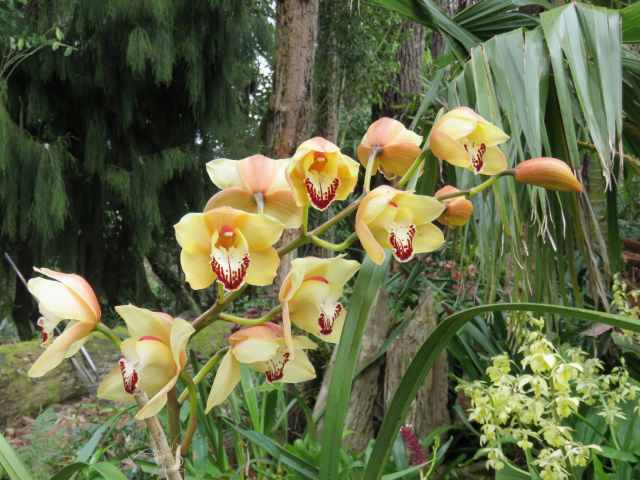
I can’t recall seeing this yellow one flower before. Our garden apprentice, Zach, is a keen orchid man and I asked him if he had moved it to its current location, fed it or done anything to encourage it to burst into bloom and he thought not. It may be that after Cyclone Dovi, we have more light in this area and that spurred it on. It is lovely.
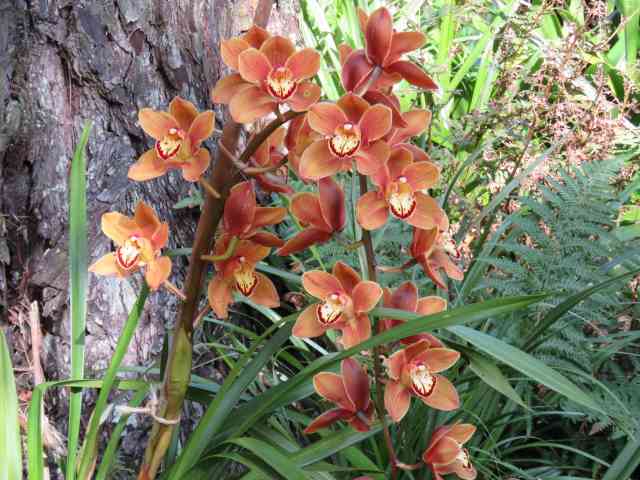
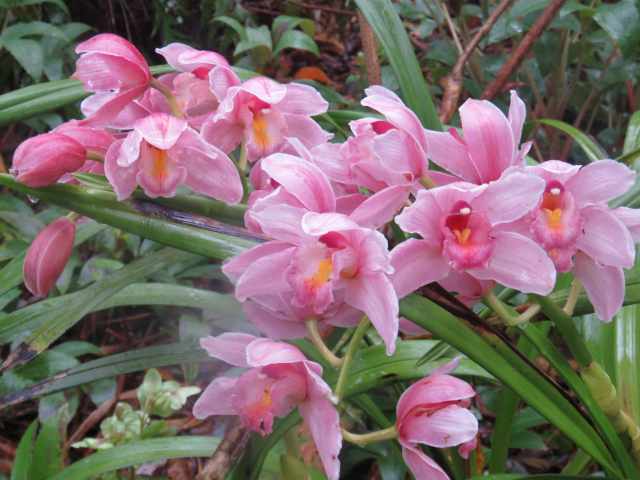
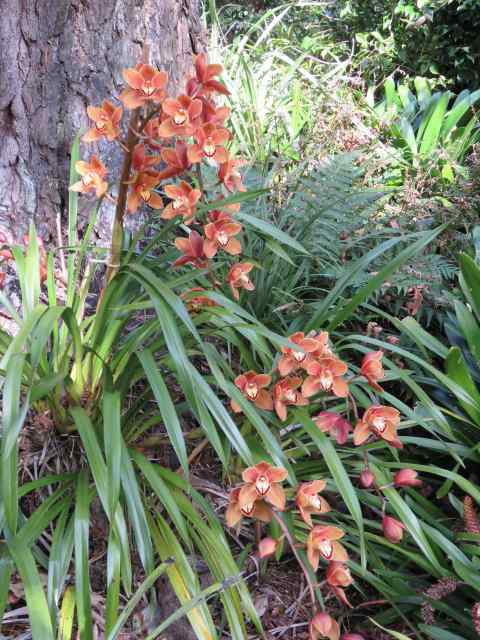
Cymbidiums have long been imbued with an aura of luxury because of their role in floristry but have, perhaps, been somewhat overlooked as garden plants in areas where they can be grown. The flowers last for many weeks in excellent condition and then die off fairly gracefully. Of all the orchids we grow, they have the longest season in bloom and are very showy, even if they lack the more delicate charm or curiosity of many other members of the same family. And they are easy-care. We have had most of ours for decades and the only attention they ever had was to stake flower spikes when necessary. They are getting a bit more love from Zach who is dividing larger clumps to spread around and giving them a bit of compost from time to time but they still rate as low maintenance plants.
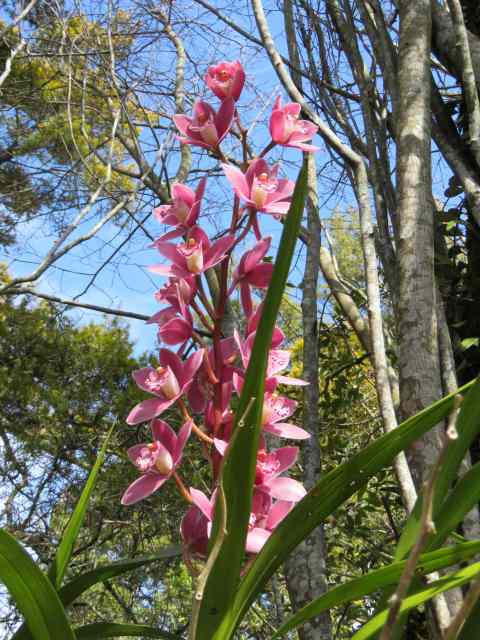
Our style is to work them into woodland plantings in conditions of high shade and go for the natural look. I have seen them used in mass plantings and I am guessing that is an expensive option because it involves buying mature plants with spikes forming from a commercial grower. The problem with sourcing plants from a commercial grower is that their main market is floristry and the flowers can look a bit over the top in a garden – a bit too large. That is fine if it is the look you are after but it is not our preferred look.
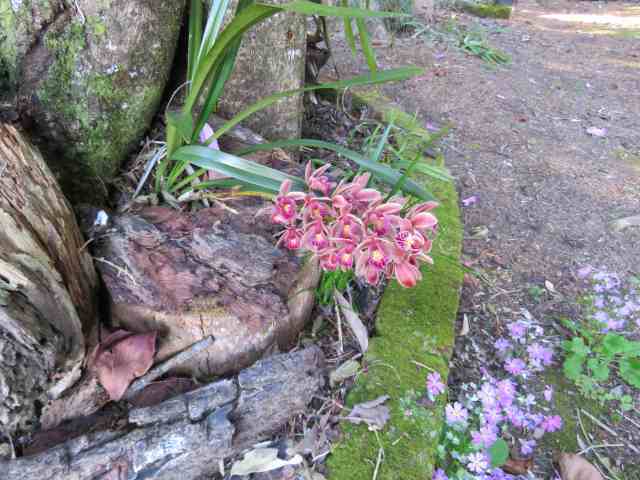
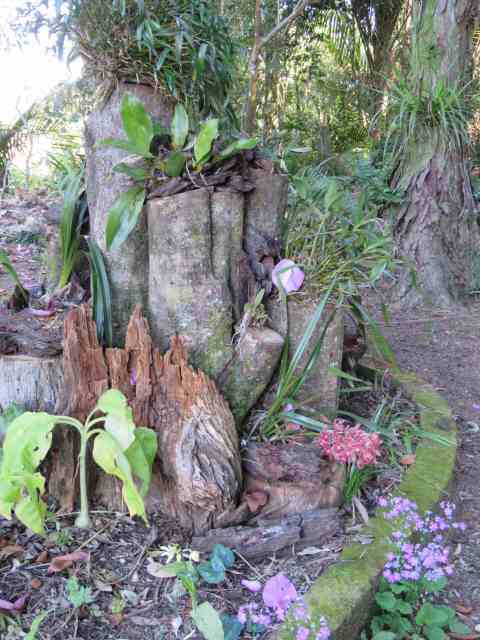
We are not experts in orchids. Aficionados – and the incredibly complex family of orchids attracts its own devotees who often develop an extraordinary in-depth knowledge of different orchid species and groups – tend to be collectors who lavish a great deal of time and love to growing their orchids in pots, often under cover. But they aren’t often gardeners. Our interest in orchids is pretty much focused on what we can grow in the garden here. Over time, that has come down to a limited range as we have learned what will thrive and lost what does not.
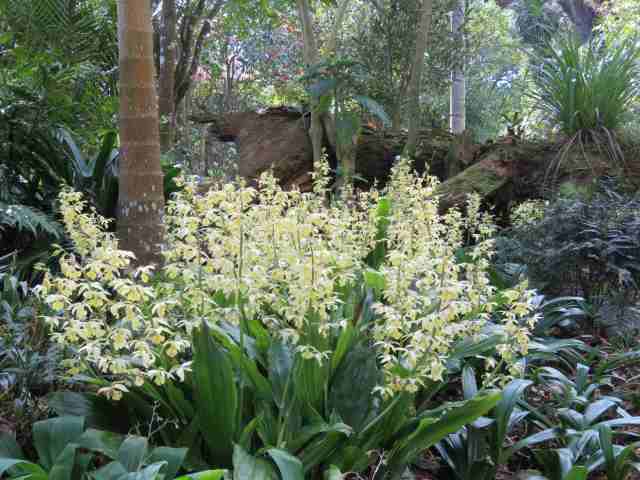
Cymbidiums are the current stars, along with calanthes. We only have four different calanthes and I am sad I lost the pretty lilac one but we have A Lot of those four different ones, particularly the pale yellow one which I am told is Calanthe ‘Higo’ (C. sieboldii x C. aristulifera). As Zach and I stood admiring them, he commented that they look way better in the large drifts we have, that a single plant in a pot is not particularly remarkable. What a difference 50 years of allowing them to multiply in the garden can make. The calanthes last for several weeks in flower and having different ones means we will have them flowering from now through until the start of November.
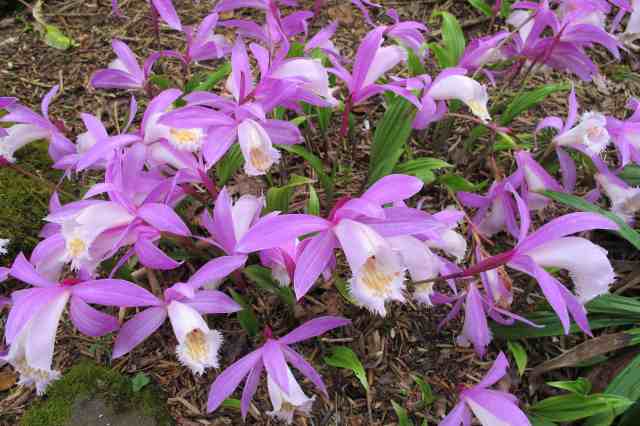
Pleiones are another ground orchid. They are just starting to put up flower spikes so I had to find a photo from previous years. They are much more delicate in texture, their season is pretty short and they need more care and management to keep them thriving because their bulbs sit half in and half out of the soil and die off after flowering. But they are one of the prettiest orchids and worth the effort. Ours are all in white and shades of lilac and purple. There are lovely yellow ones and we built them up into the hundreds but they did not last in the garden. The yellow ones need more of a winter chill than they get here. We will give plants some care but not the level of mollycoddling required to lift them each season and reproduce the chill factor by refrigerating them and then planting them out again.
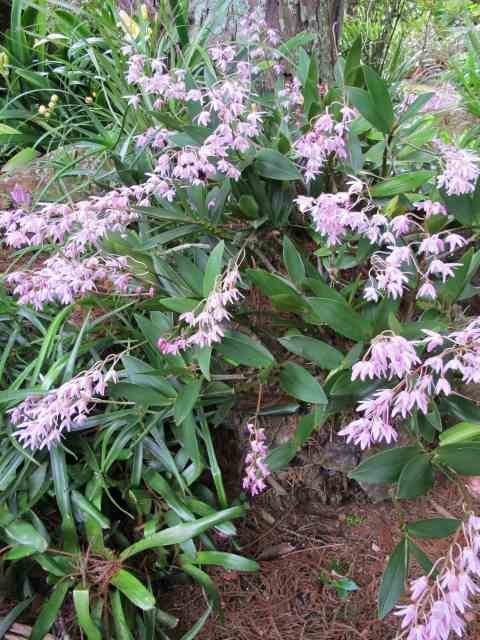
Dendrobiums can be fantastic garden plants and the Bardo-Rose hybrids are just opening their first flowers. They are another easy-care woodland option but much daintier and more refined than the cymbidiums. Later in spring, will see the Satyrium corrifolium which is happy in the rockery and demands only admiration and no care, followed by the Dactylorhiza (maybe maculata) which is slowly and quietly in retreat – which is probably a reflection of our warmer winters in recent times.
I have just discovered that we have around 120 native orchids, almost all of which are so modest (read: tiny and often green or greenish flowers) that they might be described as visually insignificant. At least one of the native earina species appears naturally over trees all through the garden but only orchid devotees will find it thrilling to see. I went to photograph one but it is not in flower yet so must close with more cymbidiums.
 Tikorangi The Jury Garden
Thank you. Absolutely stunning to see them in a garden setting. The world of your garden is such a welcome weekly contrast to my Central Otago dry desert climate. We are so lucky to have such diverse microclimates!
Such different climates and environments call for very different garden styles and plant selection! You live in a place of such natural beauty with its golden and tawny hues with the distant azure haze of the mountains. Though I admit my childhood recollections were a bit disturbed by my last visit to Central where irrigation and taming the environment to hues of green were gaining the upper hand. Even that wild lake frontage of Wanaka with its golden grasses and naturalised escholtzias has been replaced by mown lawn and white fences! Suburban values in Wanaka, of all places. But I am sure that away from the main roads, the tourist routes and intensive agriculture, the natural character can still be found.
Yep, alas, intensive agriculture has changed the formally summer-gold, sheep-studded fields in our valley to pivot irrigated, bright green circles of dairy farms. In this, the driest climate in the country. But yes there are still pockets of wildness. And we are surrounded here by schist and wild thyme, which though considered a weed, is a weed I’m happy to have!
Is nowhere exempt from the march of dairy farms??? Even more of a travesty in Central Otago than the Canterbuy Plains.
How beautiful!
I love cymbidium orchids, esp the yellow/green ones. My parents gave me some and I have them in pots. They’re flowering more in Wellington, maybe I’ve been looking after them more. Think your post has spurred me to plant them in the garden and I’m sure they’ll love it :)
There’s wonderful banks of orchids at the Te Puna Quarry gardens in Tauranga, looked after by the local orchid society I believe. They are spectacular in flower!
So many beautiful orchids in your garden! So far as I am aware we only have one, which is a ground orchid and one of the 120 or so New Zealand native species: Gastrodia cunninghamii. It is NOT photogenic and I only stumbled on it a couple of years ago, thinking it was a dead twig on a shady bank until I spotted the small bits of white that made up the insides of its few flowers. It has black or brown stems, the outside of the flowers are similar, it has no leaves and doesn’t necessarily flower every year! In spite of all that I treasure it greatly and make sure nothing else gets planted in ‘its’ spot in the garden.
It shows a sensitive and responsible nature to value this anonymous plant despite its lack of star appeal!
You are too kind :-)
Thank you for your wonderful photos :)