
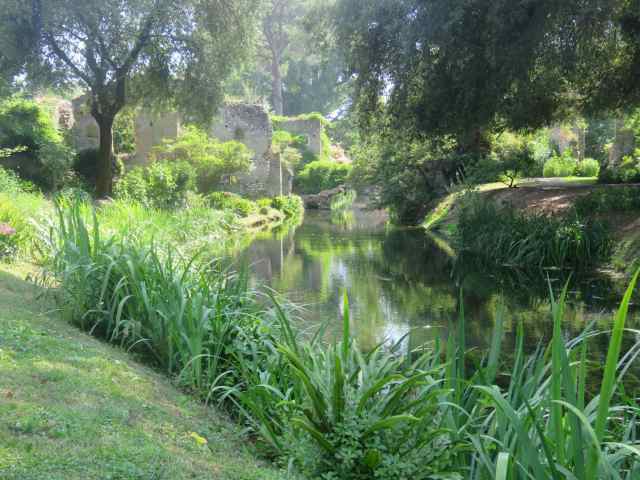
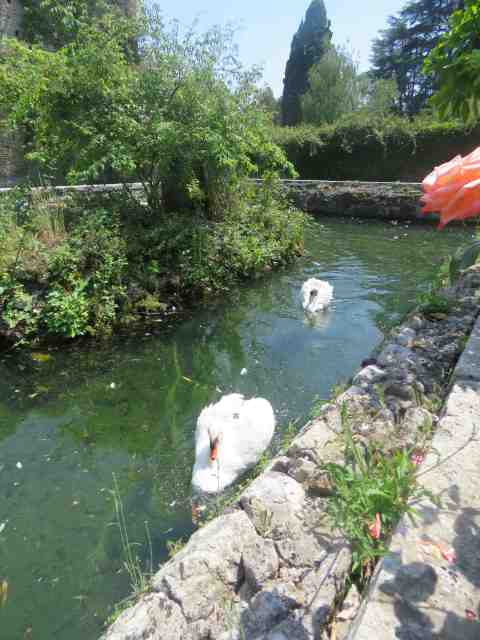
I don’t think I have ever felt so flattered in my life as when Australian garden expert, Michael McCoy came here two weeks ago saying that a Wellington landscaper friend told him he must come, that our garden is ‘like Ninfa but without the ruins’. Well, I was even more flattered when he endorsed that observation after we walked around for 2 ½ hours in rain. It took that long to get around because we found so many shared gardening values and, indeed, experiences.

Upon reflection, it isn’t so much that we are like Ninfa (and we certainly lack ruins), but that these two younger professionals in the garden design scene saw the romanticism that we have embraced in our garden. We have reached it in a different way to Ninfa but soft-edged romanticism was the goal and this was an endorsement that we are reaching that goal.
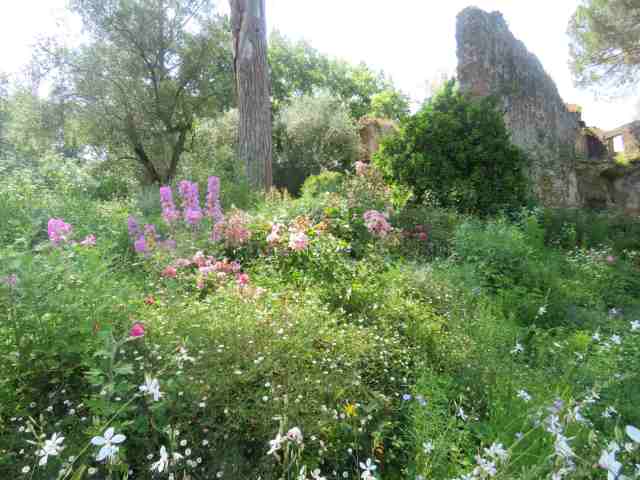
For those of you who don’t know Ninfa, it is a garden in southern Italy that is often hailed as ‘the world’s most romantic garden’ and it is built around the remains of an entire town that was occupied from Roman times through until it was sacked in 1370. So 750 year old ruins. Our only ruin is a collapsed low brick wall which fell back around 1960s or 70s. I don’t think that counts. Ninfa is renowned for its roses and we don’t have a mass of climbing roses. Neither Mark nor I could recall long grass at Ninfa; I went through my photos from our visit and they don’t have long grass and meadows as we do. So how are we like Ninfa without the ruins?
Soft-edged gardening is what it is all about. I see I wrote a piece about romantic gardens for Woman magazine at the beginning of last year and I must be getting old because until I reread it, I had no memory of writing it at all. ‘I grow old… I grow old… I shall wear the bottoms of my trousers rolled’, to quote T.S. Eliot in his Love Song of J. Alfred Prufrock. At least I still dare to eat a peach.
Before I found those earlier thoughts, I had been musing all week about what makes a romantic garden. In no particular order, I would list the following:
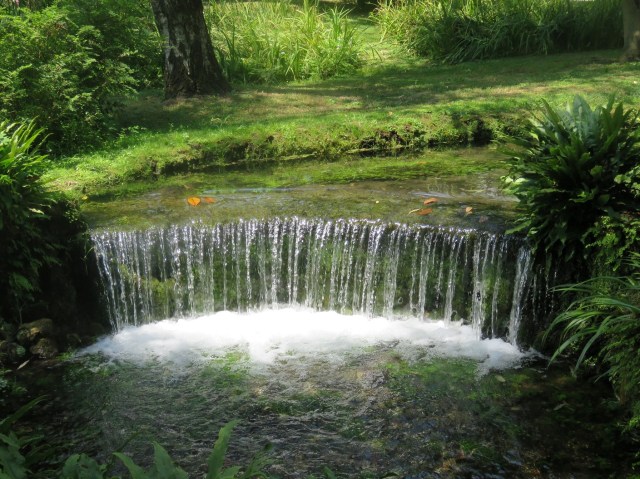

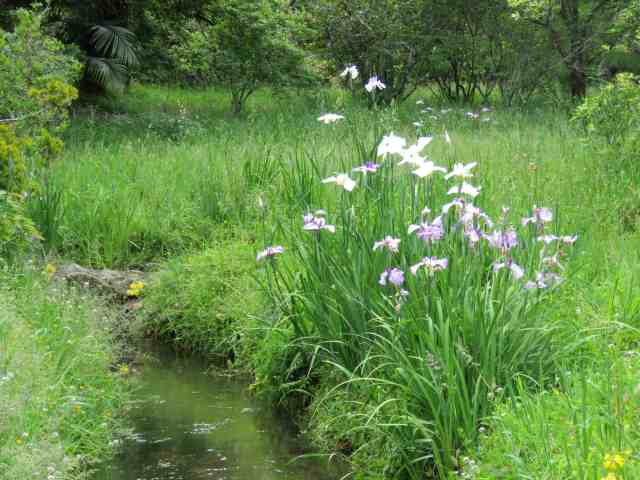
- Water – a reasonably large body of water that is moving so it brings the element of sound. Ninfa was exceptional in that it was in a dry, arid part of Italy but it had its own river which gave the feeling of an oasis in a barren landscape beyond. Years ago, when Mark was playing with our onsite water, he worked on ponds and rapids to achieve small drops in level to get the sound of flowing water.
- Lush growth – onsite water plays a large part in being able to manage a lush garden. I don’t think I have seen a dry garden that could be described as romantic. Water and lush growth also encourage birds, flowers bring bees and other insects and these natural creatures bring more life to a garden. We do lush growth very easily in our little corner of the world where three weeks without rain has us muttering darkly about drought.
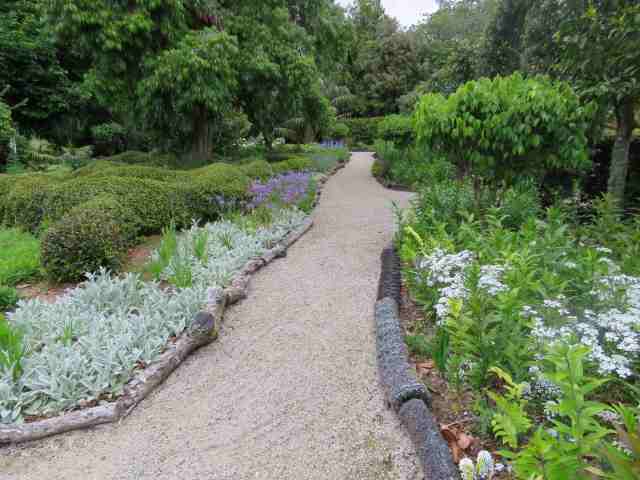
- No straight lines, right angles or hard edges. Formal gardens may be many things, but romantic they are not. And no wretched edging plants defining the line between garden and path. To our mutual amusement, Michael McCoy and I share an intense dislike for suburban edging plants.
- Avoid evidence of maintaining the garden with glyphosate, too. There is not much that is less romantic than edges that have clearly been sprayed, or indeed expanses of liverwort which are too often a sign of long-term maintenance with glyphosate (Round Up).

- Light and shade and dappled light which usually means some taller trees. Too often, the delight in variations of light and shade are not factored into planning gardens but they add another dimension beyond flowers, foliage and form. With light and shade come views through. Designs with tightly enclosed garden rooms may be cosy and contained, but they are not often romantic. Glimpses beyond hint at further areas to be experienced.
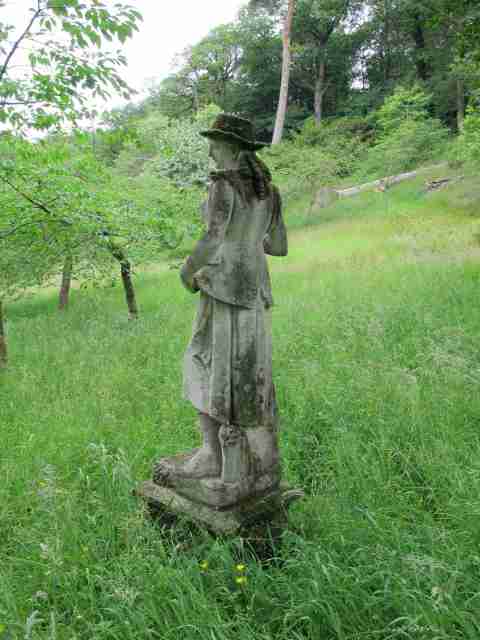
- An absence of dominating man-made features or much that is modern. As soon as you add man-made features into a garden, be it a gazebo (oft referred to as ‘gazzybows’ here), a Japanese-style bridge painted red or any other piece of brightly painted garden structure, a modern sculpture or a stark white statue, the eye is always drawn to that piece rather than to the wider environment. Old ruins or suitably aged and mellow pieces can be added but in great moderation and with care. Less is more in a romantic garden and any additions should blend and meld, not shout out to be noticed. Forget focal points which are to direct the eye – they belong in more structured garden styles. The romantic garden is more of an absorbing experience than a directed one.
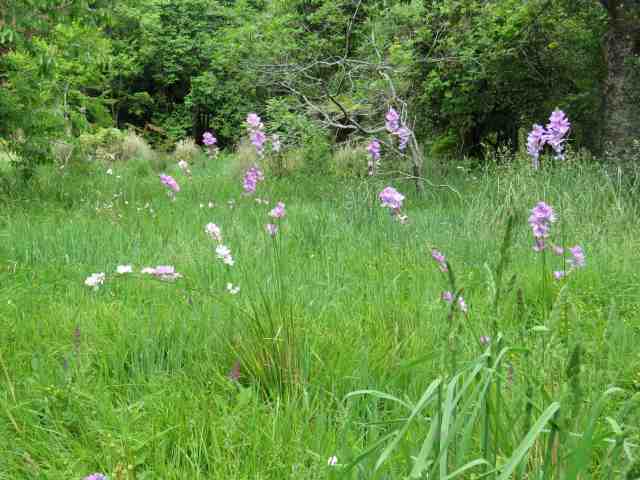
- Flowers are generally in simpler, looser forms. Not necessarily small but if large, they look better if they are on the blousy side. Flowers with the tight form of, say, auriculas or formal camellias are more at home in more controlled situations. The same rule of thumb applies to plants with rigid, stiff forms. Looser forms also give more sense of movement – they will sway and respond to the slightest breeze.


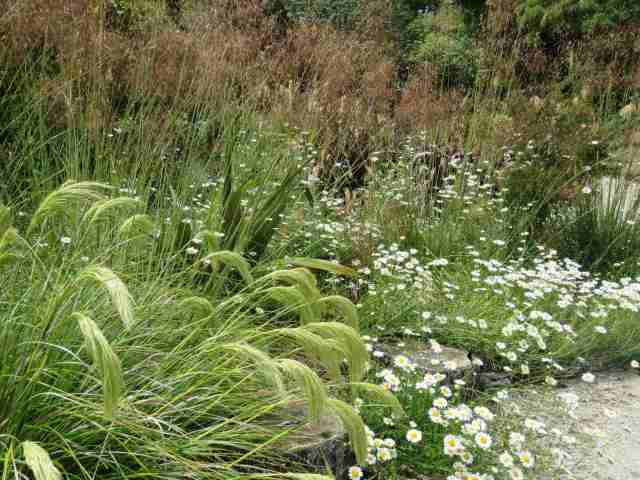
Without ruins and rambling roses, we have basically done it with long grass and meandering mown paths following the natural contours of the land (no straight lines!). The paths are what give definition and stop the long grass from looking like the area has just been shut up and left. In our climate, the grass growth is so strong all year round that we have to mow everything down twice a year – in midsummer and midwinter so the end of January and the end of June. But long grass, flowers growing semi-wild and meadows are not a defining characteristic of a romantic garden. They are just one style that sits within the romantic genre.
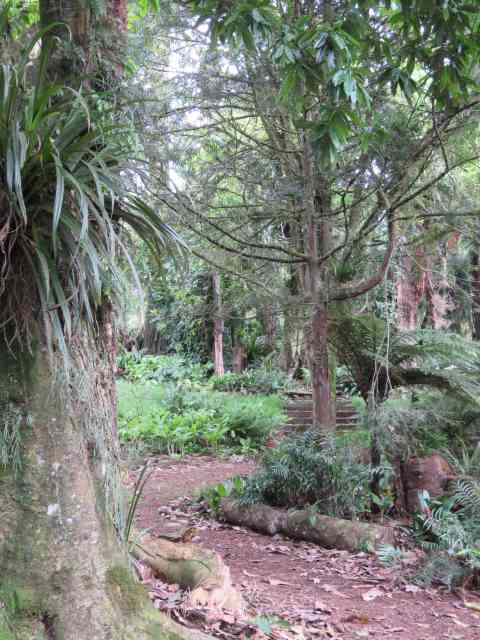
Romantic gardens come back to being in the garden, not looking at the garden, gardening with Nature more than by controlling Nature and creating gardens that sit within the landscape rather than on the land.
It is not everybody’s cup of tea. It is bringing different eyes to a garden situation and with that, different expectations. It makes us happy, brings us delight and, mostly, that is all that matters. But I am still honoured and flattered that others have referenced Ninfa as a comparator.

 Tikorangi The Jury Garden
Wow, high praise well-deserved. I visited your wonderful garden once, a few years ago now, during the festival – Ninfa, never – its top of my long list of ‘when I get back to Europe’ … but you have given a name to the style of gardening I definitely subscribe to. I’m a romantic gardener!! Perhaps my style is more on the side of the newly coined ‘re-wilding’ – given my landscape has a lot of natural beauty (in my eyes) and I have to work hard to establish any form of planned planting here given our rabbit, possum and deer neighbours, and therefore I plant very little and let them do the pruning in the wider landscape! Mine is probably more Wuthering Heights than Ninfa to be honest :-) Thank you for your posts, always entertaining and inspiring.
Romantic gardening can take in rewilding but with more of an aesthetic sense as well. We like pretty scenes so we use flowers a lot. Refined rewilding, perhaps? Thanks for your kind comments.
It is unlikely that I will ever get to New Zealand and the opportunity to visit your garden. I had longed for many years to get to Ninfa and eventually managed it and it was one of the happiest gardening experiences of my life. For now, I can only dream of your garden and enjoy your reports and your photographs but I’m certain I would love time there too.
Oh Paddy! We would have loved to see you here. But at least you got to Ninfa.
Your garden is utterly beautiful! I am in amused agreement about the edging plants…here in the UK short hedges of box or other evergreens are popular as an edge. I regard them as a waste of space and much prefer your looser, more romantic planting style. :)
I don’t like edging plants because I think they create a visual barrier, a separation – particularly when they are low hedges. Others like the definition and they can make a garden look ‘tidy’ if that is the look one wants. But even when hedges aren’t used, too often I see mondo grass, liriope or similar used to define the edges of paths and that does not gladden my heart, either. I am not sure that paths need defining along the sides.
I think the path itself is all the definition that’s needed – but then I prefer informal gardens.
A thoroughly enjoyable trip through the romance of Ninfa and your own garden… yes, different in many ways but sharing a romantic heart.
Thanks, Pat.
I’ve never been to Ninfa (that sounds like a song) but I was lucky enough to come through your garden at the festival last year, and absolutely loved it. And thanks for the thoughtful analysis of the style.