

The Chelsea chop is a time-honoured British gardening technique. Its name is related to the Chelsea Flower Show towards the end of May each year; that is the recommended time for gardeners to head out with their secateurs, snips or handy flax cutter in order to sever a third to half of the fresh season’s growth on various plants.
Why this drastic action, you may ask. Cutting off half the growth at the peak of its spring spurt does two things; it delays flowering but, more importantly, it makes the plant more compact and sturdy with its second growth.
We do a bit of it. Where we know we will have problems with plants needing a whole lot of staking to prevent them flopping all over the place, we try and get around to cut them down in their prime. Being on the other side of the world, we do not do this at the time of the Chelsea Flower Show. November is our time and, in our mild conditions with rampant plant growth, I aim for early November so a few weeks earlier.

I started by experimenting on chopping back a large growing miscanthus that, in a single season, could put on an overwhelming amount of foliage and generate such weight and volume that it all just fell apart well before the end of the season. Cutting it back very hard indeed in winter when the foliage is all dying off (it is deciduous) and then again in November works a treat and means it can stay in the garden.

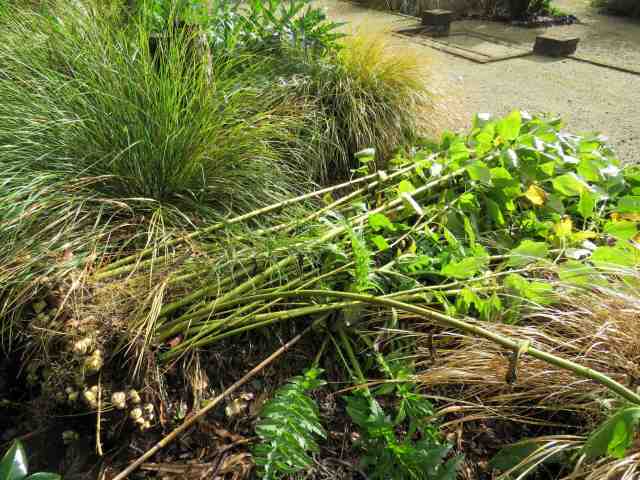
There is a bit of an open verdict on the Jerusalem artichokes as an ornamental plant. Put in last year, they have bolted to over 3 metres high. Canberra daughter looked at them and said she Chelsea chops hers but she is going to dig them out anyway and replace with the tall Echinacea laciniata. Not enough flowers, she said. I waited for mine to flower and she is right – foliage to flower ratio is waaaay too high. I saw yesterday that one plant has given up the ghost in moderately severe weather. I shall keep one patch to experiment with Chelsea chopping it next spring but it had better put on a better display of blooms or it will go the way of its compatriots which are destined to be removed this week.

The two plants we regularly Chelsea chop are sedums and perennial lobelias. Unless we have just dug and divided the sedums, they grow rapidly and then fall apart which spoils the effect entirely. And I don’t want to be digging and dividing the sedums every year. Chelsea chopping them means they produce shorter, stouter stems which can hold the weighty blooms up.
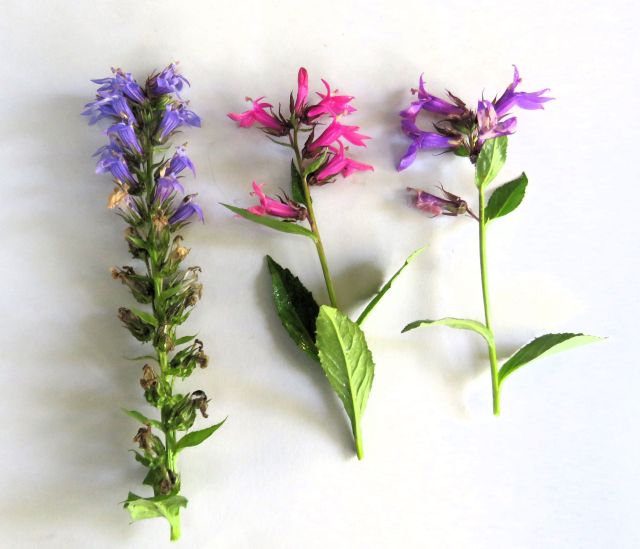
Similarly lobelias grow rapidly and put out tall flowers without enough strength in the stem to hold them aloft. I am not going to stake lobelias, I can tell you that much. Chelsea chopping them is working, as is deadheading them to reduce their spread.
You do have to know which plants respond to this treatment. If I am uncertain, I will chop half the patch only, leaving the rest to grow as per normal and then I try and remember to keep checking through the season. Chopping only some of the plants is also a way of extending flowering season: the untouched flowering stems will open as usual whereas the chopped plants will come into bloom anything up to 4 to 6 weeks later.
Mostly it is done on perennials but only some of them. There are lists on line – echinacea (though I am uncertain why one might wish to Chelsea chop echinaceas), asters, phlox, solidago, campanulas and helenium come to mind. Never try it on bulbs, perennials that only flower once like irises, and most flowering shrubs will just shrug their shoulders and not flower at all this year and sometimes next. Timing is important – you need to do it when the plant is at its most energetic and in full growth and the plant needs to have vigour.
I don’t want to Chelsea chop every perennial; I have quite enough to do in the garden without adding unnecessary tasks. I just try and get around to doing it on plants that I know will cause problems later in the season if I don’t.
 Tikorangi The Jury Garden
Why does Chelsea get the credit for it? We simply prune things back, some more than others. Some items merely get pinched, perhaps earlier.
hi Abbie
We have the same wide leafed miscanthus and treat it the same way ie cut back to ground early November. (It doesn’t have many flowers we find, when treated this way). Otherwise it is a split apart mess by early December. We accidentally did the same treatment with one miscanthus Morning Light last year and it grew back happily but did not put up many flowers (fronds). We find the wide leafed miscanthus does not have particularly showy flowers so that is no great loss.
Our sedum also respond well to the chop. How do you get the foliage to look so good on yours? We have no trouble with sedum Autumn Joy but our white and mid pink ones grow beautifully but their foliage turns a sad pale green-yellow after Christmas (is it the dry? We don’t seem to have drainage problems).
Our Jerusalem artichokes were given the heave-ho due to their high leaf to flower ratio. No regrets.
We visited a garden this week where the owner had taken cuttings from their hydrangea Limelight before Christmas and this had resulted in half the shrub flowering at the usual time (late January) and half flowering now (mid April) and gosh it was looking fabulous. Limelight is a show-stopper but only has that lovely lime-green-white look for a couple of weeks before softening. We will be experimenting to extend the flowering next year.
I am pretty sure the large-leafed miscanthus came from you in the first place. Those sedums are in relatively heavy soil which never really dries out. I wonder if they prefer a bit more moisture? Autumn Joy is my least favorite sedum but it is a good performer. Interesting that Chelsea chopping may work well on hydrangeas. I will follow your experiments with interest!
Hello
I really enjoy reading your columns – always so interesting so thank you.
Please note my email address has changed to byrdie.ayres@outlook.combyrdie.ayres@outlook.com – please update your records
Thanks
Byrdie
HI Byrdie, you control your subscription details. If you scroll down the latest email there is a link at the end labeled “manage my details”. That should enable you to alter your emaill address. If that doesn’t work, you could unsubscribe and then resubscribe with your new email. Cheers, Abbie
The big thuggish Miscanthus is M. sinensis ‘Variegatus’. We bought one 25 years ago and have it doing its thing in several parts of the garden where it is given plenty of room due to its floppiness. I never see it for sale in the garden centres these days and ‘Morning Light’ is a much better plant in most situations. I think we’ll try your Chelsea chop on one of the ‘Variegatus’ next spring to see what happens, as we do stake 3 of them with big metal hoops girdling the whole plant to keep it looking good. We’ve tried the Chelsea chop on one of our Sedums too (wish they hadn’t changed the name to Hylotelephium!), but the plant still flopped this year when in flower. Based on what you say we’ll give it a go a month earlier next time, as they certainly fall apart every autumn, even though they are in pretty poor quality soil. We’ve tried it on Asters and Heleniums too, but only to alter the flowering time as neither of them fall over much in our garden.
We’ve been very happy with Rudbeckia laciniata, but R. laciniata ‘Golden Glow’ is probably another candidate for us to try the Chelsea Chop on. It grows a lot taller than the species does, around 2.4m here, and falls over no matter what we try, which is a shame as the bright yellow double flowers look good waving about above almost everything else.
I would have despatched the big miscanthus to compost had I not found that chopping it right down a second time made it stay together. If was mighty difficult to tie it all together when it just wanted to fall apart.
We chop sedums to very good effect and use the cuttings for propagation.