
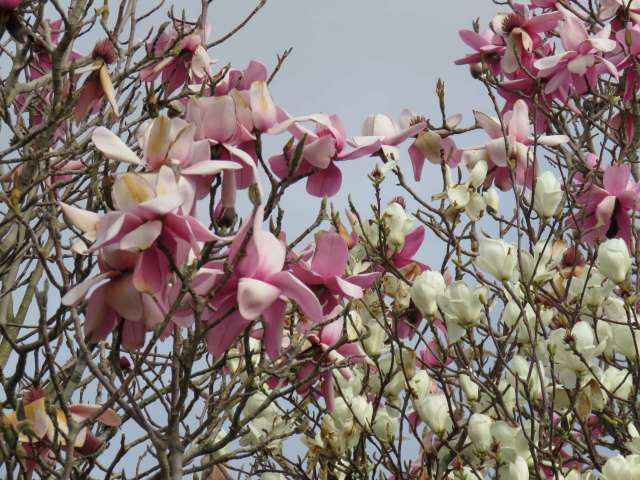
The Magnoliafication – we made it up. A bit like The Rapture, perhaps, but with its roots firmly in the soil, showier and more socialist in concept so not, in fact, like The Rapture at all. It was the process by which we distributed our surplus nursery stock free of charge in our local town of Waitara.
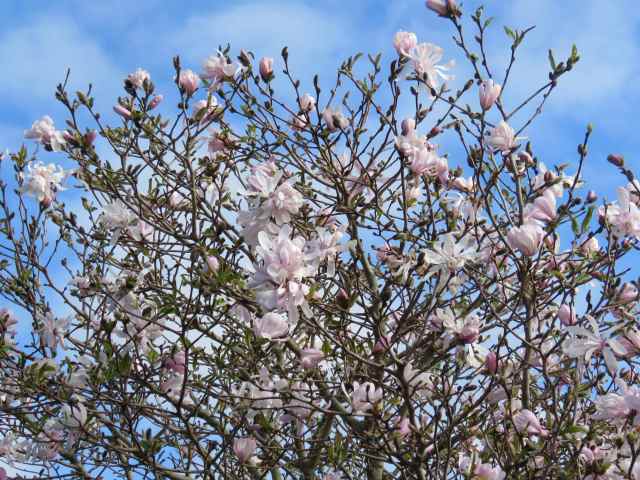
Every plant nursery ends up with surplus stock, seconds and rejects. We had less than many nurseries, being smaller and focused on producing high-end products. But we still had them – lines we had over-produced and plants that did not make the quality grade and it seemed such a waste to burn or compost them. We had the occasional sale but when you are targeting the upper end of the market, sales are something of a betrayal of loyal customers who have already bought a plant at full price. We preferred to give the plants away.
In the early days, Mark gave a lot of surplus magnolias and rhododendrons to local farmers in the hopes of beautifying the countryside and we still see some of those around the area. We also see properties which have since changed hands and new owners have come in and chainsawed out established trees with no awareness of what they are removing, but such is life. A few experiences made us feel we were being taken somewhat for granted so we stopped giving them to farmers. Instead, we had an arrangement with a charity shop on the main street of Waitara that they would collect plants when we had them and put them out on their front pavement for people to collect free. It worked well. Everything was taken and some of it at least would be planted.
A lot of what went down for collection were magnolias – some with inadequate root systems which would have needed nursing to recover, or misshapen plants which should have grown well, if a slightly odd shape. And a lot of those reject magnolias were ‘Felix Jury’ which took us a while to learn how to grow straight and tall. We also had a contract grower producing an export crop of the magnolias for us and his standards were not as high as ours so too many were unable to be exported. They went down to our magnolia distribution system outside the charity shop.
At the time, Mark quipped about the magnoliafication of Waitara.
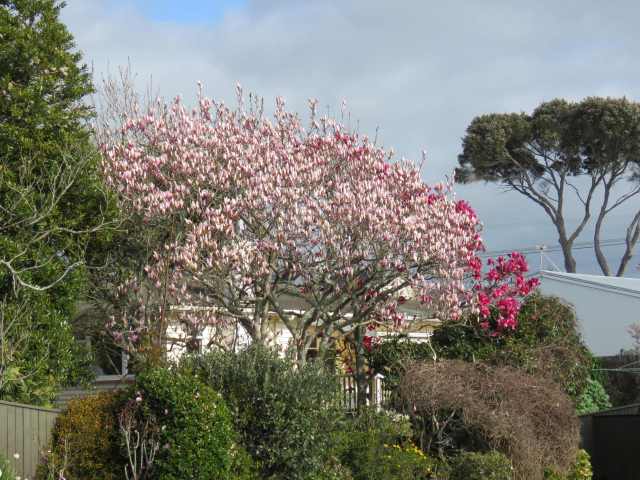
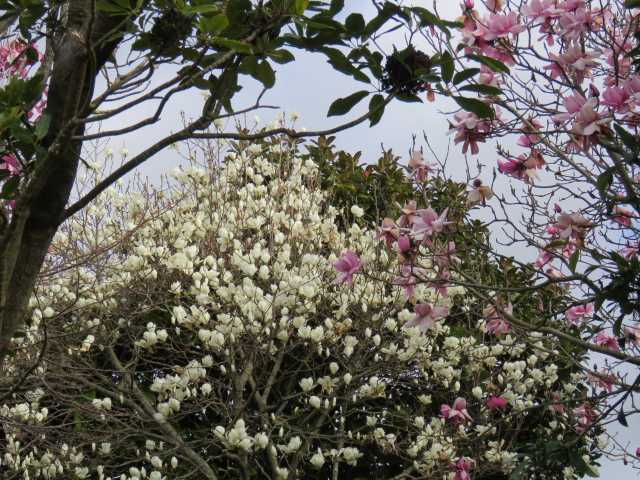
Waitara has a lot of magnolias all coming into bloom. By no means did they all come from us, either as purchases or as freebies. When the powerhouse nursery, Duncan and Davies, was in full production on the other side of Waitara, it was a significant employer of locals as seasonal labour and it was also renowned for its huge end-of-season sales. There were also a number of other nurseries around, also producing magnolias and employing locals and some of the trees will have come from those sources.
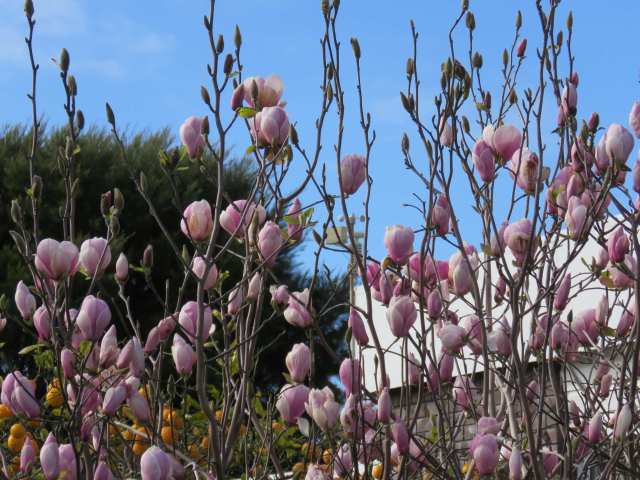
The irony is that magnolias are generally seen as a high-end, prestige plant and Waitara can be described in many ways but elite is not one of them. Its post-colonial history has made it the poor relative in the district, at the low end of every socio-economic indicator. But it can sure grow magnolias well and I think it likely has more magnolias per capita than similar small towns.
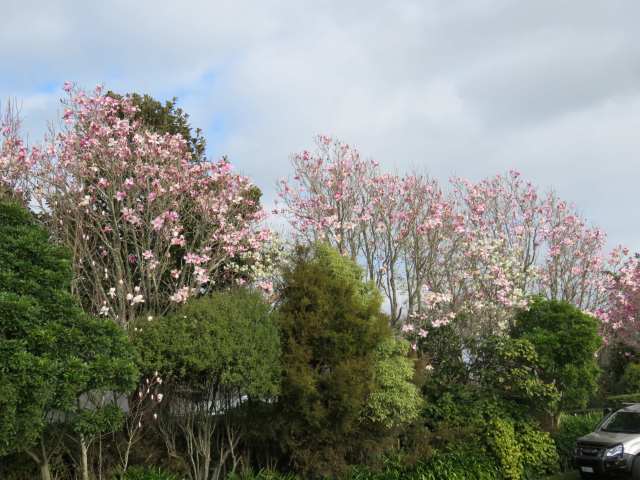
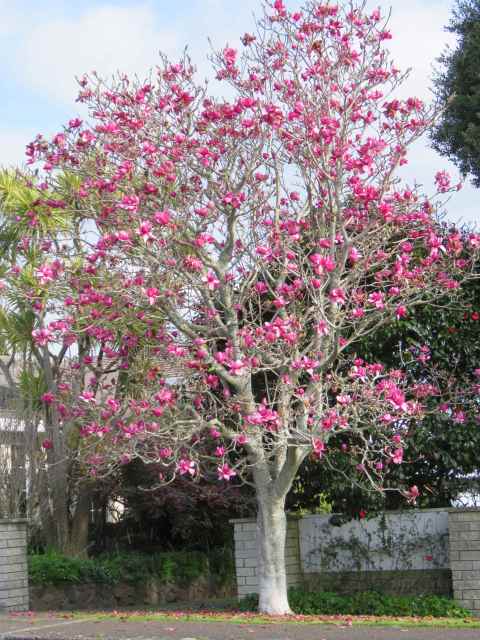
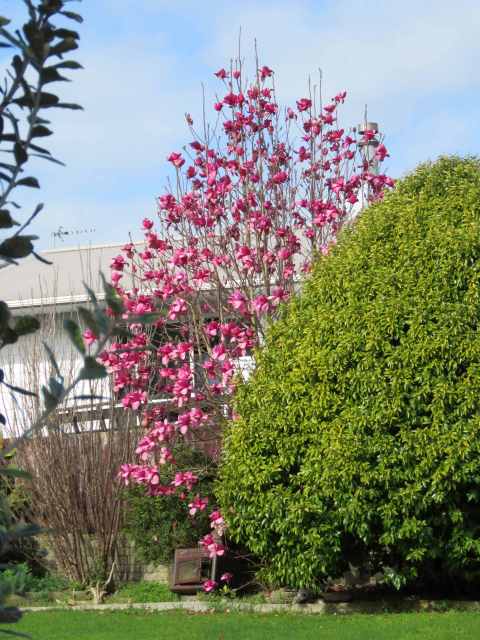
I only drove around about 8 or 10 short streets this week, photographing magnolias from the roadside. I belong to a Facebook page which is mainly comprised of mad, keen magnoliaphiles in the more northerly parts of Europe. Most of the photographs they post are close-ups of blooms on small plants, often growing in challenging climatic conditions. I thought they would be interested to see them used more widely as a mainstream ornamental plant, planted by non-gardeners and gardeners alike. They were indeed surprised to see them in this context.
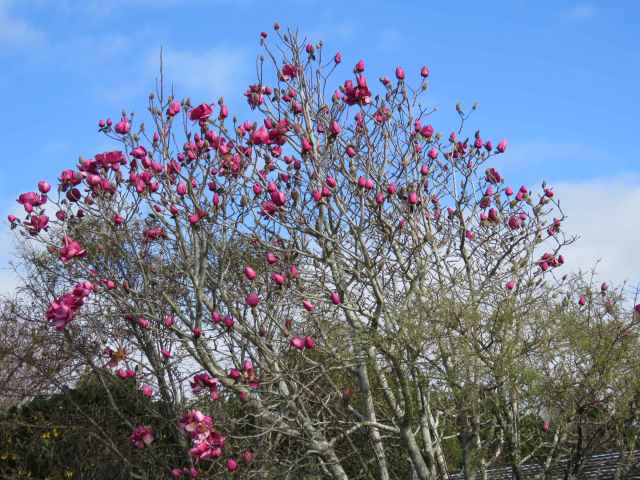
Given how many reject Magnolia ‘Felix’ we sent down, I was delighted when I found five planted in two gardens a couple of doors apart which were the right age and size to be from those. One had two trees planted side by side and the other house had three planted close together on their side boundary. I don’t know that they were our free ones, but given the high price tag on the premium product from both us and local garden centres we supplied, it seems unlikely that non-gardeners would go out and buy two or three at the same time.
I now plan to drive more extensively around the back streets of Waitara, playing ‘spot the magnolia’.
Finally, a wry observation about human nature. Friday was free plant day at the op shop, when we had plants to send down. One Thursday afternoon, two women drove in here in a modern car. They hadn’t come to buy plants, they had come hoping to get first dibs on picking over the free plants ready to go down to Waitara the next day. At the time we had a lovely, local man called Danny working here. He intercepted them and I hope they felt some shame at his incredulous response as he told them that was not how it worked. The nerve of some people.
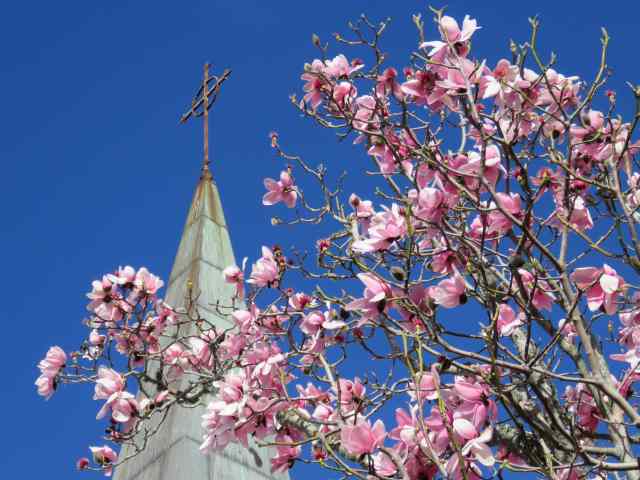
Waitara has a splendid tree of the pink Magnolia campbellii which is one of my seasonal markers for the start of the magnolia season. It has finished flowering already but here is a photo I prepared earlier, which some of you may recognise. The tree did not come from us; it is likely it was a Duncan and Davies plant.
 Tikorangi The Jury Garden
What a brilliant thing for you both to be doing for a town which, as you say, has had its challenges. The sight of so many beautiful blooms must give cheer to people who don’t have a lot else material-wise in life. We are fortunate to live on 3 hectares in Matakana, north of Auckland, and it’s a lovey time with 7 different magnolias in bloom at the moment including my two favourites, Felix Jury and Iolanthe
Really enjoyed your blogs on your trip in France.
I admit it had a feel good factor to it. And lovely to see the town in flower. Enjoy your magnolias. And thanks for saying you liked my French posts.
Abbie – your article reinforces just what a huge debt of gratitude we ( NZ and the world) owes to the Jury family for all the magnificent magnolia varieties they have given us . Waitara is particularly fortunate!
That is very kind of you to say so, Peter.
it is heartening to read they do well in Matakana, i live in Mangawhai and have longed to plant some but haven’t as I thought they would not thrive in our sub tropical, micro climate. maybe i should try – would love to have the red one- don;t know when it would flower – i see companulatas in full flower in Auckland but mine haven’t shown a thing so far – it seems the warmer we are the slower for the new season to kick in – very strange
They do really well in Whangarei and KeriKeri so you should be fine.
Hello Abbie
Jury magnolias are giving me so much pleasure at Te Henui Cemetery (New Plymouth) . They are quite mature specimens (approx 40 years old) and absolutely magnificent. It must be especially satisfying to see your grown up “vegetative children” gracing Waitara township.
I think they are closer to 30 years than 40 but I can check the release dates, if you wish. I can’t recall when NPDC got them and whether they purchased them or we donated them – possibly the latter because I remember feeling that other councils were much more enthusiastic than our one.
Would love to know release dates – thanks. I know the cemetery has multiples of Iolanthe, Athene, Apollo, Atlas and Milky Way. They are very beautiful.
Well, that was an interesting trawl down memory lane through our early catalogues. It will give you the maximum ages of the trees you have but I don’t remember NPDC getting excited and buying up large early on – although we likely gifted single plants to them. I can remember other councils placing larger orders (Wairoa, Christchurch, Palmerston North, Wellington, Gore and a few others) because we did feel a little jaundiced for a little while that other areas were more appreciative than our local council. But it seems things even out over time.
Iolanthe was given to Duncan and Davies in the early 1970s and they never paid a cent for it. I remember this because at the same time, Os Blumhardt at Koromiko Nursery in Whangarei got Serene and he actually paid Felix for the right to produce it commercially. Felix gave the money to us when we were poor university students – I think in 1973 . Mark thinks it was $100 but my memory is that it was $200, which was a lot of money in those days. Felix wouldn’t have asked for money, so it was pretty generous of Os.
We listed Iolanthe in our very first mailorder catalogue in 1982 and included Serene from 1983 but neither were first releases.
Not Jury hybrids, but in 1987 we did the first NZ release of the American yellows – acuminata ‘Golden Glow’, Elizabeth, Yellow Bird and Yellow Fever.
In 1988, we did the first release of Athene, Lotus, and Milky Way. Also Mark Jury.
1989, we released Atlas and Vulcan.
1990 Apollo was added.
1998 Black Tulip was released.
1999 First limited release of Felix.
Burgundy Star and Honey Tulip came out after we discontinued mailorder in 2003 and will be in the wholesale catalogues but I haven’t gone through them.
Thanks for that information. Council records indicate that significant tree and shrub planting occurred from 1985 through to early 1990s. It’s great to have your release dates as a guide.
I vaguely recall when the bank of camellias and magnolias beside the bridge over the Te Henui went in but I can’t remember if they were purchased or donated by us. Maybe a mix of both. We then watched as quite a few were felled for road and bridge extensions….
Thank you for all the posts however Id now like to unsubscribe but can’t seem to without creating a WordPress account! Can you please unsubscribe me.
thanks Tania
>
Hi Tania, you control your subscriptions, not me. If you go to your latest email from my site, you will see an unsubscribe button.