
Poor old Christchurch cathedral is back in the news. Badly damaged in the devastating earthquakes of 2010 and 2011, its future again hangs in the balance as money for the restoration has dried up, with substantial shortfall of $89 million – at current prices but likely to rise.
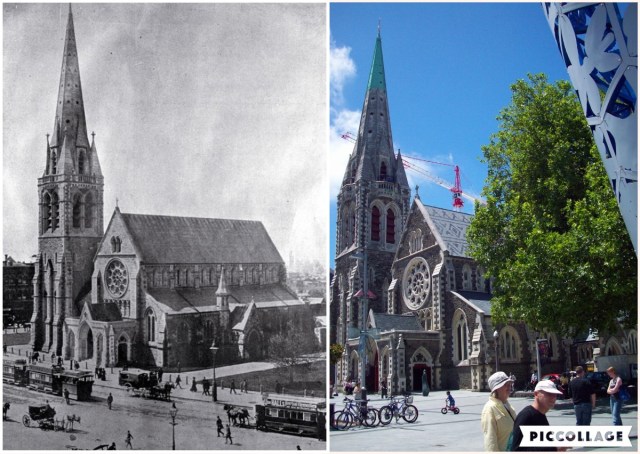
Christchurch’s Anglican cathedral is a key building in the heart of the central city square. Built in the neo-Gothic style in the years between 1864 and 1904, it immediately became an iconic image of that city.
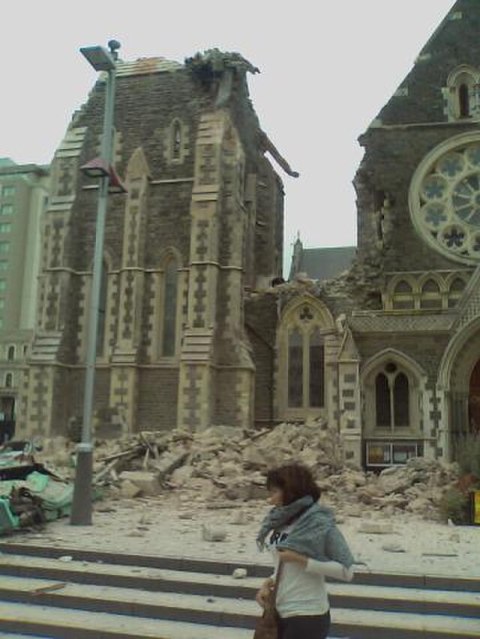
I have no personal opinion on the right or best option for the future of the badly damaged building. I can understand the desire for restoration from some parties. Christchurch lost so much of its history as a result of the earthquakes and this is one of its most significant, historic buildings. Its flamboyance harks back to earlier times before the stodgy utilitarianism of most modern structures. On the other hand, I can see the point of view of the Anglican church, that their focus is on caring for the living, not preserving architectural history at huge expense financially. The post-earthquake reconstruction required throughout much of the city was incredibly expensive, stretching both government and local body resources and those financial resources have now dried up. While historic buildings are important, the reconstruction of sewage pipes, water and power takes precedence, followed by the need for new homes for the many displaced people.
I visited Christchurch in 2013 and saw some of the damage first hand, but just from a domestic, suburban point of view. The inner city remained largely closed off. The sheer scale of destruction was hard to comprehend. My well-travelled Christchurch gardening friend and I had discussions about how the cathedral could be made safe, preserved as a ruin and gardened. We had both seen similar scenarios in Europe. But we knew our idea was romantic fantasy at the time.

For the rest of the country, the earthquakes are already just a memory – but Christchurch is left with a ruined cathedral in the heart of the city, a constant reminder of what happened, now with no solution in sight.
Of the possible options for the cathedral, the current situation of stopping restoration mid-flight seems the worst possible one. Fully restored, the city square would have been returned to its pre-quake status. Demolition would have given the option of replacing the old cathedral with a new building in an exciting, contemporary architectural style marking the new era. Of course, it might also have led to the building of a utilitarian monstrosity of no architectural merit at all but public opinion may have had some sway on a replacement. But to be left with a ruined cathedral, shut off from the public and surrounded by the detritus of a building project sitting in limbo just seems like a continuing reminder of the destructive earthquakes with nothing positive in sight.

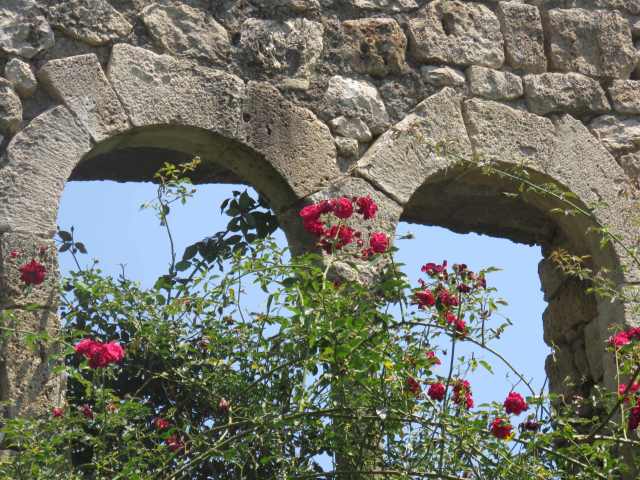
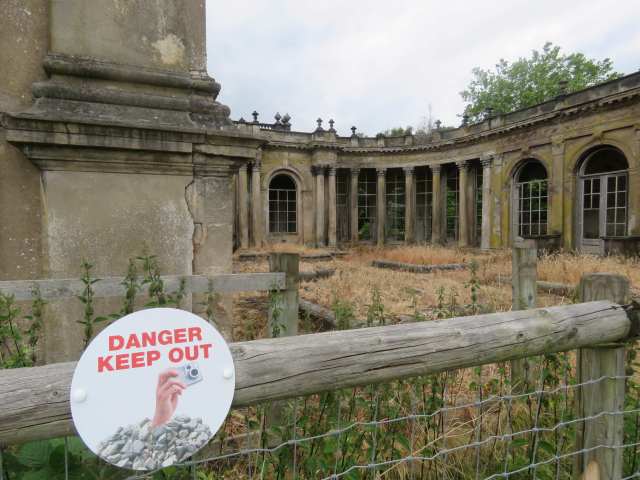
Maybe those discussion my friend and I had back in 2013 are not so far-fetched at all. It had me delving back through my photo files for images of gardening amongst ruins. I am still a bit sad that Covid cancelled our 2020 trip when we planned to get to Lowther Castle in East Cumbria. We knew Dan Pearson, a UK designer whose work we admire greatly, had an ongoing project creating gardens around a ruin. I can’t find photos I can download without breaching copyright but it is worth clicking through this link to get a view of that project which looks both grand and romantic. I would love to have seen it in person.
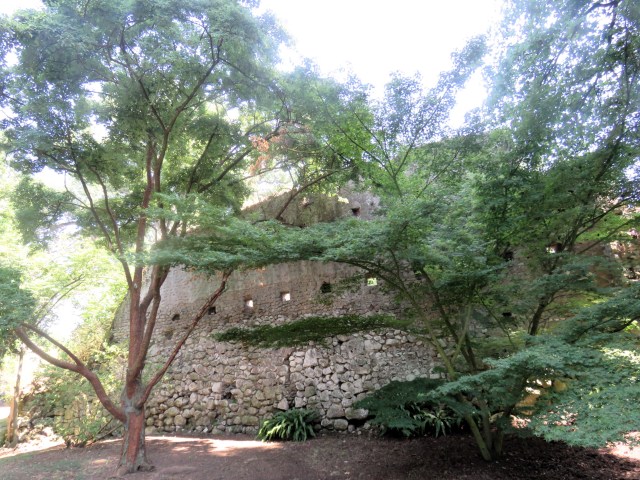
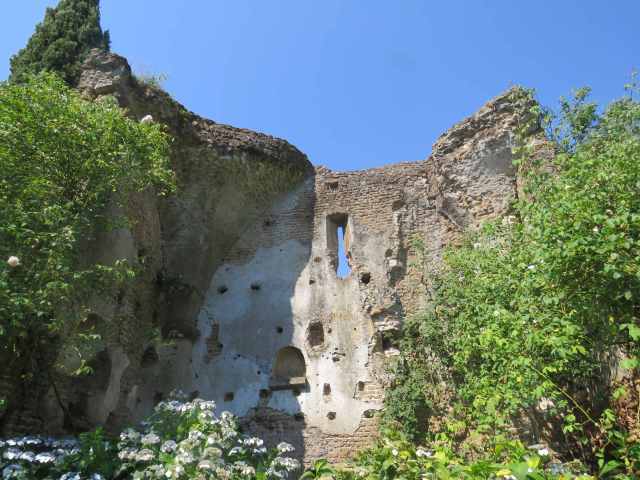
Britain and Europe are littered with ruins. I have never forgotten a garden we visited, overlooking Lake Stresa in Italy. At the top of the garden were stone ruins – a Roman fort, no less. As in Ancient Roman. Christchurch cathedral doesn’t have that antiquity – but neither does Lowther Castle.
If it is still a roped-off building site in ten years time, or if hope dies of raising the funds to complete the restoration, maybe, just maybe, memorialising the site with a garden in the ruins will be an idea whose time has come in this country, too. It took 40 years to build, so I guess the 13 years it has been an unsafe, dangerous building may have a while to run yet.

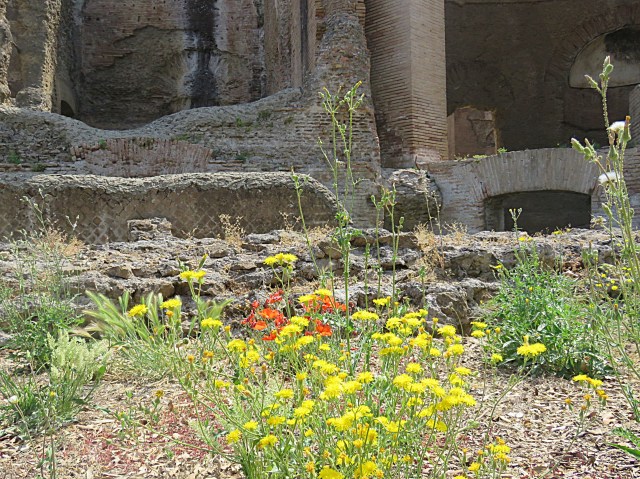
A postscript comment from Christchurch gardener, artist and garden writer, Robyn Kilty: It’s tragic Abbie! I have been to Ninfa too, and wondered if the Italian solution would work for Christchurch! Remembering that Ninfa is a much larger area- a village – with a most picturesque stream running through it, whereas the Square in Christchurch is an urban built up area with no stream, not much history, and surrounded by hard grey concrete. There is a small grassed area nearby, which is completely out of scale, but still, a Memorial garden of some sort would be preferable to the nothingness and the ugly temporary scaffolding that is meant to prop up what is left of the ruin. This seems destined to be the fate of the centre of Christchurch ad infinitum.
The trouble is that there has been and still is, such indecision around the whole sad situation – groups for and against restoration and at the time of the earthquake, a bishop from Canada with no vision and no cultural links to Christchurch, yet representing the Anglican community who appeared to hold all the power. She was in favour of demolishing the ruin and replacing it with a beach!!
As the current work to make the ruin safe has progressed, it is uncovering more and more structural damage that is more extensive and deep-seated than originally thought, so that sadly the cost of continuing to restore the Cathedral has become prohibitive, and with costs rising all the time, it is beyond the Anglican community and now the government. Even if it had been financially achievable, the feeling is that pouring more millions of dollars into restoration would still only result in a kind of ‘fake’ cathedral, where modern construction methods and materials could never replace the 19th century original anyway.
While some type of memorial garden amongst the ruins seems to be a solution, could it ever be like Ninfa, or even Lowther Castle, as our ruins are just a sort of small, out of scale aberration in the centre of the Square in Christchurch, surrounded by concrete. Imagine orange and yellow African marigolds gracing the centre of Christchurch where a cathedral once stood. Or perhaps that would be fitting after all, as we are told that the Christchurch Cathedral was mediocre in design anyway compared to grander Cathedrals in Europe and not worthy of restoration. Oh dear – why did our Victorian city fathers build their dream of an english city with a mediocre english cathedral at it’s core – on a far flung earthquake prone swamp??
Sorry, I’ve not left this comment on your Comments page, but that doesn’t seem to work for me – probably because I don’t press the right buttons.
I would make three points in reply to Robyn:
- It is all in the scale. Yes the cathedral site is one building, not an entire village but that is a design and scale issue, not a concept problem.
- Given the track record of the cathedral in earthquakes, maybe a rethink is needed. “Earthquakes have repeatedly damaged the building (mostly the spire): in 1881, 1888, 1901, 1922, and 2010. The February 2011 Christchurch earthquake destroyed the spire and the upper portion of the tower, and severely damaged the rest of the building.” (Wikipedia)
- Not African marigolds! Nevair! And preferably not tulips either, but that is personal taste.
 Tikorangi The Jury Garden
I’ve lived in Christchurch since I came up for university and I’ve always hated the square, too gray and hard, nothing inviting about it at all. A garden around the cathedral ruins would make it a vastly improved space to my mind. I also attended a few services in the cathedral over that time and I’d have supported a new facility for services over restoration, with a view to keeping something in the square to link it to the historic! I always felt there was never an option presented that wasn’t all or nothing either way and surely there could have been a middle ground, with a garden please?
I am honored to have a Christchurch local agree with me!
The idea of creating a garden in the ruins of the cathedral is very appealing. I remember sitting in the courtyard there pre earthquake. If memory serves, there was a fascinating installation with metal cords, creating the outline of a staircase using forced perspective. I can’t find any photos, though, so my memory may be off.
I have visited Lowther Castle, once when Pearson had just begun work, then several years later when the garden had begun to grow in. Very fine work. As are the gardens in the ruins of Ninfa and La Torrechia.
It must be painful for Christchurch residents to live with a construction site. Let’s hope a decision is made soon.
I don’t think there is going to be any decisions made soon, Pat. That is the problem. Anything would be better than the status quo. But I doubt this country is ready for something as radical as gardening in ruins, especially in a prime spot in the central city. Though my mind has been envisioning something as radical as using native grasses like the easy care Chionochloa rubra with carefully selected trees and plants that could change the colour through the seasons – so maybe kowhai and narcissi for yellow in spring, blues for summer, tawny apricot shades for autumn and whites in winter.