
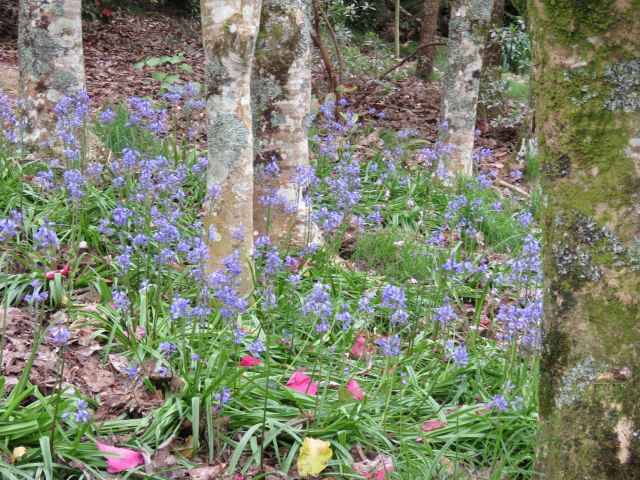
The romantic haze of blue of a drift of bluebells – how delightful. And yes, it is but only in the right place. I have written about bluebells down the years and we went to some trouble to establish drifts here. Ironically, back in 2007, I wrote: “The bluebell planting was a bit of triumph for Mark. He had been gently nurturing a patch in the vegetable garden to build numbers and came up with about 2000 this year. Now 2000 bluebells may sound a large amount to most people but his mission, he explained, was to try and get that 2000 to look more like 20 000. It takes a huge number to have much impact in a large area.”
I was first inspired by a natural bluebell wood in Scotland back in the early 1990s and I loved bluebell season when our friends, Bruce and Lorri Ellis, had Te Popo Garden. I have a childhood memory of my mother’s treasured bluebells. She was a good English gardener, my mother, and she encouraged us to pick flowers as long as we picked them with long enough stems to be put in vases. But the bluebells were prohibited; we were allowed to pick the common, blue grape hyacinths (muscari) but not the bluebells.
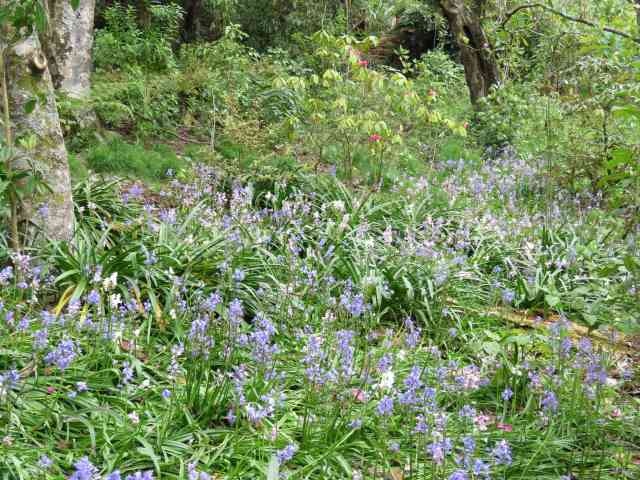
I once spent some time unravelling the differences between Spanish and English bluebells and came to the conclusion that what we have here are all Spanish bluebells, or maybe Spanglish hybrids, but not the more desirable English species.
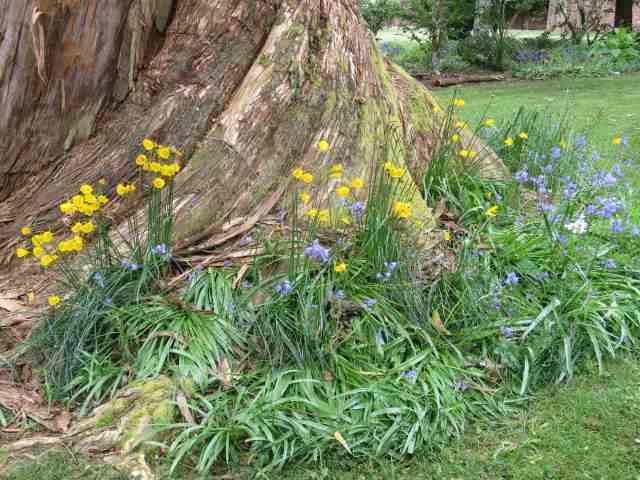
Our mistake here has been to allow some into cultivated areas of the garden. Bluebells are best kept to wilder situations. I speak from experience. Bluebells are thugs; in well cultivated garden conditions, they are more than thuggish and can spread at a frankly alarming rate. Not only do the bulbs multiply over-enthusiastically , but the seed disperses freely and germinates happily where it lands. We started trying to deadhead our garden bluebells some years ago. Now we – as in Zach and I, but mostly Zach – are trying to eradicate them from some areas and to drastically thin them where eradication is not possible. Bluebells may be pretty but we don’t want them everywhere.
I am sure we could hit them with spray but that is a last resort here and we haven’t quite reached that stage of desperation.
What to do with all the bulbs that have been dug is the question that is now troubling us. I don’t want to give them away seeing we have decided they are weedy. They can’t go into the compost because they won’t die in there. Some of the early ones went into buckets of water to see if they will rot down but that is taking a long time and we don’t need buckets of water so much as tanks or drums. Also, we won’t appreciate stagnant water as temperatures rise and mosquitoes become active.
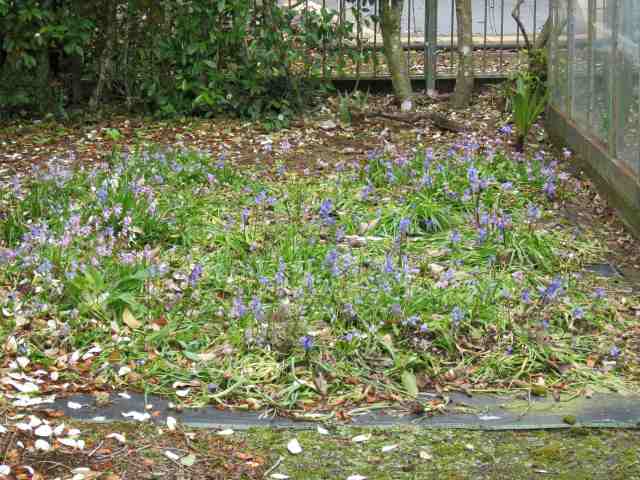
Some have been spread on a stand-out area covered in weedmat in the hope that they will dry out and dessicate. But they are actually growing and flowering there. Maybe when the heat of summer comes, we can keep turning the heap and drying them out but I reckon they are tough enough to survive.
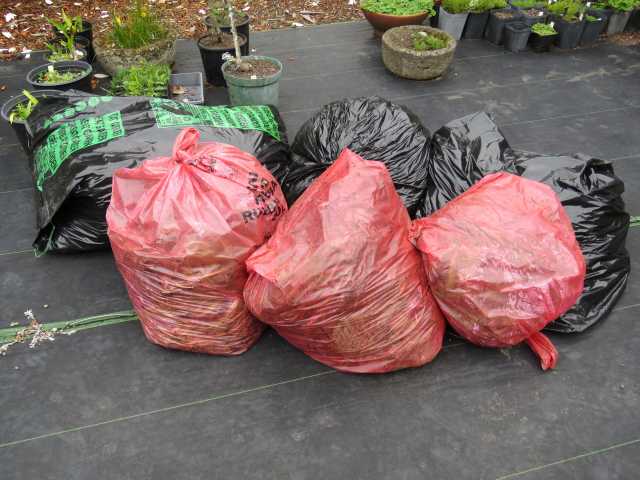
We have resorted to removing the foliage and putting them into plastic sacks. The theory is that black sacks will heat enough over summer to cook the plants inside them and it mostly worked on wandering willie (wandering jew or tradescantia) in the past but the volume was considerably less.
Our landfill wheelie bin is not to be used for green waste unless it is noxious weeds. I may make a professional decision that bluebell bulbs are indeed noxious weeds and start putting a bag a fortnight into the landfill bin but it will take months to clear them.
Any helpful ideas?
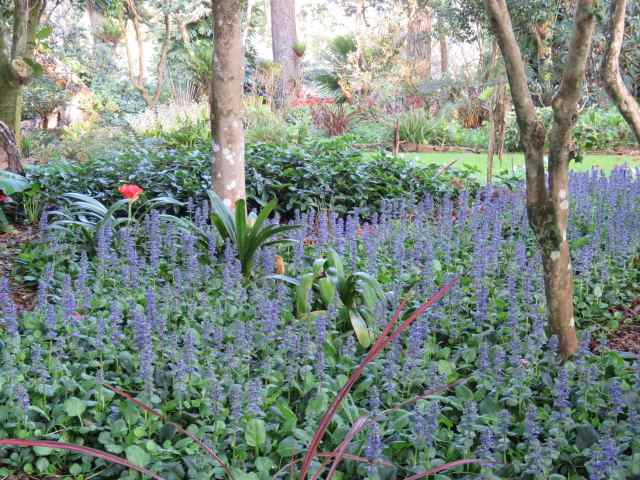
The moral of this story is not to repeat our mistake and allow any bluebells at all into garden beds. Ajuga is a much more garden friendly option to create a blue haze.
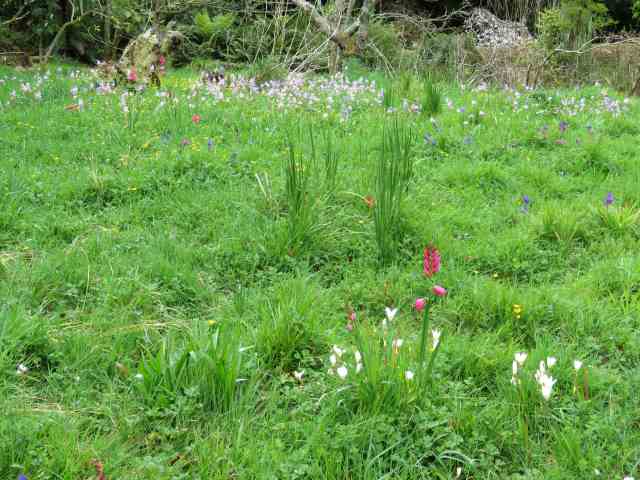
It has taken us years to learn how to create a sustainable flowery meadow in our conditions of high rainfall and high fertility but I feel we are succeeding in the Wild North Garden. Looking at it this week, I thought that a flowery meadow that goes from spring to autumn is more rewarding than a bluebell drift that looks lovely for three weeks of the year.
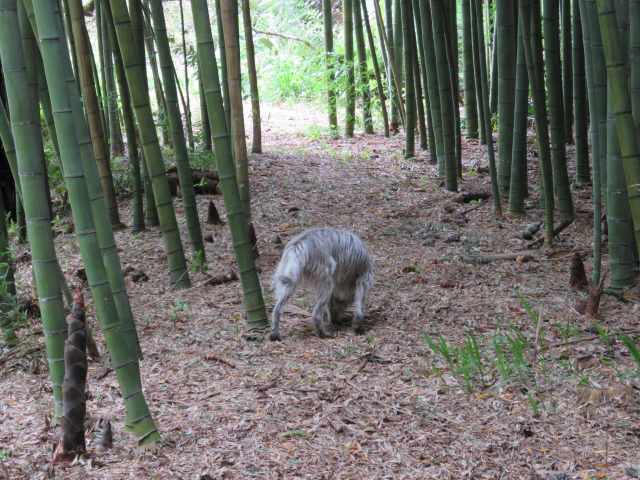
For those of you who expressed concern about our dog, Ralph, after last week’s post, I am pleased to report he is not far off being back to his normal self. He appears to have some damage to his lungs with a persistent cough. We have our fingers crossed that this may heal over time. Organ damage is a known side effect of the poisons he ingested but whether it will be permanent remains to be seen. Otherwise, he is back to his usual exuberance and if he were human, he would thank you for your concern. We are deeply relieved.
 Tikorangi The Jury Garden
If only we had your bluebell proliferation in our Bluebell Wood in Little Hagley Park along Harper Avenue in Christchurch because sadly our once dreamy Bluebell Wood in Little Hagley Park has been inundated with Onion flower Allium sativa !! And there are very few Bluebells left – only the horrid stench of Onion Flower instead!! So I do have to say be grateful for small mercies – it would be much worse if it was Onion flower!!
I have several sacks spare here. If only somebody was driving that way. But they need to get rid of the onion weed first.
Actually – Allium sativa is known more as Onion weed – not Onion flower! And weed it certainly is – highly invasive! Once you’ve got it, you are never without it.
could you put the bulbs through a shredder?
I think this was discussed. I shall check again with He Who Operates The Shredder.
We regard the bluebells as noxious weeds and put them in the landfill bin – having stripped the bulbs of foliage, as you describe above.