
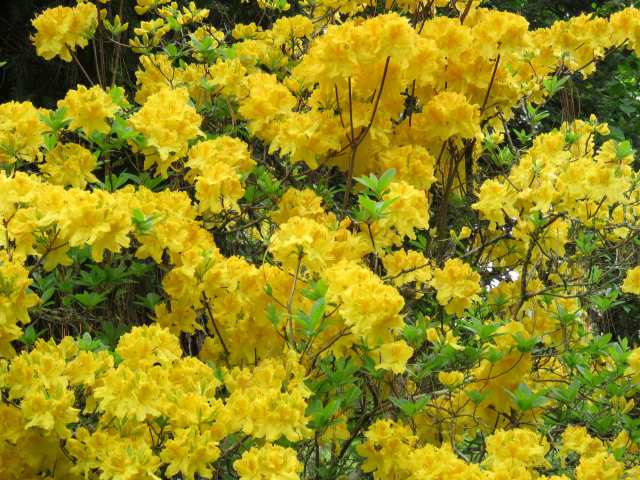
It is the time of the year when the deciduous azaleas star and there aren’t too many plants that star in bloom as they do. For 49 weeks of the year, they are largely ignored and then boom!
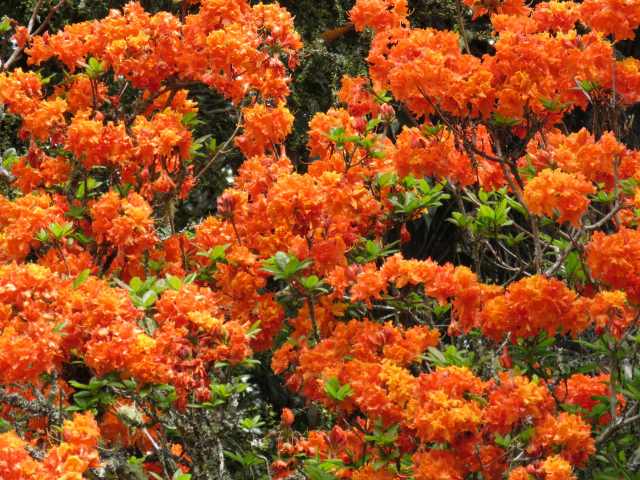
If you set aside the flower power, deciduous azaleas are a fairly unremarkable plant, at least in our conditions. I have never seen one with exceptionally attractive form. In winter when they have no leaves, they tend to look twiggy, scruffy and dead. With their fresh foliage in spring, they are generally unremarkable. By the end of summer, in our mild, humid conditions, the foliage is often mildewed. As I went around photographing ours on Thursday, I thought they would look better if we did a big round on taking out the dead wood, which we haven’t done for some years. This is a task best done when the plants are in leaf because in winter, it is hard to tell the difference between dead wood and live wood. But even when we clean them up in this way, it is still very hard to turn an azalea shrub into a good form which stands on its own merit because their growth habit is so twiggy, so formless.
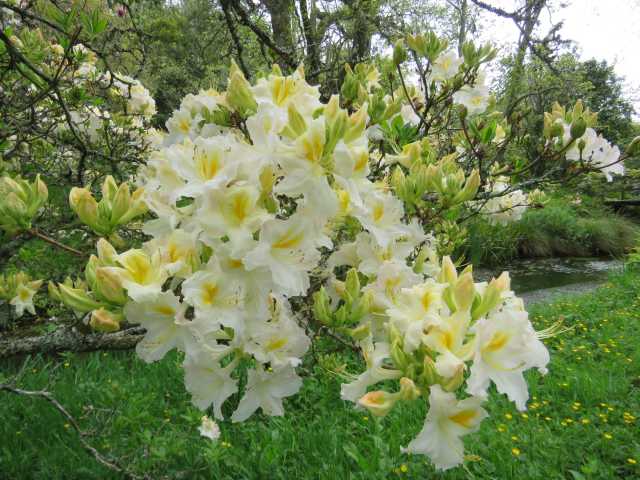
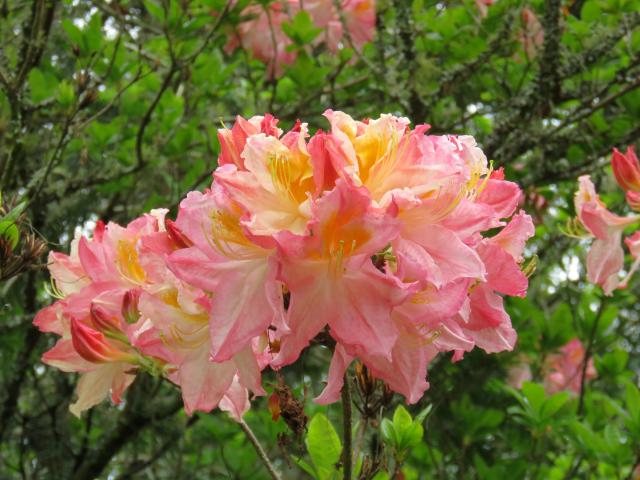
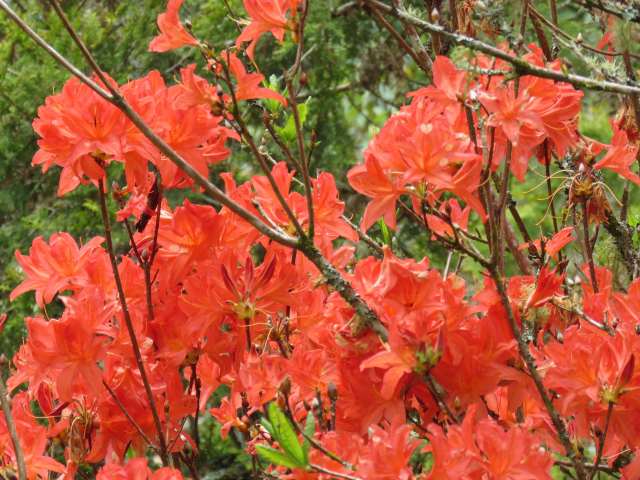
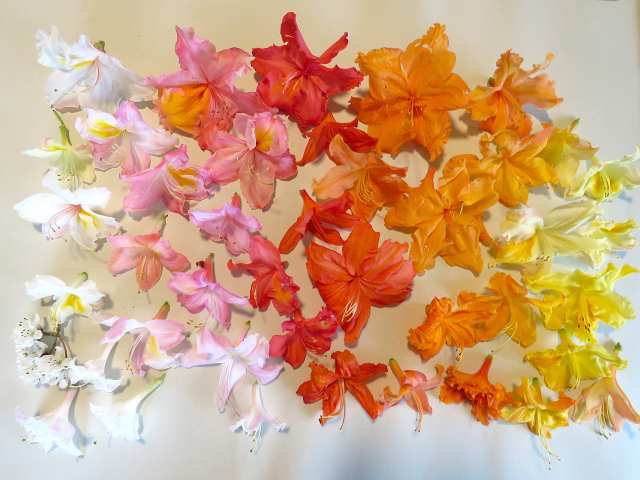
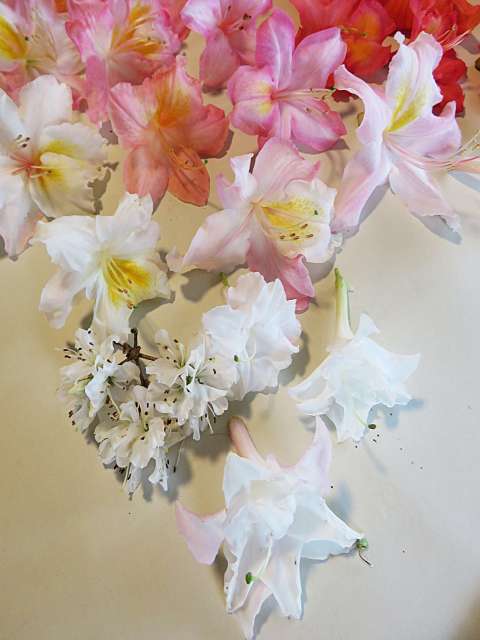
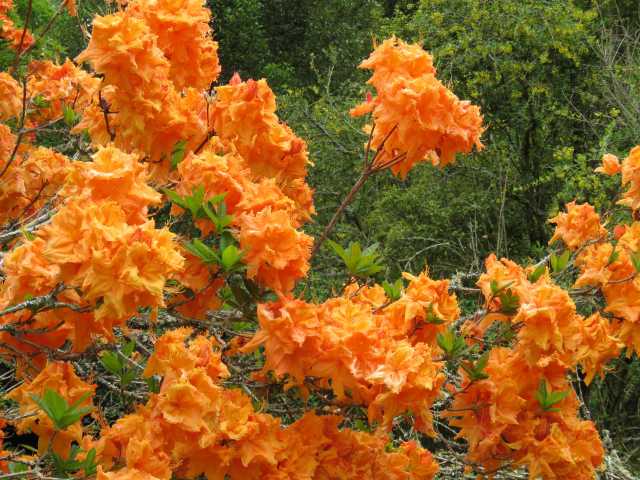
These shortcomings are forgiven when they come into bloom. Masses of bloom, often strongly scented and the colour range is extensive. Some have a vibrance and mass that is rarely equalled. ‘Look at me! Look at me!’ they shout. Others are much more restrained in hue if you can’t think how to integrate the pure colour of the oranges, reds and yellows.
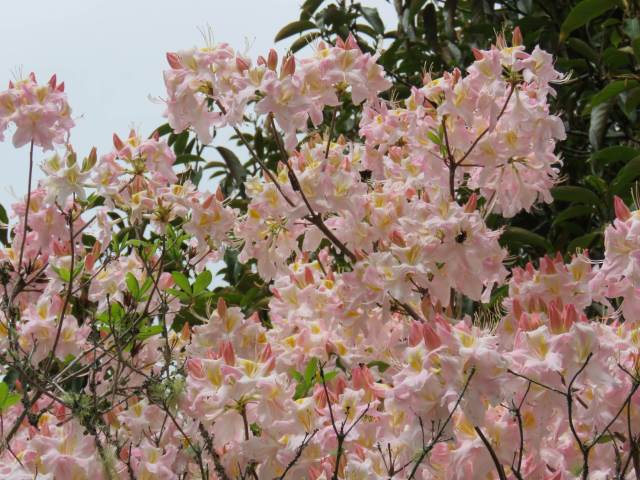
We have a fair swag of them, mostly planted between the 1950s and the 1960s. Some came into the garden as named varieties but the names have been lost in the mists of time. Felix Jury immediately used these in controlled crosses and raised more from seed. Mark also dabbled in turn, particularly with getting double flowers. Deciduous azaleas are one member of the rhododendron family that I think you can safely buy based on flower colour alone, without worrying about searching out particular varieties.
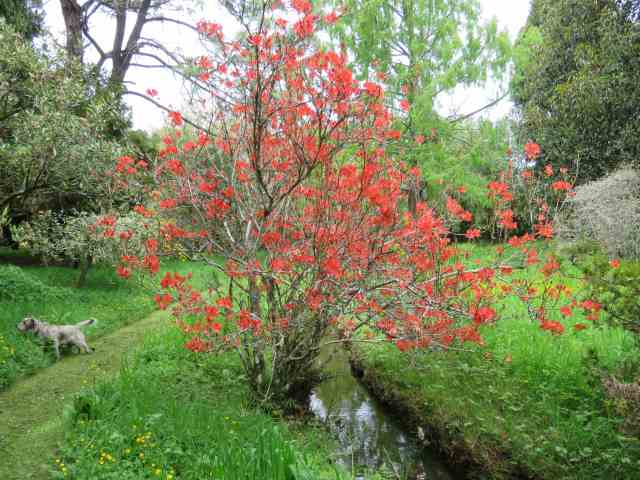
Azaleas are useful because they are nowhere near as touchy about growing conditions as most rhododendrons, particularly wet feet, as we refer to heavy soils that never dry out. In those earlier days, our park was prone to flooding. They will also tolerate dry and exposed conditions, living and growing when many rhododendrons will quietly give up the ghost and die. We only have a few deciduous azaleas in the cultivated gardens around the house; most are in the looser areas of the park and the Wild North Garden. And therein lies a lesson on placement. I don’t think they are an easy plant to place well in smaller, urban gardens, especially the strong coloured varieties.
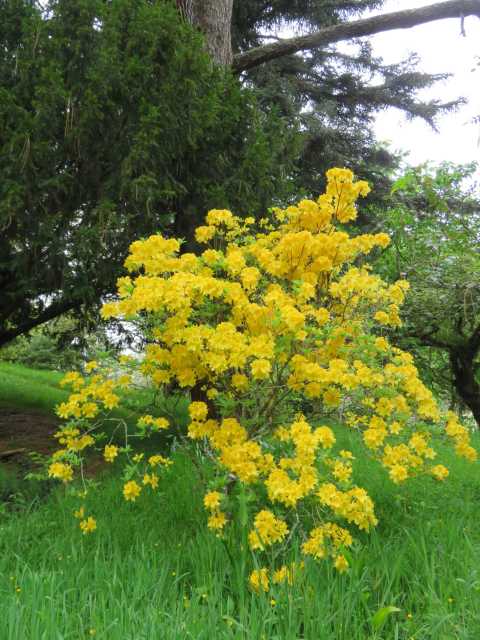
I drive past such a small garden every time I go to town. Freshly planted, my guess is that the owners went to the garden centre in spring and bought everything in flower that they liked. It has been particularly pretty this spring with both Magnolia Felix Jury and Iolanthe putting on a show despite their small stature at this early stage, along with some very pretty cherry blossoms, rhododendrons and camellias. And, this week, one garish deciduous azalea in bright yellow. I can see why they bought it but it does rather stand out as lacking harmony with the rest of the garden. The more restrained colours are easier to integrate.
I think our brightest azaleas work because they are standing pretty much in isolation surrounded by masses of green. When they have finished flowering, they will just be another shrub down in the park, like a neutral coloured cushion on a sofa. It is much harder to place them well in a small garden.
If you are in New Zealand and want to buy a deciduous azalea or three, do it right now. This is not a plant that fits modern methods of production and retail so you are unlikely to find them easily when they are not in bloom. Garden centres are not keen on them because they only sell when in flower.
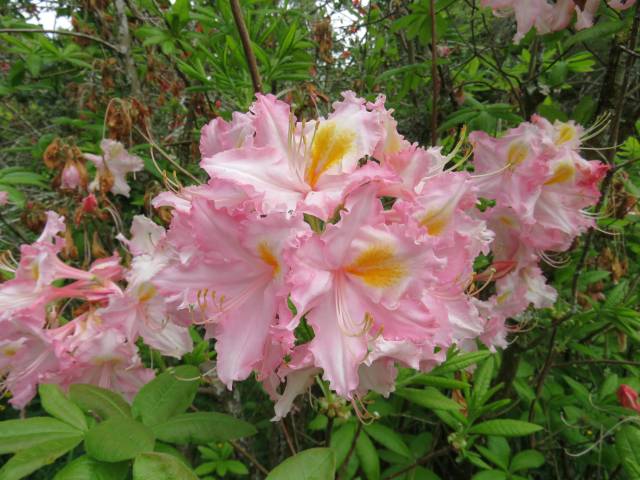
I briefly attempted to disentangle the differences between deciduous, mollis, Ilam and Ghent azaleas, to name just a few groups. Mark gave me a potted history of the azalea in Aotearoa New Zealand and names like Exbury, Stead, Yeats and Denis Hughes all came up, along with notable collections around the country when they were a very popular plant several decades ago. Alas, I am not so fascinated by the genus as to give the time to fact check it all. I will say that if you use the broad term of ‘deciduous azaleas’, it will encompass the lot.
 Tikorangi The Jury Garden
Thanks Abbie, what delight. Such glorious colour makes my heart sing. Such a different experience to living in a world of green/s in the Titirangi bush….
Thank you for saying so.
Oh, we grew these, . . . but they were not very marketable. Not many who live here are familiar with them. Even in the Pacific Northwest, where some of ours were developed, and where deciduousness is not such a deterrent, I do not notice many. For us, they were not so easy to grow in confinement as in the ground. I suspect that they would be happier if their cans are shaded to keep the black vinyl a bit cooler.
Their heydays here was back when all nursery plants were field grown. Not so easy in containers and a limited time for sales.
Our best were field grown, and although a few landscapers purchased a few, they did not purchase many.
Lovely to see so many and so big too. We have 5 altogether so far, all planted close to the edge of a stream in or next to a wild garden area. Last year we bought 3 of them and all were field grown, at Cross Hills near Kimbolton, good big healthy plants. They are just starting to come into flower now. And no, we don’t think the orange is too much, as two of ours are orange. They are all well spaced apart with masses of green around and above them, bright beacons shining out of the gloom on an overcast and wet day like today.
Stunning display…Im happy to see an azalea anywhere, big garden or small. Its refreshing to have a big dazzle of colour from time to time- long live guy fawkes day and azaleas.
Thank you Abby. For some years now I have so much enjoyed your conversations and gardening topics in general. It brings me huge pleasure as well as guides on ‘how to’ and ‘where to’ plant shrubs etc. It’s inspiring to be honest. Being in Northland it can be a hurdle sometimes, especially when my liking is for Rhodos etc. and cooler preference plants. I’m a proud owner of a line of Fairy Magnolias that each year brings a garden-filling fresh scent which is simply stunning. Thank you Abby
And thank you for your very kind comments.