
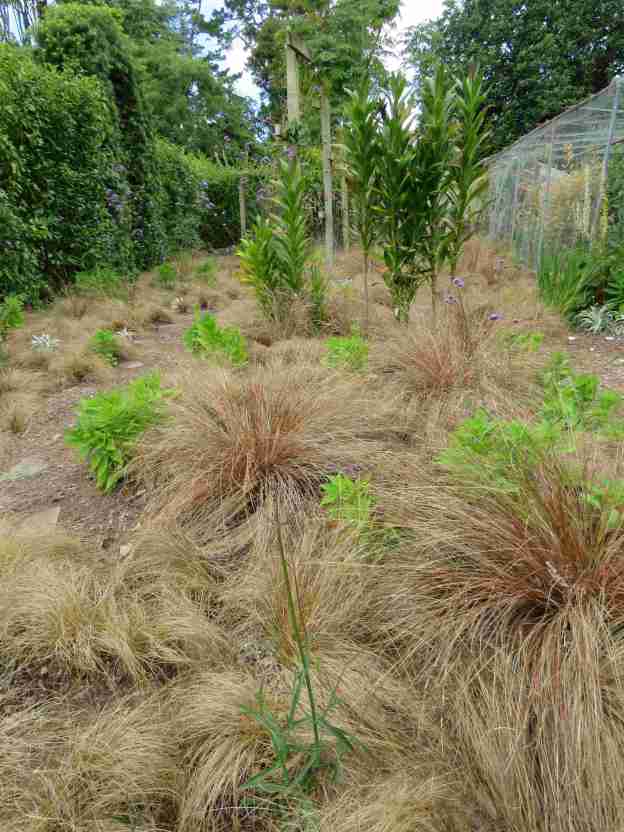
I made that term up. It is when I spend a fair amount of time working through an area, removing a large amount of plant material and at the end of it, most people wouldn’t even see the difference because it all looks pretty much the same. Just a bit tidier.
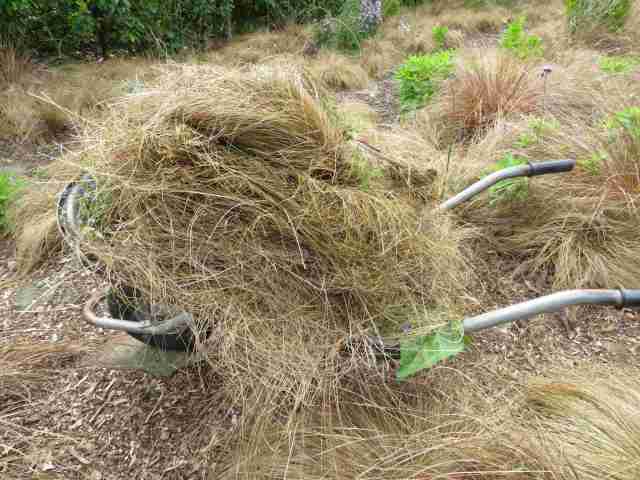
In the past week, I have spent five days meticulously going through the area we refer to as ‘the grasslands’. It is a very simple planting, mostly our native Carex buchananii and Carex comans ‘Bronze’. In the process, I have removed about ten overloaded wheelbarrows full of vegetation but honestly, nobody else is likely to notice the difference. That is fine. In fact, I regard it as something of a triumph because I know it is a lot better.
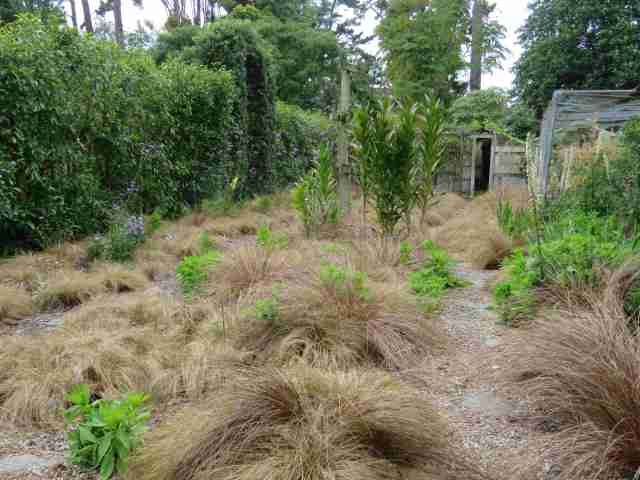
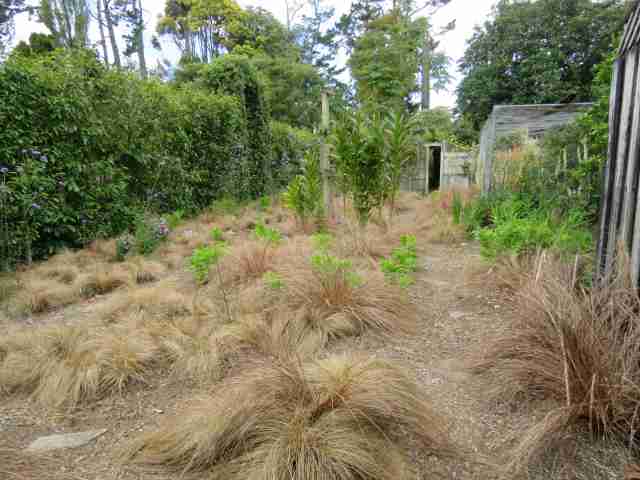
Most of the grasses we grow are evergreen and it seems that taking the time to work them over once a year, removing spent foliage, dead patches and debris buildup in the crown of the plant keeps them looking healthy and attractive as garden plants. That is the big difference between how they grow in the wild and keeping them in the garden – the human hand making an intervention now and then. While they will seed down and establish as a colony in the wild where some dead plants and strugglers are just part of the natural cycle, a garden situation only looks natural. My intervention makes sure that each plant is standing in its own space with limited competition, either from its seedlings or indeed weeds. I also comb out the foliage on each plant to remove the buildup and to keep the festooning form rather than it becoming a tangle.

We have a few other areas that also thrive and look good all year round with just one concentrated, annual blitz on maintenance. The Rimu Walk is notable. Every year, I spend a couple of weeks working my way over every plant from one end to the other and the garden waste is shipped out by the wool bale load to compost in a patch of bush elsewhere on the property. I work on rotating two wool bales and, at a rough guess, we probably move out over fifteen bales full. That is to say, I fill them and Lloyd or Zach remove them for me. At the end of it, there are no gaps in the garden, no bare areas and no indication of the time and care that has been spent but it just looks tidy, cared-for, healthy and loved. My efforts are largely invisible and I like it that way.
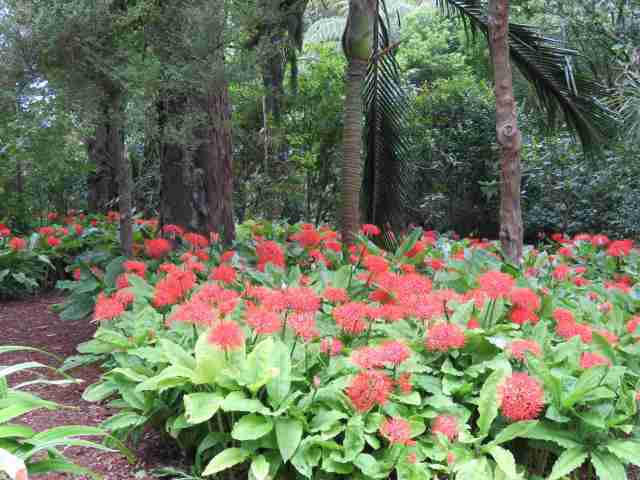
I refer to areas like these as ‘low maintenance’. With one thorough, detailed effort a year, there is little that needs to be done between those big clean-outs. We did one weeding round on the grasslands area in spring but nothing else. The scadoxus area will remain largely untouched until late winter again. Beneath the rimus, we will pick up fallen branches and sticks brought down by the wind and pull out the odd weed that has sneaked in but that is about it. They feel as though they are low maintenance, but if you averaged out the hours spent on that annual blitz, they are possibly not that low. It is just different maintenance, albeit that it only works in areas that are largely weed-free to start with, filled with plants that do not require ongoing staking, deadheading, cutting back, dividing, restricting or training and where a thick layer of natural mulch has built up over the years. Nor do they have edgings that need to be maintained, grass that needs to be cut or paths that need to be swept.
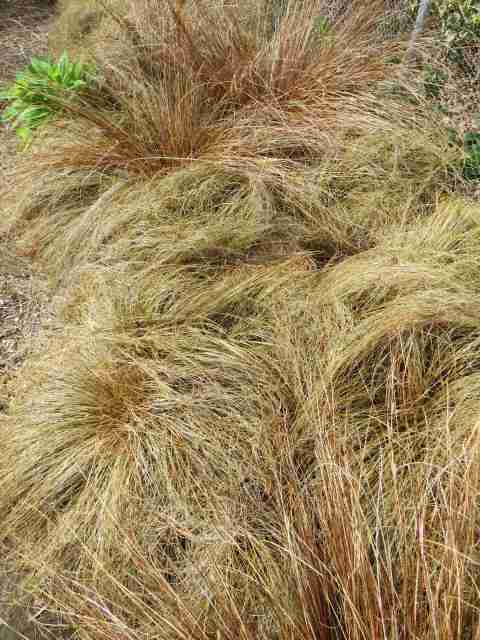
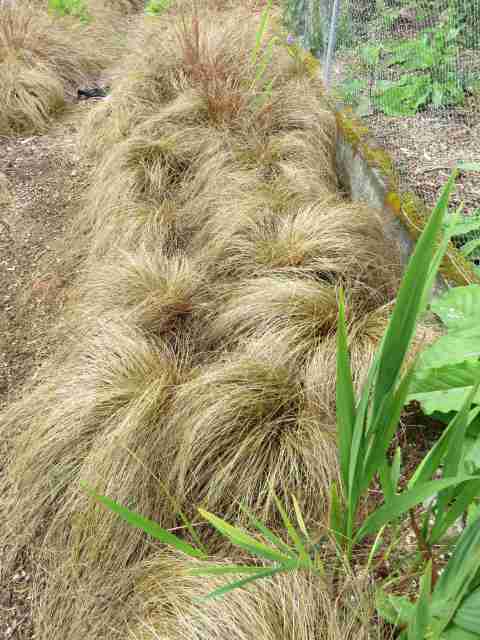
Garden maintenance can be a bore as well as a chore. There are areas I don’t enjoy working in. But it is oddly satisfying to focus entirely on just one block, working over it in minute detail and wrapping up after a few days, a week or even more and having the area look its well-furnished best at the end of it all, despite the removal of prodigious amounts of green waste. Even better is knowing that it will remain looking fine for the better part of the next year.
Maybe it is more discreet gardening than invisible. it is also a sign of somebody who has the time and inclination to spend on such fine tuning. I am aware that for many people, garden maintenance sits somewhere closer to crisis management and that is a very different scenario.
 Tikorangi The Jury Garden
Hi Abby,
appreciate the information on maintaining carex plantings.
Do you also prune back your carex plants to remove very long strands?
thanks, Paul
No, I don’t but raking through them removes many of them.
Oh, to hell with grasses; those clivias and scodoxus…growing in the open garden!!! … are fabulous!
We live In a country with reasonably extensive grasslands and some splendid native grasses so perhaps we are more attuned to them.
My method with (self-sown) C. comans is to trim all top growth (once every 1 to 2 years with sharp scissors) in the early spring down to a 3 to 10cm long clump (it’s the large/older plants that I leave with the longer growth). Plants then easily look good for 5 and more years. Despite Wellington city’s damp summers I don’t grow C. buchannii (I was given a plant once but it didn’t persist). I also get self-sown C flagiliferra but weed them out (because of their pesky flower stems).
My preferred Carex is C. dipsacea though it does accumulate dead foliage if it dries out in summer.
I use green comans in the open or as an edging plant and dipsacea in amongst other foliage or in ‘undergrowth’.
This is helpful information. Thank you.