
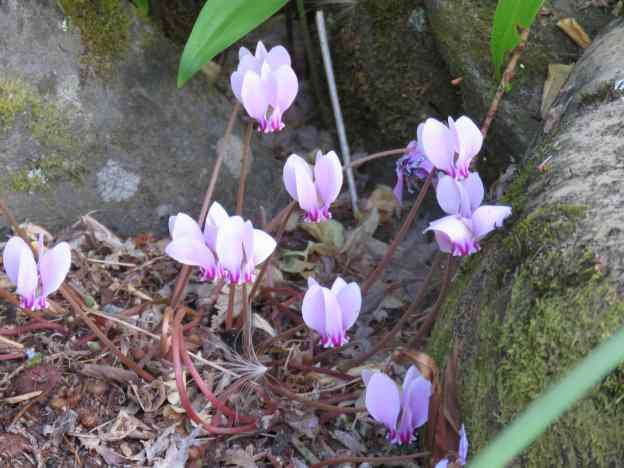
It may still feel like high summer where we are, but the flowers do not lie. We are on the cusp of autumn.
Summer here in North Taranaki has not followed its usual pattern. While we are always slower to warm up in November and December than the east coast, it didn’t really feel like summer until mid January. I don’t swim in cold water and I wasn’t tempted into the pool until well into January. Since then, we have been in and out of the water every day in an unseasonably warm and dry spell. A couple of degrees of extra heat on an ongoing basis makes quite a difference when you spend most of your days outdoors in the garden.
And dry. I know when we talk about dryness, others may scoff. We all adapt to our own, local conditions and we expect rain on a regular basis all through the year. Mark, a keen weather watcher who could have happily pursued a career on meteorology, tells me we only had 40ml in January and that fell basically on one day, late in the month. We don’t ever water the garden (except for some of the vegetables) and we have no irrigation system; it isn’t necessary in our climate and nor does it seem like good practice but we are seeing some floppy looking plants and some early dropping of leaves.
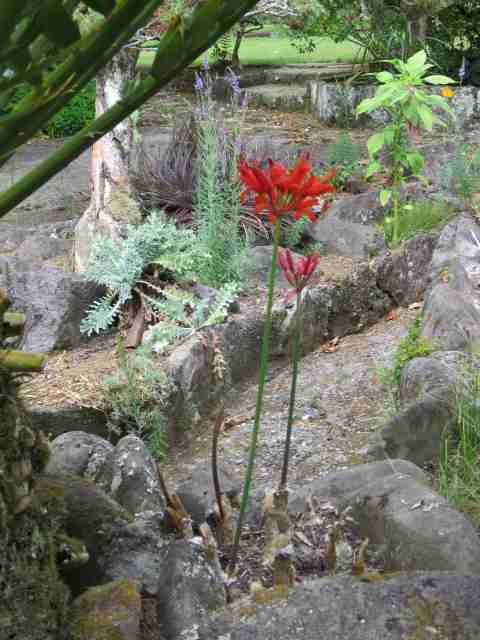
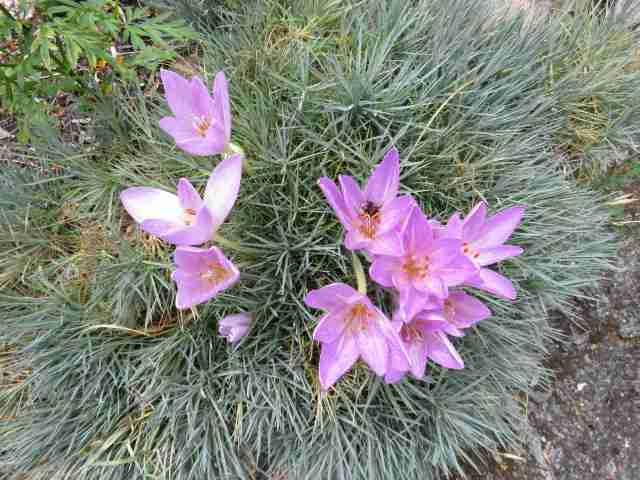
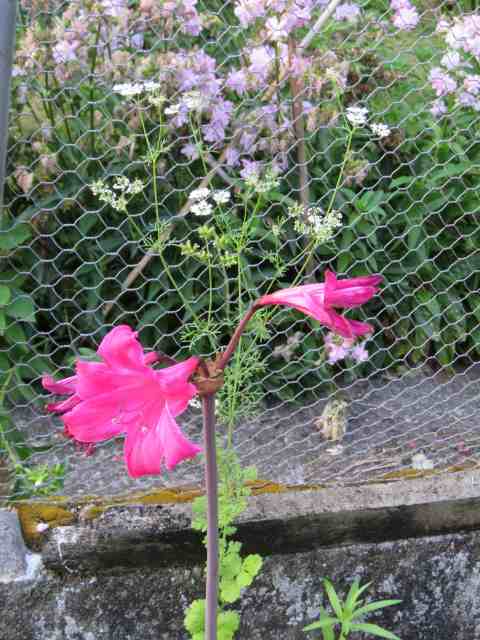
When the autumn bulbs started flowering in what still feels like high summer, I assumed they were being triggered by day length, as vireya rhododendrons are. They are certainly not being triggered by change in temperature, either day or night. Mark pointed out that it may well be that one day of rain in January that triggered them into growth and that makes sense because many bulbs are identified as summer rainfall bulbs.
Zach and I are waiting for rain so we can move plants again. We have plans we want to get underway. At least we know that here, with a temperate, maritime climate, the rains will come. While our high summer may be of short duration, so too is the depth of winter which we measure in weeks, not months. We have exceptionally long autumn and spring seasons and that does make for a good gardening climate.
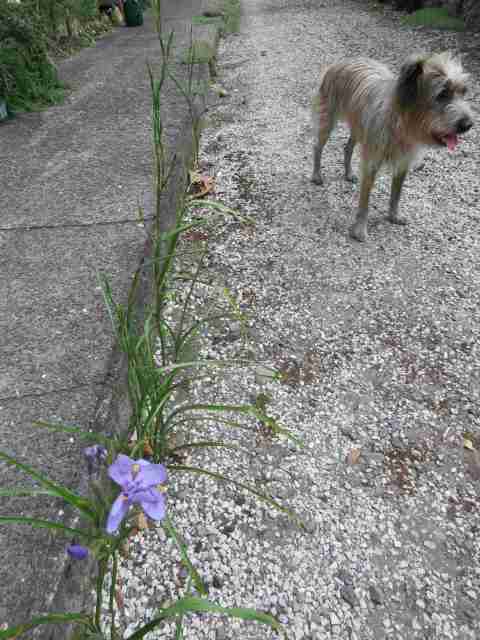
The autumn bulbs are one of our seasonal highlights.
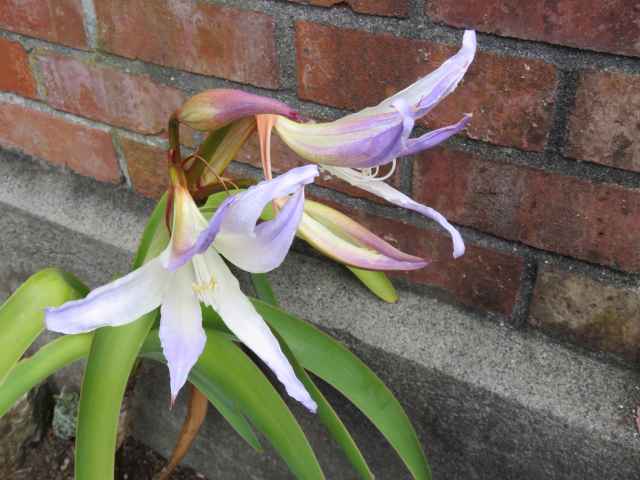
 Tikorangi The Jury Garden
Has anyone had a normal summer? Here in Christchurch the nights and days have been consistently cooler and there has been more rain than usual. Not a lot more but enough that the Port Hills have a subtle tinge of green instead of the harsh yellowish dried off tussocky look. Days have been persistently cloudy and gray. Some plants have breathed a sigh of relief but others have sulked madly.
I see Hawkes Bay has had similar conditio s – wetter and cooler than usual.
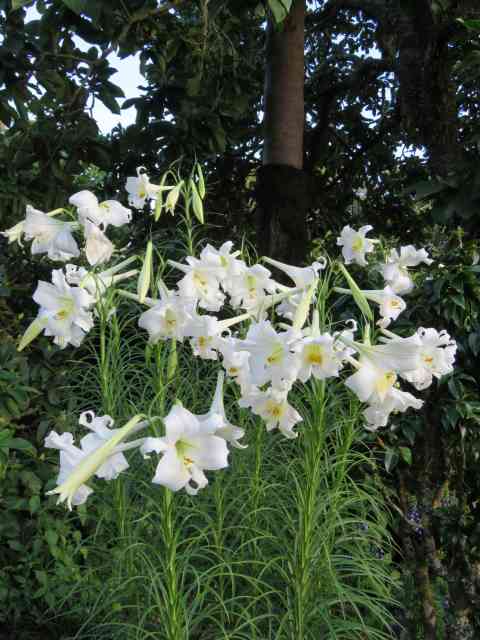
Seeing those autumn bulb photos is presumably an indication of climate differences between us and you, but as we are both cooler and wetter here I would have expected our autumn bulbs to appear earlier than yours. Instead there is no sign of any flowers yet on our Nerines, Amaryllis or Colchicums, nor on the copious amounts of what I thought was Lilium formosanum that pop up throughout our garden and properties nearby and flower in the autumn: so far buds, but no flowers. I was interested to see that your lilies are pure white, because ours are white with a yellow throat and purple streaks on the outside of the petals, very similar to Lilium regale. They have no scent that we can discern and can grow over 2 metres tall. They spread readily by seed and are quite prolific. I’ve pulled out many since they first appeared in the garden and the bulbs are always very shallow.
The fact that our autumn bulbs are already flowering when temperatures are in the mid 20s, even 28, is a sign that temperature has nothing to do with triggering them. And I assume our day lengths are pretty similar at this time of the year so it comes back to ours sitting dormant through the dry period and suddenly springing into action when we got the one rain. Lilium formasanum is variable in colour – we just happen to have a pure white form of it. And it is staying true to that. It seeds down a bit but as you say, the bulbs are shallow and easily pulled out of in the wrong place.
We had frequent rain throughout our much colder than average January. Since then we’ve had effectively no rain until yesterday and a long warm spell (but still never quite reached 28, which is very unusual) and the ground had become very dry. Perhaps our autumn bulb flowers will now be triggered as we’ve had enough rain to get into the soil a bit.
Thanks for clearing up about the Lilium formosanum variability.