
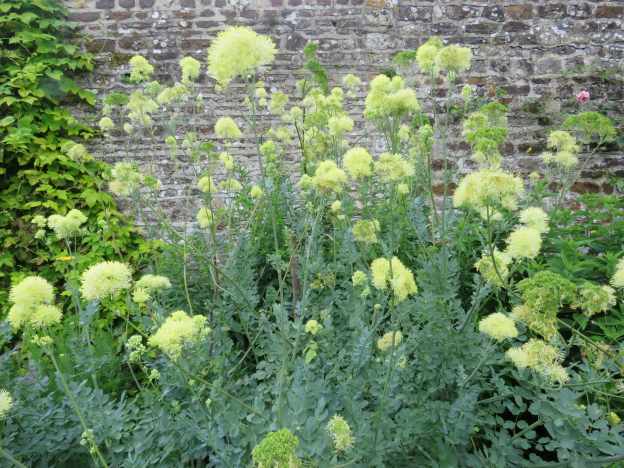
“What do you think the ingredients of a typical English or British garden are?”
“That is an interesting one. I would say hedges, borders, grass, (something inaudible to a NZ ear) and enough manicuring in some parts that it looks cared for. I think it is that mix of formality, the manicured elements and the wilder, more romantic parts that make the British garden especially British.”
Monty Don in conversation with Chris Crowder, head gardener at Levens Hall in episode two of the TV series ‘British Gardens’.
“Yesss!” I said out loud and went back and replayed it. Not just British gardens – that is a pretty accurate description of how we personally garden in Aotearoa NZ. I would qualify that we don’t do topiary here so much as some heavy clipping but it serves the same end of giving definition and form in the garden. And I would add a high level of plant interest which is another feature of British gardens (and very much so in our own garden). It is perhaps an understandable omission on Chris Crowder’s part, given that he manages a garden that dates back to 1690 (!) and is famed for its topiary.
In brief, Monty Don’s summary of the essence of British gardening seemed to come down to a few key points.

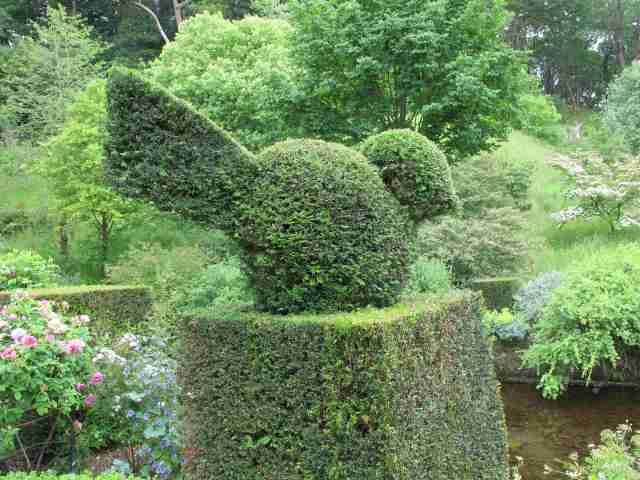
Firstly that British gardening is deeply rooted in eighteenth century landscape design (think Capability Brown and his peers designing grand landscapes for the rich and powerful) and that, to this day, a high value is placed on that long history. Many British gardens have wonderful, historic architecture features – be they massive walls from old walled gardens, ruins, follies, pretty manor houses or even castles.
Those early funders also supported plant hunters combing the world for new plants which were welcomed with delight back in their homeland in a rarified pursuit of competition and one-upmanship. To this day, British gardening is a celebration of the ability to grow a huge range of different plants collected from around the globe and plant range is a defining feature. I remember quipping after my first trip to Italy – a magnolia conference tour – that they basically gardened with the same ten plants but that is not true of British gardens, or indeed New Zealand ones.
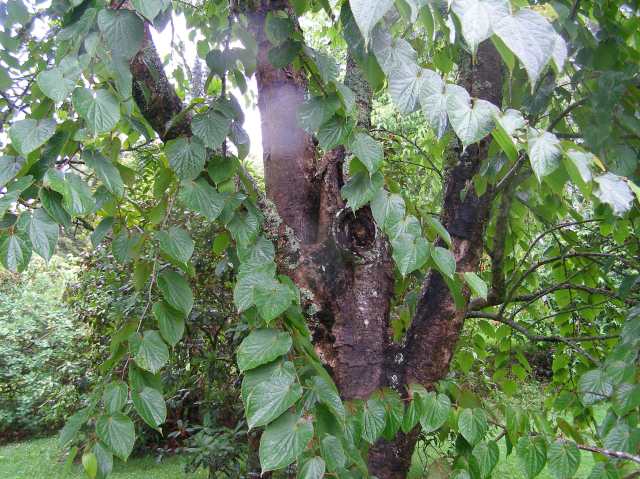
Secondly, climate. In global terms, Britain generally enjoys a moderately temperate climate and there is no doubt that it is easier to garden in a climate without extremes. I don’t think their climate is quite as good as some of the people in the programme asserted but I would say that, as a New Zealander.
Thirdly, Monty Don talked about his homeland as a place where people ‘learn the language from an early age’. I think it is a bit more complex than that. What I see is a place where gardening has been both professionalised and institutionalised over a long period of time, which has given leadership and placed a value on it which is often lacking in other countries. Gardening, not just the broader notion of horticulture, is a respected profession. There is an established career path and high-quality training. Added to that, there is considerable support from institutions like Kew, The Royal Horticulture Society with their major gardens and in the media. BBC Gardeners’ World has been running since 1968 on primetime television, for goodness sake, and still has a loyal following. There is quite the collection of other TV garden programmes, both good and execrable, and garden celebrities who are actually celebrated, as opposed to just being recognisable. The vast majority of domestic gardening is done by amateurs but there is institutional knowledge to underpin much of that, and a strongly educative side.
In this country we haven’t had a proper TV garden programme for over two decades. That is despite census data regularly showing that gardening is one of the most popular leisure pursuits. I have long figured that nobody in the TV programme commissioning area has understood this simple fact, nor have they seen past the dated formula of instant garden makeovers.
Britain is a densely populated country with much more restricted personal space. This means that large numbers of people want to get out and about in their leisure time. With gardening so embedded in the national psyche, that often includes garden visiting and the level of visitor numbers supports both public and private gardens.
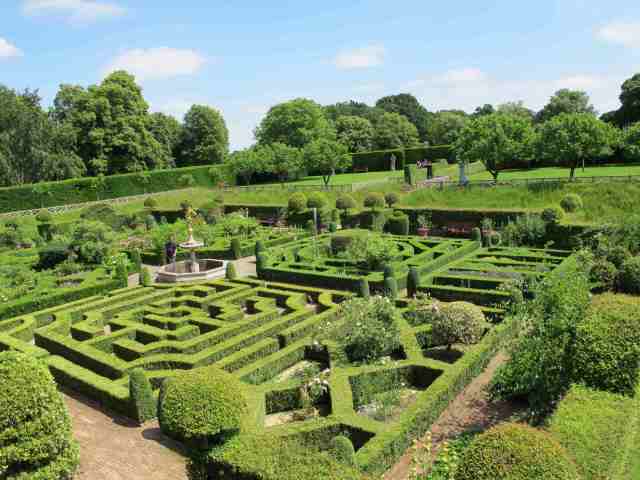
In Aotearoa NZ, we have taken on some of the same gardening values, although our colonial interpretation of British garden design is more Arts and Crafts (garden rooms) than 17th century pastoral landscape. With our benign climate, we certainly place a high value on growing a wide range of plants and having an attractive home garden – albeit quite a few want it to be both attractive and low maintenance. With a small population and overall low density of housing, the majority of people have private outdoor space. So yes, we do garden a lot. But overall, we lack that professional and institutional backbone of British gardening.
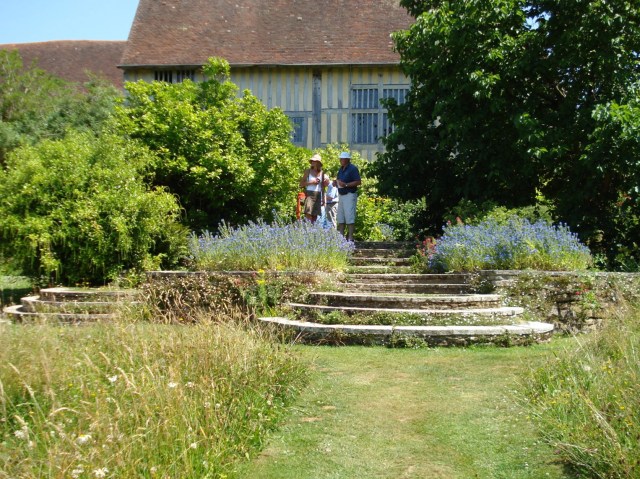
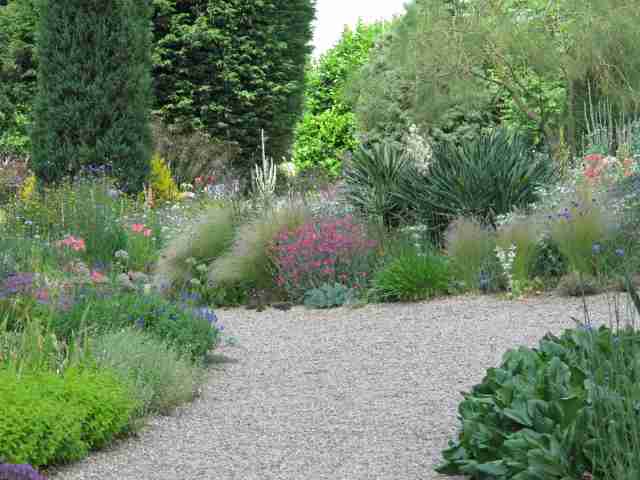
It was interesting to hear discussion on the impacts of climate change threaded throughout all the episodes. Many gardeners and Don himself referenced it as they discussed the gardens and future considerations. All I can say is that I am not seeing that sort of discussion in this country where the prevailing views seem to be either a loud ‘harrumph’ of denial or, at best, issues of climate change are pushed out to the margins as not being a relevant issue at a personal or local level. We have not normalised it as a factor in planning for the immediate – or even distant – future. We may be in for a shock as we continue to treat extreme weather events as one-offs rather than part of a larger pattern which is set to get considerably more extreme in a shorter space of time than originally thought.

Facebook showed me a post by Gardens Illustrated on one of our most favourite gardens, Wildside and I read the comments. “Lovely series but it would be nice to see some ‘normal’ gardens”. Reader, what is a ‘normal garden’? The series gave considerable attention to both the wonderful British phenomenon of allotments as well as community gardens, alongside a potted history of the evolution of gardening down the past 450 years, touching on the most innovative recent developments.
I suspect a ‘normal garden’ equals ‘a garden like mine’ to that Facebook commenter.
“Rewilding” will have to wait. I will return to Knepp Castle and Waltham Place and the questions they raise in the future.
 Tikorangi The Jury Garden
The “What do you think the ingredients of a typical English or British garden are?” question ran through the series but is always a difficult question to answer off the cuff. It is a case, I think, of people knowing what it is simply because they doing it day in and day out and feel no great need to consider how their actions, and gardens, fit in to the British tradition. I suppose, people understand what it is though they may not be able to put that into words. Monty et alia made a reasonable attempt at answering the question.
Agree, I think he did a pretty good job of it and of covering many different facets.
What I liked so much about ‘Wildside’ in the UK when I visited a few years ago was that it WAS so normal! It felt very like a New Zealand garden to me – and indeed there were many NZ native plants there – my memory is a bit hazy, but there could well have been a NZ section. Definitely I remember a stunning part of the garden which focussed on Cordyline australis NZ Cabbage trees, and was done with such flair and aplomb, as though these Cordylines were something to be valued and celebrated. Not just grown from some stray random seedlings popping up all over the place like weeds.
If I remember rightly there were about 3 or 4 large ochre clay pots placed at strategic points amongst a few Cabbage trees, all complementing the winding gravel pathways. Another point – the informality of the gravel pathways winding down a slope felt very familiar to me! Something we see such a lot in NZ gardens – especially large country gardens here! Abby is right – we can take our spacious acres of garden here for granted, whereas in the overpopulated UK, that sort of spaciousness is something to be valued, thought about and carefully designed.
Wildside had a good representation of our native grasses, too. A fine example of an exceptional plantsman and a very good gardener at the same time.
We found the series fascinating: thank you Abbie for drawing it to our attention. Thank goodness we can get to see such programs via the Internet. A modern TV gardening program produced locally would be very welcome.
Much of the fascination comes from the fact that we were both born and brought up in England. Our interest in gardens was probably kindled when we joined the National Trust and visited as many of their stately homes and gardens as we could. The only garden from this series that we visited was Bodnant, and as it was nearly 50 years ago we don’t remember anything about it, but we always hankered after a large garden.
We only had our own garden in England for two and a half years before we emigrated, but have gardened here in New Zealand for 45 years and have visited many gardens in this country. If we ever went back to the UK for a visit I think we’d have Wildside as our number 1 attraction and Great Dixter as Number 2. Robyn said her visit to Wildside made her feel it was normal and of all the gardens we’ve ever seen on UK TV garden programs it is the garden that most reminds us of our own (those Cordylines help). Luckily I didn’t have to become an expert digger operator to create the topography: ours is very similar, but all natural. Keith’s planting looks sublime.
After seeing the series I’d have to say our own garden ticks Monty’s boxes for a British garden too, but it has a very New Zealand flavour (many, many tree ferns).
See, you are proof Tim, of that garden culture that so many English people grow up with. And the National Trust plays a huge role in keeping that going, when weekend visits to a house and garden are a common leisure activity.
We have always acknowledged the debt our garden has to English gardening traditions – its roots firmly in what I refer to as DIY colonial Sissinghurst – but with different plant material. Felix and Mimosa started by planting it out with English and European favourites but, over time, the plants have changed to options that better suit our climate and our all year round approach to gardening.
Keith Wiley’s planting expertise at Wildside is one of the very best and most interesting we have seen. If you ever get back, it is well worth going to see.
Thank you for this great in-depth reflection Abby! I thought I’d share that I was approached and then worked hard with a producer for over two years on a New Zealand Gardening show concept. The execs one of our major local broadcasters turned it down and instead seemed to focus their funding on reality shows with islands of young people and lots of sex! Argh! We were then taken on by another which was very exciting, until their top dog left the company before talks began and the new team decided again, that a gardening show needed a ‘modern twist’. It’s hard to understand when some of the most resilient, long running television in the world our gardening shows -Gardening Australia and BBC Gardeners World are case in point. I’ve come to realise that unless a decision-making TV executive is a gardener, they can’t seem to see the data on the massively broad appeal of gardening across so many age groups. My producer is having a ‘rest’ from the battle but hasn’t lost all hope to have another go. It should be noted there was another group trying to create a garden focused show at the same time and they too found only closed doors. Fingers crossed for the future! Julia x
Thank you, Julia, for confirming what I had deduced. I had no inside knowledge of this. Mind you, I saw the dismissive attitude Radio Live took with their extremely popular weekend garden show with high listener ratings – all gone now because they thought to try more talkback or light music or whatever it was. Also Stuff with their garden pages. I remember a reader survey when I had a garden page in the paper which showed that readership was higher for the garden pages than the sports pages. All thrown out with the bathwater. It can be very discouraging if we let it worry us.
We won’t stop trying! Also apologies on the incorrect spelling of your name….I was sneaking a fast response in after reading while on the job at our business in Akaroa. Thank you Abbie – very much value your writing and views! xo
So this is you Julia?? – my erstwhile Linwood gardening mate! Good to see you taking up the cause for gardens again! Long may it last – even though you are ensconsed in your Akaroa life – I hope all is going well with that! Here’s hoping that you can still find time to venture into the gardening debate!
Robyn xxx
Clearly TV execs are not gardeners, and do not realise that so many of the rest of the population are – including young’uns like you Julia! It’s time TV execs widened their focus further than just inane ‘reality shows’, and realise that most of us do have a brain, and are not lulled into trivia.
Pingback: Pushing the boundaries | Tikorangi The Jury Garden
Hi Abby i found your wonderful and beautiful blog by chance, when searching can Tecoma Stans (i love the intense yellow) be trained as a vine :) lol new to gardening, born in the tropics, live in Auckland, desperate for a yellow mandevila but they are not available in new zealand. This search led me to your blog and to learning about your beautiful garden ‘ Tikorangi ‘ here in Aotearoa NZ.Such a wonderful source of learning, thank you. Loved reading about your New Guinea Tecomanthe venusta , what a beauty. Although i am a New Zealander I was born and raised in Papua New Guinea :) bless you, and thank you. I remember these growing in the national botanic gardens in port moresby, along with epic stuning emperor birdwing butterflies (kelly green and yellow body, and irredescent hummning bird teal aqua and black wings); gorgeous, golden show orchids, massive stunning Rain and Flame trees, tropical gingers, and wonderful beautiful and exotic orchids and next – level wonderous plants, and scents and sights. So cool to see you have success with a PNG tropical plant, thank you. Im just out of hospital, and so enjoying your wonderful vivid and intelligent writing, and the stunning photos. Ive subscribed. Anyway, yes I seem to take a long time to get to the point. Although the point really is a thank you to you and your husband (and doggies) for some mental respite :) ie brain and sensory pleasure. Loved the whole discussion about British garden and the NZ perspectives :) love arts and crafts – next level, shall mention that in my fashion and nature course, when we do the pre -raphaelites :). Monty Don did a wonderful documentary on allotment gardens in Havana and Cuba, i saw it on youtube. Loved your photo of the gentleman in england at his allotment. Isnt it wonderful the sense of community gardening and a love of plants brings. I have been fortunate to travel to Cuba, which is of course another tropical country :) and a truely wonderful and beautiful country, though it is the people that are so lovely, creative, talented and resourceful. Well they have to be :) Anyway Abby if any of this makes sense, thank you so much. Really enjoying learning about Tikorangi, the Jury Garden and learning from your amazing knowledge, insight, as well as those from your supporters/ stans/ communities/ publics :) Kind regards, Giles Peterson, curator and art educator. Email:gilesp@whitecliffe.ac.nz [P.S. no, im not selling anything, lol but wordpress asked for me address. One suggestion Abby, i would love a like button. lol :) i would be liking a lot of your posts :) Bless and blessings to you, and thank you. My heart sang a little happier today. Take care, Best, Giles.
Dear Giles, thank you for your many kind words and I am so glad that my site lifted your spirits. May your recovery go well. What comes through your comment repeatedly is your love for colour and vibrancy – in the plants and places you mention. You may like the pieces I have written about colour and the greying of New Zealand – https://jury.co.nz/2017/09/23/why-so-very-grey-new-zealand/ and https://jury.co.nz/2024/06/23/give-me-colour-i-say-again/ (amongst others). Colour makes my heart sing when it is in vibrant shades but also wraps around me when in more muted shades. Greys and beiges do not every lift my spirits.
Cuba is a place I would have loved to visit but I think I have left my run a little late now.
Kindest regards,
Abbie