
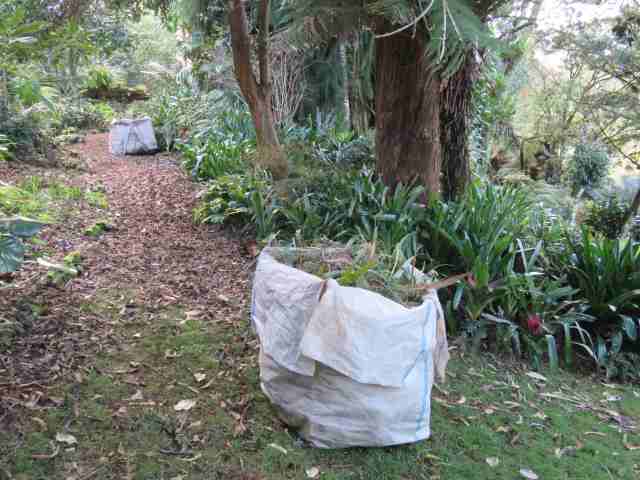
I coined the description of ‘invisible gardening’ in recent times. It describes when I spend many hours, often days, working through every square metre of a section of garden with meticulous care, removing huge amounts of foliage and debris. All the while, I know that the only people who will notice are the four of us here because, after all that, it just looks tidier. No dramatic changes.
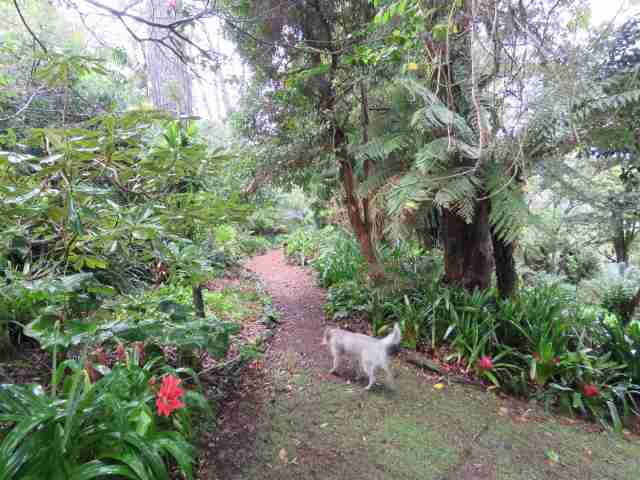
I am invisible gardening my way along the lower borders of the Avenue Gardens where it meets the park and the waste is coming out in packed wool bales to be composted elsewhere. So far, I am up to five full bales. I figured it is a reasonably high level gardening skill to pick over an area and remove that volume without making the place look denuded.
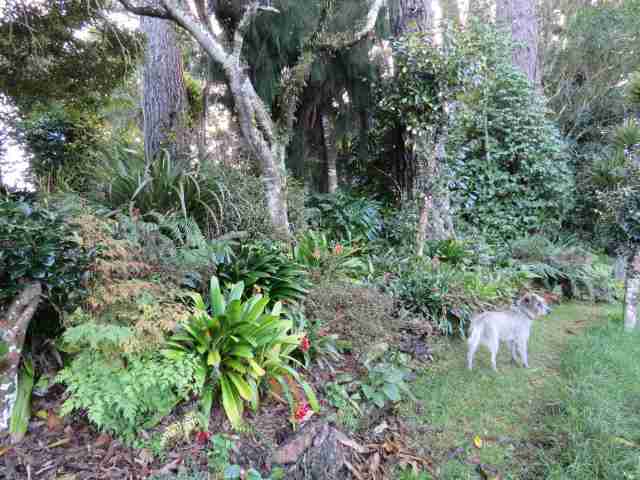
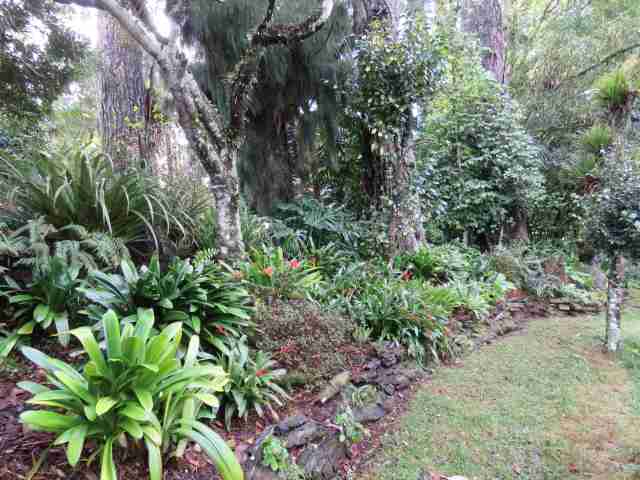
I was trying to remember when I last gave this area the same level of close attention. It will be three to four years ago. In the interim, it has had the once over lightly treatment once or twice a year- a bit of weeding and removal of fallen debris and spent foliage, but nothing detailed. We don’t apply fertiliser; natural mulch provides nutrition. And we will only spot-spray if there is a problem that has got away on us. We never need to water.
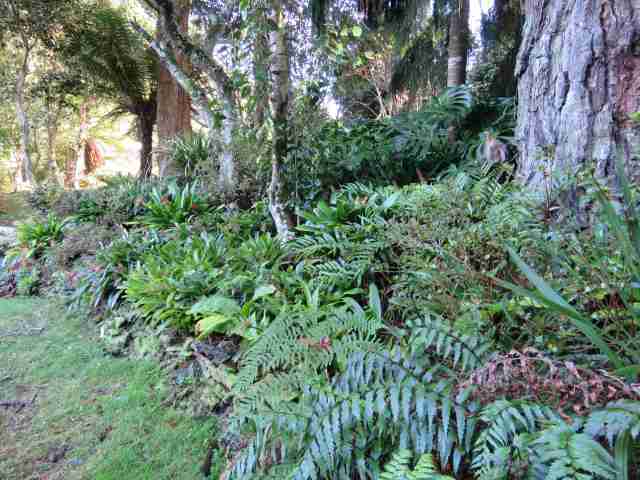
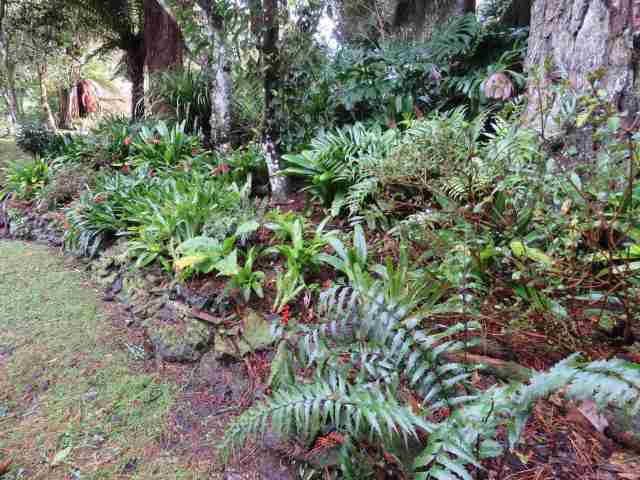
It started me thinking how long a garden lasts if you ignore it or just give it the occasional once-over-lightly attention. These are woodland gardens under a canopy that is largely evergreen, which slows growth and restricts weed germination. I came to the conclusion that after about three years, the area loses its definition. This is because plants are no longer standing in their own spaces but have melded together, enmeshed, so to speak. After about four years, the detail starts to go. We like highly detailed gardens – many different plants in varying combinations and a good representation of treasures. By four years, the thugs are taking over (I have removed A LOT of clivia seedlings) and the daintier plants have been squeezed out or swamped. From there, it is all downhill.
Halve the time estimates for sunny gardens. In those conditions, plants grow faster and the weed explosion can be exponential.
I am of the opinion that low maintenance and good gardening are mutually exclusive concepts. You can have one but probably not the other. If you want a lower maintenance garden, stick to shrubs and swathes of the same plant. We want detail and complexity and we live with the resulting maintenance demands. Besides, a couple of weeks every three years or so doesn’t seem oppressively high maintenance.
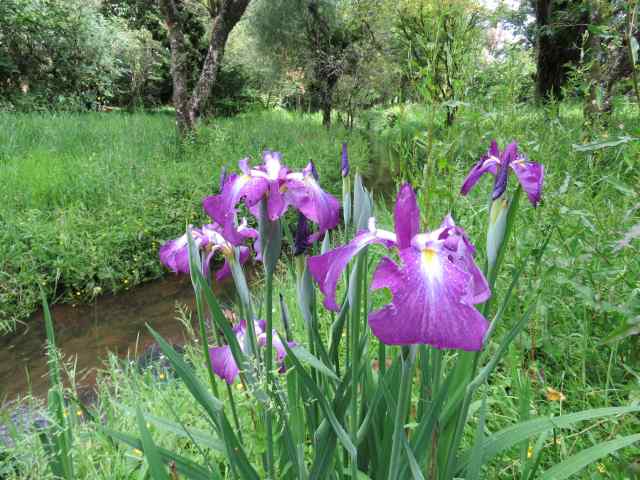
For readers who have followed our experiments in sustainably managing the park as a meadow, Lloyd mowed it all down this last week in June. The areas too steep to mow, he cuts with the weed-eater or strimmer. The timing is important because the bluebells and narcissi are all coming through. We will mow again in late January. With our high fertility and rainfall, we have to cut it right down twice a year. Grass grows every week of the year here, just a bit slower in winter. If we didn’t mow as we do, we would soon lose all the bulbs, the irises and other perennial meadow plants.
 Tikorangi The Jury Garden
Oh, there’s no such thing as low-maintenance gardening! There’s always work to be done and work that needs to be done if one wishes to have a garden and not a wilderness.
We have always remembered Christopher Lloyd in a televised chat in NZ making a comment along the lines of, “I think you will find that the higher maintenance your garden is, the more interesting it is.”