

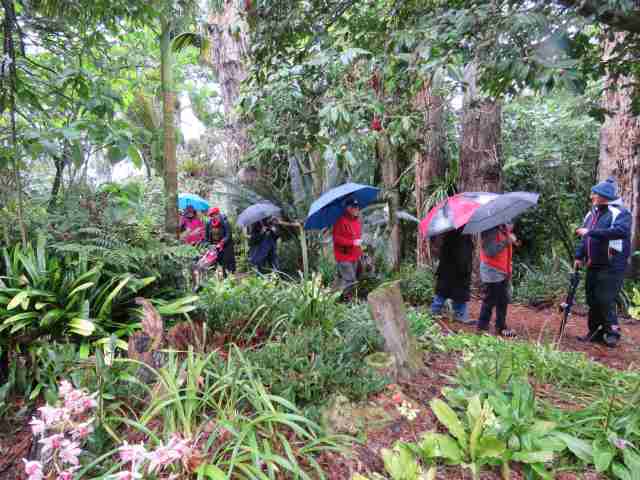
We don’t open the garden to many groups these days but agreed when we were approached to host a visit from “the last Camellia Nationals in their current format”. That is the national conference of the NZ Camellia Society. Competitive show blooms have long been a hallmark of the camellia world, the major focus of the annual conference but a range of garden visits are also included.
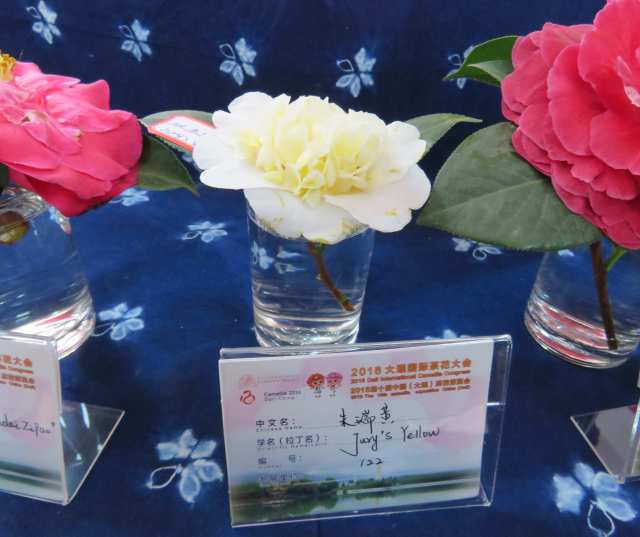
Mark’s father Felix and his Uncle Les Jury were giants in the camellia scene back in the 1960s and 1970s, earning international reputations and breeding camellias that have become known throughout the world. To this day, Les’s Camellia ‘Jury’s Yellow’ remains a market standard and Felix is probably best remembered for his camellias ‘Dreamboat’ and ‘Waterlily’.


When Mark and I returned to Taranaki at the end of 1979, Les was elderly. But before he died in the early 1980s, he was particularly encouraging and generous with advice to Mark, who was taking his own first steps in plant breeding, starting with camellias. Felix didn’t die until 1997 so the camellia influence was strong.

It was to respect that family connection to camellias that we agreed to the visit last weekend. Times are changing and many horticultural groups are struggling to continue as members die off – literally – and younger generations are not signing up to replace them. That is why this was to be last national camellia show and conference in the current format. I have no idea what new format is planned.
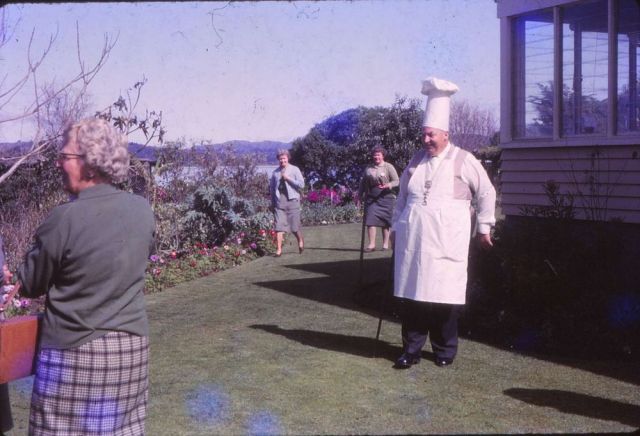
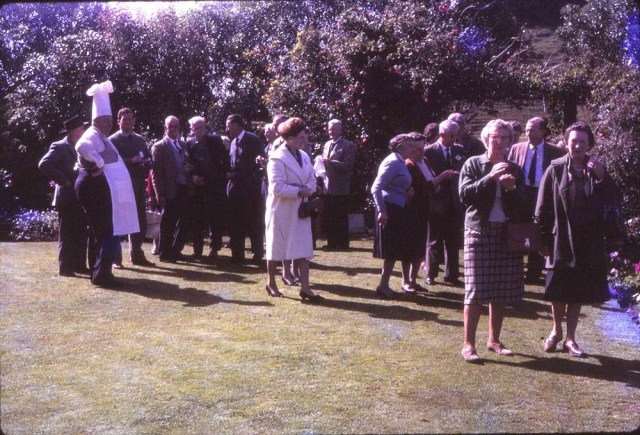
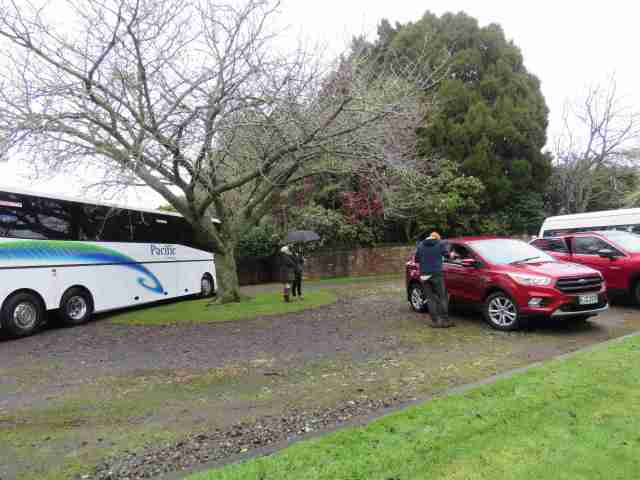
In times past, the camellia conference was huge. In the heady boom times through until the early 1990s, my recollection is that the conference tours around gardens involved six coaches and countless cars – several hundred people. It was bigger than the rhododendron conference which only required four coaches plus cars. Mark attended several conferences as his parents’ driver and was in awe at the scale of the event and the depth of expertise in the attendees. I went to one – I think it was Whakatane ‘82 and I can date it because I had our first-born with us and she was small. Even back then, Mark and I were a good decade or three younger than most of those who went. We continued to host conference visits here in the times since so last Sunday felt something like the end of an era. Conference attendance was down to 63, so one coach, a minibus and a couple of cars.

Of course, camellias have changed over that time, too. Back in those days, camellias were ranked the second largest-selling product line. Roses were top. And the vast majority of camellias being produced were japonicas and hybrids. Camellia petal blight changed everything. The mass display of flowers all over the bush, the efforts Felix and Les both went to in creating varieties that were self-grooming (dropping spent blooms to avoid the need to pick over the plant), the perfection of formal blooms like ‘Dreamboat’, ‘Mimosa Jury’ or ‘Desire’, the purity of bushes with perfect white blooms, the quest for ever larger blooms – these are but distant memories. Petal blight has largely destroyed the displays that made camellias so loved. It made the Camellia Society shows problematic because the blooms no longer stood up to travel and display over several days. Picked as perfect, they too often became blotched with brown by the next morning and sludge the day after.

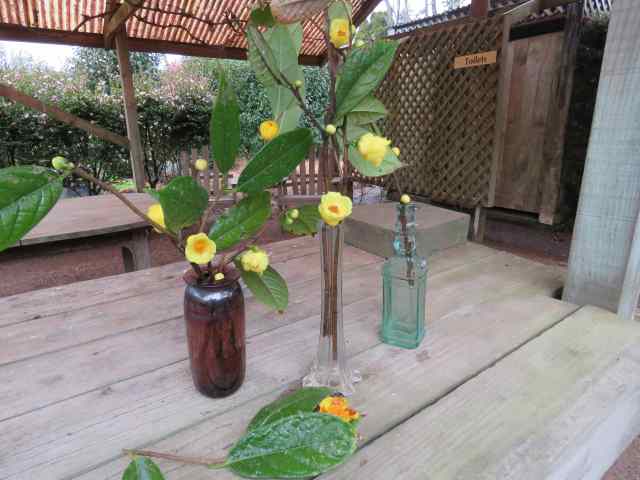
We still have hundreds of camellias here in our garden and right across our property. I set out to pick one off each bush where I could reach a flower and gave up after covering just a fraction of the garden. A few are named varieties but many are just seedlings from the breeding programme.

I think of camellias like the cast of a stage-show musical. In times gone by, the entire front row of the chorus and some significant soloists were camellias. Nowadays, they play a valuable but less acclaimed role, filling out the back rows of the chorus with a few of them getting to step forward to sing a few solo lines from time to time. They used to be grown primarily for their flowers. Now we value them more for their potential form – we clip and shape key specimens – as well as their obligingly resilient and healthy nature and their adaptability.

 Tikorangi The Jury Garden
It is saddening to read about, but both the Rhododendron Society and Camellia Society here notice the same thing.
In times gone by, people relied on horticultural societies for information and advice as well as social contact. Literally dying out now.
Toby Ngamamaku aka Tony Barnes asked me to send you his Facebook comment.
Thank you Abbie and Mark for once again allowing our group of Camellia Society members to visit your wonderful garden. It was a privilege and huge pleasure which we all very much appreciated. Absolutely immaculate, as usual, with such an amazing variety of plants, so many rarities and treasures, I could quite easily have spent another couple of hours with you! And it was special to have Mark point out to us the original seedling plants of Dreamboat, Itty Bit, Softly and Mimosa Jury.
QI didn’t even get to look at the magnolias and rock garden this time

Thanks once again from all the Camellia Society members who visited.


Thanks Glenys, for posting Tony’s kind comments.
The internet is also dying as a source of information. Websites like yours are becoming rarer by the minute. I discovered your website today and hope to continue reading about your sensational plants and the history behind them!
The internet was never completely reliable for accurate information. Anyone can put anything out there. Readers sometimes compare information that I provide to inaccurate information that they found elsewhere online. It is insulting.
The internet has always been about sifting information. Now, with the push to embed AI, information that is often inaccurate and is unverified is the first to appear at the top of every search. All I want is to be able to make AI disappear on my searches and in other aspects of my computer use.
Very sad to read. It seems Camellia blight has not yet arrived in Europa (at least, I’m not aware of it). In countries like Germany and Switzerland I see a growing interest in Camellias. More people plant Camellias in their gardens, and the annual Camellia Exhibition in Locarno (organised by the tourist authority, not by our Camellia society!) attracts considerable numbers of enthusiasts. The exhibition venue, a public park, has recenty been designated a Camellia Garden of Excellence by the ICS.
Many poeple here until recently had a prejudice to Camellias, thinking they were not hardy enough for our winters. But times, or rather our winters, have changed, they are much milder now. There is the occasional freak winter as in 2012 when temperatures dropped in most of Europe way below the average. In our garden, we had -18 C for about 10 days – but even then not one Camellia died! All lost their flower buds and a a few had twigs or branches dying back, but they all recovered. In my experience, Camellias are surprisingly robust and reliable plants. Or maybe we are just lucky?
The growing interest in Camellias, however, does not translate into a growing membership of the Swiss Camellia Society, which counts just 37 members, including myself … I doubt the figures are very different in other European countries. I wonder sometimes how national camellia societies are still able to host international meetings all over the world, support research und maintain a database.
In any case, a few Jury Camellias in our garden will remain a testimony of the great work of the Jury family in the Camellia realm. Every sping, they give us great joy.
Oh petal blight is in Europe and the UK. Sometimes it is misidentified as botrytis, which has always been an issue but is nowhere near as devastating. It is not generally as bad as here where we have what may be the worse possible experience because we have high humidity all year round, mild temperatures all year round and camellias are ubiquitous so the spore do not have to travel far! And we have plenty of wind to spread the spore. There are no natural curbs to the spread of petal blight here that are seen in different climatic conditions. It is likely that there are so few camellias grown in your area that any isolated outbreaks have remained isolated and maybe your colder winters also provide a check on the spore. I am sure it is in Belgium and France so with your open borders, it is was always bound to travel. But it has never been as bad as we see it here and it seems places with long dry periods and low humidity get off much more lightly.