
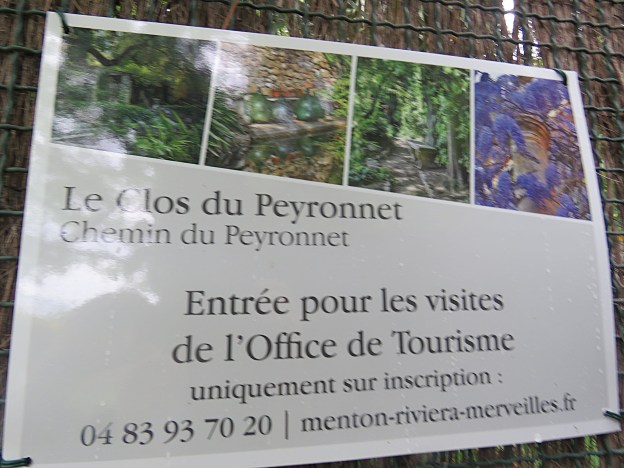
If I knew then what I know now, would my visit have felt different? When it comes to Le Clos du Peyronnet, the answer is probably yes. I have just finished reading ‘The Long Afternoon’ by Giles Waterfield. His late brother William and his even later Uncle Humphrey are credited with making the garden into a place of note.
I wrote about the garden after my visit in May last year in the second half of my post covering two English gardens on the French Riviera. I thoroughly enjoyed the visit. But now I would like to go back and experience it again, although that is extremely unlikely to happen. We were told a few historical facts but they were not of a compelling nature.
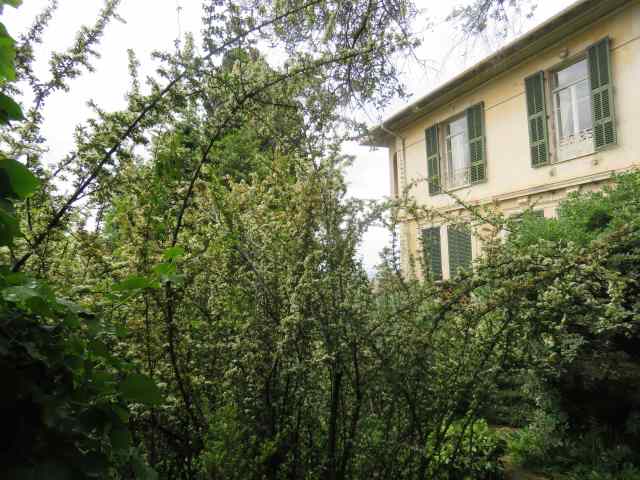
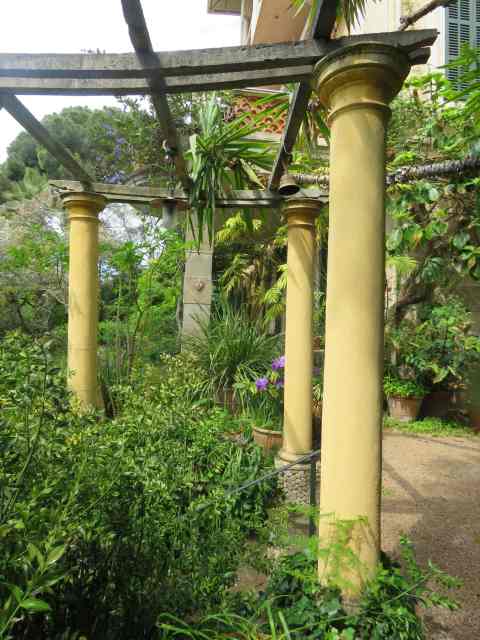
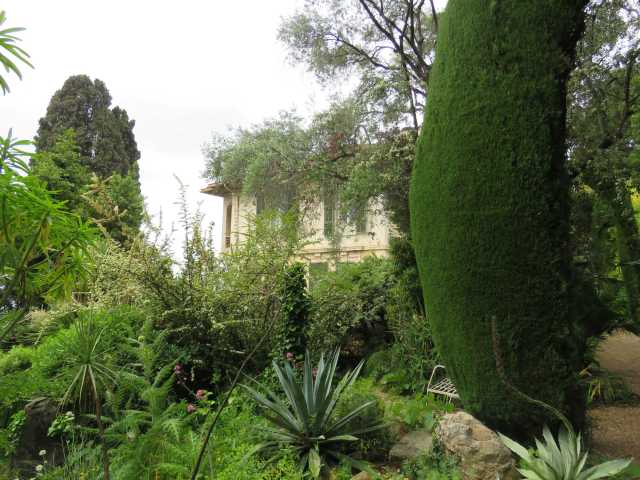
We learned that the villa, purchased by the author’s grandparents in 1912, had now been divided into five apartments – but not that it was a move taken immediately after WW2 which was necessary to save both the villa and the garden. And we were told that one or more of the apartments’ occupants were hostile to William Waterfield’s widow continuing to accept and lead tour groups around the garden. Our movements around the garden were somewhat restricted and we descended from the top terrace and entirely missed the experience of the main entrance and the front of the villa. When I looked at an upper story window, I saw a figure standing there, possibly glaring. The vibes were bad, Reader. He seemed to radiate hostility so I averted my eyes and studiously avoided going close to the building, instinctively trying to minimise any further intrusion on that resident’s privacy. As a result, I have very little visual memory of the villa, just the garden

“You should read ‘The Long Afternoon’,” our Irish tour leader said to me. “It is Giles Waterfield’s account of his father and uncle growing up in the garden.” It was published in 2001 so I found a second hand copy which described it as a novel. It is sort of a novel but based on pretty accurate family history. The names have been changed. Barbara and Derick Waterfield became Helen and Henry Williamson, their sons Humphrey and Anthony became Charles and Francis. The name of the garden became Lou Paradou. The author has created the dialogue and placed his interpretations of events into various character’s minds. But the facts and events are real.
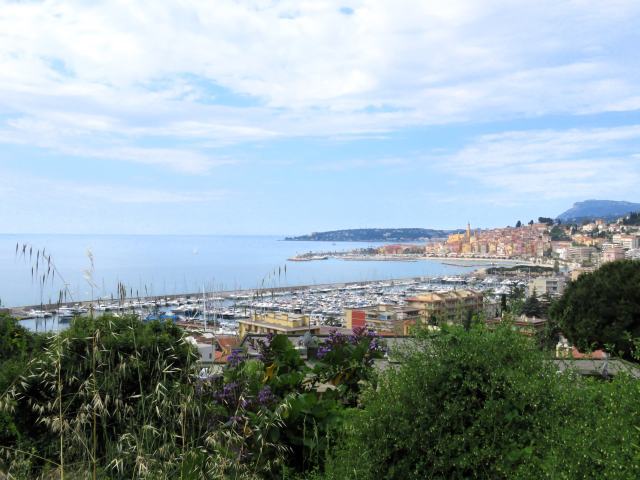
The garden and villa wrap around the plot, ever present – especially for me as I could visualise the garden and the setting and I have looked at that view of the Mediterranean and crossed the border to Italy to the Hanbury garden. The plot centres on the relationship between ‘Helen’ and ‘Henry’, leading lives of huge privilege in the sedate ex-pat community of British residents who had chosen to live in Menton in the first half of last century. New Zealanders may recall Menton as the place where Katherine Mansfield lived in her doomed quest to recover from tuberculosis. English people may know it as the place where Lawrence Johnston of Hidcote fame preferred to spend his time at his garden, Serre de la Madone. Both are of the same era as the Waterfields/Williamsons.
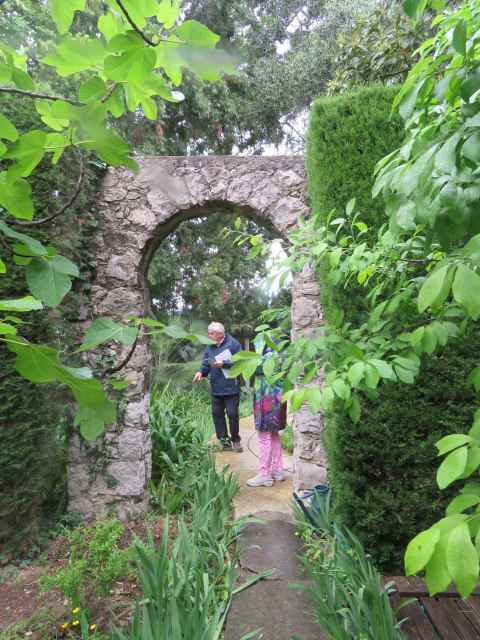
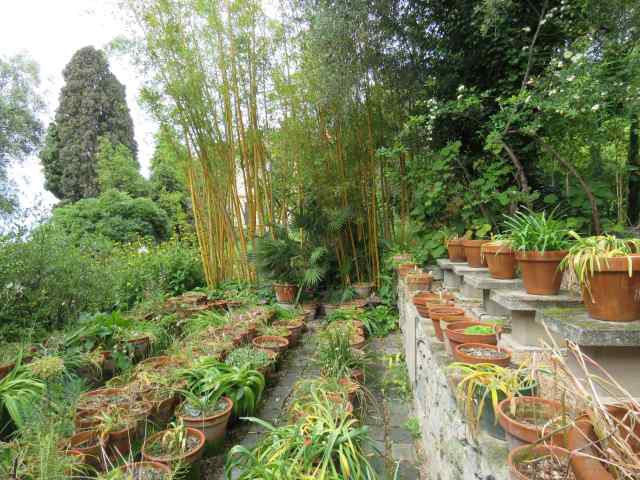
Giles Waterfield is a good writer. Much of the book is a long, intricately drawn picture of co-dependence evolving over time between Helen and Henry, set against a backdrop of ennui and lassitude that comes with lives rich in privilege but lacking in purpose. No wonder she had plenty of time to supervise the gardeners.
There is a sharp change in writing style and tone as the inevitability of WW2 looms large, disturbing their tranquil way of life. Menton is right on the border with Italy and the fascists were already in control of that country. Life as it had been started disintegrating at a terrifying speed.
Spoiler alert: in the unlikely event that you are currently reading the book or plan to read it very soon, you may wish to skip the next three paragraphs.
I describe it as an explosive ending. In a suicide pact, they chose to end their lives together, by gunshot. A Luger, no less. In June 1940. They were only in their early sixties. The war was too much for Helen – too inconvenient, too much unknown, too much to fear and too much potential chaos. Fourteen months of retreat to Pau (still in France but near the Spanish border rather than the Italian one) was all she could cope with. The tone of the book makes it very clear that it was Helen’s decision and Henry acquiesced. Again. “She wants us to end our lives, and I still love her enough to do as she wants.” I am guessing the excerpt of the letter written to their sons which ends the book is likely the actual text from Derick Waterfield to his sons.
After the precision of an organised life that leads up to the end, those last four pages were shocking. I am with the reviewer who said of the book, ‘I can’t get it out of my head’. I had to start searching to see if the ending was true. It was. Then I became fascinated by the author whom, I suspect, took after his Uncle Humphrey (Charles, in the book). The empathy is clear.
That is the backdrop to Le Clos du Peyronnet. The garden as it is admired today, is credited to Humphrey who returned to it as soon as he could when the war ended and then to William. Humphrey was in the shadow of the war and the suicide of his parents, William was raised in a family where the deaths were not discussed at all (according to his brother Giles, in a lecture delivered to the Garden Museum Literary Festival in 2014. I told you I became fascinated.)
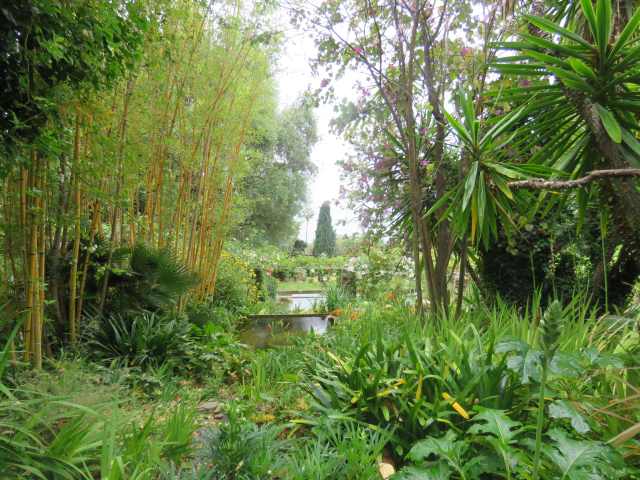
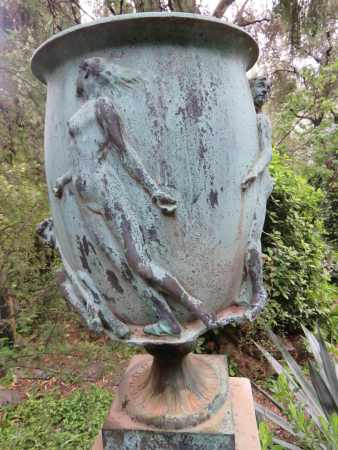
Knowing what I know now, I would be staring at that villa, locating the upstairs balcony that featured so often. I now know who built the grotto that William loved, who designed and constructed the cascading pools and so much more. It is a garden conceived, created and continued in an unbroken chain of ex-pat Brits on the Riviera, which is a very particular garden genre. It seems that the grandparents provided the canvas and showed the potential (the blue irises are woven through the family history), Humphrey lifted the design and layout to a new level and William was the plantsman who set about enhancing the garden with detail. Alas, there are no more Waterfields. The garden has been accorded historic monument status by the French Ministry of Culture but what that means in the mid to longer term, I do not know.
Would it have enriched my experience to know all this when I visited? For me, yes I think it would. Private gardens are about more than pretty scenes, interesting plant combinations or good management. Their very existence is tied to their individual owners and their social context. Their stories are part of the garden’s being.
Note to self: do more research in advance of visiting gardens, especially overseas gardens that I may only get to see once.
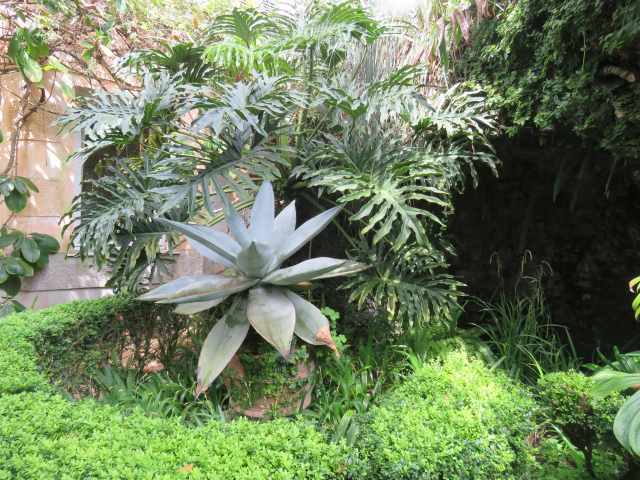
 Tikorangi The Jury Garden
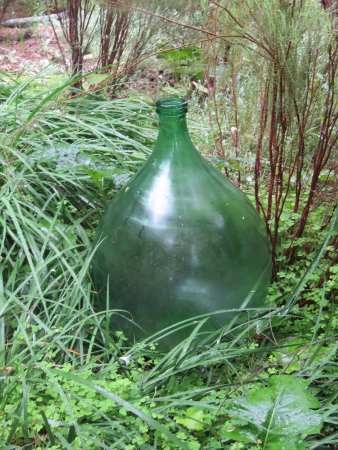
Anduze jars, or Vases d’Anduze, are classic, hand-thrown glazed terracotta garden planters originating from the town of Anduze in southern France. Known for their distinctive bell-like shape, decorative garlands, and medallion stamps, they are a traditional symbol of Provençal elegance.
My bad. I looked up anduz jars and the reference I found mentioned pottery OR glass.
Thank you Abbie for this post – I really enjoyed it. I too love to know the history of a garden to both aesthetically and intellectually appreciate and understand it.
I tried to find G Waterfield’s book at the library – but, of course to no avail. I see that an author by the same name has written a book set in WWII entitled “The Iron Necklace” – could it be the same author perhaps.
Your post has prompted me to read further about Frank Cabot and his garden Les Jardins de Quatre-Vents – as I really enjoyed the film “The Gardener.”
I see we share an interest! The Iron Necklace is probably by the same author. I like his writing style so might find it. I think I bought my own copy of The Long Afternoon through an online second hand book dealer in Wellington.
Hi Abby
Thank you so very much for this article Abby. I loved it and found it so, so interesting and totally agree with your Note to Self: do your research before you visit these gardens. I will try and find the book.
My husband and I will be in France next week, so I will try and see a few gardens.
Do you know by any chance of a good recommendation of a French company who offer small garden tours of French gardens? I am hoping to go again
Next year, by myself.
Once again, love your writing, so thank you for what you do
Judy Newman
Whanganui
Sent from my iPhone
Dear Judy, have fun in France next week! No I don’t know of any French companies offering garden tours. I travelled with a UK company – Brightwater Tours. They were reasonably priced, reliable, professional and with an excellent tour leader but maybe a little bit formulaic. If I had the opportunity, I would chose to go on Australian Michael McCoy’s tour. It is fairly expensive but a very well considered, personalised tour led by a most interesting man. https://www.travellingmasterclasses.com.au/south-of-france/about?mc_cid=3022df29a8&mc_eid=b94ce4d50c I have spent a few hours here with Michael on two separate occasions and I have never before met somebody so completely in tune with how we garden and how we see gardening and garden trends now and into the future.
So glad you enjoy my writings. It makes it worthwhile to hear that others appreciate it. Abbie