

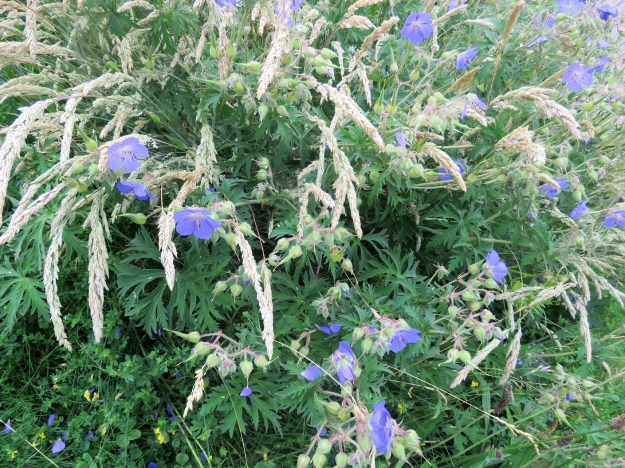
 From Dunnett at the Barbican, we went on to Olympic Park – the site of the 2012 London Olympics. There was quite a lot of media coverage at the time and everything I read praised the Hitchmough and Dunnett plantings which were strongly naturalistic and meadow in style. I can’t think why we didn’t go and see it when we were over in 2014 so I was determined to get there this time. The perennial plantings presumably went in some time in 2011 to allow them to get established so they must be in the sixth year by now. Some may even have gone in a year earlier. Most of it will have been done from seed. Given this is an expansive area undergoing repurposing after the Olympic hype, I deduced that maintenance of the plantings would be minimal at best. What would survive under a laissez-faire regime?
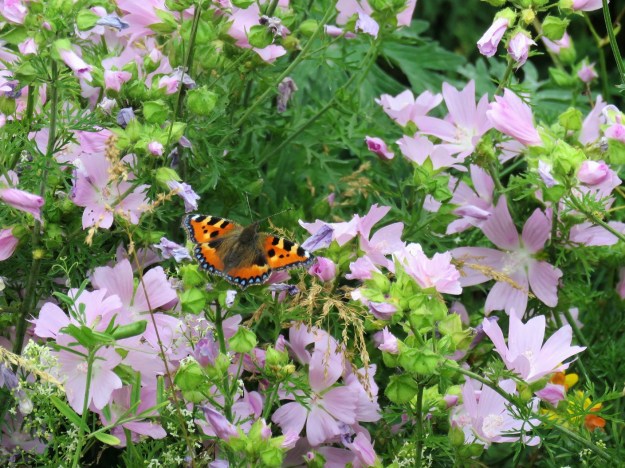 A prairie! Almost. Maybe. Though I admit I have never seen a genuine prairie. I think of early summer meadows as lush and green. These were more white and golden with a heavy population of grasses already in flower and seed and perennials that have naturalised within the environment. I bet a lot has been lost since 2012, but there are lessons to be learned in what can cope within this competitive environment. The charm within the detail was a delight.
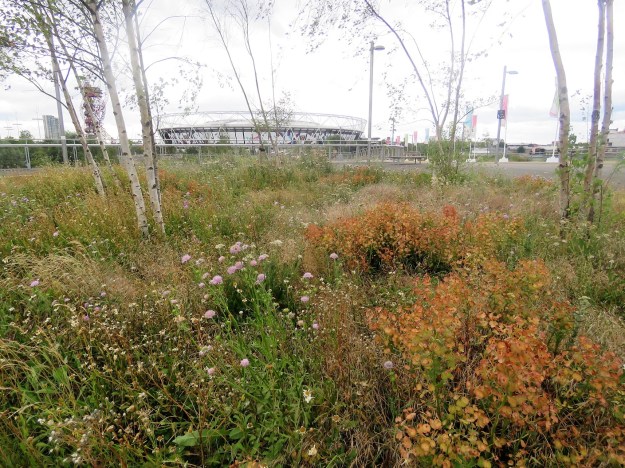
Would NZers accept this as a naturalistic eco-system? I doubt it.
Alas, I am not sure that New Zealanders would accept this as urban landscaping. The cries to mow the rank, long grass may be too loud. We are still mired back in the suburban values of short, mown, green grass with tidy edges and tidy, colourful bedding in amenity planting. If it can’t be mown, then too often it is sprayed. There is a brave new world awaiting us out there. One where the input costs are much lower, the maintenance requirements minimised and where the environmental contribution is hugely greater. It just needs us to take off our judgemental glasses where the managed environment is judged in terms of “tidiness”, to look instead at Nature.
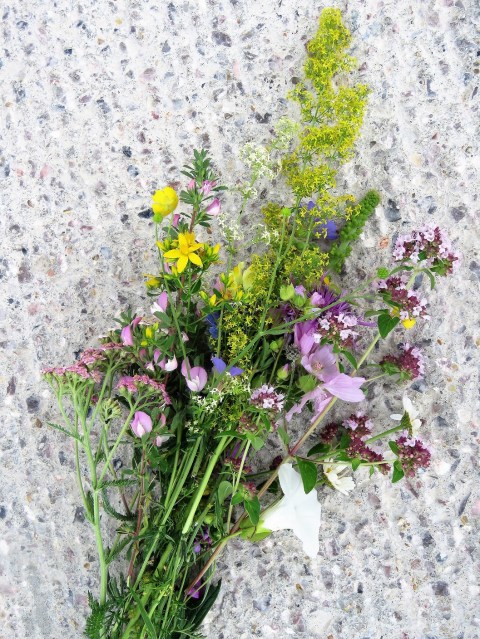
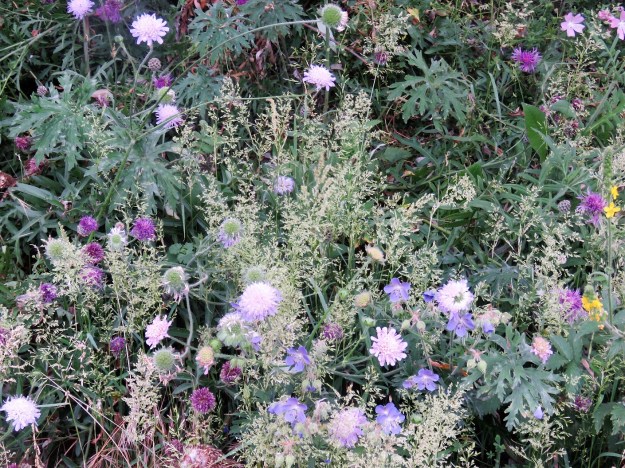
Just a sampling of flowers from one small area
My heart will never sing at the sight of sprayed edges, mown grass and bedding plants, be they in rows, blocks or circles. But we exclaimed in delight as we wandered the areas around Olympic Park. I started gathering the flowers from one area, just to see how big the range was. The hollyhock block I wrote about earlier was on the perimeter of these plantings.
I am guessing that these areas are subject to a very light maintenance regime – probably strimming them back to the ground in winter and I doubt that much of the resulting straw waste is removed. They are not irrigated at all. But I did figure that litter must be removed from time to time because there was not a huge and unsightly build-up of rubbish in the growth.
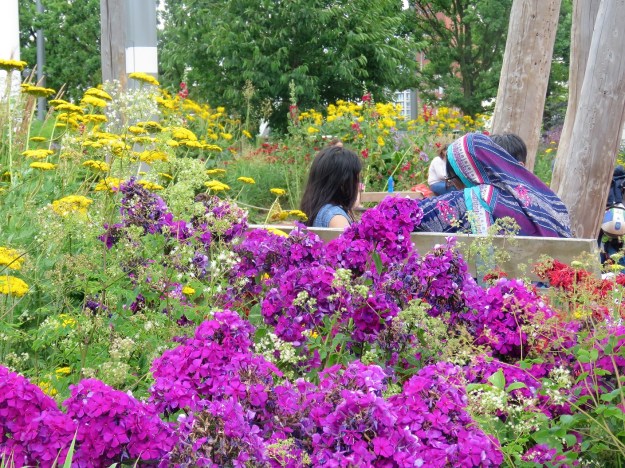
The colour-toned woman in the sari was serendipity at the playground area
The areas of generous perennial plantings around the playground area were more intensively maintained and visibly ‘gardened’ as is appropriate for the most intensively used areas. Even these were contemporary in style and concept, away from the old-fashioned bedding plant genre.
 The work of the Sheffield School concentrates on environmentally friendly plantings which can be achieved for hugely lower costs than more traditional approaches. They are not alone in this position and the acceptance of the need to work with nature, not to bend it and control it to human will seems to be widespread in the UK. A friend tells me much of Regent’s Park is now wide mown paths through meadow land and we have seen similar changes within the Hampstead Heath green belt. There is much to learn for New Zealand but it will be a brave local council that leads the charge.
Again, I have posted additional photos of the Olympic Park area on Facebook.
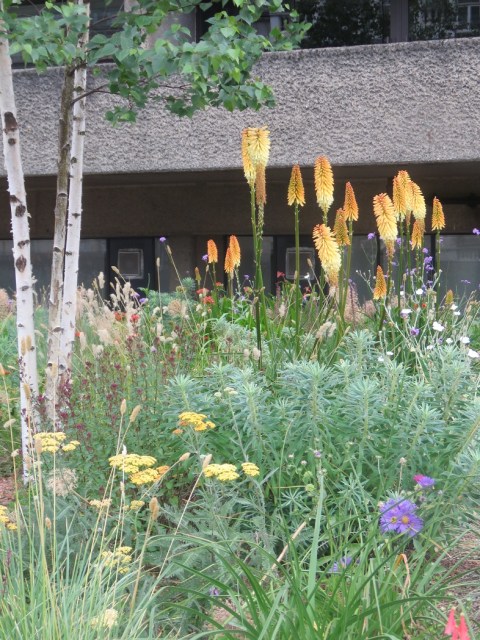
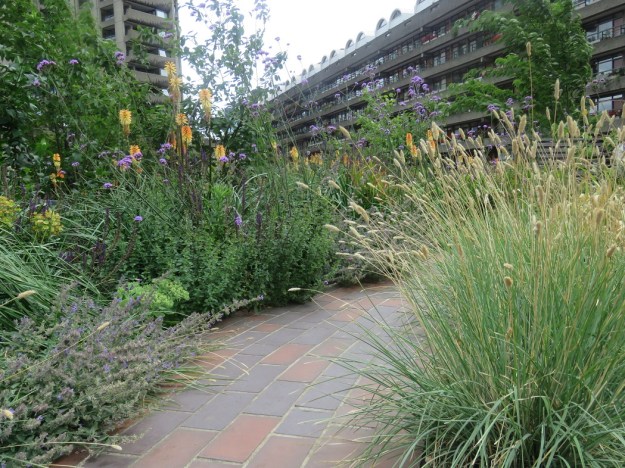
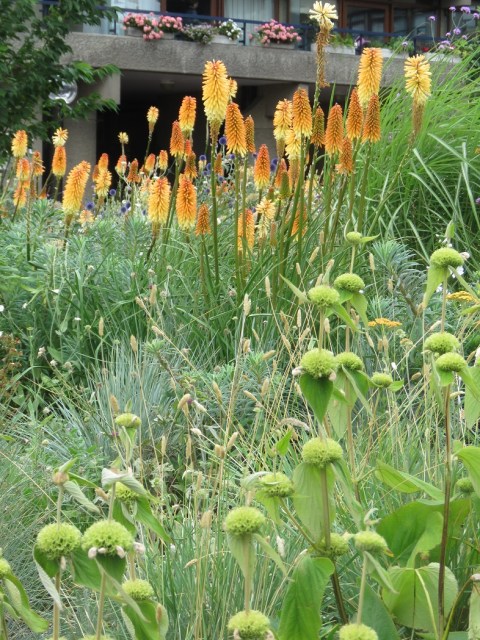
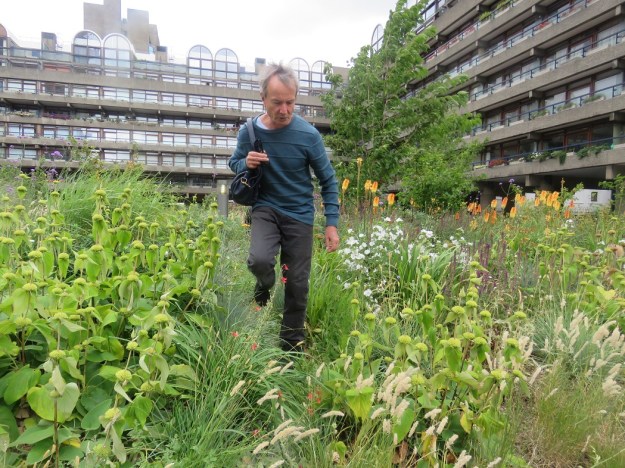
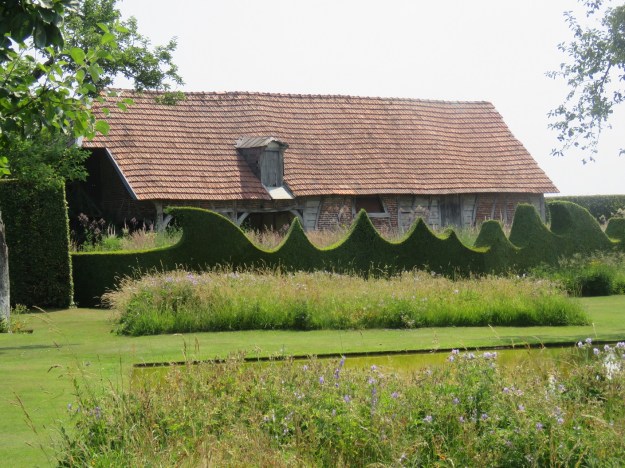
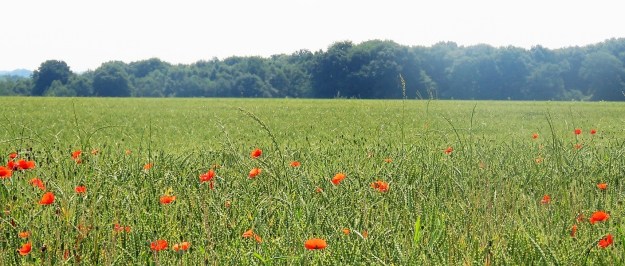
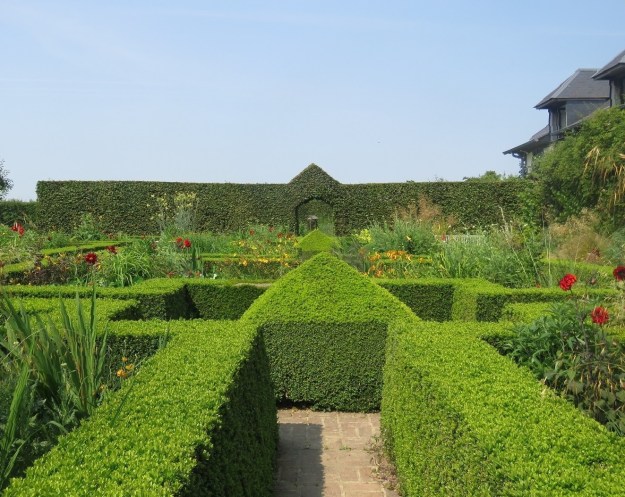
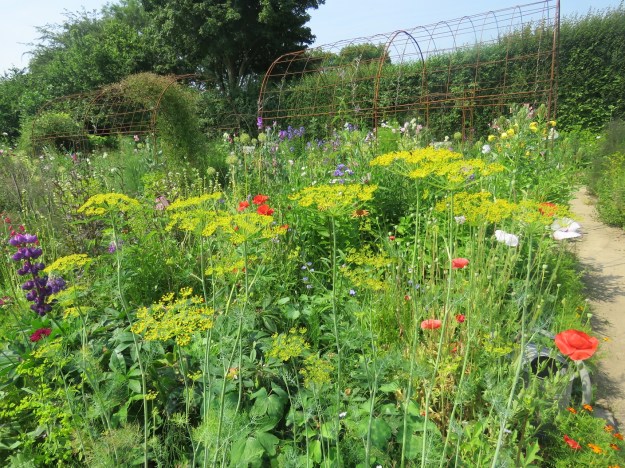
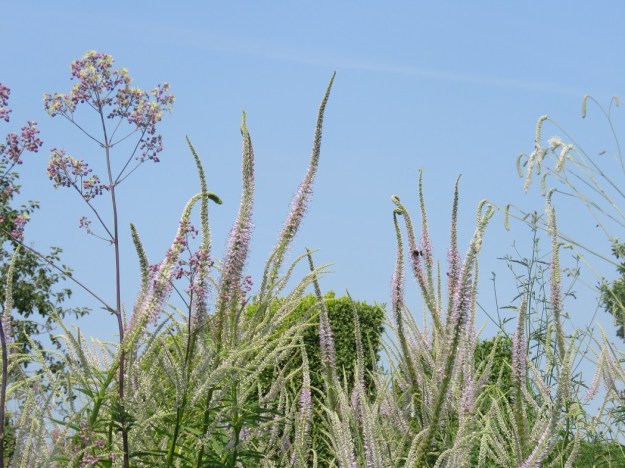
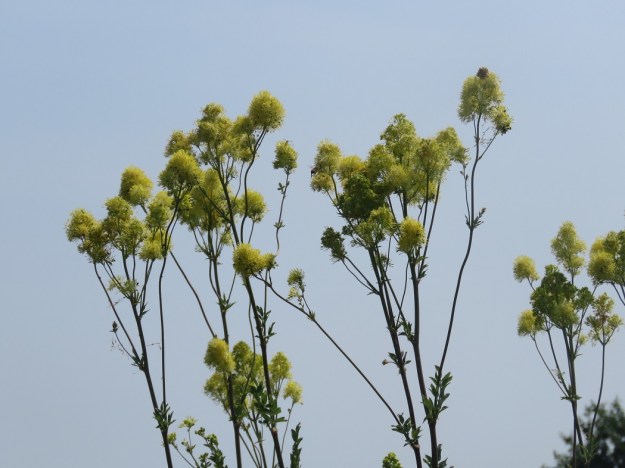
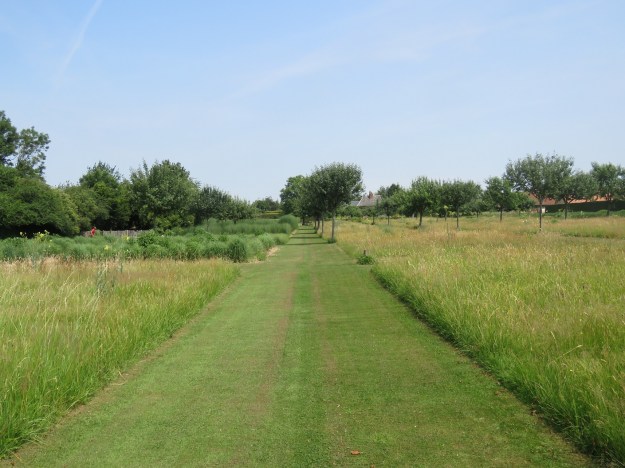
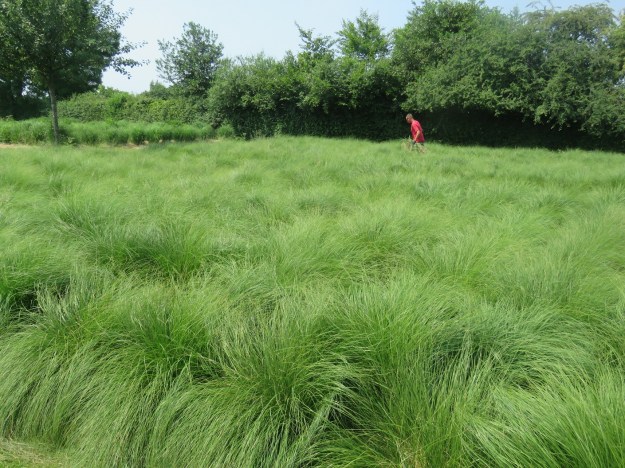
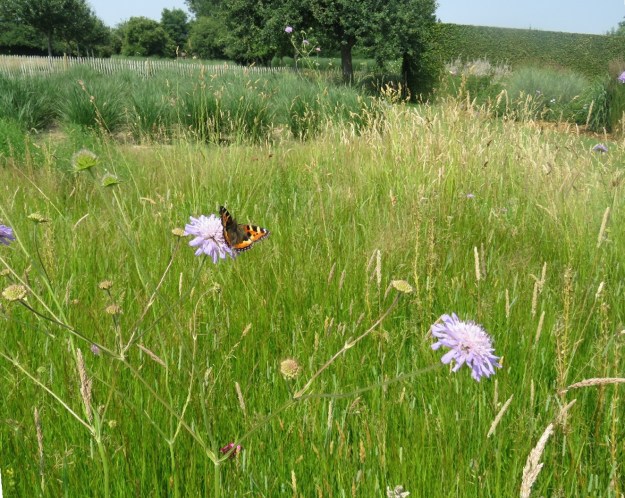 Out in the meadow ‘parterres’, the plantings are lower and more naturalistic. Some folk don’t like this whole meadow genre but we do. In spring there are bulbs. In summer, the charms lie in the soft movement and the somewhat random detail of additional plants. Added to that, there is another layer of interest in the wildlife. These areas are teeming with butterflies, bees and a host of lesser admired insect life. They are sustainable eco-systems and this planet needs a whole lot of them. In autumn, the grasses turn golden and seed heads will become a feature before being cut down just the once each year, in October.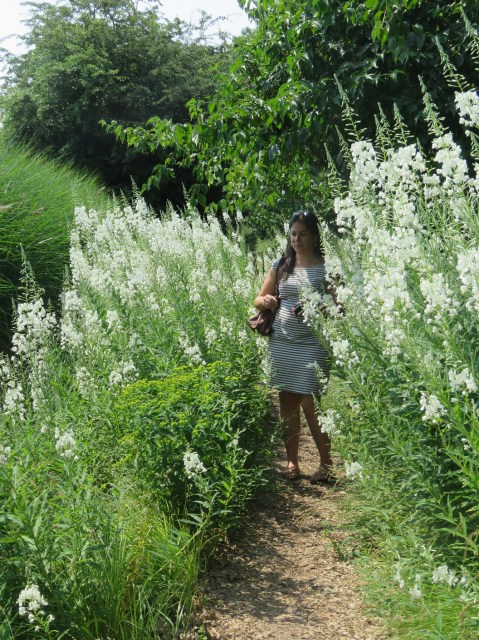
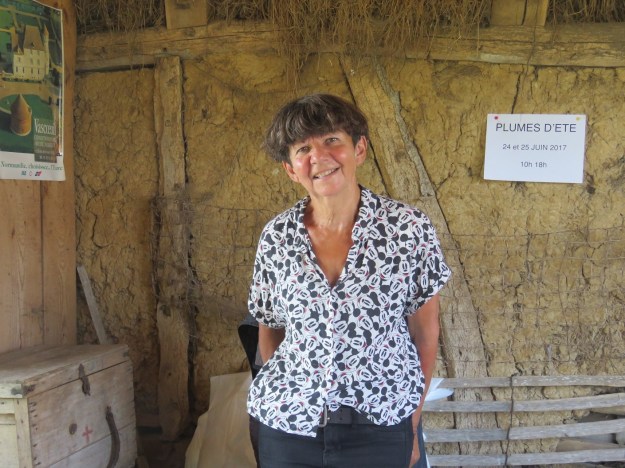
 We could not identify with the heat. It was very hot on the day we visited. From there, we drove to Vimoutiers and by the time we reached there, the thermometer outside the pharmacy read 40 degrees. I can assure you that it never gets anywhere near that hot at home. Even the camembert cheese on our evening platter melted before our very eyes.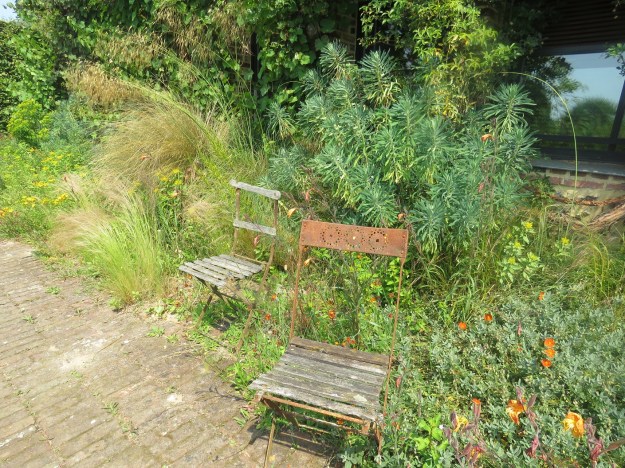
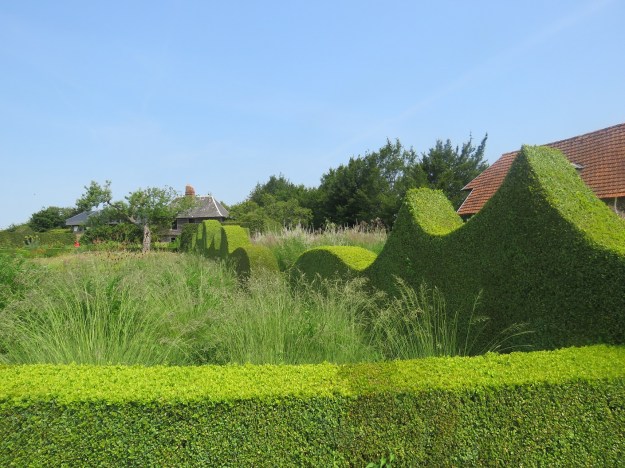
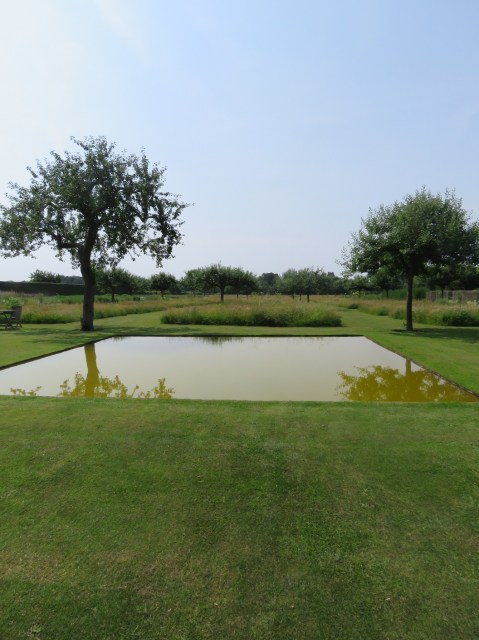
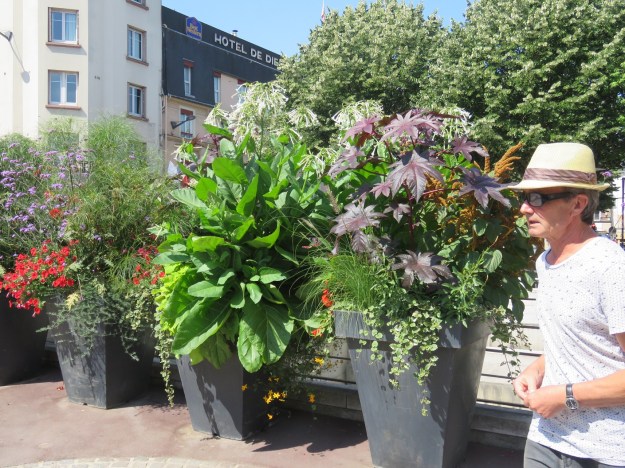

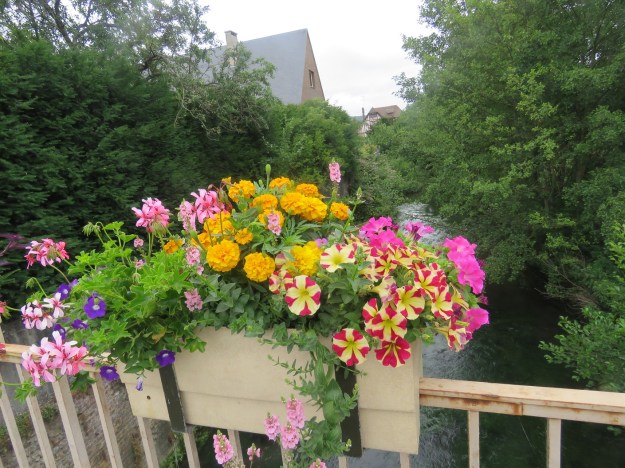
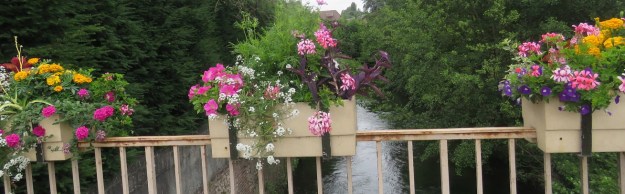


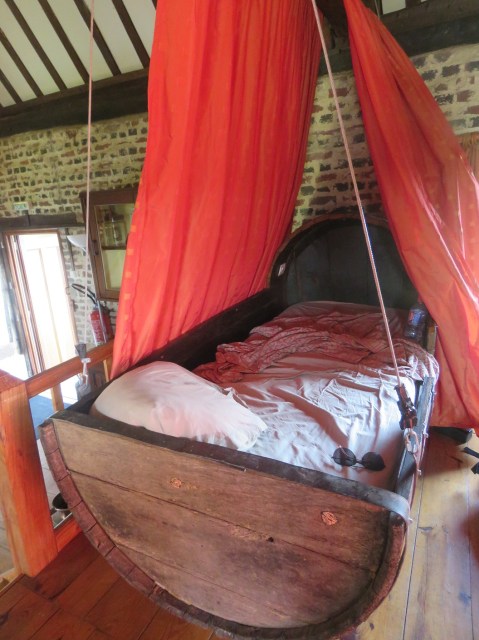 We stayed in another Air BnB place in Camembert – in this case a Norman barn that had been converted to a large apartment. Some of the conversion was a little curious but we did not electrocute ourselves and the opportunity to sleep in an adult-sized cradle created from a half cider barrel may never come my way again.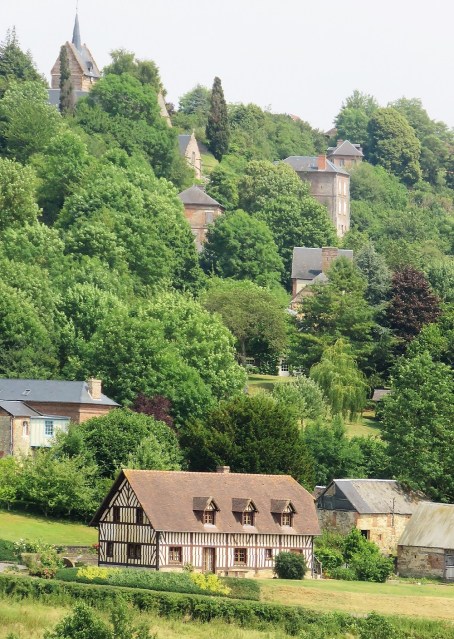

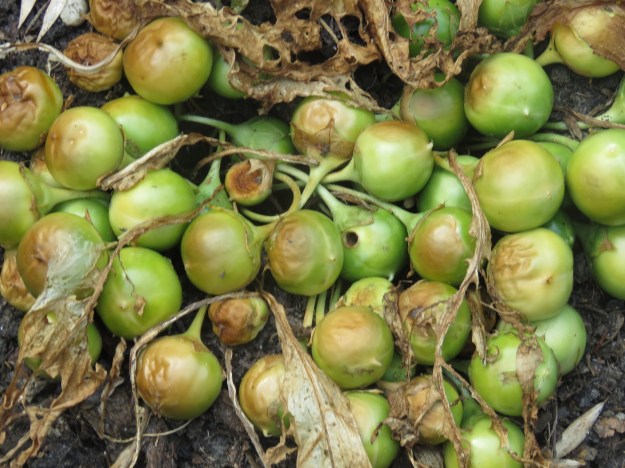 The fruit of the mandrake! Mandragora officinarum, to be botanical. This is not something one sees often. It is apparently the root that is harvested for whatever purpose one harvests mandrake, but the fruit are certainly eye-catching too. I think it was in the physic garden.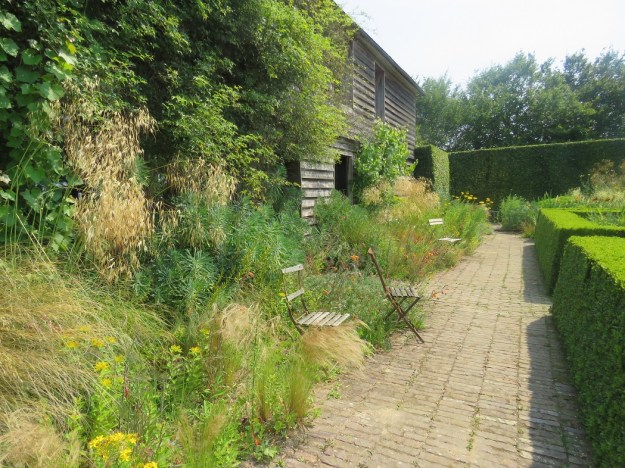
 Five years ago, I wrote a piece entitled “But where are the hollyhocks?”. Occasionally a garden visitor sears him or herself on the brain and on this particular occasion, a gentleman came out from our garden and asked that very question, declaring that he could not find any hollyhocks. I have never forgotten because it was such a bizarre question. Until that point, it had never occurred to me that anybody might regard a garden as seriously deficient for the want of some hollyhocks. We failed that test.
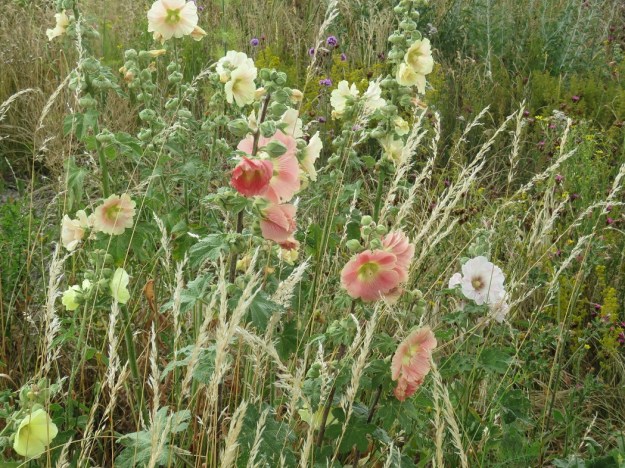 But we found the hollyhocks in London. An entire block of them growing wild. This was part of the Olympic Village plantings. Most of these plantings were prairie-flavoured while hollyhocks are pretty much traditional cottage-garden plants. This may be why they were kept separate and all on their lonesome. They made us smile. I am only guessing that the other plants like the mullein and Verbena bonariensis have introduced themselves to the hollyhock party.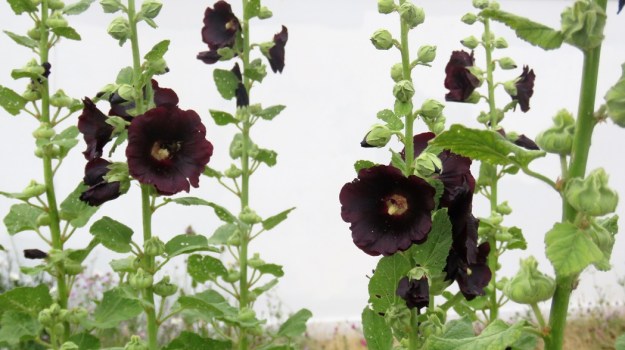
 Tikorangi The Jury Garden