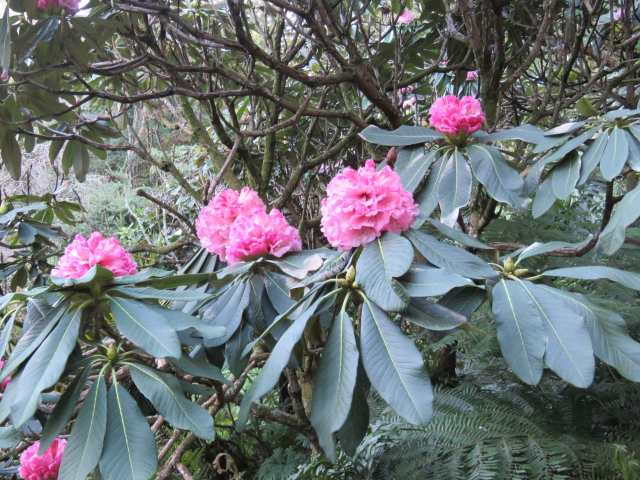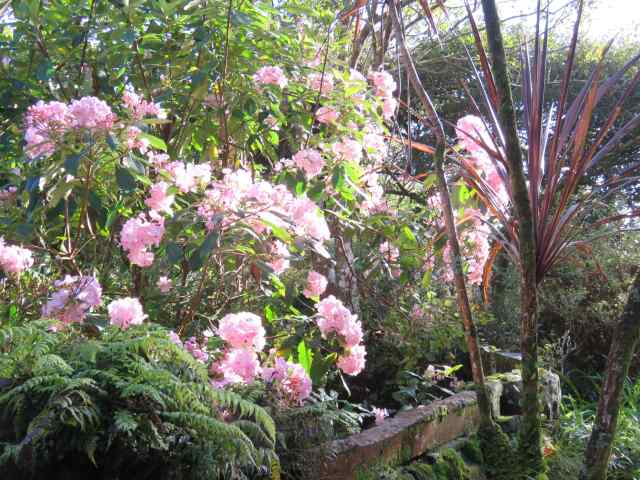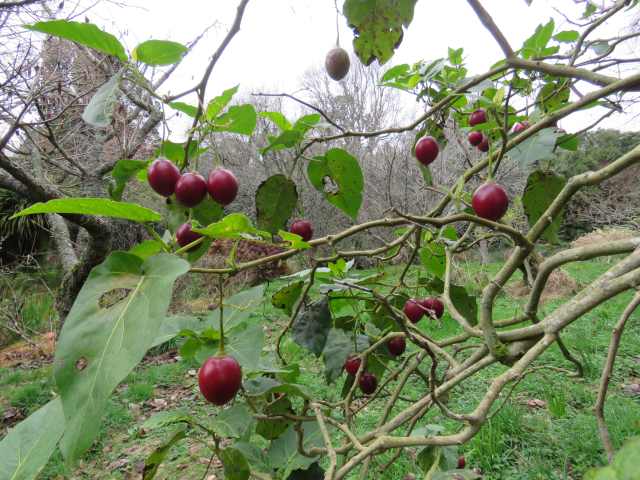
It is Matariki time again – the rising of the Pleiades star cluster marking the Maori New Year. I marvel that long ago, well before the arrival of any European settlers here in the antipodes, Maori worked out the timing of the winter solstice and the rising of the star cluster that marked the start of a new year cycle. To the naysayers who deny indigenous knowledge and science, I say just look at that. Maori worked out a time that corresponds to the northern hemisphere new year, coming soon after the shortest day. It makes far more sense than having a new year start on January 1 as we go into full summer here. Matariki has become our own unique festival in Aotearoa, rooted in history and observations that go back well before the country was named New Zealand.
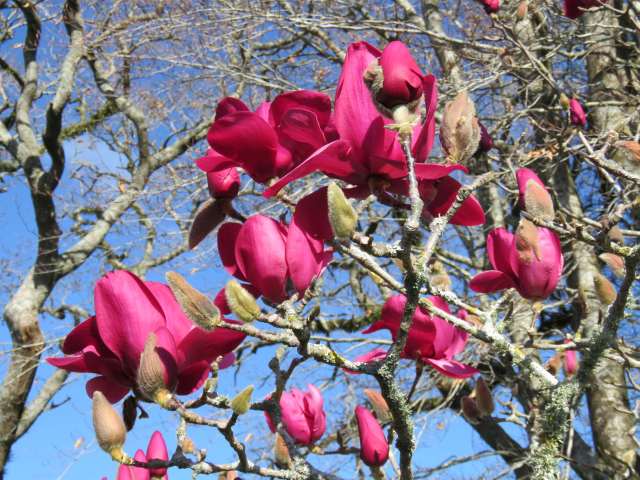
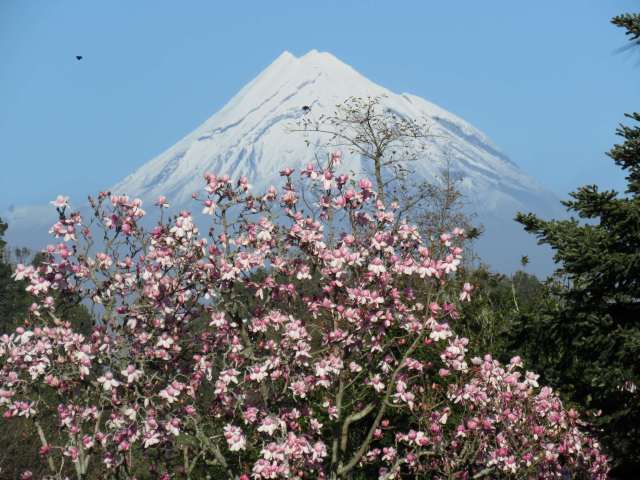
Magnolia campbellii var campbellii
I am a bit sorry that I lived most of my life without knowing a single thing about Matariki. Even before we recognised its significance, I had arrived at a similar personal recognition that, for me, a new gardening year started around the winter solstice when the first flowers on the earliest blooming magnolia opened, the magnificent M. campbellii. It makes it a richer experience to add Matariki and the historical and cultural context to the mix.
The Huatoki M. campbellii. I think there are three trees in the group amongst what are will be self-sown tree ferns
The Waitara Magnolia campbellii
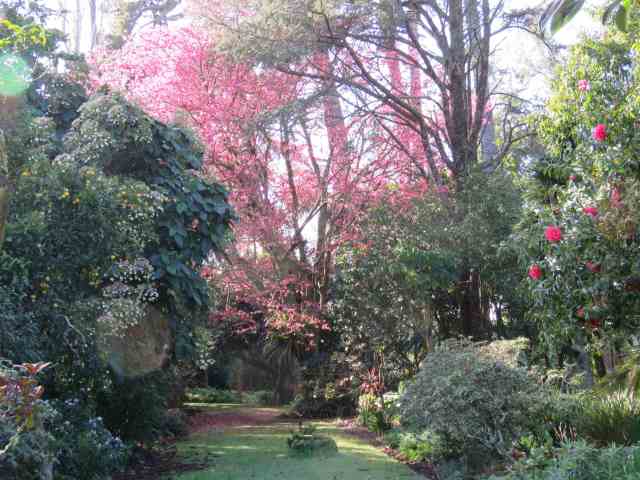
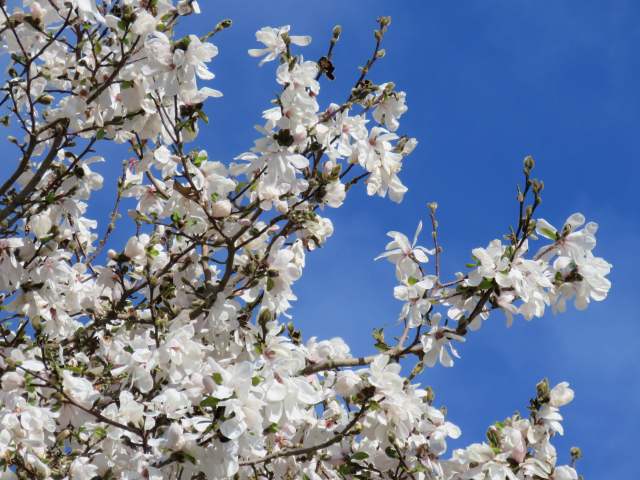
I track several plants of M.campbellii. The mature trees in my local city beside the Huatoki Stream (best viewed from Powderham Street, beside the Liquorland Store) are usually the first to open blooms. The one in my nearest town, Waitara, in the grounds of St John the Baptist Anglican Church is arguably the best specimen and, being in a protected spot, usually has the most perfect blooms. It often opens a few days or a week after the Huatoki trees but was looking better than them this week.
Our specimen is still opening its first blooms
The third one is our specimen in the park. Because we about 5km inland and not surrounded by concrete and tarseal, we are cooler and always a couple of weeks behind. It is too early yet to get my photos of our campbellii blooms with the snowy slopes of our maunga, Mount Taranaki, in the distance behind. There are not enough blooms open at the top of the tree and not enough snow on the maunga yet. In fact, none of these trees are at their peak so there is time to get out and admire them in coming weeks. All are the same clone which is the most widely grown form in this country – the Quaker Mason pink form. We are lucky it is a particularly good form because the species is variable in the wild and most commonly white.
We know that Matariki heralds the worst of winter to come in the next month. We have only had a few cold days so far and it is churlish to complain when the temperature has been hovering around 15° or 16° celsius (night time usually 8° to 9°) up until the last few days. But spring is already making a move and the season will gather pace around the anticipated cold spells.
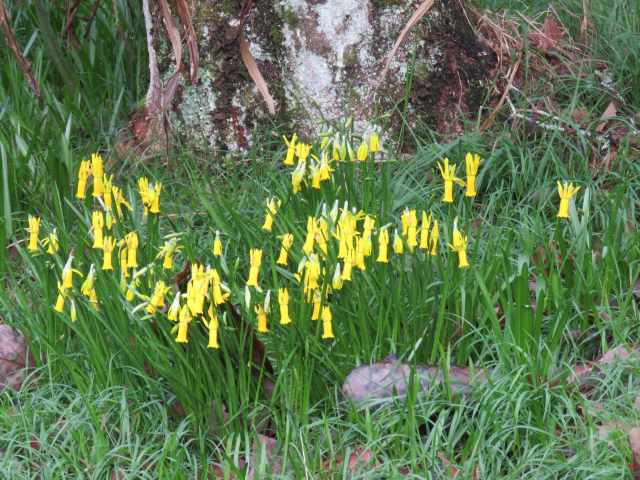
Also flowering this week, Narcissus ‘Grand Soleil d’Or’
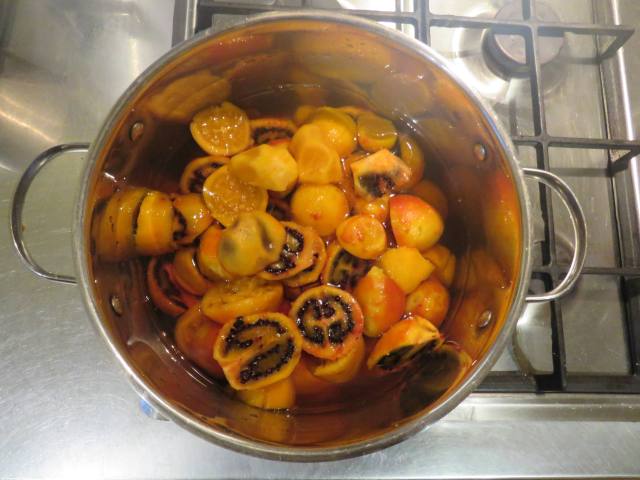
Mandarins on a winter’s day
Mānawatia a Matariki or happy Maori New Year today. We will be celebrating it with friends for lunch. May you draw breath and look forward to the next year, too.
and snowdrops both in the garden and in meadow situations
Our eldest child was a picker-up of unconsidered trifles, particularly on beach walks. Decades later I cleared her stashes out of a back shed, only keeping a few special pieces. Much to my amusement, I watched her son, then aged 7, gathering treasures as we walked along a beach and then worrying how many he could fit in his luggage going home.
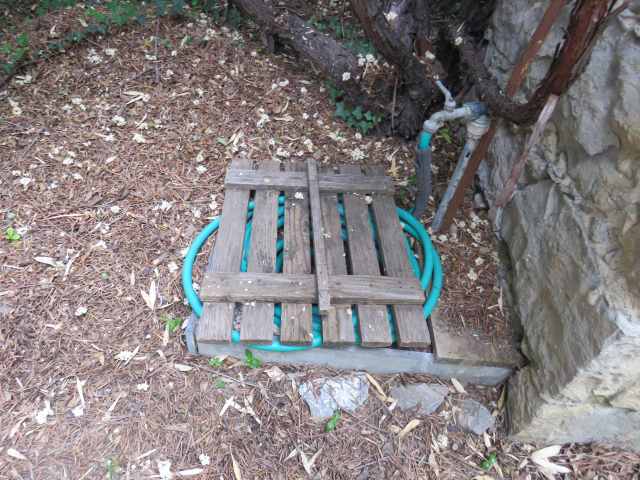
I assume that box is something to do with the electriclal supply, like our house meter boxes
What to do with these memories? I found an answer in Montesquieu des Alberes. It may not be to my personal style but that doesn’t stop me from admiring an effort that made me think it belonged to a folk art genre. Besides, I am here to share ideas others may enjoy.
The green tiles on top were a finishing flourish.
I thought the restrained swags were more subtle and effective than the whole wall. It would also have looked more cohesive had the background colour been consistent on both sides of the driveway, but each to their own. I doubt the owners were too worried about others critiquing their aesthetics as they worked on it. I thought it was a charming wall of memories.
And a close-up for anybody who wants to work out how it was done. I am guessing it mostly glue.
Every time I fly into Auckland, my heart sinks at the expanse of dreary grey roofs. And every time I go to southern Europe, I am charmed beyond measure by the colour embraced by home owners.
My daughter’s local village in the south of France is not overly remarkable and, sadly, it lacks either a boulangerie or a patisserie. What is French provincial life if you can not wander down the road each morning to buy a fresh baguette? Daughter tells me the local council has strict rules, however, on colour and approved roofing tiles.
This roof seems to have added detail – and solar panels – but the tiles are the same
The roofing tiles are pretty much what I describe as half round terracotta pots. They seem to be clay tiles, not concrete, which gives pleasing subtle variations in colour. There is no long run roofing iron to be seen.
One of the approved colours in Montesquieu des Alberes
But the permitted colour palette is what struck me. No grey. I saw cream – no white – but mostly pale to mid yellows, pink, terracotta and pale terracotta in her village. Other villages and towns allow stronger colours. No grey. Anywhere. It seems the French real estate industry does not have an iron grip with an edict that Investment Grey is the way to higher real estate values.
A pink house – not unusual at all in the south of France
I stand by my earlier assertions that the time when houses in this country became investments not homes is the time we drained colour from our daily lives and I rue that day.There is quite enough greyness in the world without turning all our suburbs into a panorama of shades of grey.
Paua shell colours – in pastels on the left and the irridescent glory on the right
It led me to ponder what the colours are of Taranaki, where I live. With our high sunshine hours and our high rainfall, we are an area of blues and greens. Blues in the sky and the vast ocean that bounds our entire area. Greens in every hue from dark forest and bush to the verdant green of farms with too much nitrogen promoting bright green grass growth. Almost paua shell colours but with the addition of charcoal black with our huge black sand beaches. Not grey.
Colour even on public buildings in the south of France
Colour on a village church, not to be confused with a gingerbread confection.
Other areas have other dominant colours – golden hues and fruity colours in the Hawkes Bay, tawny browns and golds with azure hills in Central Otago. Not grey. I do not think the current love affair with grey both outdoors and indoors on our real estate helps them meld into the wider landscape. They just look what they are – joyless, timid grey buildings which do nothing to express the character and vitality of their owners.
I can’t remember which beach this was – somewhere near the Spanish border not the Italian one so Occitania not Provence but some of the beaches around the Riviera looked similar
What we do have here, however, are sandy beaches of every description. The French Riviera and the Mediterranean have a huge reputation, but to a New Zealander, the beaches can often seem… well… underwhelming. Not all of them, but some at least. I don’t see shale rock as a beautiful beach.
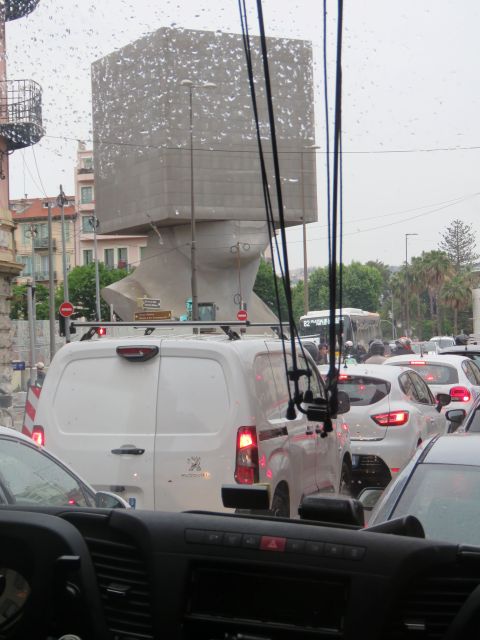
I took this photo of cars parked on the beach as we drove past on the road beside the Med, coming out of Nice heading towards Antibes or maybe as far around as Cannes. What you can’t see is that it is a very narrow line of rocky shale that serves equally as carparking and ‘beach’ although it may have been compacted for the cars. I figured everybody must have swimming pools back at their apartments and villas and the beautiful bit is in fact the expanse of sea, not the beach at all.
It is not that I liked these novelty items but the colour in a colourful village made me smile. I never feel the urge to smile at grey.
The two gardens I enjoyed the most on my recent jaunt around gardens in the French Riviera were the private ones where we were welcomed by the owners. I can relate to the scale, the personal vision and the detail that comes in good private gardens.
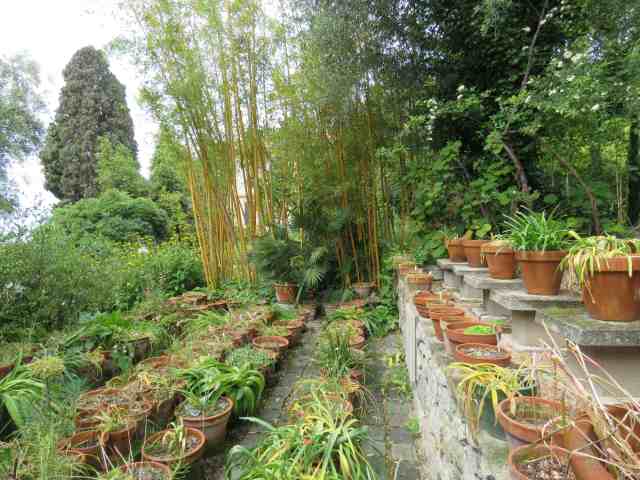
When gardening is on terraces, as most of these gardens I visited were, long walkways are a common design feature. La Mouissone
La Mouissone, near Grasse, may have a French name but the owner and hands-on gardener, Lady Lockett, is as English as they come, even though she has lived there for many years – presumably since they purchased the property in 1998. A down to earth (how appropriate), characterful and energetic woman, it was a delight to be taken around by her.
There is a whole lot more than stonework to La Mouissone but there is also a whole lot of stonework. The stone masons were mostly Moroccan. I asked, having admired splendid Italian stonework in the past.
I liked that the stonework was not all the same. It is interesting to look at different styles and techniques.
Our tour leader told us in advance that it had taken 15 stonemasons 10 years to build the walls, or was it 10 stonemasons for 15 years? And Lady Lockett cheerfully told us the stonework cost a million euros. Gulp. As a result, I expected a garden which was all about stonework but au contraire. The stone walls and terraces were all about turning a steep, old olive grove into a series of terraces that could be gardened and lived in. The owner then set about planting to soften the stone and to feature the plants. She gardens in that soft-edged, romantic way that is so very English in style.
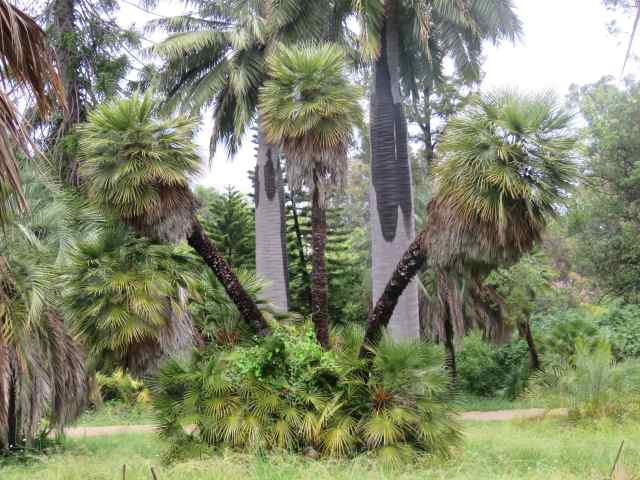
I mostly took this photo because look! A New Zealand flax plant – phormium. I had seen plenty of Australian plants in these dry French gardens but very few from Aotearoa
The garden covers 3 hectares and is built around 250 aged olive trees which are still in full production. It is still a comparatively new garden with an owner-gardener who is happy to experiment and change aspects as it matures.
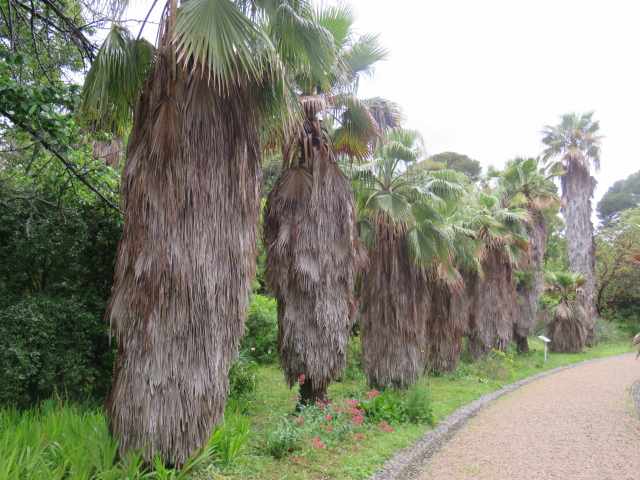
Okay, so this view is is mostly olives and erigeron daisies (which are banned from sale and generally frowned upon in this country) but there is a seductive simplicity to this lush view .
In mid May, it was unusually lush and green because of the recent rains. Apparently, it is usually dry at that time of the year and I imagine it is now, with the heat wave hitting southern Europe. My daughter, who is living on the other side of the south of France (on the Spanish border, not the Italian border that meets the Riviera) tells me that the winds have blown up from the Sahara and everything around her is covered in a fine layer of Saharan sand. La Mouissone may look different this month – a reversion to the norm of dry grass in golden hues offset by the grey-green foliage of the olives.
The swimming pool was particularly attractive, situated close to the home and with expansive views across the French countryside and beyond.
I appreciated Lady Lockett’s attention to plants and her interest in expanding the plant collection as she finds other options to grow in the poor soils and hard climatic conditions. I also liked that it is clearly a family garden – a playhouse for the grandchildren, a family swimming pool, outside seating areas placed where it is likely they would be used, extensive vegetable gardens. It makes it a very personal garden.
Echiums thrive in this climate and that looks like agapanthus to the left – another plant derided in NZ but much valued elsewhere
The biggest disadvantage of being on a tour is that one must move at the pace of the tour. This is a garden I would have enjoyed spending more time in, taking time to sit and look, exploring further and then going back around in the opposite direction to experience it in reverse. It is a garden I would go back to except I am unlikely to return to this part of France. I see it is open to visits by appointment; their website is www.lamouissone.com
I coveted this artemisia, even though our climate is very different to the greys and yellows of the Mediterranean
The dog is a resident, the people from Northern Ireland and Tasmania. The bamboo is grown for both practical use and aesthetics at La Mouissone.
Le Clos du Peyronnet was very different but still distinctively English in style
While La Mouissone is firmly anchored in the modern style – call it the new naturalism, New Perennials or what you wish, Clos du Peyronnet harks back to an earlier generation, is well established in the Arts and Crafts style. The Waterfield family bought the land in Menton, close to Lawrence Johnston’s Serre de la Madone, and built the villa as a winter retreat at the end of the nineteenth century. The garden in its current form is 1950’s vintage. Humphrey Waterfield is credited with the initial design and plantings while William Waterfield, who took over in 1976, added the many layers of different plant material – including the extensive bulb collection – and extended the garden features, building upon his uncle’s earlier work.
More long terraces, carved from the hillside – a defining feature of so many of these gardens. The cypress arches are effective, even though they are crying out for some work on the dead patches
I think the reason I liked Clos du Peyronnet so much is perhaps that it was close to what I hoped Serre de la Madone would be – and indeed may have been in its day. Sadly, William Waterfield died in 2021 with no heirs. The garden now is managed by his wife, American Judith Pillsbury. She is no garden novice, having a garden at her Paris apartment that has been written up over the years and as a previous owner of La Louvre in Provence – a garden I recognised as soon as I googled it, from seeing on TV (maybe Monty Don on French gardens?). It was Judith Pillsbury who welcomed us and took us around the garden but the mid to long term future is in doubt.
This is a fair representation of the garden and some of us with established gardens with larger trees will relate to the situation where plants grow out at an angle to reach the light.
Water is an important garden feature in a climate renowned for its hot summers.
I looked at this photo and asked myself how I could have failed to check those steps. Do they indicate this pond was originally established as a swimming pool back in the days before chlorine and pool fllters?
What did I enjoy about it? Good design, interesting plantings, quality hard landscaping that has aged well down the years, character, discreet but attentive maintenance, brilliant location and views. What is not to like? It is English-style gardening in France, spanning seven decades.
That is a splendid specimen of loquat with large fruit
Peyronnet has a collection of fruits that are rare in that area of olive trees and citrus. Amongst them was a loquat – Eriobotrya deflexa – with the biggest fruit I have seen. And I spotted a feijoa tree, Acca sellowiana. I subsequently read an article on line that referenced the feijoa – “the unrelated pineapple guava Acca sellowiana (‘tastes like sweet Harpic,’ he confides).” The he in this quote refers to William Waterfield and all I can say is that several million New Zealanders would like to disagree with his Harpic assessment.
The view from Clos du Peyronnet is remarkable
Looking across to Menton, the some time home of our own Katherine Mansfield
The feeling of privilege that comes with getting to see private gardens was reassuring to me to experience from the other side. These days, we only open our garden to a few special interest tours or individuals who manage to convince me they will be interesting people to meet. I had wondered if I was being a bit precious in creating such barriers to prospective visitors. No. It is a privilege to gain access to private gardens and to spend time with the owners. It makes it a special and memorable experience.
This little dining terrace at Peyronnet was very charming even as I derived some amusement at the global nature of those outdoor chairs which we also have at our place. Indonesian and Malaysian hard wood, I think, and probably the cause of many orphaned orangutans. To one side of that dining terrace is this fresco that I photographed before I found this comment on line: “He commissioned a local artist to paint a fresco on the wall of a small, enclosed garden that looks out across Menton’s west bay and depicts William as a bon vivant in all its senses.” Umm, is that William to the right? Or is there another fresco somewhere that I missed?
From the Ephrussi de Rothschild garden, it was on to the village of Èze and its famed Jardin Exotique. Èze is pronounced somewhere between ‘ezz’ and ‘airz’, not to be confused with the modern, novelty spelling of ‘easy’ – as in the Eze Wash carwash franchise I drive past as I go to town. I feel the village of Èze deserves more respect than that.
A few km north of Nice, Èze is recorded as having been occupied since 200BC. Its long history involves the Romans, Moors, Italians, French, Spanish and Turks. Surprisingly, it has only been formally French since the 1860s. It has attracted so much interest because the fortified village is on an elevated promontory with cliffs on the seaward side and views right around, making it both strategic and defendable. The fortifications tell quite a story.
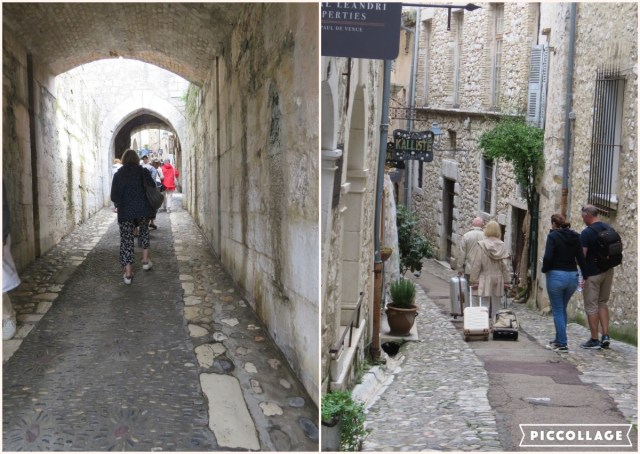
I assume the brick path through the centre of the cobbled lanes has been laid in modern times to make the terrain a little easier for visitors but the rest of it seems to be largely original. Maybe they laid the modern services of water, drains and wiring beneath the bricks?
The village layout and buildings date back to the early 14th century, although fragments of walls from those BC times, 14 or 15 centuries earlier, still exist. Significantly, there is no vehicle access into the village. Everything comes in and out by hand and manual trolley. Well, almost everything but more on that later. It seems the two hotels in the old village use porters. I laughed when I looked up accommodation in Èze, just out of curiosity. There was a review, clearly of a place by the new town, not the medieval village, and written by an American. “We could walk to the grocery, quiche place, bus, and to the old city of Eze. All the other accommodations I saw were on hilly roads without sidewalks.”
Pretty much the whole of the French Riviera I saw is built on steep hills with uneven terrain, narrow, winding roads and certainly no footpaths outside of urban centres. Every road was a foot path for centuries of occupants here, long before the car was even thought of. This is not a place for people with restricted mobility.
Just a ruin from three centuries ago of a fort that may have been built six centuries ago
Above the village, at the highest point, stand the ruins of a fortified castle, sacked in 1706 by the soldiers of French King Louis XIV. At that point Èze was still under the control of the House of Savoy, so Italian, but largely inhabited by people known as Ezasques. Interestingly, the native dialect of Èze – rarely used nowadays – is most closely related to the Monegasque language of nearby Monaco. I find Europe’s fluid land borders fascinating.
My eye is drawn to all those conspicuous white labels but there is an educational role to play in naming plants for easy visibility.
The ExotIc Garden is positively modern because it only dates back to 1949. Just down the road, so to speak, Jean Gaustad had already played a major role in creating the Jardin Exotique de Monaco. The mayor of Èze apparently thought it would be a good idea for his area too, as he is credited with a role in creating the Èze garden. Conditions are tough – exposed, coastal, precipitous, rocky, windy, very dry and hot in summer. What grows in those conditions? Cacti and succulents. They grow very well. I see a note that in getting the garden established, crews of men carted soil up the hill in bags on their backs so clearly efforts were made to give the plants a good start.
I am not a fan of prickly plants in any way, shape or form but they look right at home in these exposed conditions and I was somewhat won over by their textures and colours. Being a designated botanic garden, plants are all labelled. The gardener in me finds my eyes zooming in on those white labels and the aesthetics worry me but labels are the way in public and botanic gardens; private gardens need to make their labelling very discreet or non-existent to avoid looking amenity or municipal, in my opinion.
I felt obliged to photograph the tree fern out of southern loyalty. Truth be told, it is probably the Australian Dicksonia antarctica rather than one of our NZ species. It seems to be more widely available in Europe and Australian plants were being widely grown in the area whereas NZ plants were rare. But you know, we claim all tree ferns as ours, in an inclusive sort of way.
When I say a long way down, you can see the coach park in the centre, below the church.
As I understand it, Bono’s French pad is somewhere down below at sea level. It is quite a bit further down than the coach park and new town in the previous photograph.
The setting is amazing with 360° views. It is a long way down, whether on the land side or even further down to the sea. Apparently the Irish rock star Bono (of U2 and social activism fame) has a house down by the sea and the story is that he and his good friend Barack Obama walked up the hill for a drink at the hotel in the old village, somewhat to the surprise of village and garden visitors. All I could think was that if they walked all the way up there from the sea, they deserved a long, cold drink in peace.
The aspect of this garden that did worry me was the answer I was given to how they got large plants and sculptures to the upper levels. I didn’t think they were being levered around the tight lanes and steep steps. Helicopter, I was told, with the additional information that garden waste is also lifted out by helicopter. Surely not? Colour me shocked. In 2024, I would expect garden waste to be dealt with on site in a sustainable way, not loaded into bags to be airlifted out. I hope the information I was given is wrong but I fear it may be accurate.
Each figure has a name and a somewhat obscure sign. That is Mélisande to the right above. Others seem to have somewhat eclectic names ranging from Justine or Isis, to Margot, Rose and Anais. I found a blog on line that referenced one named Barbara but I can not vouch for that and, if true, I want to know where the name Barbara came from for the artist.
More classical at La Mortola
The Earth Goddess sculptures were an interesting, contemporary touch. Jean-Philippe Richard started on his earth goddess works in the 1990s. Their elegant, elongated bodies stretch from chunky bases as though emerging from the earth and metamorphosing into stylised interpretations of classical, maybe stereotypical, feminine beauty. They were striking and after my reservations about the cliches of feminine beauty (I kept looking in hope that they may be either androgynous or maybe include some examples of young male beauty) I decided that they were indeed striking and entirely appropriate to the setting. And, in fact, no more cliched than the classical concepts of feminine beauty seen in La Mortola and the Ephrussi de Rothschild gardens.
Looking across to a recent housing development
Privacy and green space is possible with good design
Finally, on a change of topic: looking out from the top of Eze, my eyes focused on an interesting example of green high density housing. I don’t for one moment imagine it is cheap – this is the Riviera after all – but it appears that good, modern design can give privacy and some outdoor green space while achieving housing density which blends harmoniously into the surrounding environment.
As seen in the middle of the photograph – blending into the wider landscape.