“Against the uniform sheet of snow and the greyish winter sky the Italian villa loomed up rather grimly; even in summer it kept its distance, and the boldest coleus bed had never ventured nearer than thirty feet from its awful front.”
Edith Wharton The Age of Innocence (1920)

Coleus, I regret to inform you, appear to be staging a comeback if what I saw in Auckland at the weekend is any guide
I have done two trips to Italy. The first was a major garden tour in the north, in most elevated international company so it was the full immersion experience where we got to meet head gardeners and, in some cases, garden owners. Why, we even had a reception with the Principe and Principessa Borromeo on Isola Bella. For those not in the know, the Borromeo family have an aristocratic pedigree, wealth, power and influence even today which is beyond the average New Zealander’s comprehension.
Villa del Balbianello on Lake Como
On my second Italian trip, we were in the south travelling from Sicily to Rome with some
incidental garden visiting along the way. The Italian gardening that most of us see is historical and traces its origins to times of much greater personal wealth and power. Yes it is hugely impressive but not, generally, because of the actual plants and gardening. It is the magnificence of the stone structures, the grandness of the villas – which can be very austere – with imposing formality in garden design. Most of it rests on the confident use of space and proportion, delineated in stone. Literally. There is not a hint of tanalised pine to be seen anywhere. The quality of light is also very different to our hard, bright light in this country.
Yes, there tends to be a very restrained plant palette and the same plants are seen in most gardens. I remember writing at one point about the ten plants that show up in every garden. Many of the historic gardens are clipped and groomed to within an inch of their lives and plant health isn’t always great.
Talking to the head gardeners and garden managers, the restricted plant palette is largely climatic. It is not an easy gardening climate, being cold and dry in the north in winter and hot and dry in summer. Further south, it tends to be just dry and dusty. If they could, they would grow a much wider range and that is evident in some fine gardens like Isola Madre and Villa Taranto.
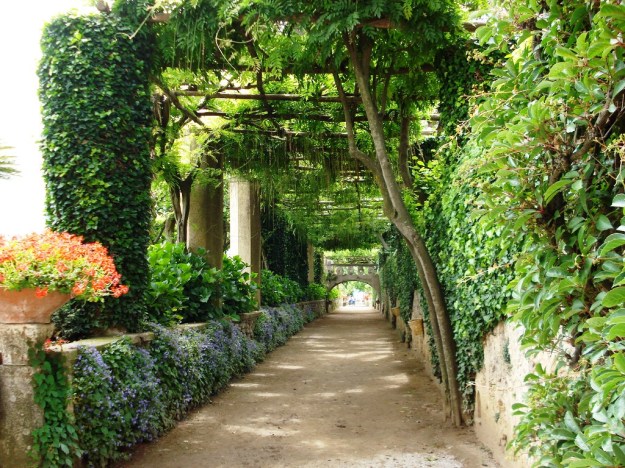
Villa Cimbrone in Ravello on the Amalfi Coast
The recently-retired head gardener of Ticino Botanical Park on the Islands of Brissago in Lake Maggiore sought out Mark at the time of our visit. He then stunned us a couple of years later by pedalling in here, unannounced, at Tikorangi. He was biking the country. We really liked Ticino. It was a small island with a villa that seemed more domestic in scale and it had a fine stand of Taxodium distichum growing on the lake edge. His comment to Mark, when he visited here, was: “You must have been very disappointed in Ticino.” He was looking at the range of what we grow compared to the conditions he knew.
So it is a mystery to me as to why New Zealanders, in their quest for “Italian styled” gardens would want to take that restricted plant palette as a mandatory, defining characteristic. This is a country where we can grow almost anything.
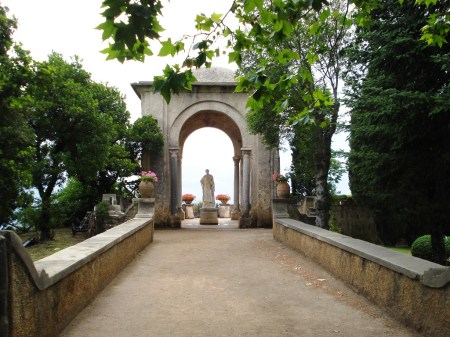
The grand historic reality
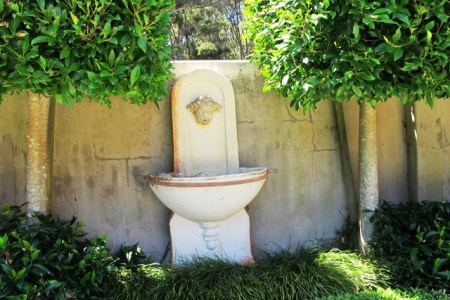
The modern domestic reinterpretation on the other side of the world
And can you achieve a domestic version of the grand, historic Italian gardens In New Zealand without the pivotal grand villa and the grace and proportions of a major estate let alone without the historic stonework? I mean, Villa Serbelloni on Lake Como has a genuine Ancient Roman fort in remarkably good condition at the top of the garden. Difficult to top that as a garden feature. And the grand gardens often have landscape vistas of astonishing beauty.
I don’t know anything about contemporary Italian garden design but neither, I suspect, do most New Zealanders. I can say that my limited experience of current domestic gardening in Italy showed a certain leaning towards what they saw as the “romantic English style” – less formal, more frothy and trying the broaden the plant palette.
Not only do New Zealanders on the quest for an Italian-style garden go for a limited range of plants, with the historically questionable exclusion of colour and bloom, they take a simplistic interpretation of hard-edged formal design without acknowledging that this is the garden design of the super powerful and super wealthy Italians in centuries past.
I could suggest that the Italianate gardening that I have seen in this country is to Italian gardening as a dinette is to a dining room, a kitchenette to a kitchen or as marblette is to marble.
All this is because I visited a garden during the Heroic Garden Festival that billed itself as “transport yourself to Italy…”. I don’t think so. It was a beautifully presented, immaculate garden, very hard edged and clipped with “a controlled palette of plants”. The fact that it is not to my personal taste is completely irrelevant. I can respect the determination and focus that goes into creating and maintaining that sort of garden and it was done to a high standard. I am sure the owners are very proud of it.
But Italian, it is not. I think what we bill as Italianate in this country is more Miami hotel-style reinterpretation of Italy. The Italian inspiration is distant at best.
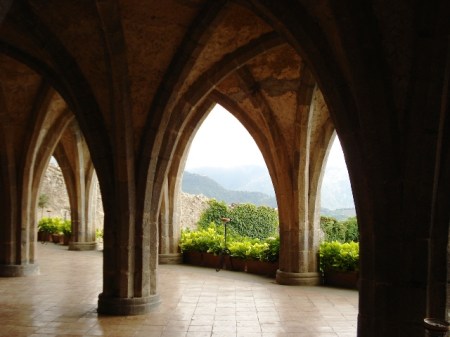
The real deal in Italy
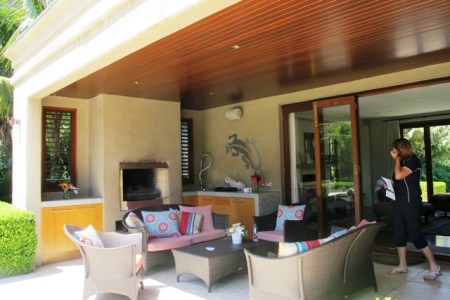
More Miami than Italy in Auckland


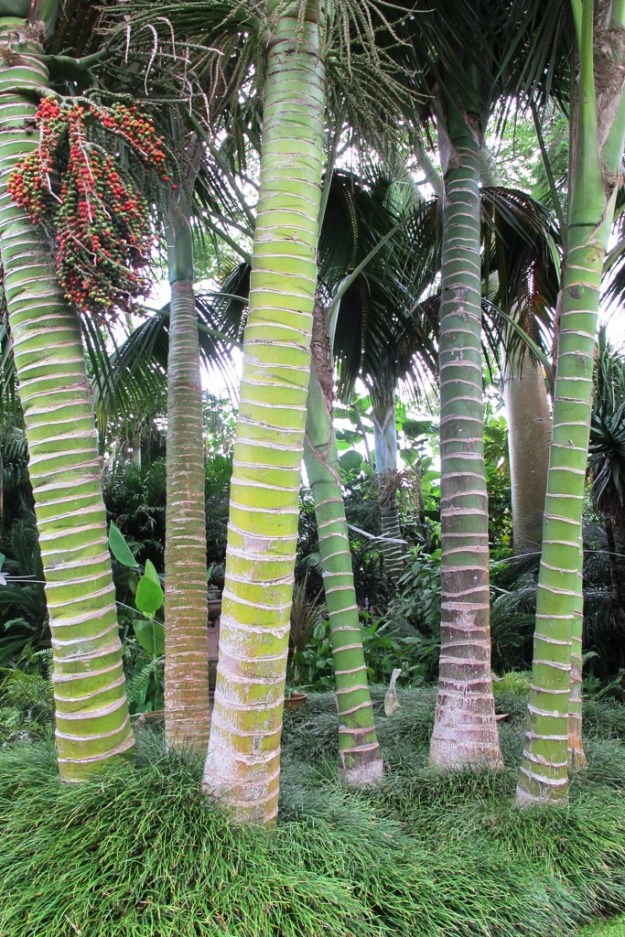 One of the delights I appreciated at the Heroic Gardens Festival was this quiet, simple green space in the back garden owned by photographer, Gil Hanly.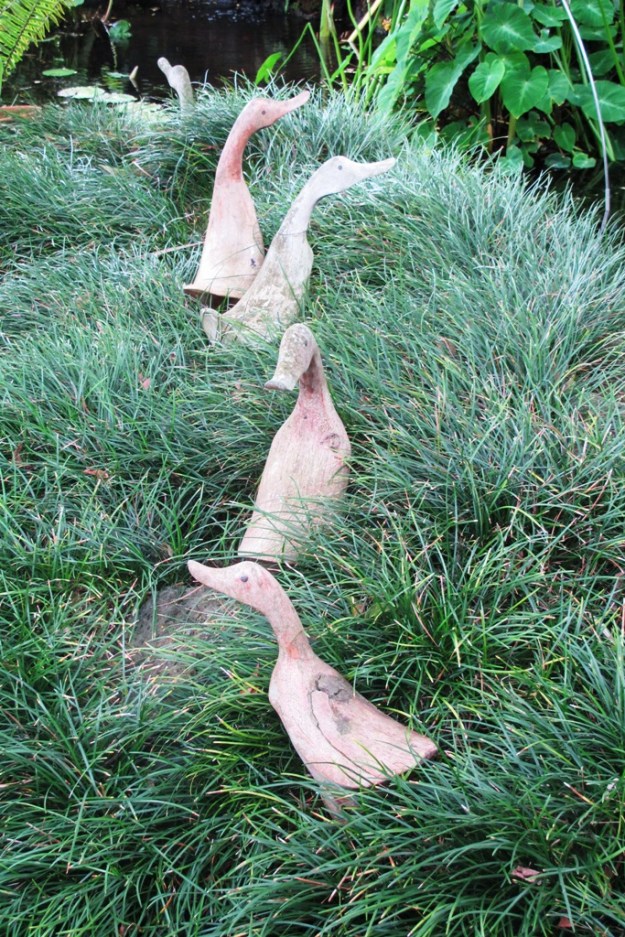
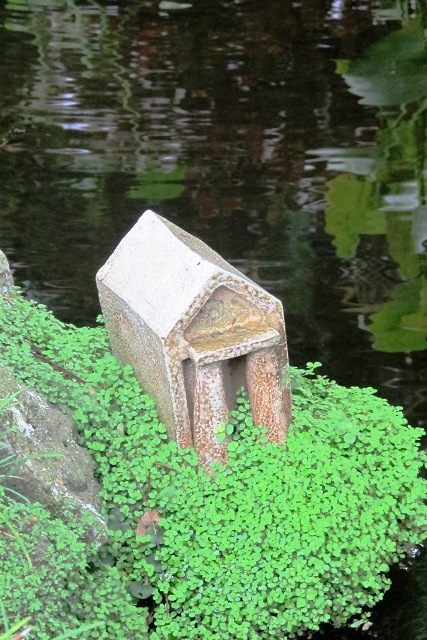
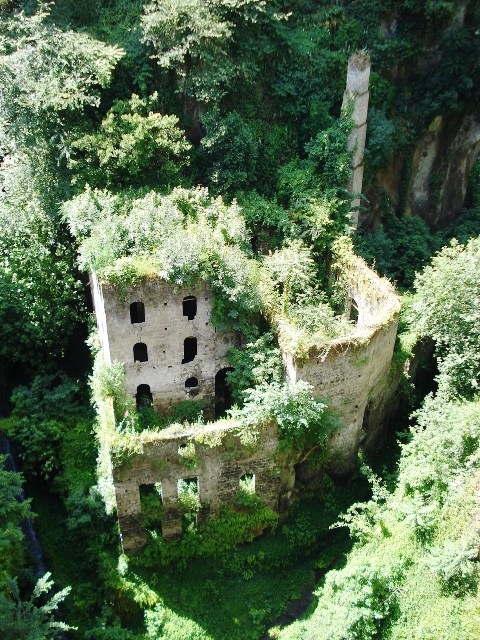 The little temple by the water (top) is, I am told, by artist, Bronwyn Cornish. For me it evoked the very old villa visible in a ravine in Sorrento in Italy (immediately above) which I photographed back in 2008. Anyone who has been to Sorrento (the jumping off point for Capri) will have seen this sight. In the Hanly back garden, the whole effect was understated but hugely effective.

 I find garden ornamentation a source of slightly masochistic fascination. We prefer very little ornamentation in our own garden and even then lean to the natural look. Back when we were university students – way back when – we used to entertain friends and visitors with gnome garden tours as viewable from the streets of both Palmerston North and Dunedin. Caversham was a particularly happy hunting ground. But brightly painted little concrete things in my own garden? I think not.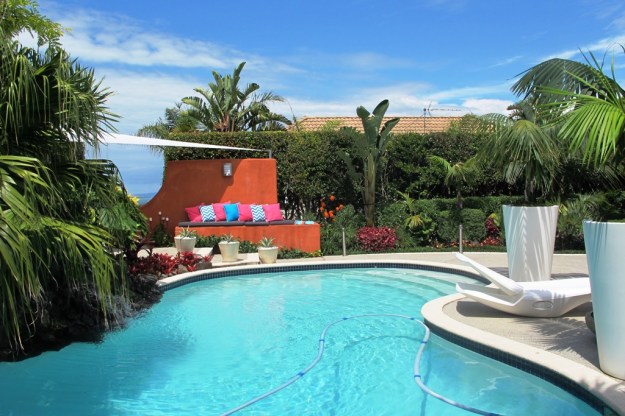
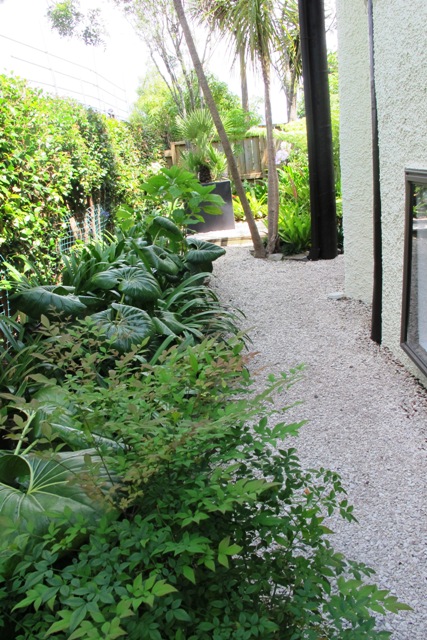 The plantings were fine, but nothing particularly out of the ordinary. The Heroic Garden Festival, for those who don’t know, has its roots in the Auckland gay scene. Gay men, as far as I can see. I have yet to fathom why gay men are such a powerful force in gardening whereas gay women have not made their mark in the same way. There appears to be a secret rule book that says that gay men in Auckland should create tropical gardens (the Ubud hotel-style, I have described it in the past) dominated by bromeliads, palms, cycads, the tractor seat ligularia (L. reniformis), bromeliads, maybe a banana palm. Oh, and have I mentioned bromeliads? After you have been to several gardens, the plantings start to meld in the mind and achieve a certain state of uniformity.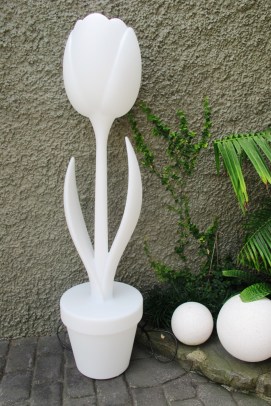

 I don’t know much at all about Gaudi and Catalan modernism is beyond my ken. Certainly there was a northern Spanish arts and crafts ambience to the house which was charming. The borrowed view to the sea was also a clever device which did not appear as if it could be built out.
 First published in the February issue of New Zealand Gardener and reprinted here with their permission.





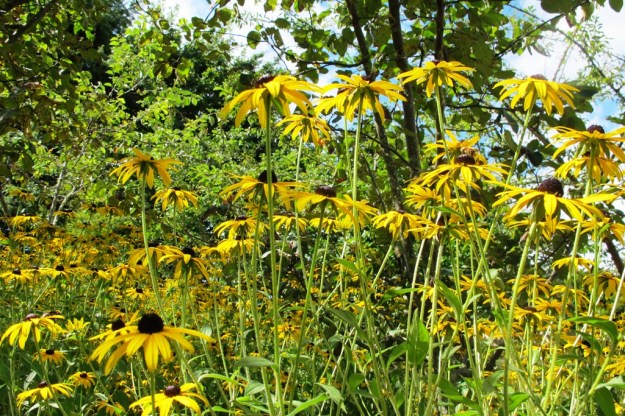
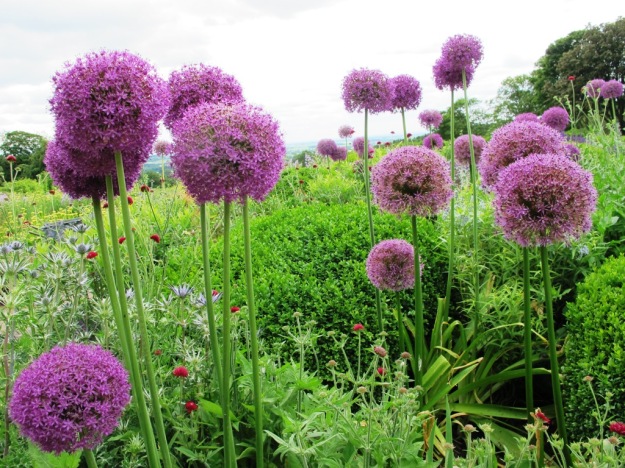
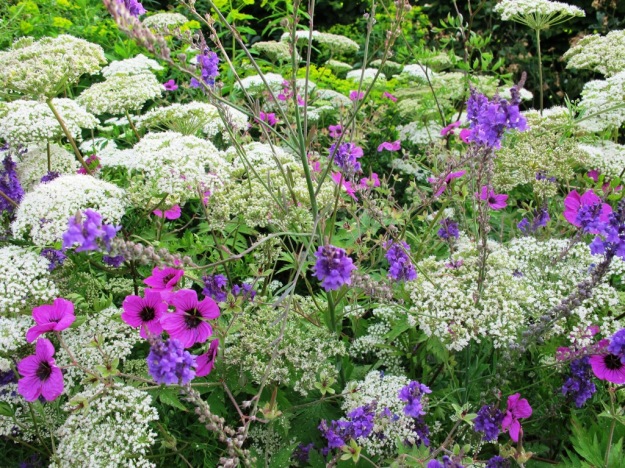
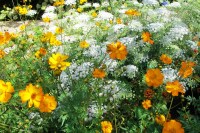 It was the hillside of rudbeckia in Lynda Hallinan’s garden that I liked the most. She has underplanted her orchard trees with a sea of gold and very lovely it was too. Her planting of a white umbellifer (maybe Ammi majus?) with a semi double golden cosmos was equally gorgeous on a day in high summer. At least, I think it was a cosmos. Annuals are not my area of expertise. Lynda’s scale was of course smaller than the Bot Gardens, showing that it can be done in a mid-sized domestic garden.