

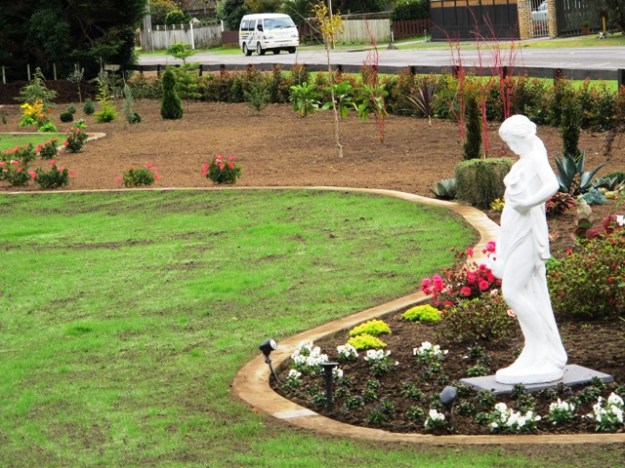
The garden owners know exactly what they like and how they want their new garden to look
Every time I drive to town, I pass a large new garden that was started from scratch late last year. The owners are usually outside, beavering away. Curiosity overcame me and I had to stop and chat.
Ann and Maurice did not want to be identified beyond their christian names and that is fine because what interested me was to find out how they decided where to start with their blank canvas. There was just some perimeter hedging and a new house at one end of the plot when they started. It is a large section – a full acre they told me – and this is their retirement garden.
Both came from larger gardens, considerably larger in their earlier days, so the prospect of an acre held no fears for them, but the fact that it is pretty much dead flat was important. There are good reasons why most people retire to the flat in later years – gardeners’ knees for one.
I asked them how they decided where to start and the response was completely matter of fact and decisive. They wanted a garden that was fully visible from the house. There was to be no slow reveal or secret garden to be discovered. In a modern house designed for indoor-outdoor flow, they wanted to be able to survey their garden in its entirety from the living areas. There is no right or wrong way on this. It is entirely a matter of personal taste and they know what they like. The result is a large expanse of central lawn surrounded by garden borders on the perimeter.
All the garden borders are curved, serpentine even. Ann was equally decisive on this design decision. She does not like straight lines in gardens and regards them as boring. Again this is a matter of personal taste and design choice. There is no correct or incorrect way.
Where their gardening experience showed was in the generous width of the perimeter borders. Irrespective of whether your edgings are railroad straight or gently curving, one of the most common design mistakes is to make borders too narrow. In a large space, narrow borders can look mean, out of proportion to the scale of the garden. But even in a small space, it is very difficult to work with narrow borders. Plants grow – often much larger than expected and few novices can envisage the amount of space trees and shrubs will take up once established.
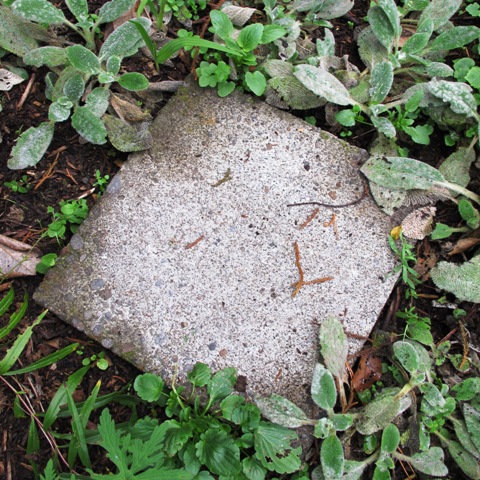
Scatter pavers in the middle of wide borders to give somewhere to stand when tending to the sections that can’t be reached from the side (this one in my garden)
We have been dogged by garden borders that Mark’s parents put in back in the 1950s, which ended up being too narrow. It is not easy to widen borders retrospectively when they have permanent concrete or stone edgings in place. We have done it to several, but getting it right from the start saves bother. Never less than two metres in width would be my rule of thumb, wider where possible. Maybe consider having fewer, wider borders if the amount of garden is scary. Scatter a few pavers in the wider expanse of the border if you don’t want to stand on the soil so that you can tend to the central area that is out of reach.
Ann and Maurice are planning their garden from the start so that they will be able to maintain it as they age. It is, after all, their retirement project. All borders have been edged with a wide concrete mowing strip, hand mixed and poured by Maurice. This gives definition to the borders and makes mowing easy. There are no island beds to circumnavigate. The lawn is uninterrupted. Maurice has given considerable attention to the lawn and they have not shied away from spending money on getting it right from the start. The level is consistent and flush to the mowing strips. It is a large area but dead flat and easy to mow with a ride-on – an important factor in longer term planning.
While the new border plantings include both perennials and annuals, the long term emphasis is on the trees and shrubs. Over time, these will grow and mature, providing a low maintenance backdrop for when hand weeding and kneeling become onerous. “It will be easy,” they explained. “All that will need to be done to keep the place looking good is to mow the lawns.”

Ann and Maurice were keeping their intensively gardened areas close to the house – very close for these areas under cover
Detailed gardens have been kept very close to the house with particular emphasis on the new conservatory which sports a permanent garden.
It is difficult to imagine a time when these two will not be out in their garden. They know what they like, they know what they want and they have made plans for it to see them into the future. No matter whether one’s personal tastes and preferences differ, there is a magnificence in such confident enthusiasm backed up by hard work.
First published in the Waikato Times and reprinted here with their permission.

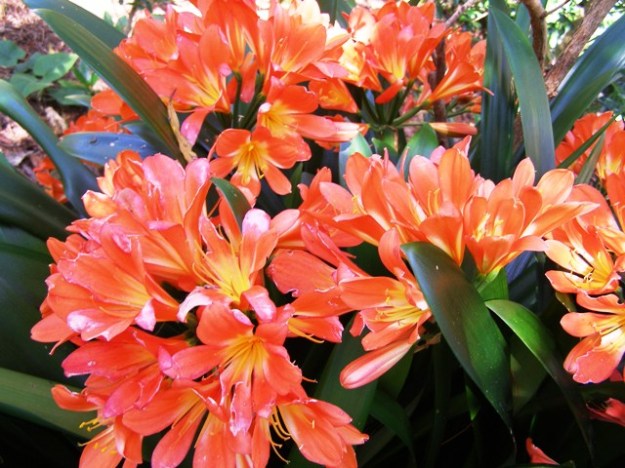 1) Clivias are wonderfully adaptable plants for mild climates. Their ability to thrive in hard conditions, even in relatively deep shade and with a regime of near total neglect makes them an obliging garden plant, once they are established. They don’t like frost but woodland conditions will protect them. The reason they are seen as expensive and choice is because they take years to reach a saleable grade, not that they are difficult. However, given time, clumps can get very large and yield many divisions for replanting.
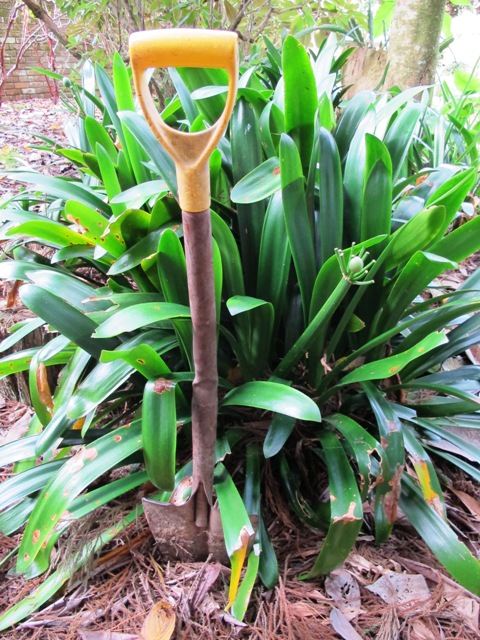 2) It doesn’t seem to matter when you divide them, though it would probably pay to avoid dry mid-summer. Like most perennials, they respond well to lifting, dividing and being replanted in ground which has been freshly dug over. The clumps can be large and heavy but this one was small enough to get out as one. Get as much of the root system with it as you can.
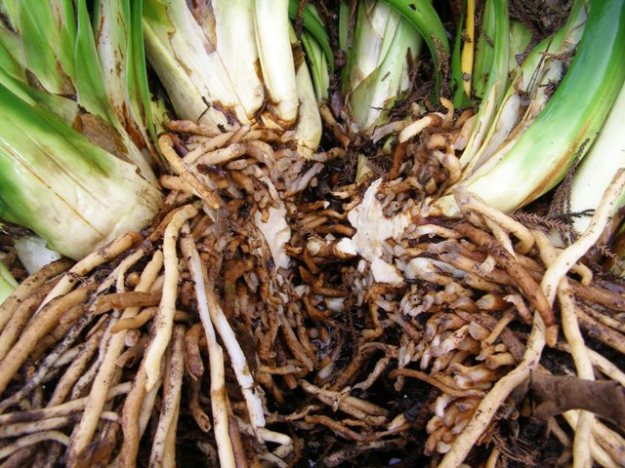 3) I hosed the clump so it was easier to see and to show what the base looks like, but this is not necessary. The fleshy base is easily cut with a garden knife or a spade. It is easier to control what you are doing with a knife and to make sure that each division has roots attached. If you try and pull them apart by hand, you are more likely to end up with a tuft of leaves and no base.
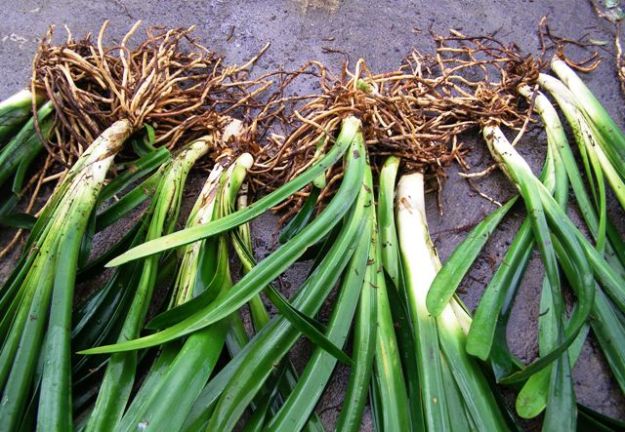 4) It pays to reduce the volume of foliage – this reduces stress on the plant which has undergone considerable disturbance and root damage. I took off about half the leaves where the root systems looked small.
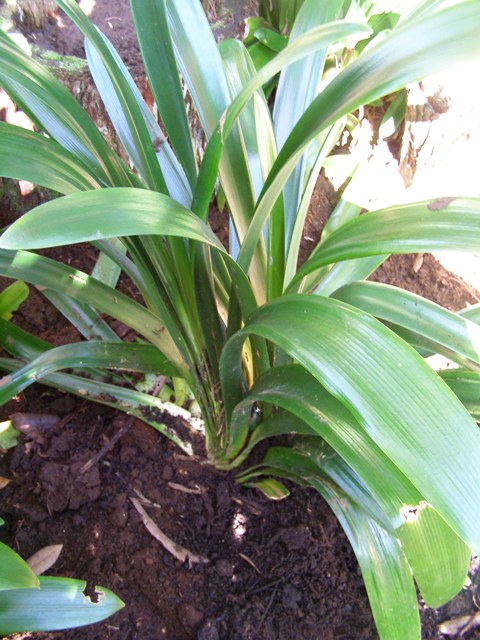 5) I dug over the area where the clump had been growing before replanting, incorporating the leaf litter that was lying around. Fertilise lightly if you wish and spread compost to enrich the soil and act as mulch.
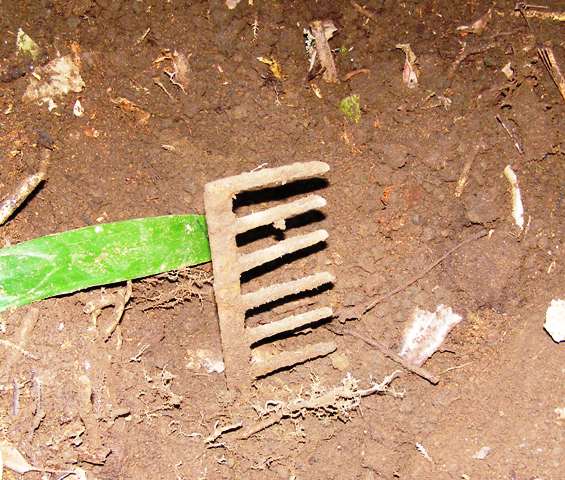 6) In digging over, I found the missing rake head from many years ago when the area was first planted. It is a bit like trowels and secateurs in the compost heap but they usually reappear within the year (albeit in just as poor condition).
 Tikorangi The Jury Garden