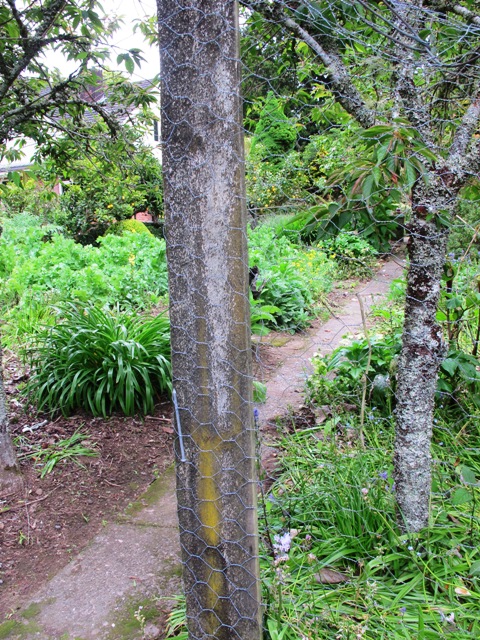
Our bean frame – it’s hard to avoid tanalised pine in the veg garden
Living rurally, the stream of free farming newspapers descending into our letterbox seems never ending. I cannot say we read them from cover to cover, but it is surprising how much interesting material is in these publications. It was ‘Straight Furrow’ that yielded this week’s most interesting article. It was about a project looking for hard wood alternatives to tanalised pine.
The timber production of this country, based as it is on Pinus radiata, derived from a forestry project started way back in the 1870s, trialling various options. Clearly the pine was the stand out performer and work has been ongoing on selecting the best characteristics for plants which are to be commercially cropped. Modern plantation pine is a somewhat different tree to the gnarly old pines sourced originally from Californian and then Australian seed sources. The use of pine as a building material is a boon for what little is left of our native forests, though we are guilty of plundering the hard woods of Asia instead – especially when it comes to outdoor furniture and more upmarket decking.
The pine we use is grown very quickly and is soft as a result. To get any durability outdoors, it is treated by tanalising it in a solution that contains chrome, copper and arsenic. There is now a quest to find quick growing hardwoods as an alternative and some of the eucalypts look extremely promising.
What does this have to do with gardening? The impetus for this research was, apparently, the discovery of arsenic in the Marlborough aquifer back in 2003. In this case, it was not a cause for panic. That arsenic was occurring naturally and not a danger to health. But, as an aside to that particular study, elevated arsenic levels were found in the soils. These were linked to the use of tanalised posts. When you think about it, we use gazillions of tanalised posts in this country, many of them treated to an advanced level so that they are durable in the ground. There is a scary thought.
It appears that those readers who ask whether it is safe to use tanalised timber in the vegetable garden are indeed asking a valid question. It is pretty difficult to avoid when you think about it. The planks many people use to avoid compacting soil when walking between rows are likely to tanalised. The waratahs often used to stake tomatoes, the poles to build the bean frame… but especially the sides of raised vegetable beds. Yes, apparently these do leach toxic chemicals into the surrounding soil. And plants are very good at absorbing heavy metals, especially leafy greens like vegetables.
It appears that some within the wine and kiwifruit industries are very keen on non-tanalised hardwoods as an alternative. Both these producers have extensive need for wooden growing frames. Organic farmers and growers are also anxious.
I have not read that it has been proven beyond any doubt that anyone has suffered from ill health or death as a result of secondary contamination from tanalised timber. It is your call entirely as to whether you consider it is a risk worth taking. It appears that different people respond differently to chemical poisoning. An anecdote about somebody who lived to a ripe old age despite an extremely careless attitude to sprays is not proof of safety because it may be that the next person suffering multiple allergies is a result of very little exposure.
Presumably the leaching of chemicals from tanalised timber slows down as it ages, so if you are using some near edible crops, look for the old stuffveg.
Heart macrocarpa is probably the most suitable alternative to tanalised pine at this stage, though it will rot eventually. The eucalypt alternatives being researched are offering maybe 25 years without being treated but the research project has a way to go yet.
For the record, the article referred to is in the October 15 issue of Straight Furrow, page 11, headed “Hardwood project promises billions”, written by Jon Morgan. The sad point of that story is that they just missed out on $3 million dollars of government funding because they were not able to guarantee that the project would earn $200 million dollars in exports by 2030. It is a fairly sad comment on the nature of government funding for research. It seems an exorbitantly high bar to set for a modest contribution, but the project is continuing. Imagine some of our pine plantations replaced with eucalypts. That would change the landscape.
First published in the Waikato Times and reprinted here with their permission.
-39.042098
174.300314


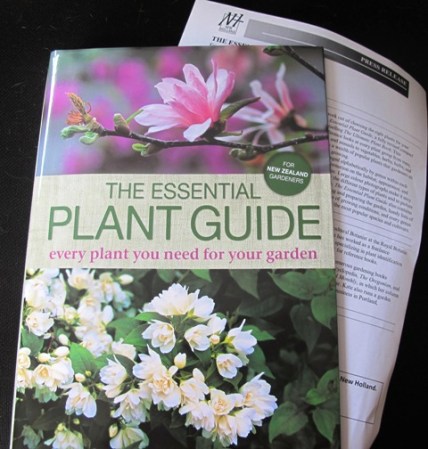 The subtitle of this large book is “Every plant you need for your garden” and the cover, presumably generated specifically for the NZ market by the publisher and the NZ distributor, New Holland, boldly states “For New Zealand Gardeners”. It isn’t. The authors are Australian and American and the text has not been adapted for NZ conditions which are very different. Including plants like meconopsis (which will seed down and naturalise, don’t you know?) and trilliums as great garden plant options is problematic. There are reasons why you don’t see many crepe myrtles (lagerstroemia) growing in this country (they need hot, dry summers) and cornus are not great in the mild north and mid north. Arisaemas – we know quite a bit about arisaemas here. A. sikokianum is incredibly difficult to keep going as a garden plant but that is at least better than the recommendations for some which we think aren’t even in this country. Recommended camellia and rhododendron varieties are often (mostly?) ones more popular in the authors’ home countries and are not the NZ market choices. I would not be sure that they have all been imported to NZ, let alone in production.
 Tikorangi The Jury Garden