Author Archives: Abbie Jury

Unknown's avatar

About Abbie Jury

jury.co.nz Tikorangi The Jury Garden Taranaki NZ

Garden lore

“Some ladies asked me why their plant had died. They had got it from the very best place, and they were sure they had done their very best for it… They had made a nice hole with their new trowel, and for its sole benefit they had bought a tin of Concentrated Fertilizer. This they had emptied into the hole, put in the plant, and covered it up and given it lots of water, and – it had died! And yet these were the best and kindest of women, who would never have dreamed of feeding a new-born infant on beefsteaks and raw brandy.”

Gertrude Jekyll, Wood and Garden (1899).

Cutting back to bare wood

Cutting back to bare wood

Renovating old camellias
Not all big old camellias are things of beauty. But they are one of the easiest plants to renovate and now is the right time to carry out drastic pruning. If you cut a camellia off at ground level, most will resprout and come again. Even glyphosate doesn’t kill them. However, if you want to keep the plant, don’t cut it back to the ground because what you will get is a thicket of new shoots in spring. Look for the natural shape of the plant and cut off just above where the branches are well formed – usually about a metre up on an old plant. This means that when it flushes into growth, you will have an attractive and established shape already.

You can cut right back to bare wood with no foliage left at all. It is only the very occasional, contrary camellia that will die instead of rushing into growth.

The plant will respond by pushing out a mass of new leaves and you should have reasonable cover by the end of the first summer and a lovely bushy specimen which is flowering again a year later. If you can see mottling or variegation on the leaves, make sure you disinfect your pruning tools before you touch any other camellias. Camellias are susceptible to virus but that is not necessarily bad. It is what gives variegated blooms. However, you don’t want to transfer virus to specimens that are free of it, hence cleaning your tools. Household bleach will suffice as a disinfectant.

First published in the Waikato Times and reprinted here with their permission.

Reviewing roses

Graham Thomas has stood the test of time

Graham Thomas has stood the test of time

Who does not love the rose? The flower, I mean, for few could love the bush. While there are exceptions, most rose bushes are not noted as attractive and interesting shrubs. We grow them for the blooms.

I am no rose expert so the arrival in my letterbox of the NZ Rose Review for 2013-2014 was welcome. As far as I know, roses remain the top selling ornamental plant in this country despite the changing habits of gardeners.

Gone are the days when gardeners were willing to get out with their sprayer every couple of weeks, huffing on all manner of poisons to counteract diseases and fungi. I never did it but others told me it was pretty expensive and it certainly was not good for the soils or indeed the lives of beneficial insects. But the devotees got fine roses out of it. Environmentally, the rose spraying regime will not go down in history as one of gardening’s finest moments and much tighter restrictions on the sale of garden sprays have forced a change in attitude and management for most gardeners.

But what is a garden without roses? I want roses with masses of beautiful flowers on bushes which will thrive and stay looking okay (and okay is all I generally manage) without spraying. I don’t mind pruning and I will dead head, feed and mulch. But we do not regularly drench or spray any plants in our garden and we sure ain’t gonna do it for roses.

Enter the Rose Review. The most interesting pages for me are at the front of this 48 page booklet. There are rankings of the top roses in various categories as voted on by experienced rosarians. This is the sort of shortcut to information that I find useful in the case of roses because I want to have them in the garden but I am not sufficiently dedicated to spend a lot of time getting to grips with the detail.

Paddy Stephens - the top ranked rose overall. Again. (Photo: NZ Rose Soc)

Paddy Stephens – the top ranked rose overall. Again. (Photo: NZ Rose Soc)

‘Paddy Stephens’ is a clear winner. It tops the Hybrid Tea list for the tenth year in a row. A higher accolade in my books is that it also ranks number one on the Healthy Roses list. So as long as you want a coral orange Hybrid Tea, this is the one to get. I don’t grow Hybrid Teas, but many others do and it is a matter of personal taste.

Interestingly, for patriotic Waikato readers, ‘Hamilton Gardens’ is a proven star, too. It is ranked number 4 in the Hybrid Tea class and 3 in the Healthy Roses class. I looked it up and I see it is a sport of Paddy Stephens, so it is hardly a surprise that it is also a top performer. These are the work of this country’s foremost rose breeder, Sam McGredy.
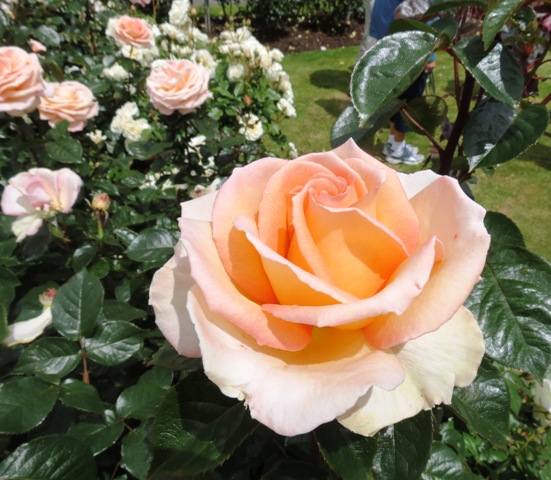
Hamilton Gardens - sport of Paddy Stephens (Photo: NZ Rose Soc)

Hamilton Gardens – sport of Paddy Stephens (Photo: NZ Rose Soc)

‘Dublin Bay’ is still up there as the best large-flowered climber. In an industry driven by constant new releases, it is interesting that this variety which dates back to the 1970s has remained top of the pile. It is another McGredy rose. The world of roses owes a huge debt to this man.

I much prefer the floribundas and the shrub roses. ‘Raspberry Ice’ is top in the floribundas, and ‘Sally Holmes’ in the shrubs, with the tried and true ‘Graham Thomas’ coming second. I have Graham and Sally was already on my shopping list for this year. I can see I should have bought her years ago. We can’t credit her to our own Sam McGredy. This is the first rose ever bred by an amateur (Robert Holmes of the UK) to be inducted to the elite Rose Hall of Fame. Also in that heady company are “Graham Thomas’, ‘Iceberg’ and ‘Peace’ which are well known, even to non gardeners.
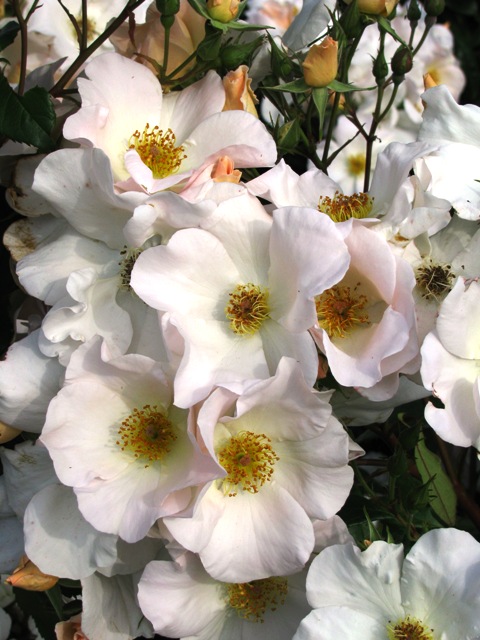
Sally Holmes - tried, true and still a top ranked variety (photo: NZ Rose Soc)

Sally Holmes – tried, true and still a top ranked variety (photo: NZ Rose Soc)

Most Fragrant Rose is topped by ‘Margaret Merril’ for another year. Patio roses are even further down my list than hybrid teas so I shall just say ‘Irresistible’, if you must.

If you are beyond the novice stage (and I have no illusions that I am anything above a novice when it comes to roses), the greater part of the Rose Review booklet is reviews of newer releases. They are all rated out of 10 as garden plant, exhibition bloom, on health and fragrance, with grower reports from around the country. All entries are accompanied by photos.

This is not an infomercial but it looks mighty good value for $7.50 (including postage). If you want your own copy, you can contact the secretary of the NZ Rose Society, Mrs Heather Macdonell (email: secretary@nzroses.org.nz, phone or fax 06 329 2700).

Don’t expect to find any of the handy Rose Flower Carpets mentioned anywhere. These are produced by nurseries outside the small circle of specialist rose growers who are major contributors to this publication and the main market suppliers. There is another story in those sometime, perhaps.
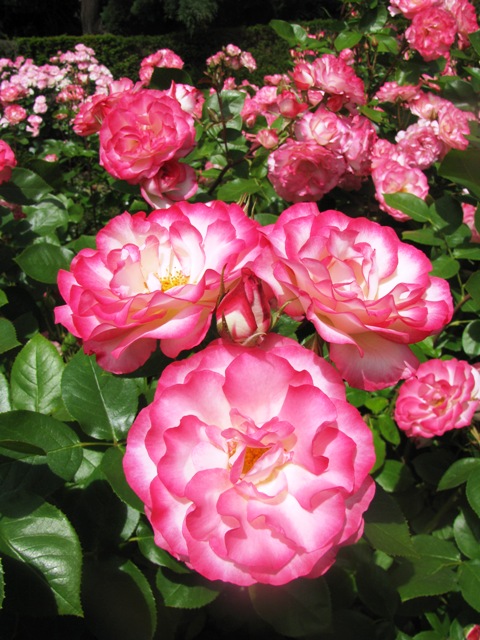
Raspberry Ice (photo: NZ Rose Soc)

Raspberry Ice (photo: NZ Rose Soc)

First published in the Waikato Times and reprinted here with their permission.

Plant collector: Nandina domestica ‘Richmond’

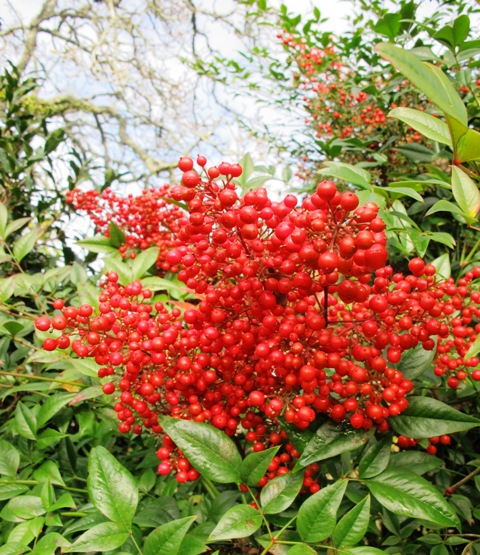
Orange berries all winter on Nandina domestica ‘Richmond’

Orange berries all winter on Nandina domestica ‘Richmond’

There is nothing rare or unusual about Nandina domestica ‘Richmond’ but it gives cheerful colour for many months in the colder season – an orange antidote to the dominant winter pinks. I read an English article which described it as the Far Eastern equivalent of holly berries, for hollies do not berry well in warm or even in mild climates. Clearly it is not attractive to birds. Otherwise they would strip it in a matter of days. It does, however, pick well if you are into flower arranging.

The nandina occurs naturally across much of Asia, from the Himalayas to Japan. It was introduced to the west in 1804 from a plant collection in China. Overseas, it is widely referred to as the heavenly or sacred bamboo, but it is not a bamboo at all. In fact it is related to barberry – but not prickly – and a member of the beriberidaceae family. It is hardy, evergreen and not fussy about growing conditions from full sun to semi shade. Our plants are just over 2 metres high and maybe 1.5 metres wide. We give them the occasional thinning every few years and snap off the spent flowering stems but beyond that, they are genuinely easy-care plants. ‘Richmond’ is a form selected because it berries particularly well and is hermaphrodite. In other words, you don’t need a male and a female plant to get the berries, which nandinas normally require. The flowers are white but tiny and insignificant. It is all about the winter berries.

First published in the Waikato Times and reprinted here with their permission.

“The other kind of boundless garden is not a geometrical figure at all. This English kind has no obvious beginning or end and the bounds are confused on all sides, so that for this garden an un-wall had to be invented, which performs the physical functions without having the visual value of a wall. The ha-ha or sunken fence is an English joke on law and order that exercises real constraint with the English deviousness and we can almost imagine a simple person stumbling into these sophisticated gardens without realising that he is in a garden at all, like someone who misses an irony.”

Eccentric Spaces by Robert Harrison (1977).

What about *land farms* then?

Unlined and unfenced. What is this liquid on the Brown Road *land farm*?

Unlined and unfenced. What is this liquid on the Brown Road *land farm*?

Update: January 3, 2014
In recent weeks, it has transpired that the Waitara *land farm* is, apparently, the only one which had fracking fluids spread over it, and that may have been in the last few months. It is probably the *land farm* that is closest to an urban area. It is also right on the coast, unfenced on the coastal side and open to the Waitara West walkway. These two photos of pits full of liquid were taken by a third party in July 2013. The pits were unfenced. Apparently the pits have since disappeared without trace. Were these the fracking fluids? In which case, why was Pit B unlined? Is this the “world class practice” our regional council keeps claiming for itself?
This pit was at least lined but still unfenced. Is this the fracking fluids?

This pit was at least lined but still unfenced. Are these the fracking fluids?


My June 29 walk

???????????????????????????????
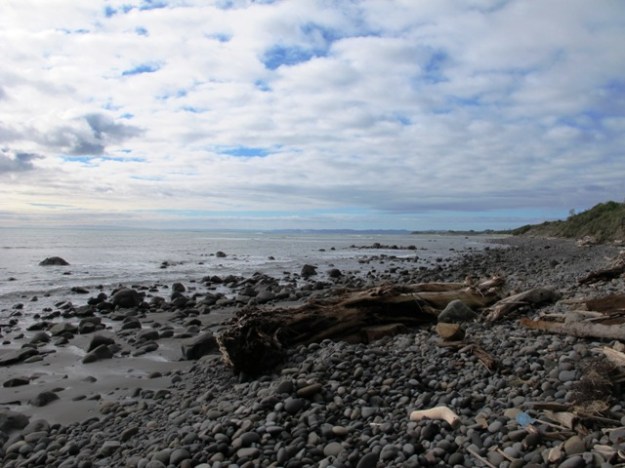
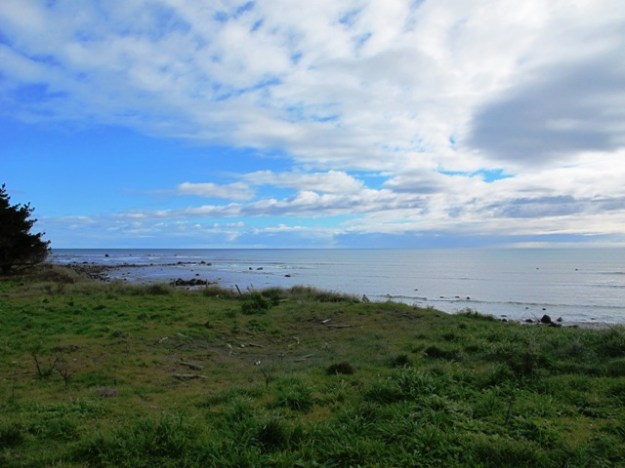
I went for a walk with my daughter along a Waitara beach yesterday. By the Orapa Reef, well known to surfers as Spot X, we scrambled up the bank for a view and to find the Waitara West Walkway and came across… the Brown Road “land farm”. There are areas with no fences here on the seaward side.
???????????????????????????????
“Land farms” sound so innocent, but they are the places where drilling and fracking waste from the petrochemical industry is spread so that, in simple terms, nature can take its course and this contaminated waste can, it is claimed, be rendered benign by bio-remediation in a remarkably short space of time.
???????????????????????????????
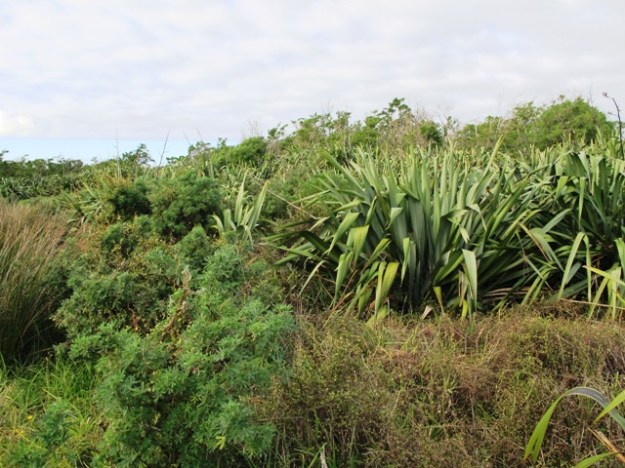
Taranaki Regional Council staffer, Gary Bedford, keeps saying publicly that land farms turn “ugly land” (his words) into lovely farm land. This presumably is what Bedford considers is “ugly land”. Some of us might call it sand dunes and think it has a role to play in the natural ecology of the area.
???????????????????????????????
Bedford may think that this bare, grassed area which is all that stands between the “land farm” and the coast is much more attractive. There is no riparian planting at all. The edge of the “land farm” looks very close to the bank at the edge of the beach but then the TRC consent appears to allow them to discharge this waste within 50 metres of the sea which seems awfully close to me.
???????????????????????????????
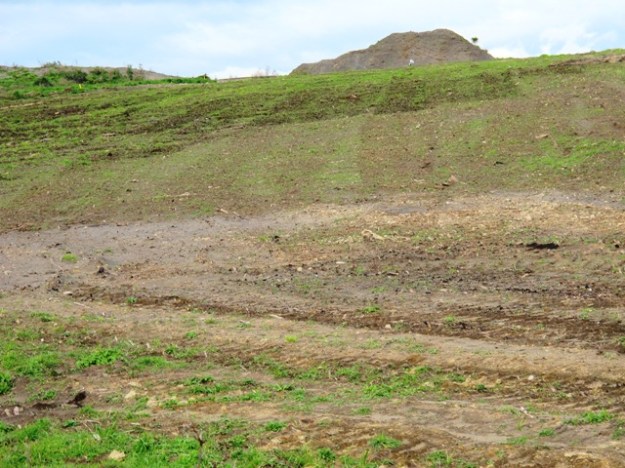
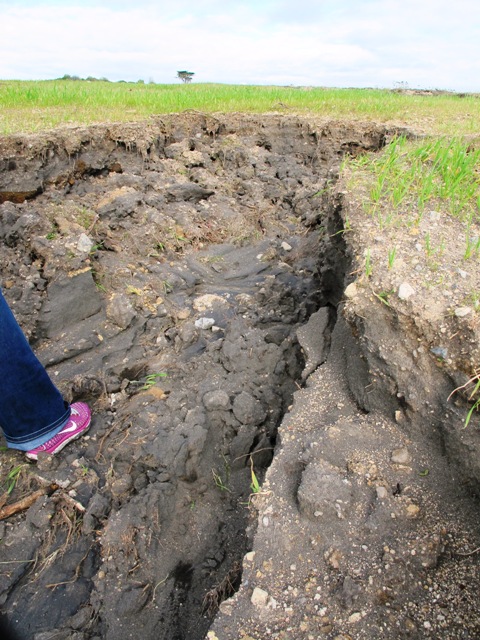
It appears that this area of the “land farm” has been levelled and resown in grass. However the edges are visibly eroding.
???????????????????????????????
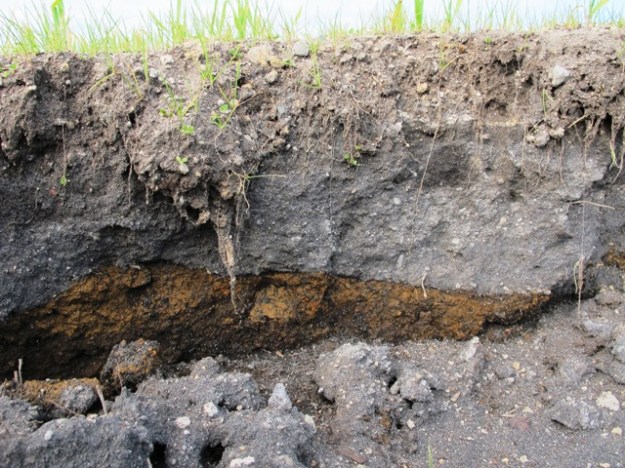
You can see a clear cross section of the soil.
???????????????????????????????
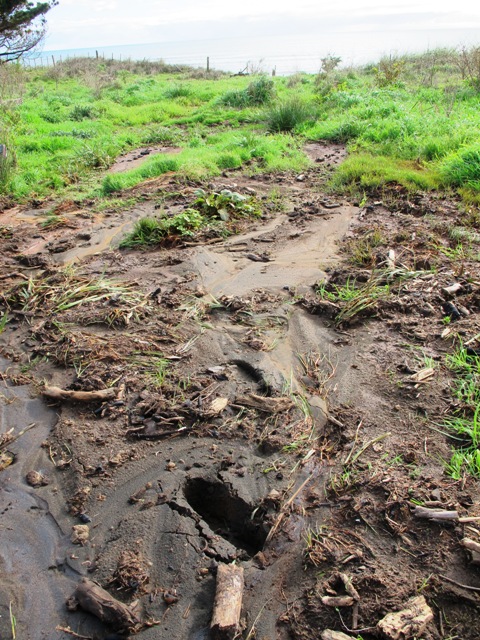
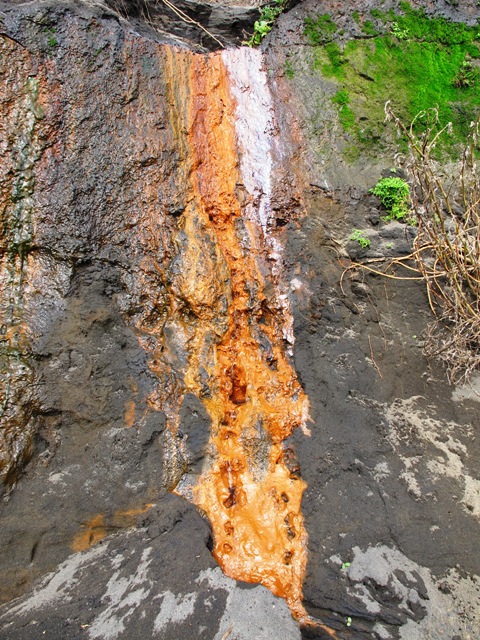
Immediately below the eroding area is a small natural swamp, presumably fed by a spring.
???????????????????????????????
It drains straight down the bank to the beach below. It is hard to see how leaching from the “land farm” area immediately above cannot be feeding into this boggy area and then draining down to the beach.
???????????????????????????????
There are other examples of natural drainage along this stretch of the beach. This one appears to be flowing all the time.
??????????????????????????????????????????????????????????????
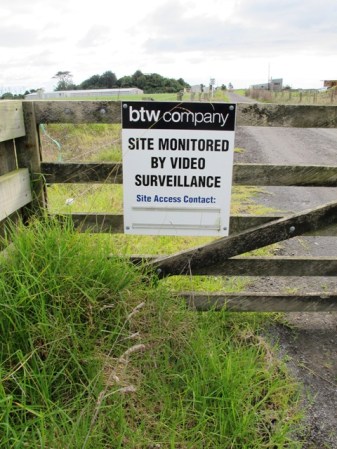
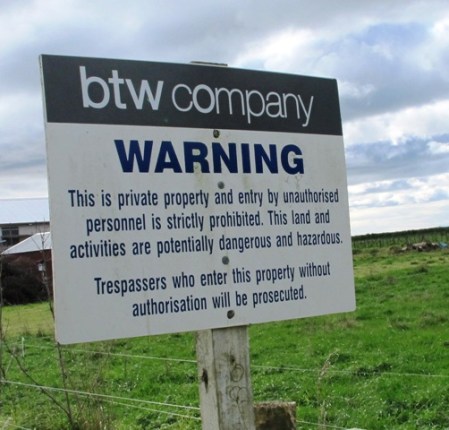
Curious, we drove around the road to find the entrance to the “land farm”. It is only a few hundred metres from the edge of Waitara and some highly desirable properties right on the coast. There we found signage, telling us that the area was under video surveillance (not on the beach side, apparently) and that it is a hazardous area.

Taranaki Regional Council keeps assuring us that these “land farms” in Taranaki are absolutely hunky dory, safe and managed to the highest standards. I do hope they are right but I can’t help being anxious about the spreading of contaminated and toxic waste so close to the coast and so close to a popular recreational area. When one matches all this drilling and fracking waste to the hazardous chemicals details in the applications for consents, it certainly raises questions. If this waste was benign, it would go to landfill. It isn’t, so it goes to “land farms” instead.
???????????????????????????????
What is even more disturbing is that we are taking the waste from other petrochemical exploration around the North Island. Apparently other local bodies are not so keen on keeping their petrochemical waste. This is not the Taranaki I want.