Author Archives: Abbie Jury

Unknown's avatar

About Abbie Jury

jury.co.nz Tikorangi The Jury Garden Taranaki NZ

My favourite white camellias

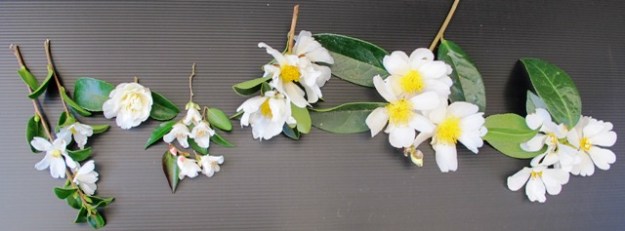
Left to right: C. microphylla,  sasanqua Silver Dollar, transnokoensis, drupifera, gauchowensis, yuhsienensis

Left to right: C. microphylla, sasanqua Silver Dollar, transnokoensis, drupifera, gauchowensis, yuhsienensis

When you think about it, it is likely that at least two thirds of camellias are pink with the remaining third shared by red and white. In this country, we have a passion for white flowers. Indeed it is seen as a mark of sophistication in some quarters to create a garden with only white flowered plants (Sissinghurst’s famed white garden meets new-age minimalism in the far flung colony), perhaps alleviated by the occasional addition of one extra colour – touches of red maybe, or black for the ultra sophisticates.

That love affair with white extends to camellias, especially where hedges are concerned. I would guess there are many more white camellia hedges than pink or red ones. While I don’t put the whites on a pedestal above their coloured cousins, there is a charm in pristine, white flowers – though not if they then turn to sludge brown and stay on the bush.

I mentioned Camellia gauchowensis last week. After many weeks, it is still looking splendid and has plenty of flower buds yet to open. We think this is a sasanqua – the Japanese camellias which start flowering in autumn. Many sasanquas have a sort of mossy, earthy scent which is peculiar to this family and C. gauchowensis certainly has it. Some optimists on overseas websites refer to its wonderful fragrance but it is just that typical wet moss sasanqua smell.

The sasanquas bring us the greatest range of good performing pure whites. Pretty much everybody knows Setsugekka with its medium to large semi double flowers and golden stamens. In fact it is not dissimilar to C. gauchowensis, or Weeping Maiden for that matter. There is a whole string of them that are similar, varying more in habit of growth than in flower. C. gauchowensis is probably my favourite only because that is the one I have planted in a prominent spot where I see it frequently.
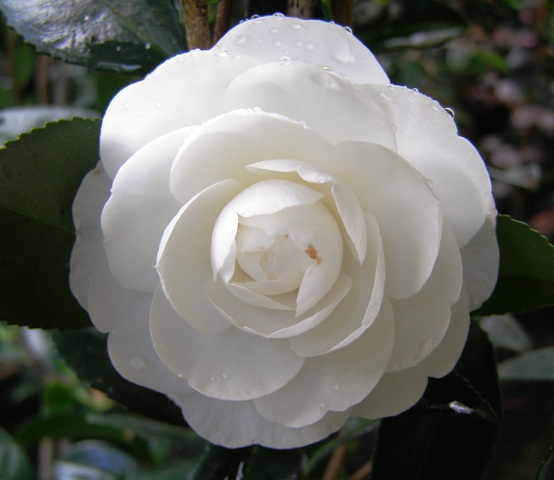
Early Pearly, one of the loveliest white sasanquas of them all

Early Pearly, one of the loveliest white sasanquas of them all

For beauty of white bloom in the sasanquas, it is hard to go past Early Pearly. It has what is described as a formal flower (a full set of petals with no visible stamens, held in tidy, overlaying circles). If I were to go for a white sasanqua hedge, I would probably pick Early Pearly but it is a matter of taste (and availability). It is the only white sasanqua I know with that flower form.

Away from the sasanquas, there are a fairly large number of species with small, white, single or semi double flowers. Tsaii is well known, though not my favourite. I think as it gets ever larger, it can be a little sparse in the foliage department. I have commented before about our choice of C. microphylla as both hedging and specimen plant. It has all but finished flowering for the season. We are also fans of C. transnokoensis (colloquially abbreviated to ‘transnok’) which has good dark foliage and masses of tiny white single flowers. In fact we are so keen on it that we have just planted two lengths of hedging and it is starting to open its flowers now. We are impressed by the somewhat obscure C. drupifera with its compact habit, dark foliage and plenty of mid-sized pure white flowers.

These single and semi double types have two big advantages. Many feed the birds in winter because the pollen and nectar are readily available in the visible stamens. They also fall and disintegrate quickly, so there is no sludge of spent blooms below. Most have blooms which are pretty short lived but to compensate for that, they set masses of flower buds so there are fresh flowers opening as the spent ones fall.

Whites are far more problematic in the japonica and hybrid camellias. These types tend to have flowers with much more substance – stiffer, more solid. This is where the show blooms come from and there is a wider range of flower form and blooms are often much larger. They also hang on to the bush for longer and the problem with white and pale blooms is that they show all weather damage and then hang about for longer in a brown and white state on the bush.
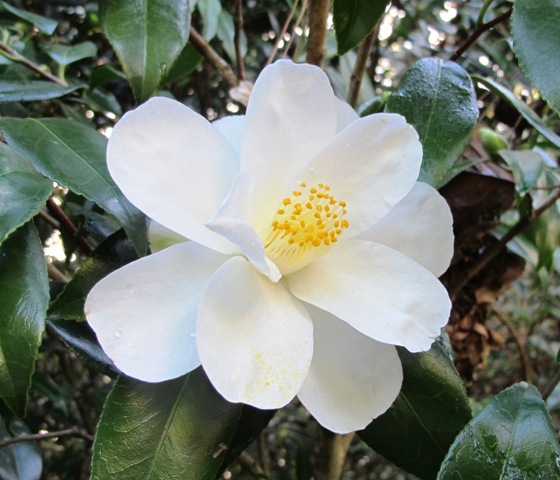
This one is Superstar. We can't pick it from Lily Pons

This one is Superstar. We can’t pick it from Lily Pons

The only ones I can honestly recommend in these larger flowered, mid season blooming types are Lily Pons or its twin sister, Superstar. We have never been able to pick the difference between the two. They are more semi doubles with fluted petals and golden stamens, showing better weather tolerance and more graceful ageing than other large whites of this type. We have never found a top performing, formal white japonica which doesn’t show every blemish.

In the end, it will come down to availability these days. The range of camellias offered for sale in this country has contracted dramatically. You may have to settle for what you can find, but take heart. There is a fairly high degree of flexibility possible because many actually look similar. In the end, choose on overall performance as a garden plant, not on the beauty of a single bloom.

First published in the Waikato Times and reprinted here with their permission.

Plant Collector: Lachenalia aloides quadricolor

The first lachenalia of the season: L. aloides quadricolor

The first lachenalia of the season: L. aloides quadricolor

The first of our lachenalias has come into bloom. ‘Quadricolor’ refers to the four colours in the blooms of this particular variety – lime green tubes with maroon tips are attached to the stem by a cap of orange and yellow. The commonest lachenalia that is seen in New Zealand is the somewhat garish, strong growing scarlet and orange which looks to me as if it should be sold amongst the plastic flowers in the red sheds. It is not in bloom yet. It used to be sold as ‘Pearsonii’ but that is an incorrect name, peculiar to this country. It is just a different form of L. aloides which is a variable species. We also grow L. aloides tricolor which is much later flowering and lime green with pale yellow and orange and the very different L. aloides var vanzyliae which is a striking pale blue and white with green tips.

Lachenalias are native to South Africa, predominantly the Cape Province. Most are winter flowering and summer dormant. We have different varieties flowering from now until early November in the garden. Many are easy enough to grow in sunny positions with good drainage, as long as you don’t get very heavy frosts. The foliage is not overpowering and doesn’t hang on too long after flowering finishes which makes for a tidier garden bulb. The highly desirable blue species come later in the season and not all are as easy to grow as L. aloides.

First published in the Waikato Times and reprinted here with their permission.
Garden lore: Friday June 28, 2013

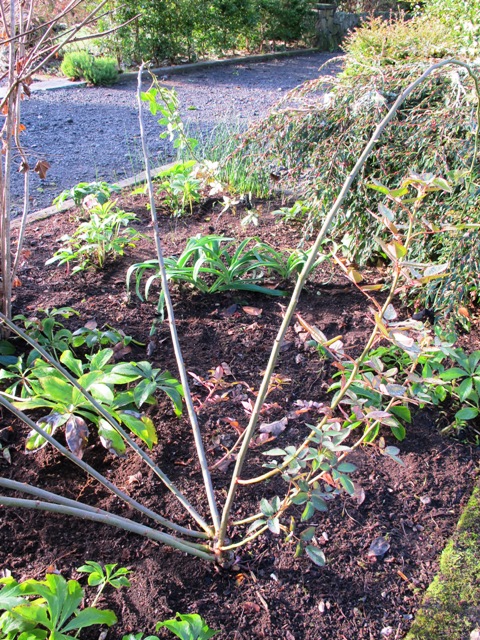
Hooping roses to maximise flowering

Hooping roses to maximise flowering

Hooping roses to maximise flowering is a technique I first saw done in Ayrlies Garden when Neil Ross was head gardener. If you have a rose which puts out long, whippy growths, arching those growths over and tying them down hugely increases the number of flowers. This is because it encourages all the leaf buds along the length of the stem to set flower buds as well by dispersing the hormones which trigger flowering, rather than concentrating them at the top. I insert wire hoops and tie the runners down with stockinette. The ground cover plants will hide the wire hoops by spring time. It takes a bit of space – a metre or more on each aspect. In a narrow space, you can do it to either side only in a free form re-creation of espalier. It does work, I can vouch for that. The wire hoops are easy to relocate each season as required though I sometimes leave the long runners in place for more than one season, pruning back all the side growths.

I am pruning roses now, but those gardeners in more frosty conditions usually leave it later in the winter. Pruning encourages the rose into growth and that fresh growth is particularly vulnerable to getting burned by frost. Rake out all the fallen rose leaves while you are about it. These can harbour disease and, like spent brassicas, should not be put through the compost heap unless you make hot compost to kill off the nasties.

For more information, check out my earlier post: a short lesson in hooping.

First printed in the Waikato Times and reprinted here with their permission.
Know thine species

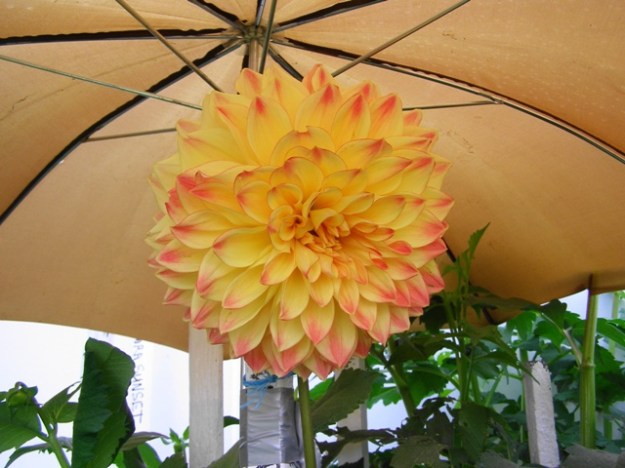
The show dahlia

The show dahlia

You can quite easily live out your gardening days without ever worrying about species and hybrids. Indeed you can, but as with most activities, many people will find that the more they know, the more they enjoy what they are doing.

At its simplest level, species are the natural form of a plant in the wild. And all plants originated somewhere in the wild.

Hybrids are mix of two different species in the first instance and after that they can quickly become a mix of many different species and resulting hybrids getting ever more complex genetic makeup. There is no value judgement in the rights and wrongs of that. Sometimes these hybrids occur in the wild without any human intervention (usually referred to as “natural hybrids”). Often it is done deliberately to try and improve plants.

A variation on controlled hybridising is line breeding – raising many seed from a plant and selecting only the very best with which to continue. Then seed from those best plants is raised time after time until it shows stability. Seed can be extremely variable and this form of line breeding is trying to edit out the less desirable aspects over several generations.

It happens all the time with edible crops. Think how much sweet corn and kiwifruit have changed over the years. The original, wild collected species of edible crops are often poor shadows of what we have now in terms of yield, reliable production, ease of handling and palatability.

It is not always true, of course. Sometimes commercial imperatives have seen us saddled with inferior tasting product – tomatoes are a prime example. And there are concerns about the loss of the wild species which are important to maintain the gene pool for food crops.

As far as ornamental plants are concerned, most of us will have gardens which are a mix of species and hybrids. There are no hard and fast rules although I have met a fair number of gardeners in my time who parade a collection of species only as a badge of status.

Species Camellia gauchowensis

Species Camellia gauchowensis

Some species have a simple charm which is lost in their showier hybrids. Others are nondescript in the extreme. Some highly desirable species are simply damn difficult to grow whereas the hybrids bring new vigour which makes them much more rewarding garden plants. Sometimes there are species which make splendid garden plants but they can be overlooked because their names are not appealing. Camellia gauchowensis has been the standout star of that family here recently and why anybody would grow the likes of Mine No Yuki instead of C. gauchowensis, I don’t know.

We have been revisiting the camellia species as we pick over the best options in the face of the devastating camellia petal blight which has so affected many of the hybrids we grow. It is not that the species don’t get it. It is just that some of them have less susceptibility and have other good characteristics which are worth looking at. More on this in the future.

Show blooms, no matter which plant family, often tend to be over-bred hybrids which are but distantly related to original species. Dahlias which are too heavy to hold their heads up without staking, bizarre daffodil forms, overblown cyclamen or chrysanthemums, enormous begonia flowers – anything that is bigger, allegedly better or a novelty genetic freak.

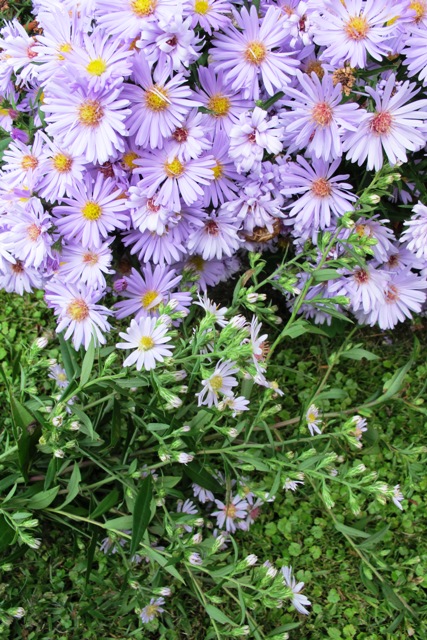
Named hybrid aster at top, self sown seedling at bottom

Named hybrid aster at top, self sown seedling at bottom

But controlled hybridising can also give us garden plants which are hugely better performers. You can see in the photograph of asters that the abundance of blooms at the top are from a named hybrid whereas the few poor specimens at the bottom are from a self sown seedling which has probably reverted closer to how the original species looks.

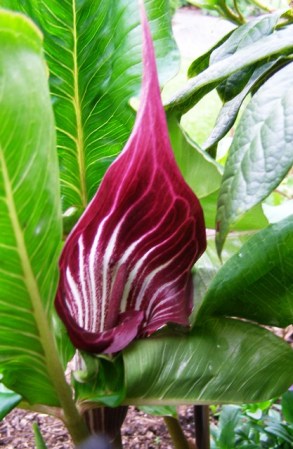
Hybrid arisaemas for our own garden

Hybrid arisaemas for our own garden

I am of course married to a plant breeder who is driven by the desire to create better performing garden plants. Sometimes it is just to get plants which will grow better in our garden here. His work with arisaemas is of this ilk. Many of the desirable arisaemas are a battle to grow in our conditions with insufficient chill and they simply don’t come back a second year. By hybridising two different species, he can get hybrid vigour which means they are much more reliable and stronger growing.

Other plants may be hybridised to look for new or improved characteristics – extending the colour range, reducing the impact of disease, getting more compact growth, better floral display, a longer season, sterility (to avoid unwanted seeding) or bringing the best features of different hybrids together in one plant. There are many reasons to hybridise and one of the final tests before selecting a new cultivar for release is to measure it against both the originating species and the actual parent plants. If it is not a significant improvement, then it won’t get released on the market.

Hybrids have their place in the ornamental garden and in the edible garden. But in a world which is squeezing the natural environment in every way possible, we need to retain the original species for reasons of ecology and bio-diversity. The more people who understand the difference the better – even more so if they can move away from the modern “green” cliché that says the original species are, by definition, better. They are not, but they are important.

First published in the Waikato Times and reprinted here with their permission.

Garden lore

“Now that all the other many-hued flowers have scattered without a trace, the dead white heads of the miscanthus remains alone in the fields until the end of winter. As it stands there so gracefully, not realising that it has entered its dotage, and bending its head as if in memory of past glories, it looks exactly like a very old person, and one cannot help feeling sorry for it.”

Sei Shonagon , The Pillow Book of Sei Shonagon (tenth century),
translated by Ivan Morris (1967)

???????????????????????????????
Pruning wisterias
Winter is the pruning time for many plants, but none more so than wisteria. The most common reason for their failure to flower in spring is savage pruning. Don’t cut them off at ground level because they flower from last year’s growth so you will be cutting off all the potential flower buds which form on the spurs. Think of them like an apple tree. Find the main stems which give the framework or shape to the plant. Shorten all the other whippy growths to between 3 or 4 leaf buds from the main stems. Thin out the ones at the base by cutting them back flush to the trunk. You don’t want the growths which sneak along at ground level because they will put down roots and your one plant can become many.

At the same time, deal to borer where you spot it. You will find the borer holes in the older wood. I tend to reach for the CRC or cooking oil to spray down the holes. It smothers them. Or you can use fly spray. None of these seem to harm the plant whereas the borer can ruin entire sections over time. It pays to keep replacement leaders coming through in case your main stems get too badly damaged.

Wisteria whips are very flexible when first cut and can be used for weaving in a similar way to basket willow.

Step by step instructions for pruning (with photos) here.

First published in the Waikato Times and reprinted here with their permission.