Author Archives: Abbie Jury

Unknown's avatar

About Abbie Jury

jury.co.nz Tikorangi The Jury Garden Taranaki NZ

Countdown to Festival, October 22, 2010

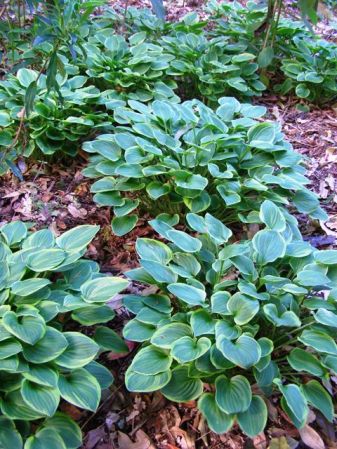
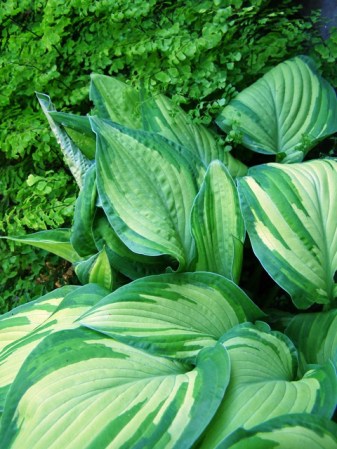
* It is just one week out from Festival this year and John and Phyllis Malcolm at Lockinge Garden near Kapuni have three young black swans in residence on their lake. The wet winter has certainly suited the hostas and Big Daddy, planted around the lake, is looking particularly splendid. Phyllis says that the irises and Rhododendron Lemon Lodge are looking spot on for flowering right on cue and she is really pleased with how the honesty and aquilegias are naturalising and filling in the spaces under their mature trees.

* Nearer Opunake, Sheryl and Geoff Campbell on Patiki Road are nearly through the last round of preparation (most of us work our way right round our gardens more than once in ever increasing detail as we prepare). The roses put on tremendous new growth in the few sunny days we have had, the clematis are coming into flower and the white wisteria is promising to be spectacular next week.

* Moving around towards Warea, Maria van der Poel is looking forward to her second year of opening. She has been like a big kid playing with a new toy in her recently erected hot house and, with assistance from a friend, has plenty of plants potted up for sale to garden visitors. The wood pigeons have returned to her garden for spring time and the roses have responded to some special TLC and are rocketing away despite recent coastal winds buffeting them around. Maria has her fingers crossed for good weather and a great festival for all her fellow garden openers.

* Inland from Stratford, Lorri and Bruce Ellis have one of the largest private gardens in the Festival and Lorri plans her preparation from six months out. Even so, she wryly notes, she has a tendency to underestimate the vagaries of the spring weather. The recent winds have hurled branches all round the place and the horrendous September rains (324ml of the stuff at their place) saw her and Bruce wading through sticky mud and papa up to the tops of their gumboots as they worked to complete the new trail through their dell. On the bright side, she is enjoying the blues in her garden – a sea of bluebells complemented by a bank of purple ajuga which is alive with busy bumblebees, the mauve pawlonia and the purple sparaxias completing the picture.

* Down the road, more or less, and around a few corners at Gordon Dale Gardens near Toko,
Jan Worthington agrees that timing is all important in the lead-up to Festival. Did she prune the standard photinias at the right time so that they will be glowing red balls at the start of November? Will there be any roses in flower, given the cold spring? How quickly will the vegetables grow so that they look strong, healthy and nearly ready for harvest? Will the bare patches in the garden be filled out with the annuals and perennials over the next week? A few days of sun and warmer weather will make Jan breathe more easily.

* Near Hawera, at Puketarata, Jennifer Horner is irritated by the rabbits nibbling at the new growth on her pinks and tiarellas. Other than that, she is hoping that winds will not return after the mess left last week. They are busy enough with the final round of weeding and tidying and can do without the extra work.

* The unusually wet spring is a recurring theme and Vance Hooper at Magnolia Grove says that at least they have seen the worst case scenario for springs and groundwater on their property after five years of living there. It is so bad in one area that he and Kathryn have decided that best solution will be develop some permanent ponds there in the near future (after Festival, no doubt). However, even the few days of fine weather recently has made a big difference, getting the roses and perennials moving into growth. The pink floribunda wisteria is promising its best display yet.

* It is many years since Josephine and Quinton Reeves at Wintringham in New Plymouth have opened for Festival and they are making a welcome return this year. Josephine says that their blue clematis are rocketing into flower but her Cornus controversa variegata is threatening to become The Wedding Cake Tree of Pisa as it has developed a significant lean in a quest to get away from the domineering influence of the adjacent 80 year old golden elm. It is not the pesky mynah birds that are visiting their ponga trees (as mentioned recently at Te Kainga Marire) but visiting doves who come to sojourn daily and carry out their courting rituals. More decorative, at least, than the mynahs.

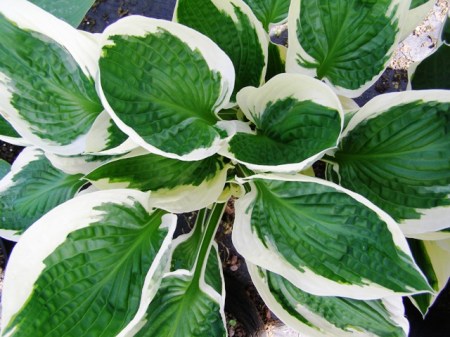
* Festival newcomers, Alan and Cath Morris at Pukemara (also in New Plymouth) have been feeling tested by the wind and rain but are well on top of the final preparation work. They are hoping for more sunshine and warmth to hurry along the flower buds on the vireya rhododendrons, but the roses are opening their first buds and the hostas are rocketing away and filling the spaces. They are really looking forward to opening day next Friday.

Tikorangi Notes: Friday October 15, 2010

Latest posts:
1) Hippeastrum aulicum is flowering in abundance in our woodland gardens.
2) Garden tasks for the upcoming week as we hurtle along in spring.
3) Choosing a wheelbarrow – the latest in Abbie’s Outdoor Classroom series.
4) Two weeks until our annual Taranaki Rhododendron and Garden Festival – the pressure is on as we count down.
5) Tried and True – ligularia reniformis (widely referred to as the tractor-seat ligularia).
6) A hot, dry autumn in Spain and Portugal – the first of Abbie’s columns on her recent jaunt to those countries.


Rhododendron polyandrum - big and very fragrant

Rhododendron polyandrum - big and very fragrant


Tikorangi notes
: October 15, 2010
I went away for three weeks and came home to find that I had entirely missed the erythronium flowering for the year, the magnolias are all but over, the michelias are past their peak, but the pleione orchids and rhododendrons are looking great. This is R.polyandrum, one of our favourite species. The fragrance is divine and it is one of the breeder parents of a whole range of cultivars bred by both Felix Jury and Mark, bringing healthy characteristics, flower size and its delicious scent. This is one of those plants where the scent can hang heavy in the air metres away from a large specimen. Others might think it can be a bit open, leggy even, but we don’t mind that because it has splendid peeling bark and we like the open habit rather than a heavy, dense shrub which sits solid on the ground.

Plant Collector – Hippeastrum aulicum


Hippeastrum aulicum

Hippeastrum aulicum

At this time of the year the big red flowers of Hippeastrum aulicum look like Jacobean lilies. We use it as a woodland plant because our past experience is that narcissi fly can devastate hippeastrums planted in the sun but the flies don’t go into the shaded areas to lay their eggs in the crowns of the bulbs. It takes a while for the bulbs to get large enough to flower but they are happy to be planted and left alone, gently increasing year by year so, after several decades, we have large clumps of them which oblige with gorgeous blooms in spring, standing 60 to 70cm high on strong stems. With us, they are completely evergreen though they may drop their foliage in harsher conditions.

A colourful woodland plant - H. aulicum

A colourful woodland plant – H. aulicum

Just for a change, the hippeastrum family doesn’t come from South Africa which is home to the majority of bulbs that we grow successfully here. Instead they hail from South America and this particular one is native to Brazil and Paraguay. H. aulicum is a species and not widely available though the curious H.papilio is sometimes offered for sale (expect to pay about $30 for a single, flowering sized bulb) and there are many hybrids which are brightly coloured, big flowered things for growing in containers. I am not so keen on the hybrids, papilio is less obliging as a garden plant but aulicum is both exotic to look at and a consistent performer.

In the Garden this Week – October 15, 2010

• I headed overseas for three weeks and came home to find that I had successfully missed two weeks of hideous weather and the season had changed completely in the third week. The pressure is on in the garden. Most plants are putting on their main growth spurt for the year and that includes the weeds. If you can eliminate the first round of germinating weeds this season, you can do a lot to break the cycle.

• When you have done a weeding round, pile on the mulch to nourish the soil, suppress the next series of weed seeds which will be wanting to germinate and stop the garden from drying out over summer. We favour a thick layer of compost which we make ourselves (but you need to make sure your compost is free of weed seeds). Leaf litter, bark or woodchip, calf shed shavings, old silage, barley straw, pine needles or pea straw are other options.

• Get woody trees and shrubs planted as soon as possible. That includes any new hedging and fruit trees. They need time to settle in and make some fresh root growth before the heat and dry of summer. This is even more important if you live close to the coast where soils are usually lighter or in South Taranaki which dries out faster than the north.

• The cold snap earlier this week was a good reminder as to why it does not pay to rush planting out summer vegetables like tomatoes, capsicums and corn. Labour Weekend is the traditional time but it may pay to wait a little longer until it is clear that we are consistently warmer. These plants don’t like cold changes.

• Get peas sown now. You are running out of time for this season. Planted now, you may have your timing right for fresh peas for Christmas dinner.

• You should be planting out main crop potatoes and in warmer areas, kumara runners can go in soon. Kumara need a long growing season.

• If you have your vegetable garden dug over and prepared for planting, go in with the rake every few days. You will keep cultivating the soil to a fine tilth and hoeing off successive waves of germinating seeds.

• If you persist with the opinion that our native plants are boring, take a look at the island bed on Courtenay Street outside the fire station. It stopped me dead in my tracks from right across the road and I had to go and have a closer look. It is as good a combination of plants as you will ever see. The fact that they are natives is almost irrelevant to the fact that it is just an exceptionally pleasing and interesting small public planting.

Countdown to Festival: October 15, 2010

• With only two weeks left before Festival starts, I am sure we could all have done without the savage winds early this week. In our case it felled yet another massive Lombardy poplar along with the power lines which service a fair number of properties along the road. We are desperately hoping that is the end of any of our trees committing hari-kari before the chainsaw wielding men get to the vulnerable ones straight after Festival. But as we waited for the Powerco crew to arrive, our trees festooned in broken power lines, Mark and I were deeply shocked to see a pair of visitors come out from the garden. They had found the honesty box and the directions and taken themselves around, presumably stepping over and under power lines. We have informed our two dogs that they failed entirely as an early warning system when it could have really mattered.

• Chris Goodin, who gardens around Pungarehu way on Mirihau Road, is very excited about the exhibition of flower paintings by Auckland artist Karl Maughan which she is having in her home this festival. Because the artist will be overseas during the event, they are planning a small exhibition opening at daughter Nicci’s florist premises in town this coming Wednesday, 20 October when the artist can be present. If you are interested in attending, call Chris on 7828 160 or Nicci Goodin on 757 2233. The paintings have all been inspired by Taranaki with a particular link to Pukeiti.

• At La Rosaleda in New Plymouth, Coleen Peri’s best laid plans have been disrupted. She had been feeling confident and well on track until the really awful early spring. She lost two weeping silver pears in one gale and has had to resort to some reasonably expensive, specialised metal staking for her tall standard roses as she feared they could snap in the wind. However, despite the cold, wet and windy conditions, her roses are well advanced and she says most will be flowering for festival. While Coleen describes herself as an impatient gardener, her delight that her Phlomis tuberosa is about to bloom after about three years would suggest that she has more patience than some. She is hoping the Crambe cordifolia will follow suit and finally flower.

• In Waitara, Margaret Goble reports that her roses are already starting to show colour so there should be a splendid display from this experienced rosarian during festival. She is really pleased with how her window boxes are looking – a froth of lobelia and pansies – but her hanging baskets are letting the side down and languishing behind. They need some warmer weather to hurry them along in time. The bearded irises (Margaret has a substantial planting of these and was kind enough to give me some of a pure blue one I admired greatly) are spiking up right on cue this year. Margaret is keeping mum on the design changes she has made in her garden this year (though she did let me into one secret) – you will just have to visit and see for yourself.

• At the time of writing, it seems like a distant memory but Maree Rowe had the sunblock out last week after she unwittingly burned herself the previous day. Weeding has been keeping her very busy. As a certified organic property, she does not use weedkillers but does it all by hand. Readers of the Weekend Gardener should have spotted the feature on Havenview Vegetable Garden in the issue which came out last week.

• How apt to see that the winner of the Early Bird Prize Package (that is the garden visitor’s equivalent of a goody bag) is none other than Stratford’s Shirley Greenhill. Shirley is a renowned gardener herself who opened her large garden as part of the Festival for many years before she retired and downsized. Those of us who know Shirley will be looking forward to seeing her out and about the gardens wearing her complimentary hot pink and white festival tee shirts.