Author Archives: Abbie Jury

Unknown's avatar

About Abbie Jury

jury.co.nz Tikorangi The Jury Garden Taranaki NZ

Threatened Plants of New Zealand

After last week’s book review lambasting an author who was way out of her depth, the first indication that this publication is in a different league altogether is the use of multiple authors, all with short biographies which demonstrate a depth of experience and knowledge of the topic. You can be sure that this major reference book has been extensively peer reviewed.

It was a revelation here just how many of our native plants are threatened with extinction – one in thirteen apparently. We knew about Pennantia baylisiana (down to a single, naturally occurring plant in its habitat on Three Kings Island) because we have a large cutting-grown specimen from it in our own garden. Similarly we knew that the kakabeak was seriously endangered but not that it too was reduced to a single plant in the wild. Many of the other threatened plants were news to us and the authors are flagging real concerns that we are in danger of losing our diversity of native plants. Alas plants are not as cute as black robins or kakapo so they do not garner the same public attention.

This is a sumptuous hardback book with a great deal of technical information but well organised and presented so that a broad spectrum of interested readers can find the information they need. Each entry has its botanical name, conservation status measured by accepted national and international convention, botanical description, details of how to recognise and identify the plant, its distribution, habitat and threats to survival. Add in several photographs and a map showing the location in the wild and you end up with a really good reference book which will last for many years in this country. Its somewhat hefty price-tag is justified and anybody with an interest in our native flora or botany will want to have their own copy on the bookshelf.

Threatened Plants of New Zealand by Peter de Lange, Peter Heenan, David Norton, Jeremy Rolfe and John Sawyer. (Canterbury University Press; ISBN: 978 1 877257 56 8).

Tried and True – vireya rhododendrons

• Extended flowering, sometimes more than once a year.
• Once established, generally only need dead heading and an occasional prune.
• Available from garden centres in a range of colours.
• Easy to propagate at home from cutting.

The smaller leafed, smaller flowered vireya hybrids are often tougher and better performing as garden plants.

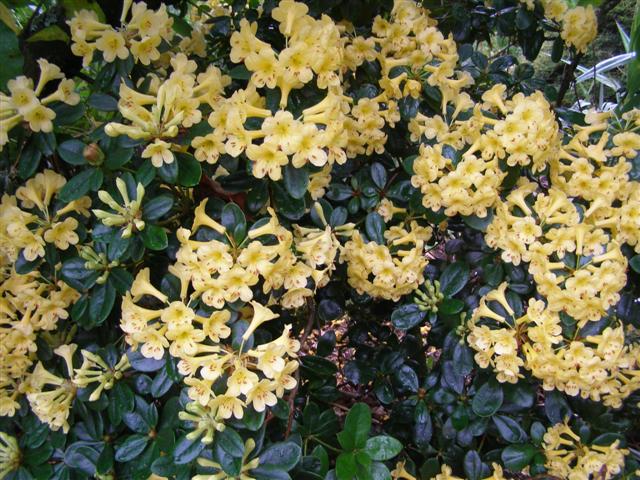
This small flowered yellow vireya has been a picture in full flower in recent weeks. Vireyas can be touchy as garden plants but get them well established in a frost free area with good drainage and they are most rewarding. Unfortunately people are often drawn to the exceptionally showy, fragrant varieties and bypass these less spectacular types. The big scented trumpet types with heavy felted foliage can be very touchy indeed and you often don’t get the flower power display of the smaller leafed, smaller flowered ones. This particular one is a sister seedling to one we have sold in the past under the name of Mellow Yellow but there is a whole range of different vireyas available with the same characteristics – in different colours too. They are hardier and tougher by nature and certainly justify a place in the garden. Flowering times are unpredictable with vireyas but many will repeat flower later in the year or gently open flower buds over an extended period of many months.

Pruning a rampant climber: step-by-step with Abbie and Mark Jury

1) This climber has gone well past the point where a light trim will suffice and allow more light in the window behind. However, we don’t want to dig it out and cutting it off at the ground is likely to kill it. This is an ornamental jasmine (not the dangerously rampant variety) and we like the fragrance.

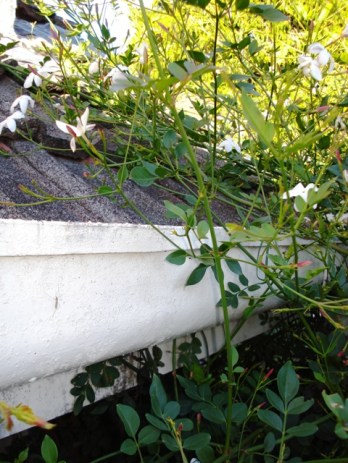
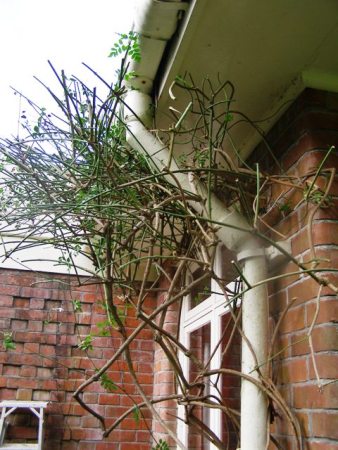
2)The tendrils going over and under the spouting, and even worse, under the roof tiles are a warning that action needs to be taken now. Looking into the mass of vines, you can see that the downpipe is under threat and also that the plant is putting out new growth from the middle and not just on top.

3) Cut back the foliage hard. We are aiming for a curved shape around the corner of the house. It is easier to work out which vines to keep when you can see where each one is headed. You can use a chainsaw for the initial shaping and follow up with clippers and secateurs to tidy up the rough cuts.

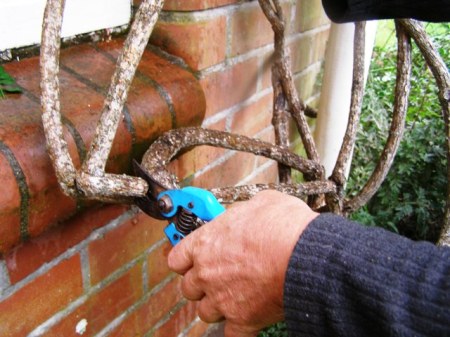
4) Trace the path taken by the vines and remove unwanted stems in sections. If you try and pull it out in long lengths, you run the risk of damaging the growths you want to keep. We are trying to protect the house and to allow the window to be opened so we are thinning extensively. More frequent pruning would have avoided this.

5) Thin out clutter and remove all dead wood.

6) The finished product looks shorn and a shadow of its former self but should grow away strongly. In our mild and soft climate, we can do this type of cutting any time of the year but gardeners in cold, inland areas may wish to wait until late winter or early spring, timed for just before the plant will put on its first flush of new season’s growth.

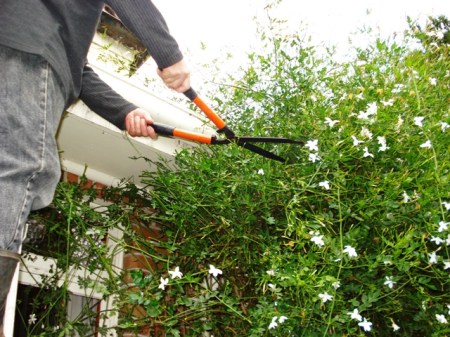
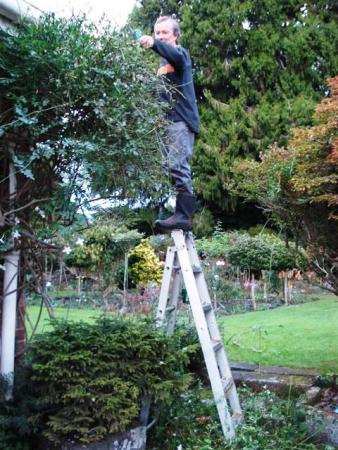
7) This is the photo that we did not use in the newspaper when this feature first ran – not perhaps the best advertisement for safe practice (though Mark asserts that he was holding on tightly with the hand which is out of sight…).

Camellia Diary – the second entry. May 13, 2010

Click to see all Camellia diary entries

Click on the Camellia diary logo above to see all diary entries

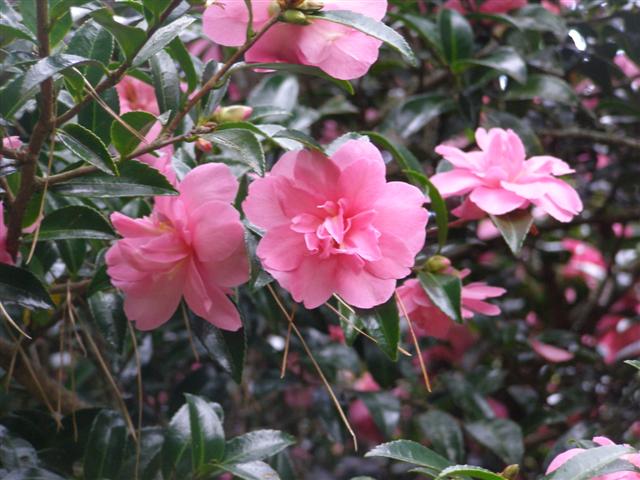
Camellia sasanqua Elfin Rose - a personal favourite

Camellia sasanqua Elfin Rose - a personal favourite

Now that we are well and truly into autumn, it is the sasanquas which are the dominant flowering shrub in the garden. What they sometimes lack in flower substance and form, they more than make up in mass display. And in a country where camellias are used extensively as garden plants and shelter, we have been hit hard by the advent of the dreaded camellia petal blight from mid season onwards. The sasanquas flower early enough to miss the onset of that scourge.

Crimson King - a graceful plant with a light canopy

My personal picks are Elfin Rose and Crimson King which just keep on flowering but there are a host of others which are very charming in their own right – Bettie Patricia, Gay Border, Mine No Yuki, Yoimachi (a sasanqua hybrid), Bonanza and Silver Dollar to name but a few.

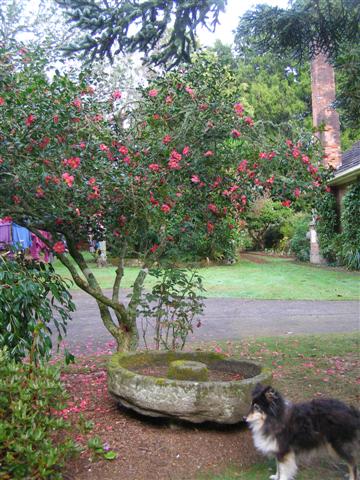
Many of our plants are decades old, three to four metres high and just as wide. Of all the different groups of camellias, sasanquas particularly lend themselves to clipping and shaping, turning into either layered forms or light canopies often growing from multiple trunks. There is a grace to be found in their natural growth habit and form which is not always present in the more sturdy japonicas.

In the species, we couldn’t help but notice that brevistyla was brief indeed in flower. While individual blooms continue to open, the mass flowering can only have lasted ten days. The closely related microphylla, however, has continued to put on a really good show for nigh on a month now. I was writing a piece on the earliest flowering camellias for a national gardening magazine and friend and president of the NZ Camellia Society, Tony Barnes, mentioned C.granthamiana as one of the earliest to open.

We are pretty sure it is C. gauchowensis

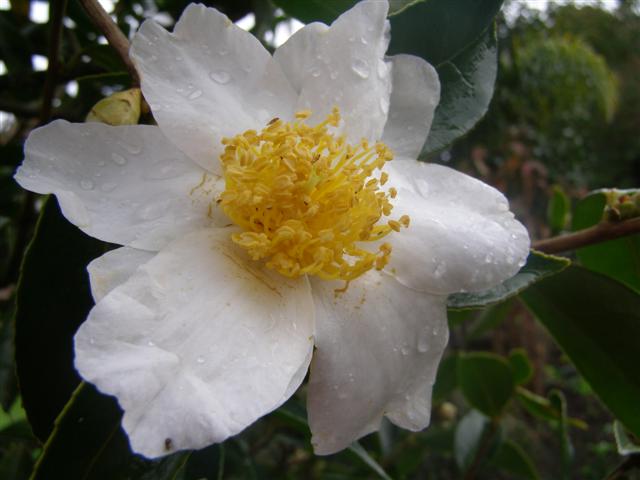
We have it somewhere in the garden but we appear to have mislaid it – which is to say that Mark can’t remember where he planted it and neither of us have come across it yet. We have what we think is C.gauchowensis in flower. It is another pristine white single bloom as many of the species are , on a narrow, columnar bush. Unfortunately it does get easily weather-marked. Few of the species are inherently spectacular when compared to the modern cultivars on offer but they have a quiet charm which we enjoy.

Tikorangi notes: May 6, 2010

Latest posts:

1) Dear oh dear, Penguin Books (NZ). Did nobody even bother to double check the content of the new Tui New Zealand Fruit Garden book released this week? Not only are there rather too many errors, but there seems to be a certain amount of what might be called plagiarism going on – a bit too much cutting and pasting from easily traced overseas websites (even Wikipedia – who cuts and pastes from Wikipedia for a book?) and none of it seems to be attributed.

2) A woodland plant supreme – now Farfugium japonicum argenteum but still often referred to as a ligularia.

3) Autumn is well and truly here and we advise taking full advantage of the continuing fine, calm and dry weather – garden tasks for this week.

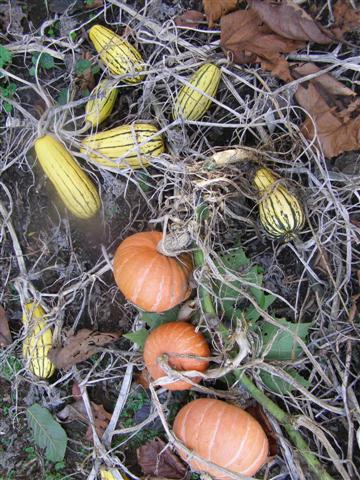
Some fruits of a Tikorangi autumn

It is feijoa season here. This is a fruit from South America which we have almost made our own in mild areas of New Zealand. The plant grows to a large evergreen shrub which is amazingly forgiving, tolerating even salt winds so it is sometimes used as hedging. Good forms will fruit prolifically. When our children were little, we had a row of four old plants along a roadside boundary and they would routinely head outside with a teaspoon to sit under the trees and eat their fill. Now that they have all left home and live in places where the humble feijoa is virtually unknown, they get very nostalgic when I tell them the fruit is falling. For those who have never encountered a feijoa (and they don’t transport well so while they are sold dirt cheap in fruiterers and on roadside stalls locally, they are not generally shipped elsewhere), the common method of eating them is either to scoop out the centre with a teaspoon or to peel it and eat the whole centre. There are no bothersome pips or stones.
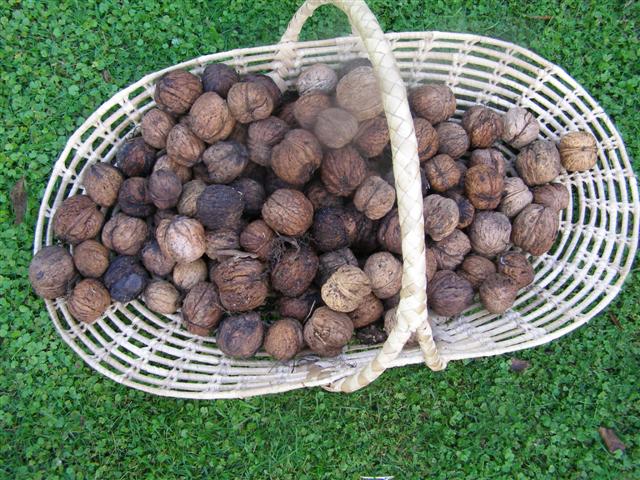
And just to show how mild we are, the physalis (referred to here as Cape Gooseberries even though they too are South American) seed down and pop up around the place and we even grow macadamia nuts successfully. We are right on the margins of suitability for growing macadamia trees and we get occasional years when fruit set is aborted, but in the main they crop consistently for us. It is just a shame they are so difficult to get out of their shells because they are a Rolls Royce nut of choice.