Category Archives: Abbie’s column

Abbie’s newspaper columns

A gem of a garden

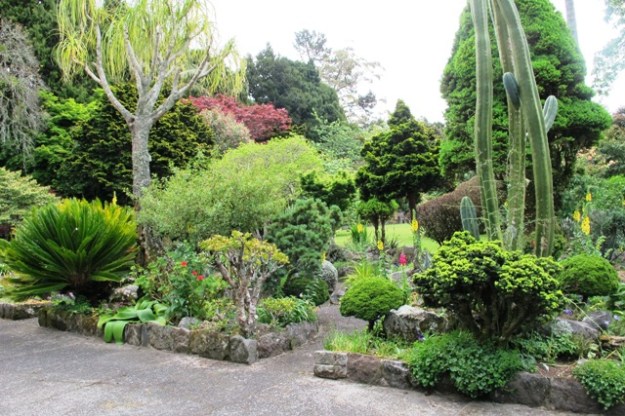
The front garden of Number 11 in tawny and red tones

The front garden of Number 11 in tawny and red tones

Tiny gardens have not featured large on my radar. They are just not part of my life experience so far but they are a reality for many people, whether by choice or circumstance.

When your allotted physical space in life is to have only one of those smaller garden spaces, it is undeniably different. I stayed with garden writer and gardener, Robyn Kilty, in Christchurch. Her own garden which has been acclaimed as one of the best examples of its type, is huge in charm but very small in size.

If you are working in a small space, you can go the Ellerslie show garden way and produce a static scene which is primped and starched to perfection as if frozen in time. Show gardens leave me cold, personally, and the idea of creating and maintaining that in my own environment around my home is even less appealing. So you will need to look elsewhere for ideas on that approach. Try magazines because that is what you will be creating – the glossy feature look. It will probably be unchanging through the seasons and it will not usually have a specific sense of place but be more universal in style. To me, that is like making more housework outdoors because it will need tidying, dusting and vacuuming twice a week to keep it pristine.

I was far more interested in what Robyn was achieving – seasonal change, interesting plants with plenty of colour, texture and detail and a garden which invited you take a little time to enjoy it. But in small spaces, everything has to be thought out, carefully controlled and restrained. “If you get something wrong in a small garden,” Robyn said to me, “it is in your face all the time. You can’t ignore it or get away from it.”

It is a mistake to think that all plants have to be tiny to be in proportion. Sure, if your garden bed is only 3 metres long and 1 metre wide, you don’t want a plant that is going to spread to a couple of metres across. But if you keep everything itsy bitsy, you will end up looking as if you have planted a traffic island. You still need height and some plants with stature in their foliage to give grace and proportion. But you need height without width. You can still be bold in a tiny space.

You will probably end up having to prune and clip regularly to keep plants to their allotted space. Bold foliage may be fine but triffids you can do without.

It is not compulsory to have lawn. If you have grass, you need a lawnmower which will also mean a shed to contain it. Sometimes it is better to manage a little open space by paving and do away with lawn altogether.

Achieving some level of continuity is pleasing in any garden, no matter the scale. In a tiny garden, it might be by a little formality in design, by small groupings of the same plant, mirroring a planting on one side of the path to the other, or by very careful colour management. In late summer, Robyn’s front garden was in tawny autumn shades and red whereas her even smaller back area was featuring deep burgundy with just touches of pure blue and yellow to give it zing.

A touch of formality, careful colour choices and paving instead of lawn in a tiny back garden area

A touch of formality, careful colour choices and paving instead of lawn in a tiny back garden area

You have to be more restrained in a small space, even if you are creating a colourful or maybe flamboyant display. Every plant has to justify its place. The real gardening skills come in managing changes through the seasons, which make it all a great deal more interesting. Bulbs need to be used so they can star when in flower, but not look awful and scruffy when they are passing over. As one dominant plant passes over for the season (maybe a hydrangea that has finished flowering or a hosta that is going dormant), another nearby plant needs to be coming into its own. The challenge in a small garden is to make the whole area work for you all year, giving you lovely views out your windows, from the road frontage and from all your viewing points within the space.

Ever the practical type, I would find it hugely challenging to manage without the hidden areas “out the back” as we call them. If you have plants in containers, you need somewhere to repot them. You still need a shed or cupboard for tools and packets, even if your space is too small to warrant a wheelbarrow. Dealing with green waste would be a challenge without a compost heap. Yet if you have a small one of those, there will be trimmings and prunings that are too large for it. You probably can’t run a closed system in a tiny garden, recycling your own waste.

I am not ready to trade down on space, but when I thought about tiny gardens, I developed a new respect for the few I have seen where the owners have made them into something special. It is harder than it looks to do it well.

First published in the Waikato Times and reprinted here with their permission.
Banned plants in New Zealand

The offending Lilium formasanum

The offending Lilium formasanum

I have to start with a mea culpa today. Last Friday I featured Lilium formasanum on Plant Collector. I wouldn’t have done so had I known it was on the Pest Plant Accord list. In other words, it is banned from propagation and sale in this country.

To be honest, we are a bit surprised it is on the banned list. While it seeds down, in our experience it does so gently and has never shown invasive tendencies here and it is not strong enough to out-compete native plants that we can see. However, we respect the spirit of the Pest Plant Accord and I would not have praised the merits of this lily had I known.

Being on that list, does not mean it has to be eradicated – just that it can’t be produced for sale and that gardeners should be cautious with it. My general advice is that if you live near native bush or a reserve and certainly near a national park, the responsible action to take is to get rid of these plants from your garden altogether. In more suburban areas, it is not likely to be a problem but keep an eye on what they are doing and don’t let them escape. You also need to be careful what you do with garden waste because too many of our weeds are garden escapes.

So embarrassed was I at having been caught out making a public slip-up that I started to browse the National Pest Plant Accord booklet, the website of the Ministry for Primary Industries and some of the regional council websites. After encountering some of the most confused and badly designed websites I have seen in a while, I rang our local pest plant person to confirm my interpretations. There are no simple answers and there is a wonderful level of inconsistency in language, classifications and recommendations. It is all as clear as mud really. So here is my attempt to translate it to home gardener level.
???????????????????????????????
The handy little spiral-bound book entitled the National Pest Plant Accord is a listing agreed to by various bodies including the Nursery and Garden Industry Association of NZ. You can request a copy of this booklet from the Ministry or your regional council. It has photos and descriptions (one plant per page) but no advice on dealing to individual plants – every page tells you to contact your regional council for this advice. The plants included are a little… random, shall I say. Lilium formasanum is there but I don’t know where it is a particularly problematic weed.

Curiously, Rhododendron ponticum is also included. Now, R. ponticum is a blue rhododendron species that has been used extensively to breed many of the big blue hybrid rhododendrons favoured by gardeners. It is a real problem in the UK where it has established itself in the wild by layering and seeding but I am not aware of it ever being produced much, if at all, in the nursery trade in this country because the hybrids are so superior. The hybrids are not a problem. In other words, ponticum is not a problem in this country but it could be if we let it get established. Well, if this Pest Plant Accord were to include every potential weed in the world that could establish here, it would be a massive tome.

We have not cut our bangalows out at this stage, but we are alarmed at their weed potential

We have not cut our bangalows out at this stage, but we are alarmed at their weed potential

But the Accord misses out on some significant plants because the nursery industry has dug its toes in and refused to play ball. I have written before about the bangalow palm (Archontophoenix cunninghamiana) which we regard as having significant pest potential, and we are not alone in that opinion. Similarly the Chinese Windmill Palm (Trachycarpus fortunei) is pretty questionable but so strong in the trade that it may never make the Accord. We’d say the same about the Himalayan Daphne bholua too.

The problem with the Accord is that it is national and what is a significant or major weed in one area, may not be at all problematic in another. That is where the regional councils come in. As far as I know, their pest plant lists are not dependent on cooperation from the nursery industry and being based on local experience, they are more relevant to local gardeners.

In Northland there are huge issues with seedling campanulata cherries and I have been told that only sterile varieties can be sold there now. Similarly Buddleia davidii and agapanthus, but they are not on the national Accord. Taranaki completely bans both species of the giant Chilean rhubarb (Gunnera tinctoria and manicata) and insists on total removal.

Waikato Regional Council has lists on its website though you do have to know the common name (often confusing) because apparently it is too complicated to list under both botanical and common names on the directory page. Plants are classified as eradication (Council will deal to it for you), containment (landowner’s responsibility), potential pest and merely nuisance status (presumably waiting to move up the ranks). There is information on how to deal to these plant pests. A quick look suggests that not many of them are common garden plants (though we will be getting rid of our yellow flag irises here), but it is worth having a look.

I just can’t help but think that some analytical thinking, better writing, consistency of information and good website design would make this stuff a whole lot more useful for responsible gardeners. These are important issues but the powers-that-be haven’t made it easy to use the information.

The days are numbered here for the yellow flag iris

The days are numbered here for the yellow flag iris

First published in the Waikato Times and reprinted here with their permission.

Reviewing summer garden choices, as the drought worsens

Plant options for dry conditions- at Beth Chatto's Garden.

Plant options for dry conditions- at Beth Chatto’s Garden.

Have we reached a point where the emerald green sward of lawn in the midst of drought is a badge of shame, rather than a symbol of pride and good management?

The current extended dry spell has focussed my train of thought on inappropriate gardening styles. As I walked around Christchurch a few weeks ago, I marvelled at just how many sprinklers were running and how many property owners were out holding hoses and watering their ornamental gardens of an evening. At the time, I wondered why this city of keen gardeners were so determined to ignore their Mediterranean-style summers and slavishly pursue an English style of gardening which, in their conditions, relies entirely on irrigation.

Eryngiums - another plant option for dry conditions

Eryngiums – another plant option for dry conditions

The deepening drought conditions here in the north should be raising red flags for gardeners who rely on summer watering. Where I live, drought is pretty much unheard of – until this summer at least. But much of the Waikato was in severe drought a few years ago and there are warnings coming from meteorologists that these are likely to become more common. Maybe it is time for thinking gardeners to lighten their heavy hoof prints on the planet and actively explore other ways of creating beautiful and pleasing gardens without following what are, at times, downright bad environmental practices. A clarion call, no less.

Lawns are a major offender. Frankly, I regard watering your lawn as an indefensible waste of a scarce commodity. Perfect green lawns are a value we have adopted, almost without question, from American suburbia. We have elevated the lawn to a pedestal way beyond its actual position in life which is to offer a useful area upon which to play and entertain and to provide a negative space (an empty space) to act as a foil which highlights ornamental plantings. A lawn should be a functional tool, not an end in itself.

Watering hedges is similarly dubious in my books. If you have to water your hedge to survive, you have chosen the wrong plant in the first place.

I also put permanent irrigation systems throughout gardens in the same category. If you are having to water your garden all summer to achieve the effect you want, then I think you should be going back to the drawing board and looking at different gardening styles.

We watched a BBC Gardeners’ World programme recently on the Royal Horticultural Society gardens which includes Hyde Hall in Essex. The head gardener there commented that their annual rainfall was less than Jerusalem. We have been to Hyde Hall and while they certainly irrigate many of the ornamental gardens (and probably the lawns, too), the dry garden was a revelation to us.

Not far from Hyde Hall are the famed Beth Chatto Gardens and it was Mrs Chatto’s dry garden which astounded us with its magic when we visited. She is gardening in similarly dry conditions and her dry garden is on an old river bed so with even less moisture retention.

We wanted to come home and try a dry garden but alas, in a climate where we regard three weeks without rain as a drought and where we have an annual rainfall level about eight times higher than those areas of Essex, it is never going to work here. We failed on the photography stakes in those two gardens. I took plenty of photos of wonderful colour combinations in perennial plantings at Hyde Hall (gifted colour combos, even, though my photos are average) but it is the special magic of the dry gardens at both locations which has stayed in our memories.

Missouri meadow garden at Wisley - simple but magic in 2009

Missouri meadow garden at Wisley – simple magic in 2009

Wisley Gardens in Surrey to the south are also very dry and they were showcasing a different style of dry gardening in their Missouri Meadow.

Helichrysum Silver Cushion - happy in dry conditions, attractive, tidy and it's even a native

Helichrysum Silver Cushion – happy in dry conditions, attractive, tidy and it’s even a native

If you pause to think, much of the world is dry and of course there is not only dry gardening with Mediterranean style plants – shrubs, trees and perennials which will take poor, dry conditions. These are often dominated by grey foliage, not necessarily small leaves but frequently so, often furry or prickly – all ways for the plant to conserve water. Some of our native plants fit into this type of garden. Pachystegias, our native helichrysum, some of the olearias, Astelia chathamica – all will take dry conditions.

The American prairies are a rich source of inspiration for seasonal gardens and home to a host of wild flowers that we now incorporate in our gardens such as echinaceas and black-eyed Susans. The work over recent decades by prominent Dutch gardener and designer, Piet Oudolf, appears to draw more from the American prairies as it does from the Med. The Oudolf School has been one of the most influential garden styles in Europe for the past decade but has pretty much bypassed us in this country so far. Yet it is one which lends itself to dry gardens.

Look across the Tasman. Our nearest neighbours have a wealth of plant material which has evolved to thrive in dry conditions. Some of it is very beautiful.

As the drought deepens here, maybe it is time to seriously question why so many of us are hanging on for grim death to an arguably outdated genre of lush, green gardening, mixing formality with informality, inspired by the English gardens of early last century.

If you are having to water anything other than your vegetable garden every summer, have a rethink. There are other ways to garden.

First published in the Waikato Times and reprinted here with their permission.
About the butterflies and the bees

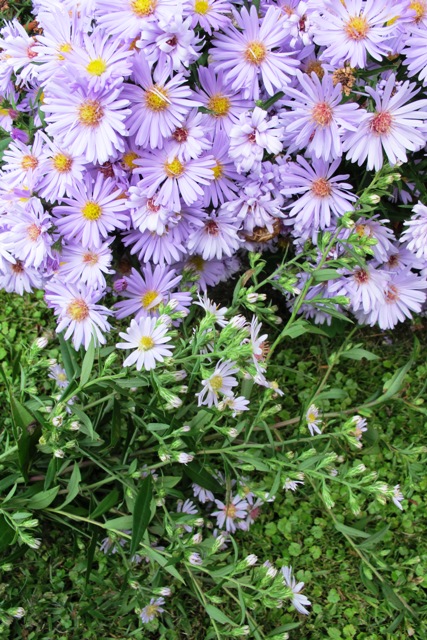
Single flowers like the white cosmos and semi doubles like the aster provide pollen and nectar

Single flowers like the white cosmos and semi doubles like the aster provide pollen and nectar

Were my Mark to have his life over again, he might equally choose to be a meteorologist or a lepidopterist instead of a plant breeder. But as he only has the one life, he is destined to remain merely a weather-watching butterfly enthusiast. It is butterflies this week.

As a country, we are a bit deficient in the butterfly stakes. Moths we have a-plenty and very beautiful many are but the jewel colours of butterflies are in short supply. I have even seen Mark, in a fan club of one, admire the fluttering of cabbage whites around the summer garden.

When he found a beautiful Blue Moon years ago, he became very excited and tried to make a home for it. I have only just looked it up and informed him that his Blue Moon was a male and could never have laid the eggs he hoped for. The females are modest brown but the male was gorgeous. We figured at the time that the Blue Moon had been blown over from Australia but I see they are now to be found in parts of this country so maybe they will turn up here to enrich our lives at some stage. Plant portulaca, though it needs to be the right one.

A stinging nettle turned up in a prominent spot of the veg garden this summer and we are pleased. It can stay and we may encourage a bigger patch of them to form because that is what is needed to bring in the admiral butterflies. We know next door but two had red admirals and was working on yellow admirals last year so we are optimistic. It is just a shame their host plant is so off-putting.

Monarchs, the most rewarding common butterfly on offer in this country

Monarchs, the most rewarding common butterfly on offer in this country

Essentially it is the monarchs which are the most rewarding of all and which have become part of our way of life here. The earlier obsession that saw Mark successionally sow swan plants by the kilometre (I am not exaggerating – I paced out his rows one summer) have passed. These days we have plants seeding down and naturalising with just a bit of topping up from fresh seed as required.

Nasty yellow aphids

Nasty yellow aphids

Nasty yellow aphids are an ongoing issue. They suck the sap from plants and can weaken them to the point of death. After trying various ways to control these critters, Mark is pleased to report that there is a spray that works. It kills the aphids without harming the caterpillars. Nature’s Way, a product from Yates. It is not organic, despite its reassuring name, but it is targeted and appears to be safe to use. Nature’s Way is a fatty based spray. In his capacity as my in-house technical advisor, he thinks that the organic canola oil-based Eco Spray from Tui should also work in a similar manner. Both sprays will need repeat applications every few weeks to achieve control. If you only have one plant and are vigilant, you can probably squash the aphids (digital control) but that is not practical on larger plantings or out of control infestations.

It is not the caterpillars that have exerted the greatest influence over our gardening here. Leaving swan plants to seed down in corners around the garden is the easy part. It is the next step – food for the butterflies.

The fashion for minimalist gardens (so last century now) which has morphed into the clean lines of prestigious modern landscaping using large swathes of the same plant in monochromatic monocultures, is one of the unfriendliest types of gardening as far as butterflies, bees and insects are concerned. Most insects need nectar and pollen and that means flowers with visible stamens. Green, sculpted gardens don’t do it.

If you follow the British garden media, you will have noticed a very strong drive to promote gardening which supports eco systems rather than imposing unfriendly garden styles on nature.

Single and semi double blooms offer the most to both bees and butterflies

Single and semi double blooms offer the most to both bees and butterflies

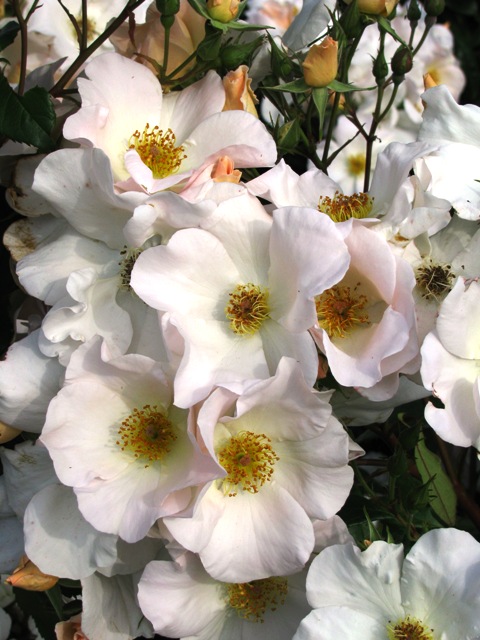
All this means flowers, particularly single and semi double flowers. A single flower form has one row of petals arrayed around a sunny centre of stamens which usually means pollen and nectar. A semi double has two rows of petals so looks to be a fuller flower but still has that life supporting centre. Full double flowers only have petals visible and are of very limited or no value at all to insects, including our butterflies and bees. This is not to say you should shun double flowers. You just need to make sure that you have a good representation of singles and semi doubles as well.

Generally, there is plenty in bloom during spring and early summer. We target flowers for summer, autumn and winter to keep the butterflies around. If you lack the food for them, they will just fly away. These days our vegetable patches are a major mix of flowers and produce. This tumble of plants may not appeal to ultra tidy gardeners, but our patch is full of bees and butterflies and many lesser appreciated but valuable insects. We are also factoring in the need for food for butterflies and bees in the ornamental gardens.

You know you are succeeding when you get monarch butterflies wintering over in your garden and when you have plenty of bees buzzing busily. Not only is it better for the balance within nature, it adds vitality to the garden.

First published in the Waikato Times and reprinted here with their permission.
Tikorangi News

Tikorangi-Butter-paper

Welcome to the first edition of Tikorangi News which your council has undertaken to write in response to complaints from a few local residents that they don’t know what is happening in their district. At New Lympouth District Council, we take our duty to consult local residents very seriously and we hope this newsletter will fill the gap. We would like to thank the guardians of the old Tikorangi Dairy Factory for making their butter wrapper available to use as letterhead, reminding us of the semi rural nature of the area. regular_smile

036• We at Council are deeply aware that traffic is a major issue for many Tikorangi residents but we have AWESOME news. We have brokered an arrangement between companies, their subcontractors and Tikorangi School. Starting next week, the trucks will be calling in to the school where the students will be painting happy faces on all the vehicles. We are confident that smiley faces will bring a smile to all Tikorangi residents as the trucks pass by. Drivers have also been instructed to give a cheery wave as they pass. regular_smile regular_smile regular_smile

• Graymooth Petroleum have told us that they are very, very sorry that their drilling rig on Kowhai B allegedly broke their consented noise levels on one occasion and they promise they are doing all they can to remedy this situation. We are confident that this is the case because they even returned our wet bus ticket to us. The good news is that they have nearly finished this well and may shortly be moving their rig to the Stratford area which means it will no longer be our concern. sad_smile

???????????????????????????????• Tikorangi residents will be as thrilled as Council is that the Len Lye Centre has been given the green light. It is only because of Toad Energy’s wonderful generosity that this project is going ahead. In recognition of the special relationship between Toad and Tikorangi, residents will be guaranteed free entry to the new centre when it opens for a period of five years. regular_smile
???????????????????????????????• A few residents have suggested that Greymooth are not abiding by their declared number of light vehicles on their Kowhai B site. We are pleased to report that Greymooth have assured us that they are abiding by all conditions of their consent. We suggest that busybody residents who have counted up to 17 light vehicles parked in the two carparks at the same time should perhaps find something better to do with their time and get a real job. There are only six light vehicles a day travelling to the Kowhai B site. Similarly, Toad have assured us that they too are keeping strictly to the terms of their consent and there are only 8 light vehicles and 3 heavy vehicles driving on to their Mangahewa C site in any 24 hour period during drilling activities.

???????????????????????????????regular_smileThe next edition of the Tikorangi News will be called the Todger News after your council successfully negotiated a sponsorship deal with both Toad Energy and Greymooth Petroleum. This is good news because it means the special needs of Tikorangi will no longer be a drain on the other ratepayers of the district.

• Residents are reminded that they are best to contact the company concerned in the first instance when they have worries. This cuts out the middle man and companies can let us know what queries they have logged. We recently requested the logs from both Toad and Greymooth and were thrilled at the positive entries.
“Thanks so much for our awesome new road. Now we can speed down it at 120km an hour” said one Tikorangi East Road resident (Good news, Otaraoa Rd people. Roadworks will be starting in your area soon!)
“ Thanks guys for the generous gift of a hamper. My wife and I loved it. Now we no longer notice the sound of your generators and drilling rig at night.”
“Don’t take any notice of the carpers and moaners, guys. These few greenies are probably the same types who spend their time buggerising around on Facebook and besmirching the reputation of NLDC. We think you’re great. I will be back at work next week, by the way.”
It was wonderful to read so many positive comments and to know that the companies are taking such good care of you all. ???????????????????????????????

• On a more serious note, Council is reducing the affected party zone for new sites to those people whose residences are 20 metres or less from the site. This brings it in line with the notional boundary ruling in the District Scheme where noise levels are monitored at a distance of 20 metres from the nearest neighbouring houses. Effects from this change should be less than minor and no parties will be adversely affected. The rural character of the area will not be changed by this minor amendment.

• Big thanks go to both companies and their active programme of retro fitting double glazing in houses where the owners do not even have affected party status. This is a wonderfully generous move on their part and one which they are under no obligation to make. regular_smile

???????????????????????????????cry_smile We are acting on concerns raised by an elected councillor at a recent Council meeting regarding malcontents in Tikorangi “besmirching the reputation of the Council”. He suggested a public education programme might be required. Council categorically rejects any insinuation that this may be a case of shooting the messenger and is investigating models of re-education programmes pioneered in the Soviet gulags, the Chinese re-education through labour programmes and the Vietnamese voluntary relocation strategies of the 1970s. We are confident that any troublemaking dissidents in Tikorangi can and will be dealt with promptly and efficiently and will no longer be able to embarrass your council and to sully the reputation of Taranaki.

• Finally, in response to community concerns, we at New Lympouth District Council can assure Tikorangi residents that as far as disruption as a result of the petrochemical industry is concerned, we will leave no stone unturned in our quest to find where the buck stops. We think it may be with central government but we are mindful it may even be international – maybe WTO or OPEC.

• Kia kaha Tikorangi! And remember, you drive a car so you can’t complain. regular_smile

Tikorangi-Butter-footer