Category Archives: Abbie’s column

Abbie’s newspaper columns

Oh Christmas tree, oh Christmas tree…

The pohutukawa - often called the NZ Christmas tree

The pohutukawa - often called the NZ Christmas tree

Ah, the Christmas tree. I was a little amused by a comment on Twitter from somebody that their potted pohutukawa had arrived but was considerably smaller than they had expected so their decorations were now placed beside it. Somebody else posted a photo of their potted karaka tree festooned in gold tinsel, Christmas balls and lights. It looked odd, but logic says it is no odder than adorning a pine tree in similar fashion.

Some brand the pohutukawa as the New Zealand Christmas tree. Living near the coast as I do, pohutukawa feature very strongly in the landscape. They obligingly flower at Christmas, lighting up the landscape. But of course there are large parts of New Zealand where they don’t grow or aren’t needed and residents there may well question the seasonal accolades bestowed upon it. When I say they don’t grow, the problem is that this special tree is not overly hardy. Indeed it is distinctly frost tender when juvenile. If you look at the distribution, it is largely coastal because disturbed air flows from the sea prevent frosts. Head just five or more kilometres inland and it can be too cold for them.

The other aspect of pohutukawa is that they are a wonderfully obliging and resilient coastal tree, putting up with salt laden wind and making enormous buttress roots to hold back the ravages of coastal erosion. They will grow where most other trees struggle badly, defoliate and die. Our coastal areas would be barren wastelands without them. Once you move to more sheltered areas inland, you have a much larger palette of trees to choose from so the tough pohutukawa might not be the tree of first choice. So for those of us who live in coastal areas from about the lower middle of the North Island upwards, the pohutukawa is our New Zealand Christmas tree but there will be New Zealanders who have never seen one in flower.

Did some not make the grade in years past? A commercial grower's roadside field. Spot the two that have never been clipped

Did some not make the grade in years past? A commercial grower's roadside field. Spot the two that have never been clipped

For others, it has to be said the common old pine tree is more likely to deserve the award. Many people do not realise it is in fact native to California – it grows wild in a limited area of the Monterey Peninsula. But I think we could probably crown this country as the Pinus radiata capital of the world and certainly other countries don’t tend to use the humble pine as a Christmas tree. The handsome abies family are the favoured tree in Europe, particularly A. procera and A. nordmanniana, and these are so much slower growing that there are good grounds for raising eyebrows at the environmental vandalism of severing them to become temporary frames for Christmas lights. At least Pinus radiata grows so quickly in this country that it is more or less disposable. It also clips very well and if you buy a cut tree from a commercial grower, you should get a well shaped specimen with shorter needles. We were always into gathering wildlings, though the children would have liked better shaped specimens when they were young. They used to bewail the unbalanced shapes, the scruffy branches and the extra bits tied in to pad out particularly sparse areas.

Should you contemplate a growing Christmas tree in a pot as a last minute green alternative, you need to factor in three aspects. A large tree has a correspondingly large root system and is damned heavy. Don’t expect a living tree of two metres plus unless you have a small fork lift. It then takes a fair amount of skill to keep large plants healthy for an entire year so thinking you can keep your living Christmas tree and reuse it in future years may not be entirely practical. You are far more likely to have a moth eaten looking specimen with dead patches, badly root bound and hungry come next December. Thirdly, should you have purchased a living tree with a view to planting it out in the New Year, make sure you harden it off slowly to the bright sunlight when you bring it outdoors, saturate the root ball before planting and keep watering the poor thing all summer. But above all, choose the site carefully. Most living Christmas trees are forest giants in their infancy. They are not generally suitable candidates for suburban gardens, even less so if you are planting one a year.

The grapevine version

The grapevine version

If you are still determined to try a live option for the future, take a look at our native matai and start clipping and training it early.

If the live Christmas tree is an ethical option based on concerns about the abject waste of severing a tree in its prime to adorn your house for two short weeks, it would probably be kinder to the environment to stick to the disposable pine tree or go for the reusable option. As a family which shuns the horrors of the tinsel Christmas tree, I am hoping my efforts with the woven grapevine pyramid will be greeted by the returning adult children today as an acceptable alternative.

Merry Christmas everyone and best wishes for a safe and happy festive season.

First published in the Waikato Times and reproduced here with their permission.
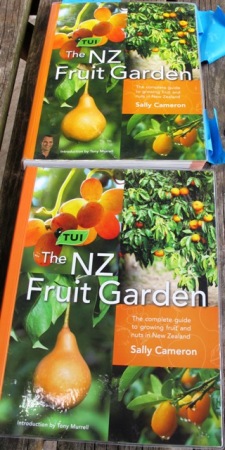
Gardening books that stand the test of time

Over the past decade or so, a fair number of new publications of New Zealand gardening books have come across my desk for review. Precious few remain on the bookshelf. After being critical of the recent offerings for the Christmas market, I wondered at the manner in which NZ publishers are reacting in the face of competition from the internet. With all the information in the world available on one’s computer screen with a click of the mouse, I would have thought that the future of the reference book was as a highly credible, accurate, reliable, expert presentation of related information in one place. After all, one has to wade through a vast amount of dross on the internet and weed out unreliable information. It is often easier and a great deal more convenient to reach for the traditional book, but only if you trust its contents.

Reference books often used to be peer reviewed before publication to iron out errors and to identify problem areas. Wide ranging topics often had multiple authors, each working in their own area of expertise. Authors had solid credentials and there was a general expectation that information be accurate. Books were produced on the assumption that they could last for years, maybe even decades, and good ones would be reprinted. It took time to produce a new book.

Not anymore. The NZ gardening book today is more akin to the glossy magazine. Here today and gone tomorrow but looks good in the short time it is in demand. Who cares about the rest of it as long as the customer is seduced into buying it right now?

In both NZ books and magazines, the advice being dispensed so freely in visually appealing ways is too often coming from commercial interests which want to sell product to the consumer. And it is not always accurate advice, let alone best practice. Bring back independent, non aligned advice and information, I say. You know – the sort of information we used to get from books. I like to think that readers are neither dumb nor gullible. Would that NZ publishers thought the same way. Alas, they have redefined readers as consumers.

This train of thought led me to look at the books which we reach for regularly. We own a lot of gardening books. The dross goes to charity. Many of the specialist ones are particular to our interests but there are a few more general ones that we use regularly and which have stood the test of time and I am happy to recommend for any gardener’s bookshelf. Some will only be available second hand – try Touchwood Books who offer a mail order service.

1) Bulbs for New Zealand Gardeners and Collectors by Terry Hatch and Jack Hobbs. First published by Godwit in 1995, it may look a little dated and it is not the most comprehensive bulb book available. But it is accurate, written for NZ conditions and covers the bulb material available here. We trust it.
2) The Hillier Manual of Trees and Shrubs (Redwood Press). The version we have has no pictures but is still the best comprehensive listing of trees and shrubs we know. There are good reasons why it has had multiple reprints and editions.

3) Grow It Yourself Vegetables by Andrew Steens (Batemans, 2010). It is not the smartest looking of the latest crop of vegetable books and the sow/harvest diagrams are an unreliable afterthought, but the text is practical, helpful and reliable. According to Mark, the real gem if you can find it, is Vegetable Growing in New Zealand by J A McPherson and F J E Jolie. It was published by Whitcomb and Tombs and we have the sixth edition with no date but it retailed for three shillings and sixpence.
4) Koanga Garden Guide by Kay Baxter (Body and Soul, 2007). Simply the best and most comprehensive guide to organic and sustainable fruit and veg gardening that we have found. It is self published and a little rough around the edges (the edition we have lacks an index which makes it harder to use), but serious gardeners will read it cover to cover and take heed. What is more, they will keep going back to it which is a measure of a good book.
5) Like a shining beacon of hope, came New Zealand’s Native Trees by John Dawson and Rob Lucas from Craig Potton Publishers this year. A comprehensive, high quality and credible publication which is likely to remain on the bookshelf as a key reference for decades to come. We never did get the definitive two volume edition of Eagle’s Complete Trees and Shrubs of New Zealand (latest version is 2007 from Te Papa Press) – equally credible and enduring but more expensive.

6) We still use the 1993 Perennial Gardening in New Zealand by Christine Dann (Bridget Williams Books), particularly for identification.
7) The old (and I mean really old) Department of Agriculture publications on fruit trees – the bulletins and their 1973 book “The Home Orchard”. Treasure these, if you find them. Technically they are still very good on basic fruits though they are way out of date now with modern options and new cultivars. Use them for information on planting, pruning and general care but with the proviso that the excessive and toxic spray regimes can be totally ignored. They have their origins in the Chemical Ali times and we have since moved on.

I cannot think that many of the New Zealand gardening books published in recent times will still be on the bookshelves in decades years to come. Even fewer will be a resource of first choice. What happened to professional pride?

First published in the Waikato Times and reproduced here with their permission.
A mast year for strawberries in the quest for semi self sufficiency here

It appears to be a mast year for strawberries here. That is a term for when plants produce a significant abundance of fruit. In nature this can be important. Apparently kakapo need rimu to have a mast year in order to breed. But here it just means we are having a bumper strawberry harvest. Not wanting to overstate the case, but they are coming in by the bowl full.

This leads me to the issue of self sufficiency and the observation that if you want to be self sufficient, you have to accept that there will be mast years and there will be famine years for some crops. At least we have the supermarket option these days so the famine stakes are not as high. I have noticed that self sufficiency has become trendy again, often espoused by people who claim that it is terribly easy and achievable in very small areas, taking relatively little time. All I can say is that self sufficiency must mean different things to different people and varying levels of home provision are being hailed as self sufficiency.

We describe ourselves as relatively self sufficient in fruit and vegetables. We produce enough fruit for high individual consumption all year and only buy additional fruit for variation in the diet and seasonal treats which cannot be grown successfully in our area. We generally produce sufficient vegetables but there are times we have to supplement. The husband felt such a failure when I had to buy a bag of potatoes last week because we had run out of old ones and we had eaten the first crop of early ones already. The onion harvest was poor this year so we have had to buy. Purists would maybe go without onions for the year.

But we are nowhere near self sufficient if you take in grains and animal protein. We don’t even attempt to produce our own grains. While we raise our own beef, we haven’t done our own poultry for years. To be genuinely self sufficient, you would need to factor in sufficient grain cropping to be able to feed the poultry as well.

Nevertheless, it is astonishing quite how much area gets taken up in providing sufficient to keep us going at the level we like for just the two of us and how much time it takes on the part of He Who Produces it All (aka Mark). Fortunately he enjoys doing it. If it was left to me, it would be a poor harvest of basil and lettuces at best because I would rather grow flowers. Mark has long scoffed at suggestions that you can achieve self sufficiency in a tiny plot and in dinky raised beds so we returned to The Oracle to see how much land she thought was needed. The Oracle is Kay Baxter, founder of the Koanga Institute. She only preaches what she practices and she has close to 40 years of experience in food production, organics and self sufficiency. We have the utmost respect for her opinion. According to her: “To grow all your veges and grains, you will need 100 square metres per person.” Yes that does include grains, which not many of us produce, but it does not include fruit. That is a hundred square metres of healthy soils in full sun with good shelter – per person. For a family of five – five plots of 10 metres by 10 metres. There are reasons why modern society has turned to the industrialisation of food production and one is the economies of scale.

If you want to produce your food on organic principles, you may need an even greater area. Generally speaking, organic production relies on producing crops at optimum times and not pushing the boundaries either end of the season (because that is when pests and diseases will strike more readily). You also need to be meticulous on crop rotation and soil management because you don’t have the fall back position of a chemical arsenal to rectify problems.

Factor in time as well. Time every week, not just when the gardening bug strikes in spring. To get reliable production in the vegetable garden requires constant vigilance, planning and regular work. If we costed in our time, it would be cheaper for most of us to buy all our food.

For us, it is a measure of a very high standard of living that we can produce most of our fruit and vegetable requirements. It is not a point of principle so much as a measure of quality – quality of both produce and life. When our lives were more frenetic and we had the demands of running a seven day business, there was not the luxury of time to produce food which could be bought cheaper and more conveniently from the local shops. There can be luxury in simplicity. Just don’t believe the current advice that you, too, can be self sufficient in fruit and veg in next to no time with minimal area and effort and it is all wonderfully simple. Ask such proponents again in twenty years time and you may be told something very different.

First published in the Waikato Times and reproduced here with their permission.
A love-hate relationship with roses

There is something undeniably romantic about Rosa Cymbeline

There is something undeniably romantic about Rosa Cymbeline

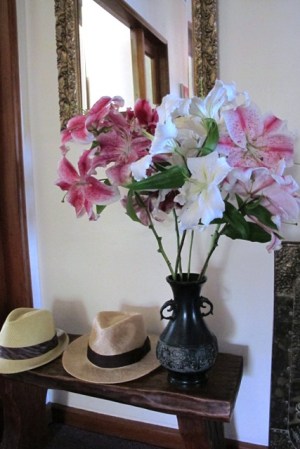
I have a bit of an ambivalent attitude to roses. On the one hand, there are only two types of flowers I consistently cut and bring indoors – roses and auratum lilies. There is something wonderfully opulent about a vase full of fragrant roses. Most roses rank pretty high up the scale for flower power. In other words, in reasonable conditions, they give a high number of flowers over a good length of time, given the size of the plant. Roses have an air of romance and promise. Well, most roses do. We will ignore the naff patio standards and freaky types. Just as the complete garden has a productive kitchen garden, so should it have at least some roses – in our opinion at least.

On the other hand… well. Roses are grown for the lovely flowers. Very few bushes are things of beauty. They harbour more pests and diseases than any other plant I know. They are probably second only to lawns in being the cause of home gardeners pouring a whole range of nasties into the environment. I hate their thorns and resent splinters and gouges during pruning. I am always nervous of wounds since being told by a nurse how she had to special a patient who caught a thorn in her elbow and it subsequently turned extremely septic. Disposing of prunings is a problem because they have to be burned or go to landfill. They get black spot and have few leaves after about March. They positively lure aphids. Climbing roses are so rampant that it becomes a major battle to contain them. The year I spent an entire afternoon pruning and tying in one plant of Albertine was its last. I decided that the resulting reward was not worth that amount of effort. The list of negatives is extensive.

The bottom line is that, despite all their disadvantages, roses remain a big seller so clearly the general opinion is that they still justify their place in the garden because of their lovely blooms. And I haven’t taken all mine out and put them on the burning heap because I still love them. I have taken some out, though and another is destined to go soon. It has black spot and yellow leaves already.

The issue here is that we don’t spray our roses. Ever. I don’t spray anything and the husband is adamant that he won’t spray roses and I should just pull out the non performers. Despite having grown up as the Chemical Generation (would that be Gen C?), we have made a conscious decision to try and garden with a greatly reduced spraying regime. There are only a few key plants that get sprayed here. Picea albertiana conica is one – the red spiders will take it out otherwise. For the rest, if they can’t survive and thrive in hospitable conditions, planted well and fed regularly with compost, then they aren’t worth keeping.

In times gone by, the classic rose garden tended to be an area of scorched earth with no build up of leaf litter below which stopped diseases from wintering over. Plants were spaced well apart, usually only one of each variety and predominantly hybrid teas, so there was plenty of air movement which reduces problems with mildew. And it was easy to spray. It is a pretty dated look and really only applicable to a picking garden.

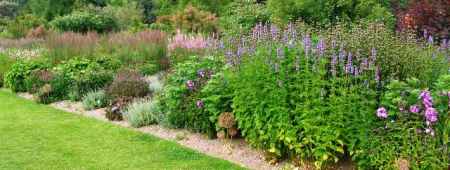
The modern rose garden is more likely to go one of two ways. Either the roses get bedded into what is essentially a cottage garden mixed border, filled with a froth of perennials, annuals and small shrubs. That is what I do, in the hope that as the roses defoliate through the season, the other plants will hide the shortcomings.

A modern take on the rose garden at La Rosaleda in New Plymouth (photo by Jane Dove Juneau)

A modern take on the rose garden at La Rosaleda in New Plymouth (photo by Jane Dove Juneau)

Alternatively, one can go the formal path, as at Coleen Peri’s garden, La Rosaleda, where she has planted a grid of matched Sharifa Asma standard roses with a solid groundcover of catmint or nepeta beneath. To carry this look off, you have to maintain your roses in the highest health or they will look unloved, uncared for and considerably more of an eyesore than my defoliated specimens in a mixed border.

What annoys me is that it has taken so long for rose breeders and rose nurseries to heed the call for disease resistant varieties. The Flower Carpets led the way and I have to say that while they are not picking roses and they lack some of the romance of old roses, let alone the fragrance, the white and coral variants of Flower Carpet are two of the very best performers in our garden. I am told the new amber variety is particularly good too. But aside from that series, the trialling and selection of roses based on the criterion of being able to grow them in the home garden without spraying appears to have moved at a snail’s pace. Maybe the clamour from the consumer has simply not been loud enough yet? There is a pretty quick turnaround on rose breeding, certainly compared to the slow process that comes with magnolias, camellias and similar woody trees and shrubs.

Two final comments: firstly, if you are not going to spray, you have to be thorough with pruning and feeding to promote health. We feed through regular applications of compost mulch. I do a textbook hard prune in winter and I constantly summer prune lightly to remove spent stems, weak growth and diseased areas. That repeated pruning encourages the rose to keep pushing out fresh leaf buds.

Secondly, we were told by an international rose breeder in Holland that perfume and longevity as a cut flower are incompatible. That is why many florists’ roses lack scent. They are bred for vase life. Nobody has ever confirmed that for us, but we assume he knew what he was talking about, it being his speciality.

I grow my roses in a mixed border situation - with the hope that the other plants will disguise the defects of the unsprayed rose bushes

I grow my roses in a mixed border situation - with the hope that the other plants will disguise the defects of the unsprayed rose bushes

First published in the Waikato Times and reproduced here with their permission.
Gardening is not exempt from fashion trends

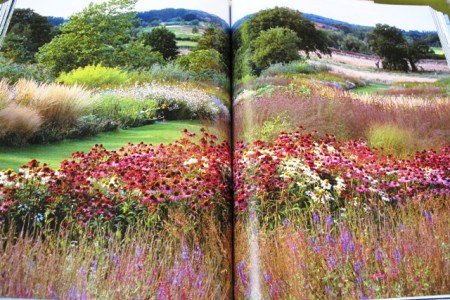
We are hoping the next garden fashion may be the revival of romantic naturalism

We are hoping the next garden fashion may be the revival of romantic naturalism

I was reading an interesting review on line when I came across the following comment: “… New Zealand gardens are getting more conservative with time”. I have not gone back to the original source yet, so will not attribute the comment except to say it is apparently local to Hamilton. It certainly gave us food for discussion here.

Are our gardens getting more conservative and less adventurous? On balance, the unanimous opinion of two was: probably not. We are currently in the meshes of a deeply conservative garden fashion where mini Sissinghursts are all the rage (clipped buxus hedges and balls, white standard roses or bay trees, the odd limbed up hornbeam that claims to be pleached) but it is only a fashion. It too will pass.

What has changed, we suspect, is disposable income, the trickle down of wealth and status to the hoi polloi and the linking of garden to fickle fashion. In other words, the democratisation of gardening. In centuries past, garden fashion was dictated by the rich and powerful across the globe. From the Islamic water gardens, through the classic revival of Italy, the British landscape tradition of Capability Brown, the Arts and Crafts revival in Edwardian times – none of it had anything to do with the common people.

Now we have a whole breed of property owners, some of whom are gardeners, who want an outdoor environment which complements their lifestyle, marks their social position and brings some level of reward in pleasure or productivity. And just like everything else, the cycles have sped up. Clothing fashions change. Colours change in interior design. Why would we expect gardening to be timeless?

The gardening genre of suburban Sissinghurst

The gardening genre of suburban Sissinghurst

Some of us can remember the conifer garden of the seventies – the first instance of a mass fashion in gardening that I can recall. It wasn’t just conifers. It was the meeting of small conifers and the easy-care pebble garden that gave us a certain genre which is widely regarded with horror these days.

We were already in the plant nursery business when flowering trees and shrubs took a dive in the eighties. It was the time of the cottage garden, filled with a froth of annuals, perennials and roses. Anecdotally, we attributed it to the sharemarket crash of the time. Back in those days, you could buy three or four perennials for the price of one good tree or shrub. The price of woody plants has never recovered and these days you can pay about the same for a good perennial as you do for a woody plant which has taken at least five times longer to produce.

But cottage gardens are not low maintenance and in due course they morphed into the short-lived fashion of minimalism – large rocks, ground cover scleranthus and three vertical plants, one of which should be a sanseveria or yucca. That was a fashion driven by a new breed of landscaper who knew about design and space but not plants.

Somewhere along this timeline, natives became the vogue and we saw a fair number of Idealistic Young Things who would only buy a plant if it was a native.

Then we had the tropical garden – lots of palms, clivias, vibrant vireya rhododendrons and that burgundy aeonium with the unpronounceable name (Aeonium “Zwartkop” and I don’t think I ever spelled it correctly in years gone by). The trouble is that most of us do not live in tropical climes and those tropical gardens didn’t take winters too well.

The Auckland bromeliad garden has survived a little longer and is still de rigueur in some circles – for all the world the conifer garden of the new millennium. The overseas trend of prairie or meadow gardens has largely bypassed us in this country. It is damn difficult to do a prairie garden unless you live in prairie conditions with dry, hot summers and dry, cold winters.

Enter the edible garden and the Bright Young Things who would only buy native plants in the past decided they would only buy a plant now if it was edible. Raised beds, nasty mulches of used woollen carpet, no dig gardening, watered down organics – aiming for self sufficiency in food has never been easier, or so it is widely claimed. I know I am not alone when I say many of us have tired of vegetables dominating the gardening media. There are not many aesthetics when it comes to vegetables which are utility things at best.

Gardeners who weren’t into growing vegetables followed a parallel path with their recreations of suburban Sissinghurst, sometimes adorned by a pretty potager if they wanted to adopt both fashions. Even the gals at the New Zealand Gardener appear to think that vegetables have passed their peak and they are onto new branding with Grandma’s flowers – from dahlias to rhododendrons if recent pieces I have read are any guide.

The hope here is for the next fashion trend to be sustainable gardening and to see a revival of romantic naturalism replacing suburban Sissinghurst. Gardens don’t freeze in time any more than their owners do but by definition, few people are trend setters and most people are followers of fashion.

First published in the Waikato Times and reproduced here with their permission.