Category Archives: Abbie’s column

Abbie’s newspaper columns

Magnolias – Number One in the Plant World

By Abbie Jury

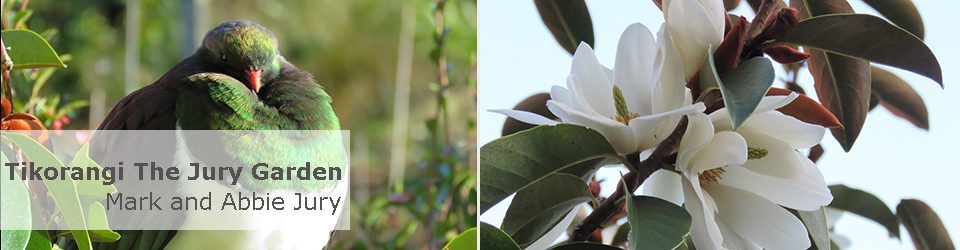
If I am ever asked what my favourite plant group is, it does tend to be whatever is freshly in flower at the time. There is no single minded loyalty to one genus of plants here. But overall, magnolias are probably number one here. There simply is nothing in my experience that can beat the sight of a large magnolia tree in full bloom. Set against a blue sky, it can take your breath away.

The recent run of fine early spring weather with little wind has given us a splendid flowering this year. I have never counted how many we have planted out here but it must be well into the hundreds now. Some are splendid large specimens imported from England by Mark’s father fifty to sixty years ago, some are named plants of more recent breeding and many are simply part of the ongoing breeding programme here.

For some reason we have not yet managed to fathom, we get much richer colour in New Zealand than is apparent in some other countries. When we looked at peak flowering in England, Italy and Switzerland a couple of years ago, we were a bit surprised to see how washed out the colours can be in their conditions. Named cultivars which we know here as rich pinks, purples and wine reds appeared to be much paler. It may be due to soil conditions there and our high light levels may also have something to do with it. While we have not yet seen the magnolia flowering in areas of the USA or in their native habitats of China and central Asia, we returned from Europe convinced that a New Zealand flowering is something special.

I am talking of deciduous magnolias here. The evergreen magnolias, mostly native to USA, are a different plant altogether and decidedly less spectacular in their flower power. I had a call this week from a woman (out of the readership area) who was trying to source a pink or red magnolia. She had a white one but she wanted another colour because she was planting her children’s placentas. (Did I need to know that? Not really.) I then ascertained that she wanted a pink or red evergreen magnolia. I restrained myself from commenting that the rest of the world wants one too. Despite the best efforts of some international breeders to get colour into the evergreens, they remain resolutely white in their flowers.

Evergreen magnolias have their place (as windbreaks and in cemeteries in my book, I am afraid) but they are unlikely to ever make you say “oh wow”.

Magnolias are one plant group which has benefited hugely from the interference or endeavours (depending on your point of view) of the modern plant breeders. Even fifty years ago, there was not a big range to chose from – campbellii, soulangeana, Rustica Rubra, liliiflora, kobus (the stellata or star magnolia) and not a huge amount more. Some you had to wait a good fifteen years or so to open a flower and some had a huge burst of wonderful blooms only to be over in about 10 days. And they were mostly pink or white unless you were American in which case you had the small flowered yellow species.

How times have changed. Now some magnolias will flower in the garden centre (bred to encourage flowering on juvenile plants) though it must be said that early blooms on very young plants aren’t always up to quality. Most modern hybrids will at least flower within a couple of years of planting out.

Many modern magnolias will extend the flowering season because they set flower buds down the stem, not just on the tips. This means that the flower buds develop at different rates and consequently the display lasts longer. A number of years ago, a very late and severe frost here turned Magnolia Iolanthe from a vision in pink and white to brown slush overnight. It was very discouraging but within a week she had opened a full set of fresh flowers and was back to her former glory. Iolanthe was one of the first modern large flowered cultivars to show this propensity to set buds down the stem and from first to last flowers can be as long as two months.

In New Zealand we tend to favour solid petals and more robust flower form which has to do with our wind. In countries where wind is not an issue, big floppy flowers are quite acceptable but they just blow to bits here. I am not so keen on the stellata or star magnolia types because the petals lack substance and can fall apart rather too quickly. They also tend to make multi trunked rather twiggy large shrubs to small trees which are not as appealing as a well shaped solid tree, in my eyes at least.

Modern breeding has also brought a wider range of smaller growing plants onto the market which means that you don’t need to own a very large section to be able to grow at least one tree. That said, the bigger the tree and the bigger the flower, the more spectacular they are. Some trees just get old and tired as they get bigger whereas magnolias go from strength to strength.

Mark will tell you that a watched bud does not open. He is popping up and down the hill several times a day in anticipation of a rather special cross which is about to burst into flower. It looks exciting with the promise of a colour break and the bud is satisfyingly large but the wretched thing still has not rewarded him by showing its true colour and form.

Those of you who grow magnolias will have seen the large furry sheath which encases the bud. When they were little, our children used to refer them as sleeping bags for mice.

Yes, magnolias are number one in the plant world for us here.

A tui in a cherry tree

What a joy are the tuis in the cherry trees at this time of the year. They won’t sit still for us to count, but there are times when we guess around 40 to 50 of them are fighting for the nectar. The trees can look as if they are exploding with birds. Being strongly territorial, they spend as much time bickering and squabbling and giving each other their marching orders (or is that, flying orders?) as they do feeding.

Mark found one tui which had apparently overindulged, lying in the park looking distinctly glazed about the eyes and very wobbly. He placed the somewhat floppy bird in a safer spot where it had some cover and wondered aloud to me as to whether he should be trying to get it to drink water. I was not at all sure how he planned to get the bird to drink. Nor was I convinced that the metabolic system of a drunk bird is similar to that of a drunk human.

Whatever, when he returned a little later to check on its welfare, the tui had perked up considerably and was not going to let him come near it again.

It is the campanulata cherries which feed the native birds in late winter. They are sometimes referred to as the Taiwanese or Formosan cherry. Presumably when the intrepid British plant hunters went out collecting, the island was still known as Formosa. They also occur naturally in areas of southern Japan and south China.

The campanulatas are small flowered in sugar pink or cerise red tones and they flower long before most other cherry trees. A tree in flower is just a mass of bloom and the leaves start to appear towards the end of flowering. Because they flower and come into leaf so early, they are regarded internationally as only suitable for very mild climates but they will grow through most of our area.

We had a very knowledgeable visitor from England this week and he was delighted by the sight of the campanulatas which he says can’t be grown in the UK because it is too cold. Now that he is building a garden in Normandy, he thought maybe he could try growing them. He was a bit stunned when we told him they are a noxious weed in Northland and on the banned list.

herein lies the problem with camapanulata cherries. They are a joy at this time of the year and they provide plenty of food for tuis and honey bees. But many will set seed and Mark will tell you that wildling cherries are one of the main weeds he deals to on our property.

I talked to a couple of garden centres in the hope that they would tell me whether anyone has selected sterile carmine red forms so they don’t set seed. Sadly no. There is a great project for someone. But in the absence of hard information, we would advise people to err on the conservative side and not plant campanulatas of unknown seeding status if their property adjoins the national park or a bush reserve.

A sterile plant which does not set viable seed allows the best of both worlds – food for native birds along with colour impact at this time of the year. Three of the most common cultivars on the market are of Felix Jury’s breeding – Pink Clouds, Mimosa and (what else?) Felix Jury. As far as we know, Pink Clouds and Mimosa are both sterile but they are the sugar pink colour range. In the desirable carmine red range, such as Prunus Felix Jury, most appear to be far too fertile. The one sterile tree we have in the garden here is far too large for most gardens, already being in excess of 10 metres tall.

Cherry trees, or prunus, are a huge family with about 400 different species from around the world and many more named selections and hybrids. But as a general rule in this country, it is the Taiwanese ones flowering now and the Japanese ones flowering later in the season. The ones from Japan are generally small trees, often selected for their big fluffy flowers. Varieties such as Tai Haku, Mount Fuji and Kanzan are well known. Gorgeous these Japanese ones may be, but sadly they don’t feed the birds. Nor do they tend to be long lived in our climate, often succumbing to bacterial blast.

Unfortunately fruiting cherries such as the big beautiful Black Dawsons do not like our mild and damp climate. There are good reasons why they do so well in Central Otago and why the fruit sells for around $5 a kilo there whereas we rarely see it under $15 a kilo here. Believe me, we have tried growing fruiting cherries here and if we could, we would be producing them. But we can’t so we gave up.

Foliage for the Contemporary New Zealand Garden, Julian Matthews (Random House, $39.99) Reviewed by Abbie Jury.

Essentially this book is a collection of 114 different plants which have nice leaves and are liked by the author. Each plant is given an eyecatching photograph with the facing page giving relevant plant information.

The photographs are beautiful and my only quibble would be that there is usually no indication of scale within the image and it isn’t always easy to pick because they are all close ups. Given that the range of plants is vast – from the large ginkgo biloba tree down to a ground cover ajuga, relative size may be challenging to new comers.

What lifts this book above a simple, pretty coffee table tome is the writing. The author is experienced in both gardening and in writing. He does not shy away from using botanical names but he writes with such enthusiasm and clarity that novices will not be confused. His advice on plant combinations is what makes this book worth having.

It is a shame the publisher economised on the quality of the cover. It has a cheapskate cover which creases and curls and is unlikely to last the distance should you keep this book on your coffee table for inspiration.

Formality and informality – painting with plants versus formal design

It may only be mid August, but spring has sprung and the grass has riz. The tuis are back, attracted by the early flowering campanulata cherries. Many of the daffodils are in flower here already. The snowdrops, sadly, have finished their all too brief season. The early michelias are in full flower, as are most of the camellias and the magnolias are opening. Magnolia Lanarth is a rather large vision in purple in our park where the big leafed rhododendrons are also opening their flowers. Some of the calanthe and cymbidium orchids are open and the early lachenalias are at their peak.

Garden visitors have started to trickle in again and everywhere I look I see work which must be done soon. I just wish that such a lovely time of year did not coincide with that sense of panic of time running out yet again. There are so many tasks I really meant to have done by now.

I had a very interesting conversation this week with a prominent landscaper about spaces in garden design. We were contemplating a reasonably large area which Mark and I are planning for a garden extension (close to the last area we have to move in to, short of expanding into the neighbour’s property). As gardeners who grow plants for a living, we look at a new area and think about achieving the desired effect with plantings and design. As a landscaper who makes his living designing outdoor areas for other people, his approach was to talk about space and flow and focal points and the actual plants are more like the finishing effect of soft furnishings.

What I found really stimulating was his confident and assured assessment of space and its absolute importance to gaining any effect. Spaces in a garden are essentially the open areas, usually paved or in lawn though you can achieve a sense of space in open woodland if there is minimal under planting. If you are lucky enough to have a property with a large expanse of water, that too constitutes open space.

Gardeners by nature tend to fill in spaces, to paint and furnish with plants and said landscaper felt that too often gardens could simply be cluttered by failing to define and retain sufficient open space. I guess it could be argued that the more complex the plantings, the more important that there be corresponding space in the right places to give form and definition.

I was once accused by a very defensive self-proclaimed practitioner of being anti landscapers. In fact that is not a fair comment at all. I part company from many landscapers when it comes to plant selection and plant interest and I was objecting at the time to a trend whereby many landscapers claimed superiority based on job title alone.

But I will always show respect for good design. And a good landscaper, by definition, has high level skills in looking at an area and seeing the potential to define spaces and to make pleasing sense of the area while meeting the daily needs of the occupier.

Mark describes the happy median as a marriage of formality with informality. The easiest way to define space is by formality which tends to mean straight lines, circles and semi circles giving obvious and clear form, often with a repetition of shapes. The skill is in creating the spatial relationships and the right proportions within the design. In a completely formal garden, this geometric design is matched by uniform and geometric plantings which, as gardeners, we personally tend to regard as lacking in plant interest and simply dull. However, it is the easiest option for non gardeners.

Enter the great English practitioners of Sir Edwin Lutyens and Gertrude Jekyll in the first decades of last century. It has taken us a long time to discover Lutyens and Jekyll here but we are inspired by their work. There is the perfect marriage of top design and creative plantsmanship.

Lutyens was a highly respected architect whose buildings certainly inspire with his gifted use of space, light and the intimacy of the arts and crafts movement. What would I not give to have a Lutyen’s house? And his garden designs are marked by a similarly gifted perception of space, proportion and formal design.

But it was Gertrude Jekyll who furnished those garden designs and she filled in his garden spaces with informal plantings which are soft and flowing by nature. Jekyll was the leading light of the great English herbaceous border and her skills with plant combinations still set the standards others aspire to. Jekyll softened the hard edged formality and gave a depth of plant interest, variety and quality which purely formal gardens lack.

I was interested talking to a keen Italian gardener recently and he much preferred the English style of gardening to the dull, repetitive formality of Italian and French gardening.

In Taranaki where we have luxuriant plant growth, rampant even, that combination of soft English planting of considerable complexity is a more natural style than the strict formality of gardens created in harsher climates with a very limited range of plants. But it does not have to be bereft of good design, formal design even.

And certainly my conversation with the landscaper focussed my thoughts on the importance of open space in a garden and its integral contribution to good design. In the end it is all about making an environment more pleasing to the eye and uplifting to the spirit. Why else would we bother gardening?

Living with an icon

It is tough being a Taranaki icon in our household, or so Mark may tell you. Nobody accords you any respect at all and instead you become a target for endless jokes. Mind you, this is the man who, when I told him I wanted to be a sacred cow so that nobody would dare to write any more horrible letters to the editor about me, replied: “Well one out of two ain’t bad.” So I am milking the icon jokes for all they are worth, singing “I con see clearly now the rain has gone….” A friend contributed Ike on Tina Turner and I think we have several days worth yet to run but I will not inflict any more on readers.

Nor am I going to write about magnolias this week despite their being the genus which is bringing the accolades to Mark. It is a little too early in the season yet as the buds are just starting to break on most of the early flowering varieties. Instead we are back to camellias which provide colour in the season before magnolias.

At this time of the year, I fall in love with camellias all over again. The love affair wanes somewhat as the season progresses. The flowers can turn to mush and they loose the freshness but in June and July, I look at them with delight.

A camellia hedge is a camellia hedge. It tends to be either a formal clipped affair of one single variety or an informal and usually unclipped row of mixed varieties. I can not pretend that a camellia hedge, clipped or unclipped, is ever going to get me too excited. Really, it is just a hedge.

No, it is the interesting feature camellias which get me inspired. For some years I have been nurturing a little collection in pots. Every year I have hosed off the old potting mix around their roots and repotted them in fresh mix for winter, pruned and shaped the tops and transported them out to chosen spots in the garden, only to bring them back into the nursery when the heat of summer hits.

I decided this year it was too much work. While I advocate plain terracotta pots, they are heavy and I always need to find someone to give me a hand hauling the bigger ones around the garden. And I think I had about twenty of them, which seemed excessive. What to do? I hadn’t spent up to ten years nurturing these treasures just to stick them in the garden where they were not likely to remain much a feature. Therein lies the problem. It is not easy to feature a single camellia plant in a garden. Big mature plants in the right place can be thinned out, shaped and titivated. But little character plants can get a bit lost. They tend to meld.

There is an open verdict here as to whether my experimental solution will work and we won’t really know for a few years. We had a simple border which looked great for two weeks of the year. Backed by a buxus hedge, I had planted yellow and red roses, underplanted with mainly yellow and blue perennials. Bright summer colour, I thought. Fortunately, the two weeks of the year when it looked really good with a carpet of red soldier poppies and blue cornflowers were the two weeks around Rhododendron Festival but it was all downhill from there and for most of the other fifty weeks of the year it looked pretty scruffy.

At the time Mark was coming up with his theory that what appeals to people about new gardens is the crisp shape of plants. When freshly planted, each specimen stands on its own whereas when the garden matures, it loses that fresh definition and the plants grow into each other and start to form more of a wall of foliage. I wondered if we could combine my little camellia collection and the permanent freshness of the newly planted garden.

We gutted the border of all roses and perennials and made sure the surface was level. Then, having repotted my camellias for what I hope is the last time, we sank the terracotta pots into the garden with just the rims sitting above the surface. Where plants were rather pot bound, we cut the bottom off the pot so the roots have somewhere to go. So each plant is individually contained and individually displayed. For ground cover, I have used that creeping orange berry plant, on whose name I have a mental block which is not surprising because I have just found out that it is apparently rubus pentalobus. It is a rampant ground cover in sunny conditions even though I have only ever met one person who has seen it fruiting in Taranaki. (It is meant to have delicious orange berries but i think it prefers it hotter and drier.) I am hoping the groundcover will form a simple carpet through which seasonal bulbs can add spots of colour.

So far so good. The plants are indeed featured individually and collectively they create a look of formal structure. They are easily groomed and they should not need watering in summer because the terracotta will absorb moisture from the soil. I will see how they endure through the next few years. If we don’t like it, at least it will be easy to disassemble.

If you looking for varieties suitable to shape into character plants, look at the miniatures and slow growers such as Baby Bear, Itty Bit and Baby Willow which tend to be natural bonsais. The small leafed species are fun to work with (minutiflora, microphylla and a number of the other obscure types). Otherwise, varieties with slightly unpredictable growth habits and wayward branches can lend themselves to turning into feature plants. Bonsai artists often prefer misshapen plants to start with. If you want to create a standard or lollipop, make sure the plant you start with has a good straight central leader.

Camellia petal blight has decimated the flowering impact of the plants in this country. While that is very discouraging, their use and beauty as individual, shaped feature plants or as hedging should not be ignored. They are all evergreen plants and most have a fairly robust constitution which means they will tolerate some pretty harsh treatment. If you hate the big, slushy, spent blooms, keep to the small flowered varieties and the single flowers. There is still a good place for camellias in gardening.

In praise of finocchio

The surprise delight from our vegetable garden in the last few months has been the Florence fennel. I have never seen these bulbs for sale in the fruit and veg section of the supermarket in New Zealand. Indeed the first time we ate them was, appropriately enough, in Italy a couple of years ago though I think they are commonly available across the counter in other European countries too.

It took me a long time (decades, even) to convince Mark of the merits of fennel. Having had a rural Taranaki upbringing, he found the aniseed flavour and scent just reminded him of the roadside weeds and he was not that keen on aniseed. I weakened his resistance by the use of dill which Larousse tells me is also known as false anise or bastard fennel. I had thought it was a step up from fennel myself, but apparently not. Whatever, I had a nice but fiddly recipe which stuffed schnitzel with smidgeons of many vegetables and flavoured it with dill. Dill is still the favoured taste in North Africa and Scandinavia, but most of Europe uses fennel which is a native Mediterranean plant.

Fennel leaves or seeds are frequently used as flavouring, particularly for fish and it appears that you can use the common roadside weed for this purpose though the pots of living herbs you pay $3 for in the supermarket may look more appealing. There aren’t too many confusing forms of fennel really – common fennel (foeniculum vulgare) where you use the leaves and seeds, the bronze fennel which is sometimes used as an ornamental in the herbaceous border (named the same as the common stuff but with purpureum added) and which is equally edible and Florence fennel or finocchio (same name but with var. azoricum added). It is the Florence fennel that is worth searching out. It produces a fleshy, bulbous sort of swollen base to the stems which is the delicious bit. Technically it is a pseudo bulb (false bulb) but usually they are referred to as bulbs. We got our seeds from Kings Seeds or local garden centres can order them in for you.

Why are we so hooked on Florence fennel? It is a useful vegetable cooked or raw. It is different to other staple vegetables we use. And it is easy to grow. Eaten raw, it makes an excellent substitute for celery. Mark, who is the vegetable gardener here, has never had a lot of success with growing celery. It tends to get stringy, infested with slugs, dirty and does not yield much edible volume. Or it all matures at the same time and doesn’t hold. It requires constant spraying to keep leaf disease at bay. But Florence fennel is easy peasy, stays clean and doesn’t need spraying. It can be harvested as required over many months. It can be grated or finely sliced raw into salads where it gives a faint aniseed flavour and a good texture. It can be braised, added to soups or roasted. When cooked it loses almost all the aniseed taste and scent. It is not always easy to get too excited about vegetables so the discovery of a new option which is tasty, different and practical for the home gardener (but which the Europeans have known about for centuries) is worth some attention.

We have found next to no information on growing finocchio in New Zealand. Overseas books talk about planting one season and harvesting the next, although we have also found references to keeping the bed going as a perennial crop to be renewed every three years. So Mark has been floundering a little finding the best way to grow it. Kings Seeds advocate direct sowing the seed into the garden in early spring. As the plants grow, they form the bulbs and you can treat it as an annual and start harvesting around Christmas. Or, keep cutting the seed heads off over summer and restrict the number of shoots to each plant and you can harvest a succession of bulbs next autumn and winter. If anybody has more experience, Mark would love you to call him. By the way, finnochio leaves lack the pungency of ordinary fennel so if you are after it as a fresh herb too, you may need to grow both forms.

Just to confuse matters further, the so called fennel flower has nothing whatever to do with fennel itself. This is in fact nigella (presumably the well bred English chef was named after the pretty flower). Some readers may know it better as Love in the Mist, (botanically nigella damascens). I have it seeding down as a well behaved and very pretty annual in a cottage garden but I hadn’t realised what I was missing out on by not using the seeds scattered over bread and cakes. Nigella sativa is a different Mediterranean wildflower species from the same family which is not quite as ornamental though pretty enough in its way. It has a single flower. As it is also referred to in folklore and cooking parlance as Black Cumin, Roman Coriander or Nutmeg Flower and can be used in place of black peppercorns, it is clearly a near complete spice garden in one plant. Indeed, Mohammed is alleged to have said of nigella sativa, “In it is a cure for everything except death.” How can the versatility of fennel flower have escaped me up until this point?